Changsha

Sunset view of the Young Mao Zedong statue on Orange Isle Changsha surrounded by lush greenery and the Xiang River - Changsha, A City with History of Chu and Han Culture 2026 - The China Journey - Changsha, A City with History of Chu and Han Culture 2026 - The China Journey
Discover Wuhan, a vibrant city along the Yangtze River, rich in Chu culture, ancient temples, bustling night markets, and modern skylines.
Sunset view of the Young Mao Zedong statue on Orange Isle Changsha surrounded by lush greenery and the Xiang River - Changsha, A City with History of Chu and Han Culture 2026 - The China Journey - Changsha, A City with History of Chu and Han Culture 2026 - The China Journey

Table of Contents

About Changsha

Changsha, the capital of Hunan Province, is a vibrant city rich in history and culture.

Nestled along the lower reaches of the Xiang River, its diverse terrain features mountains, plains, and rolling hills.

Boasting a subtropical monsoon climate, the city experiences distinct seasons, with warm springs, rainy early summers, and prolonged autumn heat.

With a population of over 10.5 million, Changsha is a key economic and cultural hub in central China, recognized as a national historical and cultural city.

Its legacy dates back to the Paleolithic era, and it played a vital role in the late Qing reform movements and revolutionary history.

Renowned for its “practical and inclusive” Huxiang culture, the city has been named China’s most livable city for 16 consecutive years and holds global titles such as the “City of Media Arts.”

If you want help choosing routes, trip length, and the best places to combine on a first visit, see our Changsha Travel Guide.

CategoryDetailCategoryDetail
NicknameStar CityAdministrative Code430100
City TypePrefecture-level cityRegionHunan Province, China
LocationNortheastern Hunan Province, ChinaArea11,819 km² (Total)
Administrative Divisions6 districts, 1 county, 2 county-level citiesPostal Code410000
Population (2023)10.51 millionFamous AttractionsYuelu Mountain, Orange Isle, Window of the World, Hunan Museum
AirportChangsha Huanghua International AirportRailway StationsChangsha Station, Changsha South, Changsha West
License Plate CodeXiang A (湘A)GDP (2024)¥1.5268 trillion
Geographic Coordinates27°51′–28°40′ N, 111°53′–114°15′ ECity FlowerAzalea (杜鹃花)
City TreeCamphor Tree (香樟)Notable UniversitiesHunan University, Central South University, Hunan Normal University
DialectsChangsha dialect, Liuyang dialect, Ningxiang dialectOfficial WebsiteChangsha Government
Per Capita Income (2023)¥67,276 (urban), ¥43,200 (rural)Climate TypeSubtropical monsoon climate
Ethnic GroupsPredominantly Han, 55 ethnic groups presentPortChangsha Port
The neon lit retro style building of Super Wenheyou in Changsha featuring colorful signs and vibrant street food culture - Changsha, A City with History of Chu and Han Culture 2026 - The China Journey - Changsha, A City with History of Chu and Han Culture 2026 - The China Journey

Changsha Travel Overview

Changsha is a vibrant tourist destination blending natural beauty and rich cultural heritage.

Home to iconic attractions like Yuelu Mountain, Orange Isle, Tianxin Pavilion, and the Former Residence of Jia Yi, the city offers diverse experiences.

As of mid-2024, Changsha boasts 82 rated tourist sites, including two 5A and 30 4A scenic spots.

With recent policy changes, 77 scenic areas no longer require real-name reservations, making travel more convenient.

Tourism plays a vital role in the city’s economy, with 1.95 billion visitors in 2023, generating ¥2,193.05 billion in revenue.

In the first half of 2024, the city welcomed over 90 million domestic and international tourists, reflecting significant growth in both domestic and inbound tourism.

A table filled with spicy and flavorful Xiang cuisine featuring signature Hunan dishes like chopped pepper fish head and stir fried beef - Changsha, A City with History of Chu and Han Culture 2026 - The China Journey - Changsha, A City with History of Chu and Han Culture 2026 - The China Journey

Food Culture in Changsha

Changsha is famous for its rich and flavorful Hunan cuisine, with a history dating back to the Warring States period.

The city’s culinary heritage includes a variety of dishes, influenced by local ingredients, geography, and climate.

Known for its bold flavors, particularly spicy and sour, Changsha offers an array of iconic street foods like crayfish, stinky tofu, rice dumplings, and spicy noodles.

Popular snacks such as “zi mei tuan zi” (sister rice cakes) and “guo liang fen” (cold noodle jelly) reflect the unique taste of the region.

Renowned restaurants like Huo Gong Dian and De Yuan Baozi, along with bustling night markets such as Yangfan and Huangxing Road, provide an authentic taste of the city’s food culture, making it a paradise for food lovers.

Traditional Changsha handicrafts on display showcasing intricate bamboo weaving pottery and other cultural heritage artifacts - Changsha, A City with History of Chu and Han Culture 2026 - The China Journey - Changsha, A City with History of Chu and Han Culture 2026 - The China Journey

Intangible Cultural Heritage in Changsha

Changsha is home to a rich array of intangible cultural heritage, including Xiang embroidery, Liuyang fireworks, Xiang opera, and Tongguan kiln ceramics.

As of 2024, the city has nine national-level, 44 provincial-level, and 131 municipal-level heritage projects.

Changsha actively integrates intangible heritage with tourism, featuring projects like Liuyang fireworks shows and immersive cultural performances, boosting visitor engagement.

The city has established dedicated museums, training workshops, and employment hubs to protect and promote these traditions.

Events like heritage fairs and forums further showcase its legacy.

Educational initiatives, including campus programs and artisan mentorships, ensure younger generations continue these crafts, keeping Changsha’s cultural identity vibrant and thriving.

A large pink LED billboard in Wuyi Square Changsha displaying I Love CS and the Chinese characters for Changsha - Changsha, A City with History of Chu and Han Culture 2026 - The China Journey - Changsha, A City with History of Chu and Han Culture 2026 - The China Journey

Origin of Changsha’s Name

The name “Changsha” originates from Changsha County and has four possible origins.

One theory links it to the “Wanli Sand Shrine,” as recorded in Taiping Huanyu Ji, stating that the area from the Xiang River to Donglai covers ten thousand miles, hence the name.

Another suggests it was named after the “Changsha Star” mentioned in Records of the Grand Historian, leading to its nickname “Star City.”

A third theory attributes it to the sandy terrain, while a fourth claims it derives from ancient Miao and Baiyue languages, referring to a place of goddess worship.

A bustling indoor food market in Changsha with people dining at wooden tables surrounded by nostalgic decorations and red lanterns - Changsha, A City with History of Chu and Han Culture 2026 - The China Journey - Changsha, A City with History of Chu and Han Culture 2026 - The China Journey

Changsha’s Population

As of the end of 2023, Changsha’s permanent population reached 10.51 million, a 0.9% increase from 2022, with an urbanization rate of 83.59%.

The birth rate stood at 7.37‰, the death rate at 5.7‰, and the natural growth rate at 1.67‰.

According to the 2020 census, males accounted for 50.61% and females 49.39%, with a gender ratio of 102.49.

The population aged 0-14 made up 16.64%, 15-59 years 68.03%, and 60+ years 15.33%.

The average education years for those aged 15+ was 11.52, with a literacy rate of 99.53%.

Changsha hosts 55 ethnic groups, with the Tujia, Miao, Dong, Yao, and Hui being the largest minorities.

A collection of artistic calligraphy panels displaying unique phrases from the Changsha dialect mounted on a dark exhibition wall - Changsha, A City with History of Chu and Han Culture 2026 - The China Journey - Changsha, A City with History of Chu and Han Culture 2026 - The China Journey

Changsha’s Dialect

Changsha’s local dialects include Changsha Hua, Liuyang Hua, and Ningxiang Hua, each preserving elements of ancient Chinese.

Changsha Hua, a representative of the New Xiang dialect, is spoken in the urban area and surrounding regions.

It has six tones, including a preserved entering tone from Classical Chinese.

Some words have dual readings, with a tendency toward Mandarin pronunciation.

Ningxiang Hua, spoken in Ningxiang, varies across regions and serves as a transitional dialect between New Xiang and Old Xiang dialects.

Liuyang Hua, mainly spoken in Liuyang, belongs to the Gan dialect group.

With economic growth and improved transportation, dialectal differences are gradually narrowing, particularly in Changsha’s urban areas.

A grand Daoist temple in Changsha with traditional stone architecture golden calligraphy plaques and lush green trees surrounding the entrance - Changsha, A City with History of Chu and Han Culture 2026 - The China Journey - Changsha, A City with History of Chu and Han Culture 2026 - The China Journey

Religious in Changsha

As of 2024, Changsha is home to five major religions: Buddhism, Taoism, Islam, Catholicism, and Christianity.

The city has 197 registered religious sites, including 77 Buddhist temples, 23 Taoist temples, 9 Christian churches, 3 Catholic churches, and 1 mosque.

Buddhism was introduced in 268 AD with the founding of Lushan Temple, known as the “first Buddhist site in Hunan.”

Taoism dates back to the Eastern Jin Dynasty, with Tao Gong Temple built in 505 AD.

Islam arrived during the Ming Dynasty, while Catholicism and Christianity were introduced in the late Qing Dynasty.

The city’s largest Christian church, Changsha City Christian Church (Yongren Church), was established in 1902.

Vibrant pink and purple azaleas in full bloom along a serene riverbank in Changsha with black swans swimming in the water - Changsha, A City with History of Chu and Han Culture 2026 - The China Journey - Changsha, A City with History of Chu and Han Culture 2026 - The China Journey

Changsha City Flower: Azalea

In 1985, the Azalea was chosen as the city flower of Changsha, a symbol with deep historical roots.

Ancient texts, such as the Changsha County Annals, describe the rhododendrons blooming on Mount Yuelu, where their vibrant flowers paint the cliffs red.

The resilient nature of the Azalea mirrors the enduring spirit of the people of Changsha, known for their perseverance and determination in overcoming obstacles.

The city’s history of fostering patriotic heroes and devoted citizens further imbues the rhododendron with a sense of responsibility, representing both beauty and the spirit of resilience.

 
A peaceful street in Changsha shaded by lush camphor trees with a traditional Chinese wall and a street sign in the background - Changsha, A City with History of Chu and Han Culture 2026 - The China Journey - Changsha, A City with History of Chu and Han Culture 2026 - The China Journey

Changsha City Tree: Camphor Tree

In 1985, the camphor tree was designated as the city tree of Changsha.

With its tall stature, graceful form, and lush foliage, it symbolizes the perseverance and resilience of the people of Changsha.

Camphor trees are found throughout the city, with an entire street named Xiangzhang Road in their honor.

One of the oldest camphor trees, located at the intersection of Bayi Road and Shaoshan Road in Furong District, is over 510 years old, standing as a living testament to the city’s deep-rooted history and enduring spirit.

Historical Overview of Changsha

A black and white historical photo of a traditional Chinese building in Changsha showcasing ancient architectural style - Changsha, A City with History of Chu and Han Culture 2026 - The China Journey

Pre-Qin Period (Before 221 BC)

  • 150,000-200,000 years ago: Early human activity in the Changsha region.
  • Neolithic Age: Formation of clans and tribes.
  • Shang Dynasty (c.1600–1046 BC): Part of the Baiyue tribes with developing indigenous culture.
  • Late Spring and Autumn Period: Incorporated into the State of Chu.
  • Warring States Period: Becomes an important grain-producing area of Chu.

Qin-Han to Southern and Northern Dynasties (221 BC – 589 AD)

  • 221 BC: Qin Shi Huang unifies China; Changsha becomes part of the empire.
  • 202 BC: Han Dynasty establishes Changsha Kingdom.
  • 9 AD: Wang Mang renames Changsha as Tianman Commandery.
  • Three Kingdoms Period: Changsha falls under Eastern Wu control.
  • 280 AD: Jin Dynasty reunifies China; Changsha becomes a county seat.
  • 307 AD: Changsha under Jingzhou; later called “Xiangzhou.”

Sui, Tang to Song-Yuan Periods (589–1368)

  • 589: Sui Dynasty renames Changsha to Tanzhou.
  • 927: Kingdom of Chu is founded in Changsha.
  • 963: Changsha becomes part of the Song Dynasty.
  • 1276: Yuan Dynasty takes control, renaming it Tianlin Road.
  • 1364: Zhu Yuanzhang renames it Tanzhou.

Ming and Qing Dynasties (1368–1911)

  • 1372: Ming Dynasty establishes Changsha Prefecture under Huguang Province.
  • 1647: Qing Dynasty takes over; Changsha remains the provincial capital of Hunan.

A vintage photograph of a multi story pavilion in Changsha featuring classic Chinese architecture with sloping roofs and wooden balconies - Changsha, A City with History of Chu and Han Culture 2026 - The China Journey

Republic of China Period (1912–1949)

  • 1912: Changsha Prefecture is abolished, leaving Changsha County.
  • 1920: Becomes the capital of Hunan Province.
  • 1930: Chinese Red Army briefly takes Changsha.
  • 1933: Official establishment of Changsha City government.
  • 1944: Occupied by Japanese forces.
  • 1949: Peaceful liberation by the People’s Liberation Army.

People’s Republic of China (1949–Present)

  • 1950: Changsha reforms local governance.
  • 1959: Changsha County merges with Wangcheng County.
  • 1983: Liuyang, Ningxiang, and Xiangyin counties transferred to Changsha.
  • 1996: Major administrative reorganization establishes five urban districts.
  • 2011: Wangcheng upgraded to district status.
  • 2017: Ningxiang County upgraded to a county-level city under Changsha.
  • 2015: Xiangjiang New Area becomes the first national-level new district in central China.
  • 2022: Integration of Xiangjiang New Area, Changsha High-tech Zone, and Yuelu District.

Location of Changsha

Changsha is located in the northeastern part of Hunan Province, on the lower reaches of the Xiang River and the western edge of the Changliu Basin.

It spans from 27°51′ to 28°40′ N latitude and 111°53′ to 114°15′ E longitude.

The city borders Yichun and Pingxiang in Jiangxi to the east, Zhuzhou and Xiangtan to the south, Loudi and Yiyang to the west, and Yueyang and Yiyang to the north.

With a length of approximately 230 km from east to west and a width of about 88 km from north to south, Changsha covers a total area of 11,819 square kilometers.

Changsha Topographic Map A detailed topographic map of Changsha showing major roads rivers and neighboring cities in Hunan Province - Changsha, A City with History of Chu and Han Culture 2026 - The China Journey - Changsha, A City with History of Chu and Han Culture 2026 - The China Journey

Topography of Changsha

Changsha’s terrain is diverse, with alluvial plains along both banks of the Xiang River, while low mountains and hills dominate the eastern, southeastern, and western areas.

The highest point is Qixingling in Dawai Mountain, part of the Xiang-Gan mountain range, reaching 1,607.9 meters, whereas the lowest point is Zhanhu in Wangcheng District at 23.5 meters.

The urban area slopes from south to north, with Jinpenling and Baoziling exceeding 100 meters, while the lowest city point, where the Liuyang and Laodao Rivers meet the Xiang River, is only 30 meters.

Plains cover 2,037.2 km² (17.26%), hills 2,283.4 km² (19.34%), and mountains 3,620.3 km² (30.67%), with Danxia landforms found in Liuyang’s Shegang region.

Climate in Changsha

Changsha has a subtropical monsoon climate, characterized by four distinct seasons and varying weather patterns.

Due to its inland basin location, the city experiences rapid temperature changes in spring, heavy early summer rainfall, prolonged high temperatures in late summer and autumn, and mild winters.

The annual average temperature ranges from 16.8°C to 17.31°C, with January being the coldest month (4-4.4°C) and July the hottest (28.9-29.3°C).

The city receives 1,358.6-1,552.5 mm of rainfall annually, with 151-165 rainy days per year.

Spring (March-May) is humid and rainy, summer (May-September) is hot with occasional floods, autumn (September-November) is the shortest season, and winter (November-March) is cold and dry with rare snowfall.

Xiangjiang River Changsha A scenic view of the Xiangjiang River in Changsha at sunset with golden lit skyscrapers reflecting on the water - Changsha, A City with History of Chu and Han Culture 2026 - The China Journey - Changsha, A City with History of Chu and Han Culture 2026 - The China Journey

Rivers in Changsha

Changsha’s river system is primarily part of the Xiangjiang River Basin, with 289 of its 302 tributaries flowing into the Xiangjiang.

The river enters Changsha from the southwest, running 74 km through the city before exiting via Wangcheng District.

Major tributaries include the Liuyang River, Laodao River, Jinjiang River, and Weishui River.

The city’s annual surface runoff volume averages 8.265 billion cubic meters, with a runoff depth of 550-850 mm.

The Xiangjiang River’s annual flow through Changsha reaches approximately 69.25 billion cubic meters, ensuring year-round navigability and supporting transportation, agriculture, and urban water supply.

Meixi Lake Changsha A modern lakeside cityscape of Meixi Lake in Changsha with a futuristic observation deck surrounded by lush greenery - Changsha, A City with History of Chu and Han Culture 2026 - The China Journey - Changsha, A City with History of Chu and Han Culture 2026 - The China Journey

Lakes in Changsha

Changsha is home to several large lakes, including Tuantou Lake, Zhaba Lake, Nianjia Lake, Chujia Lake, Yanghu Lake, Donghu Lake, Meixi Lake, and Songya Lake.

Tuantou Lake, located in northwest Wangcheng near Ningxiang, spans over 8,000 mu, making it the largest lake on the west bank of the Xiangjiang River.

Yanghu Lake, covering 140 hectares in southwest Changsha, is part of the Yanghu Wetland Park, a national 4A tourist attraction.

Meixi Lake, situated in Hunan Xiangjiang New Area, has a water area of 3,000 mu, while Songya Lake in Changsha County covers 4,200 mu and features the 7,345-mu Hunan Songya Lake National Wetland Park.

Shiyan Lake Changsha A lush green hiking trail leading to the peak of Shiyan Lake Scenic Area in Changsha surrounded by rolling hills - Changsha, A City with History of Chu and Han Culture 2026 - The China Journey - Changsha, A City with History of Chu and Han Culture 2026 - The China Journey

Changsha’s Natural Resources

Changsha is rich in natural resources, including abundant water, land, and minerals.

The Xiangjiang River flows through the city with an annual runoff of 692.5 billion cubic meters, while underground water reserves reach 935 million cubic meters per year.

The city’s water resources also provide hydroelectric potential, mainly in the Liuyang River, Laodao River, and Wei River.

Changsha has 3.036 million mu of arable land, with over 93% being paddy fields, concentrated in Ningxiang, Liuyang, and Changsha County.

The city is also home to 9.3 million mu of forest and 38,000 mu of wetland.

Changsha boasts 66 types of mineral deposits, including copper, iron, lead, zinc, and kaolin, with copper being its dominant mineral and chrysanthemum stone its unique specialty.

 
Cherry Blossoms in Changsha A beautiful spring scene in Changsha with rows of cherry blossom trees in full bloom lining a busy street - Changsha, A City with History of Chu and Han Culture 2026 - The China Journey - Changsha, A City with History of Chu and Han Culture 2026 - The China Journey

Changsha’s Plants

Changsha is rich in plant resources, with 9.04 million mu of forest land and a total forest stock volume of 30.86 million cubic meters.

The city’s forest coverage remains at 55%, ranking third among provincial capitals in China and first in Central China. As of 2023, its forest carbon storage reached 15 million tons.

The vegetation is mainly subtropical evergreen broad-leaved forests, with 102 families and 977 species of woody plants, including 462 evergreen and 515 deciduous species.

Common trees include pine, fir, oak, camphor, nanmu, toon, tea, oil tea, citrus, and bamboo. Changsha is also home to 13 nationally protected wild plant species and 63 cultivated species.

Red billed Blue Magpie A close up shot of a Red billed Blue Magpie perched on a tree branch showcasing its vibrant blue tail and striking red beak - Changsha, A City with History of Chu and Han Culture 2026 - The China Journey - Changsha, A City with History of Chu and Han Culture 2026 - The China Journey

Changsha’s Animals

Changsha’s animal geography falls within the Oriental realm’s Central China region, and its ecological area includes subtropical forests, shrubs, grasslands, and agricultural habitats.

The region is home to a variety of wildlife, including nationally protected species like the giant salamander, pangolin, and Chinese sturgeon.

Famous for its ornamental birds, Changsha is known for the lovely laughing thrush.

The aquatic life is diverse, with 110 species across 67 genera in 23 families.

Livestock and poultry include 49 breeds, such as Ningxiang pigs, Liuyang black goats, and Changsha Sanhuang chickens.

As of 2022, 31 species of wildlife, including 5 Class I and 26 Class II protected species, have been recorded in Changsha.

Changsha Administrative Map A detailed administrative division map of Changsha highlighting districts transportation routes and surrounding areas - Changsha, A City with History of Chu and Han Culture 2026 - The China Journey - Changsha, A City with History of Chu and Han Culture 2026 - The China Journey

Changsha’s Administrative Divisions

As of 2023, Changsha administers six districts (Yuelu, Furong, Tianxin, Kaifu, Yuhua, Wangcheng), one county (Changsha County), and two county-level cities (Liuyang and Ningxiang).

The Changsha Municipal Government is located at 218 Yuelu Avenue.

Each district and county has its designated administrative center: Yuelu District (Wangyue Street), Furong District (Dongtundu Street), Tianxin District (Qingyuan Street), Kaifu District (Furong North Road Street), Yuhua District (Guitang Street), Wangcheng District (Gaotangling Street), Liuyang City (Guankou Street), Ningxiang City (Yutan Street), and Changsha County (Xingsha Street).

This administrative structure enables efficient governance and regional development across the city’s urban and suburban areas.

Changsha Government Service Center The exterior of Changsha Government Service Center a modern administrative building providing public services - Changsha, A City with History of Chu and Han Culture 2026 - The China Journey - Changsha, A City with History of Chu and Han Culture 2026 - The China Journey

Political Overview in Changsha

Changsha, as the capital of Hunan Province, serves as the political center of the region and is designated by the State Council as a central city in the middle reaches of the Yangtze River.

With a rich political history, it was established as Changsha Commandery during the Qin Dynasty and later became Changsha Kingdom under the Han Dynasty.

In modern times, it played a pivotal role in the Xinhai Revolution and the Battle of Changsha during World War II.

Since 1920, it has been the provincial capital.

The Changsha Municipal Committee of the CPC leads citywide policies, while the People’s Government oversees administration.

The People’s Congress legislates and supervises governance, while the CPPCC facilitates political consultation.

Changsha actively implements national policies, innovates social governance, and promotes international cooperation.

Changsha City Center A stunning evening skyline of Changshas city center featuring illuminated skyscrapers and reflections on the Xiang River - Changsha, A City with History of Chu and Han Culture 2026 - The China Journey - Changsha, A City with History of Chu and Han Culture 2026 - The China Journey

Changsha’s Economy

Changsha serves as Hunan Province’s economic center, with seven pillar industries, including engineering machinery, automobiles, biomedicine, electronics, cultural creativity, tourism, and food manufacturing.

The city is home to major enterprises like Zoomlion and Sany Heavy Industry.

In 2024, Changsha’s GDP reached ¥15.27 trillion, growing 5.0% year-on-year, with industry contributing ¥5.46 trillion.

In 2023, its GDP was ¥14.33 trillion, accounting for 28.66% of Hunan’s economy. Large-scale industrial output grew 6.8%, and total retail sales reached ¥5.56 trillion, increasing 6.2%.

The per capita disposable income stood at ¥61,240, with urban income at ¥67,276 and rural income at ¥43,200, reflecting steady growth across sectors.

 
Hunan University Changsha Historic red brick building of Hunan University in Changsha China with a Chinese flag waving under a clear blue sky - Changsha, A City with History of Chu and Han Culture 2026 - The China Journey - Changsha, A City with History of Chu and Han Culture 2026 - The China Journey

Education in Changsha

Changsha is a major educational hub in China, hosting 54 higher education institutions, including Hunan University and Central South University, both designated as “Double First-Class” universities.

In 2023, the city had 79.55 million university students, 20.03 million high school students, and 87.31 million primary school students across 861 schools.

The primary school enrollment rate reached 101.5%, while middle school enrollment was 103.5%.

The government allocated ¥1.52 billion for free education and student support, covering all 2.34 million compulsory education students.

Changsha is also home to Yuelu Academy, one of China’s four great academies, with over 1,000 years of academic history, now part of Hunan University.

Hunan Provincial Peoples Hospital Changsha Entrance of Hunan Provincial Peoples Hospital in Changsha China a major medical facility in the region - Changsha, A City with History of Chu and Han Culture 2026 - The China Journey - Changsha, A City with History of Chu and Han Culture 2026 - The China Journey

Medical Conditions in Changsha

As of 2023, Changsha boasts 6,379 health institutions, including 340 hospitals and health centers, with 34 tertiary hospitals such as Xiangya Hospital of Central South University and Hunan Provincial People’s Hospital.

The city also has 13 public health institutions, 11 maternal and child health centers, and 11,270 health technicians, including 4,320 licensed physicians and 5,400 registered nurses.

With 90,600 hospital beds, 5,210 are available in public hospitals.

Notable facilities include Hunan Provincial People’s Hospital, a top-tier hospital with a history dating back to 1912, offering specialized services in emergency care, chronic disease management, and integrated Western and traditional Chinese medicine.

Hunan Science and Technology Museum Changsha Space exhibit inside Hunan Science and Technology Museum in Changsha China showcasing a spacecraft model - Changsha, A City with History of Chu and Han Culture 2026 - The China Journey - Changsha, A City with History of Chu and Han Culture 2026 - The China Journey

Technological Development in Changsha

As of May 2024, Changsha has 97 independent research institutions, 52 academicians, 14 national engineering technology research centers, and 15 key national laboratories.

The city is home to groundbreaking scientific achievements, including hybrid rice breeding, the Tianhe supercomputer, and China’s first 3D sintering printer.

In 2023, 37,900 patents were granted, including 12,960 invention patents, while 26,455 technology contracts were signed, generating 120.6 billion yuan.

The National Supercomputing Center in Changsha, located at Hunan University, hosts the advanced Tianhe supercomputer.

The Hunan Hybrid Rice Research Center, founded by Yuan Longping, has led hybrid rice innovations, achieving milestone yields from 700 to 1,000 kg per mu.

Meixi Lake International Culture and Arts Center Changsha Futuristic architecture of the Meixi Lake International Culture and Arts Center in Changsha China - Changsha, A City with History of Chu and Han Culture 2026 - The China Journey - Changsha, A City with History of Chu and Han Culture 2026 - The China Journey

Cultural Development in Changsha

As of 2023, Changsha is home to 13 performing arts groups, 11 cultural centers, 12 public libraries, 22 museums (including memorials), and 14 archives.

Notable institutions include the Hunan Museum, Changsha Museum, Changsha Bamboo Slips Museum, Liu Shaoqi Memorial, and the Hu Yaobang Memorial, all of which are national first-class museums.

The Hunan Museum, the largest historical and art museum in the province, houses over 570,000 cultural relics, including Mawangdui Han tomb artifacts, Chou bronze items, and Chu cultural artifacts. Established in 1897, it became a first-class national museum in 2017.

The Changsha Museum, founded in 1986, displays a vast collection, from Paleolithic to modern artifacts, focusing on Chou and Han relics.

Changsha Marathon 2024 Crowd of runners at the starting line of the 2024 Changsha Marathon a major annual sports event in China - Changsha, A City with History of Chu and Han Culture 2026 - The China Journey - Changsha, A City with History of Chu and Han Culture 2026 - The China Journey

Sports in Changsha

In the 1980s, Changsha’s sports sector embraced the trend of socializing sports, driving reforms and promoting the balanced development of mass and competitive sports.

By 1987, the city broke away from the traditional model of government-run sports events, introducing sponsorships, co-organized competitions, and naming rights.

The 12th Five-Year Plan saw significant progress, with improvements in both mass participation and the ability to host large-scale events.

In 2021, Changsha athletes earned 12 medals at the 14th National Games.

By 2023, over 800 mass fitness programs were held, with 8 million participants.

The He Long Sports Center, established in 1951, hosts major events such as football qualifiers and concerts.

Changsha will also host the Billie Jean King Cup in April 2024 and has athletes competing in the 2024 Paris Olympics.

Huanghua International Airport Changsha View of Changsha Huanghua International Airport with airplanes on the runway under a bright blue sky - Changsha, A City with History of Chu and Han Culture 2026 - The China Journey - Changsha, A City with History of Chu and Han Culture 2026 - The China Journey

Changsha’s Air Transportation

Changsha is served by Changsha Huanghua International Airport, the city’s only civil aviation hub.

In 2023, the airport handled a record-breaking 27.25 million passengers, ranking first in Central China for three consecutive years.

Located 22 km east of downtown, it is a 4F-class international hub and a first-class national aviation port.

The airport operates two terminals (T1 & T2) and two runways, serving as the main base for Hunan Airlines and hosting 31 domestic and international airlines, including China Southern and Xiamen Airlines.

By 2023, the airport had 295 routes connecting 156 airports across five continents, including 109 domestic airports and 47 international airports in 21 countries and three regions.

Changsha South Railway Station Modern architecture at Changsha South Railway Station with high speed trains ready for departure under a clear blue sky - Changsha, A City with History of Chu and Han Culture 2026 - The China Journey - Changsha, A City with History of Chu and Han Culture 2026 - The China Journey

Changsha’s Railway Transportation

Changsha serves as a major railway hub, intersecting key national corridors such as the BeijingHong Kong-Macao Axis, ShanghaiKunming Corridor, Xiang-Gui Corridor, and XiamenChengdu Corridor.

The city is connected by several railways, including the Beijing-Guangzhou High-Speed Railway, Shanghai-Kunming High-Speed Railway, Changsha-Ganzhou High-Speed Railway (under construction), and Changsha-Zhuzhou-Xiangtan Intercity Railway.

It has three high-speed rail stations: Changsha Station, Changsha South Station, and Ningxiang West Station, with three more under construction.

Changsha South Station, opened in 2009, is a major transportation hub integrating high-speed rail, metro, buses, taxis, and maglev trains.

By 2022, the city had 521 km of railway lines, including 198 km of high-speed rail, forming a “cross-shaped” railway network.

 
Fishermans Wharf Changsha Aerial view of the vibrant Fishermans Wharf in Changsha China lit up at night with riverside restaurants and boats - Changsha, A City with History of Chu and Han Culture 2026 - The China Journey - Changsha, A City with History of Chu and Han Culture 2026 - The China Journey

Changsha’s Waterway Transportation

Changsha’s water transport network is centered around the Xiangjiang River, with 12 navigable rivers and a total waterway length of 538 km.

The Xiangjiang high-grade shipping route spans 74 km, allowing direct connections to Shanghai Port through weekly river-sea intermodal services.

Changsha Port, comprising Xiangjiang’s Xia’nin Port and Tongguan Port, plays a vital role in the region’s logistics.

Xia’nin Port, one of China’s 28 major inland ports, features 13 berths for 1,000-ton ships, handling over 100,000 TEUs annually.

Opened in 2011, the Changsha-Shanghai container service ensures fast, reliable exports, reaching Shanghai Port within 120 hours.

Tongguan Port, in Wangcheng High-Tech Zone, connects to Dongting Lake and the Yangtze River via a 2,000-ton waterway.

Nan Erhuan Juyuan Interchange Changsha Aerial night view of Nan Erhuan Juyuan Interchange in Changsha China with illuminated roads and moving traffic - Changsha, A City with History of Chu and Han Culture 2026 - The China Journey - Changsha, A City with History of Chu and Han Culture 2026 - The China Journey

Changsha’s Road Network

By the end of 2023, Changsha’s road network extended over 16,255 kilometers, including 779 kilometers of expressways across 17 routes.

Every county and district can access an expressway within 30 minutes, while the Chang-Zhu-Tan metropolitan area benefits from a 30-minute expressway commute zone.

As of 2022, all townships have third-grade roads, all administrative villages have bus services, and natural villages with over 25 households or 100 residents have paved roads.

Key highways include National Routes G106, G107, and G319, and expressways such as G4 BeijingHong KongMacao, G60 ShanghaiKunming, and G5513 Changsha-Zhangjiajie.

The G0401 Changsha Ring Expressway enhances urban connectivity.

Changsha Metro Station China Modern and clean metro station in Changsha China featuring sleek architecture and automated platform doors - Changsha, A City with History of Chu and Han Culture 2026 - The China Journey - Changsha, A City with History of Chu and Han Culture 2026 - The China Journey

Changsha’s Public Transportation System

Changsha has developed a well-integrated public transportation system, with the metro as the backbone and buses as a supplement.

As of June 2024, the Changsha Metro spans 236.28 km, with 161 stations.

The city operates 295 regular bus routes and 126 customized routes, covering 5,472.2 km with 7,750 buses, serving 860,000 passengers daily.

The bus-metro transfer rate in urban areas exceeds 94.9%. The city has 8,752 taxis, of which 7,112 are electric.

Changsha is a leader in autonomous driving, surpassing 1.5 million km in driverless taxi operations.

Additionally, the Chang-Zhu-Tan intercity rail connects Changsha with Xiangtan and Zhuzhou, further enhancing regional mobility.

Changsha Italy Consulate Interior view of the Italy Consulate in Changsha with a counter displaying international flags and documents for visa services - Changsha, A City with History of Chu and Han Culture 2026 - The China Journey - Changsha, A City with History of Chu and Han Culture 2026 - The China Journey

Changsha’s International Relations

Changsha has established strong global connections through diplomatic and economic partnerships.

The city hosts two consulates: the Consulate General of Laos, covering Hunan, Hubei, Henan, and Guizhou, and the Consulate General of Malawi, covering eight provinces and municipalities.

Since 1982, when Brazzaville, Republic of Congo became Changsha’s first sister city, the city has expanded its international network significantly.

As of 2024, Changsha has 58 sister cities across 36 countries, including New Haven (USA), Auckland (New Zealand), Kagoshima (Japan), and Mogilev (Belarus).

These relationships enhance economic cooperation, cultural exchanges, and international collaboration, strengthening Changsha’s global presence.

Lei Feng Statue Changsha Monument of Lei Feng in Changsha China honoring the famous soldier and model citizen of China - Changsha, A City with History of Chu and Han Culture 2026 - The China Journey - Changsha, A City with History of Chu and Han Culture 2026 - The China Journey

Famous Figures of Changsha

Changsha has produced many influential figures throughout Chinese history.

Ouyang Xun (557–641) was a renowned calligrapher of the Sui and Tang dynasties.

Tan Sitong (1865–1898) was a reformist executed during the Hundred Days’ Reform.

Huang Xing (1874–1916) played a key role in the 1911 Revolution and Wuhan Defense War.

Yang Kaihui (1901–1930), wife of Mao Zedong, was a revolutionary martyr.

Liu Shaoqi (1898–1969) served as Chairman of China before being wrongfully persecuted during the Cultural Revolution.

Lei Feng (1940–1962) became a national symbol of selflessness.

Tian Han (1898–1968) wrote the lyrics to China’s national anthem.

Other notable figures include revolutionaries He Shuheng, Wang Zhen, and Li Fuchun, as well as educator Xu Teli and intelligence officer Li Bai.

Changsha’s Prestigious Honors

YearHonorYearHonor
2006National Forest City20062005 Top 10 Festival Cities in China
2008National Advanced City for Voluntary Blood Donation2008National Advanced City for Moral Development of Minors
2009China’s Entrepreneurial City2009China’s First Soft Power City
2009China’s Top 10 Brand Cities2009National Garden City
2010China’s Top 10 Leisure and Livable Ecological Cities (1st Place)2010Best International Image City in China
2010Top 10 Dynamic Provincial Cities (Including Direct-Controlled Municipalities)20113rd National Civilized City (1st Place)
2012Top 10 Most Competitive Cities in China2012First Batch of National Intellectual Property Demonstration Cities
2013Global Green City2013Top 10 Model Cities for Ecological Civilization Development
20152015 China Sustainable Development City Award2016Top 10 National Model Cities for Improving People’s Livelihoods
20162016 China’s Top 10 Brand Exhibition Cities2016“Innovation China” Special Award by the Federation of Industry and Commerce
20172017 Most Anticipated Travel Destination20172016 China Human Settlement Environment Example Award
20172016 Top 200 Most Charming Cities in the World2017National Public Cultural Service Standardization Demonstration Area
2017Model City for Rule of Law Government Construction2017UNESCO Creative City of Media Arts
20172017 China’s Most Valuable MICE Destination20172017 Top 10 Leisure and Vacation Travel Destinations
2017International City of Gastronomy2017East Asian City of Culture
20182017 Top 10 Digital Reading Cities in China2019Benchmark City for International Business Environment in China
2019Top 10 Cities with the Most Influential Night Economy in China2020Most Attractive Chinese City for Foreign Talent
2021Most Attractive Chinese City for Foreign Talent20222022 Top 20 Livable Cities (1st Place)
2022National Food Safety Demonstration City2022National Model City for Rule of Law Government Construction
20232023 Most Vibrant City2023China’s Top 10 Tourism Destination Cities for a Beautiful Life
20232022 GDP Top 100 Cities (15th Place)20232023 New First-Tier Cities Commercial Attraction Ranking (8th Place)
20232023 Top 10 Benchmark Cities for High-Quality Development20232023 Best Business Environment City for High-Quality Development
2023China’s Investment Hotspot City20232023 Best City for Entrepreneurial Happiness
20232023 Best Talent Attraction City in China20242024 New First-Tier Cities Attraction Ranking (8th Place)
20242023 Top 10 Most Active Cities for Night Consumption2024Pilot City for Opening Credit Supervision Data to Mobile Payment Enterprises
20242024 Best City for Entrepreneurial Happiness (Prefecture-Level and Above)2024“2024 Happiest City” (Provincial Capitals and Sub-Provincial Cities)

FAQs About Changsha

What is Changsha famous for?

Changsha is famous for its rich history and scenic beauty. It is home to Yuelu Academy, one of China’s Four Great Ancient Academies, and features stunning spots like Orange Isle and Yuelu Mountain. The city is also known for its Hunan cuisine, including stinky tofu and spicy crayfish, and played a significant role in China’s revolutionary history.

Changsha is not considered a Tier 1 city, but it is classified as a New Tier 1 City. It ranks 8th in the 2024 New Tier 1 City list based on its attractiveness.

A 3 to 4-day trip is perfect for experiencing the main attractions, while 5 to 7 days allow for a deeper exploration of the city’s culture and cuisine.

Changsha is a food lover’s paradise. The city is famous for its Hunan cuisine with dishes like stinky tofu, spicy crayfish, and Changsha rice noodles. The street food culture offers a unique taste experience for visitors.

In Changsha, people primarily speak Xiang Chinese (Changsha dialect), although Mandarin is widely understood and spoken.

Historically, Changsha was known as Qingyang, Linxiang, and Tanzhou.

Changsha is a wonderful place to live due to its strong economy, affordable living options, robust public services, and high quality of life. The city blends rich cultural heritage with modern amenities, offering a comfortable environment and a relaxed pace of life. With scenic areas like Meixi Lake and delicious local food, Changsha provides everything you need for a fulfilling life.

Interesting Articles for You

Map of Beijing and surrounding areas Detailed map highlighting Beijing's location and major roads, including proximity to the Great Wall of China - How Big Is Beijing? 2026 - The China Journey - Changsha, A City with History of Chu and Han Culture 2026 - The China Journey
FAQs

How Big Is Beijing?

Beijing covers about 16,410 square kilometers (6,335 sq mi) and is home to over 21.83 million people. Its massive scale reflects not only size, but also its national and global importance.

Tiananmen Gate surrounded by colorful flower beds under blue sky - People’s Republic of China 2026 - The China Journey - Changsha, A City with History of Chu and Han Culture 2026 - The China Journey
China

People’s Republic of China

The People’s Republic of China is the world’s most populous nation, blending ancient heritage with rapid modern growth across culture, economy, and society.

Zuting of Taoism stone monument – Stone tablet with red characters marking the ancestral courtyard of Daoism under blue sky. - What Is Not Allowed in Taoism? 2026 - The China Journey - Changsha, A City with History of Chu and Han Culture 2026 - The China Journey
FAQs

What Is Not Allowed in Taoism?

Taoism discourages killing, stealing, lying, sexual misconduct, and actions that disturb nature or inner peace. It values balance over strict bans.

Terracotta Army excavation site with horse drawn chariot and headless clay soldiers - Are the Terracotta Soldiers Hollow? 2026 - The China Journey - Changsha, A City with History of Chu and Han Culture 2026 - The China Journey
FAQs

Are the Terracotta Soldiers Hollow?

Yes, most Terracotta Soldiers are hollow in the torso for firing and handling, while heads and limbs are solid for detail carving and strength.

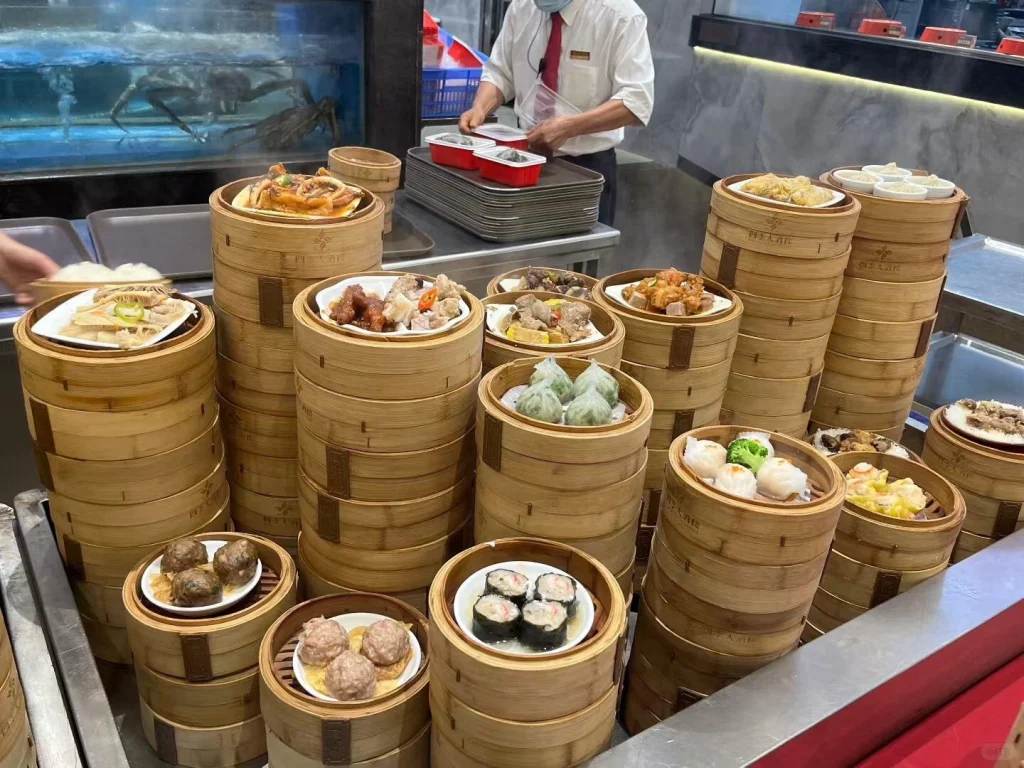
Traditional Pushcart Dim Sum Service – Bamboo steamers stacked with freshly made dim sum at a classic Chinese teahouse, capturing the lively atmosphere of authentic Cantonese morning tea - What Is Dim Sum? A Beginner’s Guide to Chinese Tea Food 2026 - The China Journey - Changsha, A City with History of Chu and Han Culture 2026 - The China Journey
Culture

What Is Dim Sum?

Dim sum is a traditional Chinese style of dining where small dishes are shared with tea, reflecting social culture, slow living, and communal meals.

happy tourists exploring city map diverse travelers sitting in park checking map and planning urban sightseeing route - Changsha, A City with History of Chu and Han Culture 2026 - The China Journey

Plan Your China Trip with Our Experts

Share your travel ideas, and we’ll help you plan a smooth, personalized trip across China.

 
travelers planning route with map group of international tourists reading map outdoors with backpacks and guide - Changsha, A City with History of Chu and Han Culture 2026 - The China Journey
happy tourists exploring city map diverse travelers sitting in park checking map and planning urban sightseeing route - Changsha, A City with History of Chu and Han Culture 2026 - The China Journey

Plan Your China Trip with Our Experts

Share your travel ideas, and we’ll help you plan a smooth, personalized trip across China.

 
travelers planning route with map group of international tourists reading map outdoors with backpacks and guide - Changsha, A City with History of Chu and Han Culture 2026 - The China Journey
happy tourists exploring city map diverse travelers sitting in park checking map and planning urban sightseeing route - Changsha, A City with History of Chu and Han Culture 2026 - The China Journey

Work with Us as a Local Guide in China

travelers planning route with map group of international tourists reading map outdoors with backpacks and guide - Changsha, A City with History of Chu and Han Culture 2026 - The China Journey

We’re looking for experienced, part-time local guides to serve international travelers.

Requirements:

• Fluent in at least one foreign language
• 3–5 years guiding international visitors
• Able to operate in multiple regions in China
• Competitive and reasonable pricing
• Proven customer reviews or testimonials
• Professional, reliable, and responsive
• Flexible availability for custom trips

Hi there!

Just a quick heads-up — a helpful user named Volker let me know that some of the non-English content on this site may not be accurate.

This site is a one-person project I run part-time. I research and publish all the content myself, and the translations are currently done by machine (Google Translate). Balancing accuracy and accessibility across multiple languages is a real challenge.

If you spot any errors, I recommend switching to the English version using the button at the bottom left. I’ll continue working to improve the translations over time.

I truly appreciate your understanding. And if you have any suggestions, feel free to leave a comment — it means a lot to me.

— Anthony 2025.6.18

Xian long image for popup form - Changsha, A City with History of Chu and Han Culture 2026 - The China Journey

Planning a Trip to China?

Changzhou Skyline at Dusk The Changzhou skyline illuminated at dusk, with city lights reflecting on the water and buildings glowing in the evening light. - Changsha, A City with History of Chu and Han Culture 2026 - The China Journey
Do any of these sound familiar from your past trips?
Let our trusted partner travel agency handle the details.
👉 Get a custom plan within your budget and enjoy the best of China — stress-free.