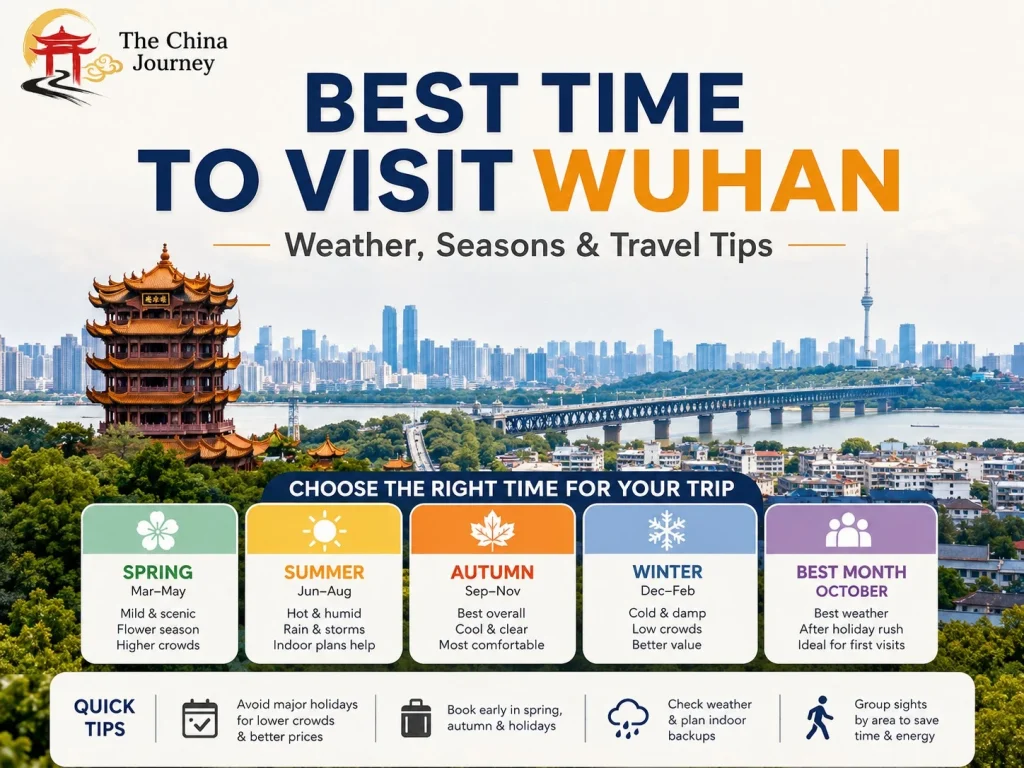
Wuhan’s travel experience changes sharply by season. Spring and autumn are easier for most visitors, while summer and winter require more weather tolerance.
Season / Months | Weather Feel | Travel Experience | Best For | Watch Out For |
|---|---|---|---|---|
Spring / Mar–May | Mild, humid, changeable | Seasonal scenery, outdoor walks, higher crowds | Flower scenery, photography, walking | Rain, short bloom windows, high prices |
Summer / Jun–Aug | Hot, humid, stormy | Harder outdoor travel, better with indoor breaks | Heat-tolerant travelers, flexible plans | Heat, rain, fatigue |
Autumn / Sep–Nov | Clearer, cooler, drier | Most stable and comfortable | First-time visitors, city walks, lake time | Golden Week crowds |
Winter / Dec–Feb | Damp, cold, quieter | Low crowds, lower costs, weaker outdoor comfort | Budget travelers, quiet trips | Wet cold, wind, gray skies |

Spring is one of Wuhan’s most scenic seasons, but it is not the easiest one. Choose it if seasonal scenery matters more than crowd control.

Summer is Wuhan’s most difficult travel season for outdoor sightseeing. It can still work, but only for travelers who can slow down and adjust the day around the weather.
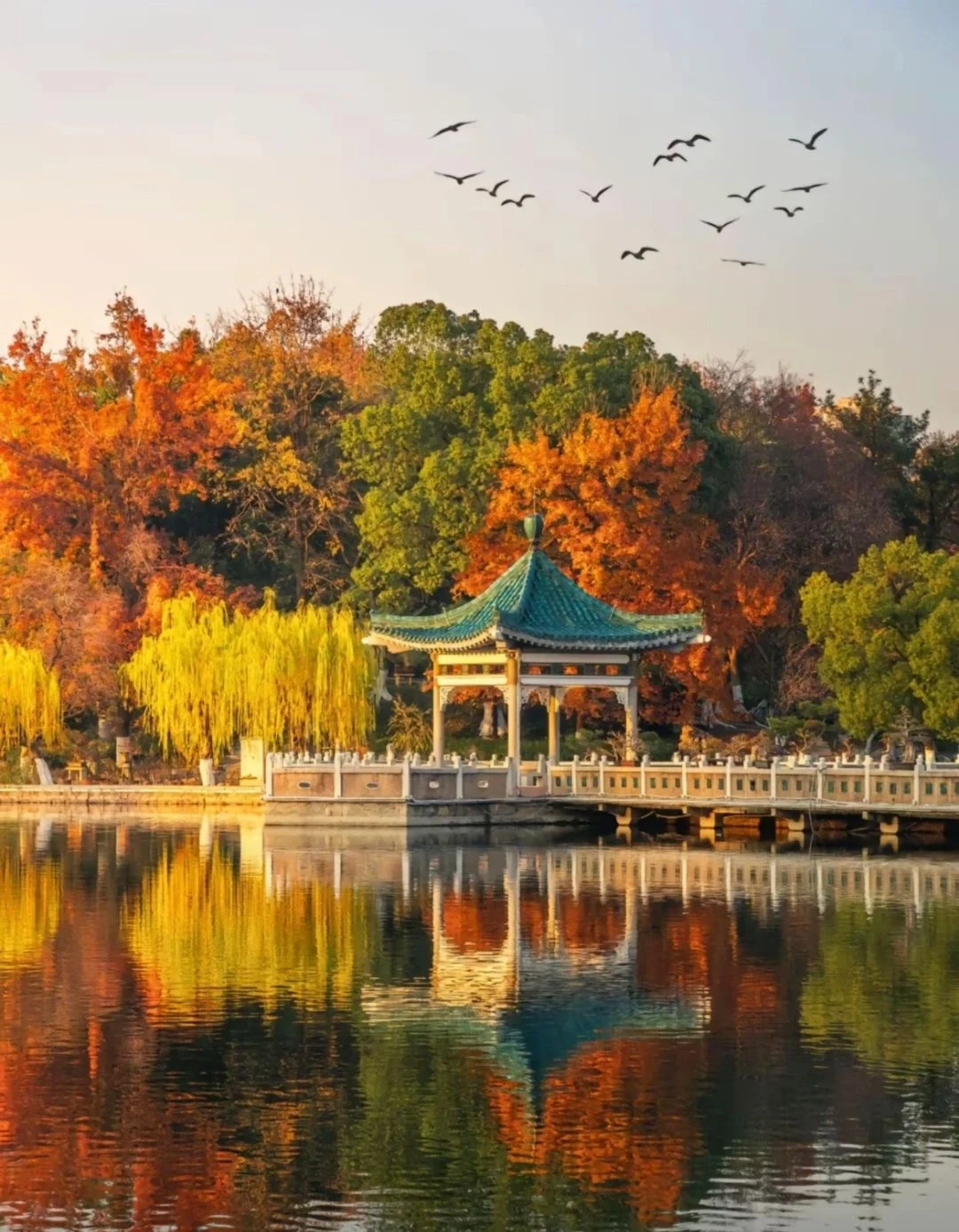
Autumn is the safest default season for Wuhan. Choose it if you want the smoothest balance of weather comfort, route flexibility, and first-time travel value.

Winter is a low-crowd, lower-cost trade-off rather than a comfort-first season. Choose it only if you can handle damp cold or plan a more indoor-focused trip.
Month-by-month timing matters because Wuhan can change quickly within the same season. The safest window is usually after Golden Week through November. Spring is better for scenery; summer and winter need more weather tolerance.
Month | Travel Rating | Weather / Crowd Feel | Best For | Main Concern |
|---|---|---|---|---|
January | ★★☆☆☆ | Damp, cold, quiet, low-cost | Budget trips, indoor culture, low crowds | Wet cold reduces outdoor comfort |
February | ★★☆☆☆ | Cold; holiday crowds and prices can spike | Post-holiday quiet trips, family visits | Spring Festival affects bookings and prices |
March | ★★★☆☆ | Early spring, unstable, crowds begin rising | Early spring atmosphere, flexible travelers | Rain, temperature swings, early booking pressure |
April | ★★★★★ | Mild and scenic, but very crowded | Flower scenery, photography, spring travel | Peak crowds and high hotel prices |
May | ★★★★☆ | Comfortable, warmer later in the month | First-time visitors avoiding peak spring crowds | May Day crowds; late-month heat |
June | ★★☆☆☆ | Humid, rainy, less predictable | Flexible travelers, indoor-heavy plans | Rain risk and sticky weather |
July | ★☆☆☆☆ | Very hot, humid, tiring outdoors | Heat-tolerant travelers only | Midday outdoor travel is difficult |
August | ★☆☆☆☆ | Very hot, humid, storm-prone | Indoor-heavy trips, flexible plans | Heat, storms, fatigue |
September | ★★★★☆ | Improving weather, still warm early | Early autumn travelers, lower-pressure trips | Early-month heat can remain |
October | ★★★★★ | Best weather after Golden Week | Most first-time visitors, city walks, lake time | Avoid October 1–7 crowds and prices |
November | ★★★★☆ | Cool, drier, comfortable, calmer | Autumn travel, good value, lower crowds | Late month can turn cold |
December | ★★☆☆☆ | Damp, cold, quiet, budget-friendly | Low-crowd trips, indoor culture | Gray skies and weaker outdoor scenery |
The worst time means higher weather, crowd, price, or booking pressure. If your dates are fixed, plan earlier and keep each day lighter.


In Chinese astrology, the Fire Ox corresponds to those born in the years of 1937, 1997, 2057, and so on. It belongs to the Fire element in the Five Elements system.

Discover Chinese Buddhism — a fusion of Indian teachings and Chinese philosophy. Explore its temples, art, rituals, and living heritage across China.

Different dynasties led in different areas: Yuan for territory, Tang for culture and global power, Qin for unification, Song for economy, Qing for stability.

Shanghai covers over 6,340 km² with 24 million people. Discover its vast size, population, districts, and role as China’s global megacity.

A steady and insightful 2026 forecast for people born in 1952, covering career, wealth, relationships, health, and practical guidance for stable well-being.

Chengdu’s history spans 4,500 years from ancient Shu civilization to today’s modern hub, marked by irrigation marvels, silk trade, Three Kingdoms legacy, and cultural resilience.