 Written by
Anthony

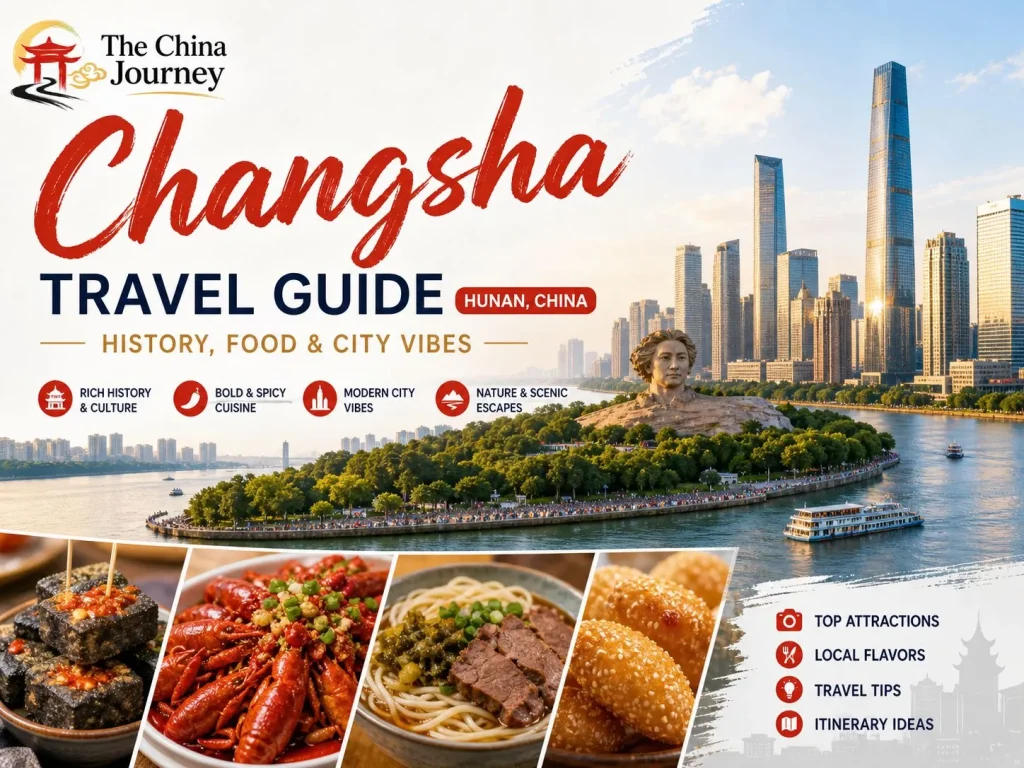
Nestled along the Xiang River, Changsha is the vibrant capital of Hunan Province and a shining gem in China’s Yangtze River Mid-Reaches city cluster.
With over 3,000 years of history, it weaves together the legacy of the Chu and Han dynasties with the rich cultural heritage of the Xiang region, creating a city with a distinct spirit.

Known as the “Star City,” its elegant nickname comes from ancient astronomy—legend says the “Changsha Star” in the sky mirrors this land’s destined greatness.
As a historic Chu-Han city, Changsha witnessed the poetic sorrows of Qu Yuan and the brilliance of statesman Jia Yi.
Today, Changsha pulses with energy as “China’s Entertainment Capital.”
The dynamic spirit of Hunan TV blends seamlessly with the bustling old alleys and neon-lit CBD.
From the millennia-old whispers of Yuelu Academy to the lively nightlife on Jiefang West Road, and from the mysteries of Mawangdui Han Tombs to trendy sculptures atop the IFS skyscraper, Changsha perfectly balances deep history with vibrant modernity.

Changsha experiences a distinctive subtropical monsoon climate with clear four-season changes: mild and moist spring, hot and rainy summer, crisp and refreshing autumn, and damp, cool winter.
The city’s average annual temperature is about 17°C, and the presence of the Xiangjiang River running through adds a subtle humidity that enhances the natural beauty of each season.

Spring in Changsha is like a vibrant painting brought to life by gentle rains.
Temperatures range comfortably from 15°C to 25°C, perfect for leisurely strolls in a light jacket.
Cherry blossoms blanket the paths of Yuelu Mountain in soft pink, while peach blossoms bloom abundantly on Orange Isle’s lawns.
Mornings invite visitors to listen to birdsong mixed with the quiet rustle of pages at Yuelu Academy, afternoons are ideal for picnics by the river breeze on Orange Isle, and evenings lead to charming walks through historic alleys on Taiping Street, filled with the sweet scent of traditional snacks and fresh rain-kissed greenery.

Autumn is arguably the most transparent and picturesque season in Changsha.
The sky stretches wide and brilliantly blue, with humidity dipping to comfortable levels.
Maple leaves on Yuelu Mountain gradually turn red from the foothills upward, and fallen leaves carpet the stone paths near Aiwan Pavilion like golden carpets.
From the summit, the Xiangjiang River gleams like a silver ribbon, with the statue of Mao Zedong on Orange Isle standing solemnly under the warm sun.
On Saturday nights from September to November, spectacular fireworks light up the skies above Orange Isle, their glow reflecting on the river and mingling with neon lights along both banks.
It’s the perfect time to explore the lively night market on Jiefang West Road, savoring spicy crawfish while enjoying the cool evening breeze.
For a nationwide seasonal comparison, see Best & Worst Time to Visit China.
Changsha is well connected to major Chinese cities by air and high-speed rail, making it an easy stop on both regional and cross-country routes.
For a system-level overview of how to travel between cities and regions in China, see our China Transportation Guide.

Changsha Huanghua International Airport (CSX) serves as the city’s main air gateway and a major aviation hub in central China.
It offers direct flights to over 60 domestic and international cities, including Seoul (Incheon), Bangkok (Suvarnabhumi), Hong Kong (Chek Lap Kok), as well as major Chinese cities like Beijing, Shanghai, and Guangzhou.
The airport is located about 25 kilometers from downtown Changsha, with convenient transport options:
Airport Express Line: An economical choice that takes around 40 minutes to reach Wuyi Square, the city’s commercial core.
Metro Line 6: For punctual and efficient travel, this line connects the airport to key city areas in about 50 minutes, including Wuyi Square and Huanghua Airport stations.
Taxi or Ride-Hailing: Ideal for travelers with heavy luggage, a taxi ride to the city center costs approximately 80 RMB and takes about 30 minutes.
For domestic land travel, high-speed rail and conventional trains are popular options:
Changsha South Railway Station: The high-speed rail hub links Changsha to major cities nationwide with precise scheduling. It takes about 5.5 hours to Beijing, 4.5 hours to Shanghai, 2 hours to Guangzhou, and 3 hours to Hong Kong. The station offers seamless connections to Metro Lines 2 and 4, enabling easy access to central locations like Wuyi Square and Orange Isle within 20 minutes.


For routes, tickets, and travel tips, see China’s High-Speed Rail (HSR).

Changsha’s metro system, consisting of 6 lines, forms a dense network that seamlessly connects popular attractions like Orange Isle, Wuyi Square, and Mount Yuelu.
Operating daily from 6:30 AM to 11:00 PM, the metro offers punctual service with affordable fares ranging from 2 to 8 RMB. Tickets can be purchased via single-ride options, the official Changsha Metro app, or mobile payment platforms like Alipay and WeChat Pay.
For example, a quick 10-minute ride on Line 2 from Wuyi Square takes you directly to Orange Isle, where you can step out to enjoy the refreshing riverside promenade.

Buses reach every corner of Changsha, including suburban and rural areas, making them an economical choice for exploring lesser-known spots or residential districts.
With fares at just 2 RMB per ride and convenient payment through Alipay QR codes, buses are ideal for travelers wanting to dive deeper into the local lifestyle.

For greater freedom, taxis and ride-hailing services like DiDi are readily available.
Taxi fares start at 8 RMB for the first 2 kilometers and then 2 RMB per additional kilometer, with taxis easy to hail on the street.
Ride-hailing apps offer transparent pricing and faster booking, especially convenient during rainy weather or late nights.
For instance, a trip from Jiefang West Road to the foot of Mount Yuelu usually costs around 30 to 40 RMB.

Shared bikes from providers like Hello Bike and Meituan are ubiquitous and offer low or no deposit options, making them perfect for short trips.
The dedicated cycling paths around Orange Isle provide scenic rides with river breezes and views of Mao Zedong’s statue and blossoming cherry trees.
At Meixi Lake, green trails wind through lawns and lakesides, inviting riders to pause and relax by the water while admiring the arts center’s iconic “Furong Flower” architecture.

Many areas in Changsha are highly walkable.
The vicinity around Wuyi Square includes connected streets like Huangxing Road, Pozi Street, and Taiping Street, where historic alleys meet bustling shopping areas and tempting street snacks like sugar oil rice cakes.
Orange Isle’s wide, smooth promenade has benches for rest and a scenic tourist train for easy transport.
At Mount Yuelu, winding stone steps lead up past Aiwan Pavilion and ancient temples, rewarding climbers with stunning views at the summit.

Nestled deep in Mount Yuelu, Yuelu Academy is one of China’s four great academies and the longest-running.
Founded in the Northern Song Dynasty over a thousand years ago, its serene courtyards and traditional buildings are surrounded by ancient trees.
The echoes of Zhu Xi and Zhang Shi’s teachings still linger here, and the “Loyalty, Filial Piety, Integrity, and Honor” inscriptions reflect the strong Hunan cultural spirit.
Walking through, you can almost imagine scholars from centuries past engrossed in study.

The Mawangdui tombs belong to the Western Han dynasty chancellor Li Cang’s family.
The remarkably preserved body of Lady Xin Zhui, over 2100 years old, is considered a world marvel.
The Hunan Provincial Museum nearby showcases these treasures, including T-shaped silk manuscripts, exquisite lacquerware, and delicate silk burial garments.
Using AR technology, visitors can virtually explore the tomb and experience ancient burial customs firsthand.

Located in the heart of the Xiangjiang River, Orange Isle stretches like a green silk ribbon.
The most iconic sight is the 32-meter-tall statue of young Mao Zedong gazing into the distance, framed by the flowing river beneath.
In spring, the isle blossoms with cherry trees; in autumn, the swaying reeds create a poetic scene.
On Saturday nights, spectacular fireworks light up the sky, reflecting on the water as cheers fill the air.

About an hour from Changsha by high-speed train, Shaoshan is the revered birthplace of Mao Zedong.
His former home, a traditional farmhouse with blue tiles and mud walls, preserves the original furnishings like the eight-immortal dining table and wooden bed.
The bronze statue in the square faces east, welcoming visitors who come to pay homage.
Nearby, the tranquil bamboo groves of Dripping Water Cave recall Mao’s later years of rest and reflection.

Housed in a modern building on the Xinhe Delta, Changsha Museum holds over 60,000 artifacts tracing the city’s 3,000-year history.
Bronze vessels from the Shang and Zhou dynasties gleam with patina, while Tang dynasty ceramics reveal foreign influences.
Ming and Qing paintings and calligraphy capture the essence of old Changsha.
The rooftop viewing platform offers stunning vistas of the Xiangjiang River and Orange Isle, where history and modern life converge.

Tianxin Pavilion is the last remaining ancient city wall relic in Changsha, its soaring eaves and pointed corners standing like a guardian of the old city.
Climbing to the top, you can see centuries-old bricks engraved with the stories of the Ming and Qing dynasties beneath your feet, while modern skyscrapers loom in the distance, reminding visitors of time’s flow.
Autumn is the best season to visit when the copper bells at the corners chime and the scent of osmanthus fills the courtyard.
The inscription “A Panoramic View of Chu Sky” perfectly captures the majestic view overlooking the city.

Dating back to the Five Dynasties period, Kaifu Temple is an ancient Buddhist sanctuary hidden within a ginkgo forest.
The golden, resplendent Thousand-Hand Guanyin statue stands amid swirling incense smoke and the monks’ chanting echoes softly.
In late autumn, the temple grounds are blanketed by golden fallen ginkgo leaves, where worshippers tread quietly to offer prayers, creating a peaceful blend of spirituality and warmth.

The home of Jia Yi, a celebrated Western Han dynasty scholar exiled to Changsha, has been rebuilt but still radiates a scholarly aura.
His statue in the Grand Preceptor’s Shrine reflects a pensive gaze, as if still composing his famous lament for Qu Yuan.
The ancient cypress trees in the courtyard, some over a century old, stand firm and twisted, as if guarding the solitude of a thousand years.

Huaminglou, the core site of Liu Shaoqi’s hometown, features a modest and dignified residence with gray bricks and tiles.
The memorial hall houses old photos and manuscripts that chronicle his lifelong dedication to the revolution.
Surrounded by evergreen pines and cypresses, the tranquil waters reflect the blue sky, creating an atmosphere so peaceful you can hear your own heartbeat.

Built along the river in Tang dynasty style architecture, Du Fu River Pavilion features flying eaves and intricate bracket sets.
Facing the scenic Yuelu Mountain across the Xiangjiang River, the pavilion offers breathtaking views of riverboats, Orange Isle’s silhouette, and distant city walls, as if framed in a traditional painting.
Legend has it that poet Du Fu once moored here in his later years and penned the verses “Drunk at night on Changsha wine, walking at dawn by Xiang River spring.”
Standing in the same spot today, one can still feel the poetic spirit carried by the river breeze.
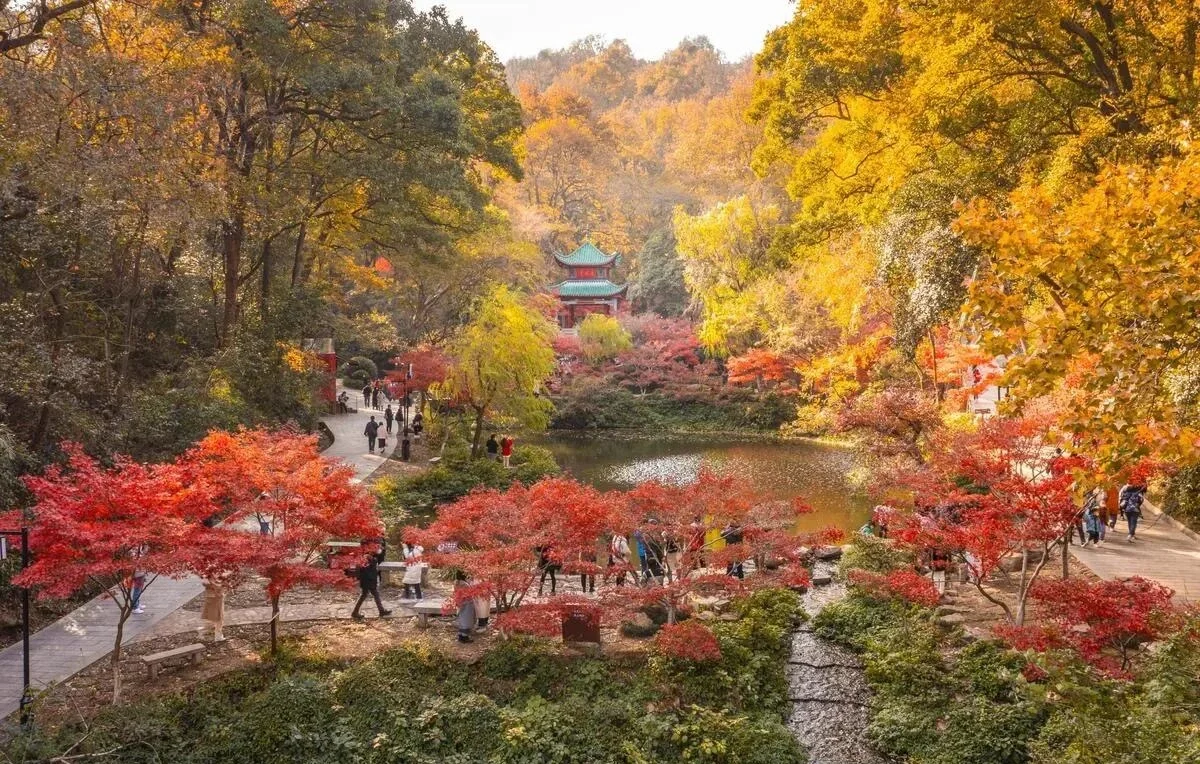
Known as Changsha’s “green lung,” Yuelu Mountain rises 300.8 meters yet holds endless surprises.
The vibrant red pillars and yellow tiles of Aiwan Pavilion stand out amid autumn’s fiery maple leaves, evoking the poetic scene described by Du Mu.
Winding hiking trails pass ancient temples, clear springs, and cliff carvings.
From the summit’s viewing corridor, you can overlook the entire city — the Xiangjiang River cuts through, with Orange Isle like a green ribbon, while old and new districts unfold beneath your feet.

A modern urban park spanning 2,000 acres of shimmering water, Meixi Lake is a city gem.
The Zaha Hadid-designed cultural and arts center resembles a blooming hibiscus, with light and shadow flowing over its curved walls by day and glowing like a jewel at night.
The lakeside greenway is perfect for cycling, framed by blossoming peach trees in spring and golden ginkgo paths in autumn.
When tired, relax at a lakeside café and watch black swans glide gracefully across the water.

Located about 1.5 hours from Changsha, Dawei Mountain is a natural oxygen bar.
Waterfalls cascade over chestnut-wood bridges through dense forest, and the crystal-clear waters of Yuquan Lake invite serenity.
Wind turbines spin atop Qixing Ridge, adding a modern touch to the lush landscape.
With average summer temperatures around 23°C, it’s a cool retreat, while autumn’s fiery foliage paints the hillsides like a spilled palette.
Hiking here fills the air with the scent of pine resin.

Covering 2,400 acres, Songya Lake is a mirror reflecting the city’s edge.
Rent a small boat to glide across the lake and watch waterbirds take flight among the reeds.
Its 10-kilometer cycling path is lined with cherry blossoms in spring and fluffy reed flowers in autumn.
Popular with families, the park offers open lawns for kite flying and sandy beaches for children to play.
As the sun sets, the golden light bathes the lake, making every snapshot feel like a fairy tale.

A lesser-known gem featuring Changsha’s “Shiyan Lake,” Wangyue Park offers willow-lined shores and mysterious Han dynasty tombs nestled on its hills.
Quiet and understated, its spring cherry blossoms and autumn red maples enchant visitors.
Locals love to stroll here — early mornings see elders practicing Tai Chi, while parents feed swans with their children, creating a peaceful, timeless scene.

Known as Changsha’s “miniature world,” this theme park showcases detailed models of global landmarks like the Egyptian pyramids and the Eiffel Tower.
Beyond sightseeing, thrill-seekers can enjoy exciting rides such as roller coasters and giant pendulums.
During the day, explore the “International Street” to snap photos that make you feel like you’re abroad, and at night, the spectacular fireworks show and lively parties keep the whole family entertained.

A perfect destination for family fun, Ocean World captivates kids with its underwater tunnel where sharks swim overhead and rays wave their “wings” as if greeting visitors.
The dolphin performance arena delights with smart dolphins jumping through hoops and balancing balls, making children squeal with joy.
Don’t miss the penguin exhibit, where adorable waddling penguins melt everyone’s hearts.

Known as Changsha’s “cosmic center,” Wuyi Square is where locals and tourists flock.
The iconic KAWS sculpture at IFS International Finance Square always draws selfie lines, surrounded by trendy fashion boutiques, luxury brands, and popular eateries.
When you need a break, head to “Super Wenheyou,” a retro-style food hall that recreates the 1980s street scene and serves authentic spicy crayfish—eat, sip, and soak up the nostalgic vibes of old Changsha.

Changsha’s cuisine pulses with fiery freshness, deeply rooted in the city’s soul.
The essence of Hunan cuisine lies in three words: fresh, aromatic, and spicy.
Each dish celebrates the pure taste of local ingredients, with layers of flavor from chopped chili’s sharp heat, fermented black beans’ rich depth, and perilla’s fragrant notes.
Every bite feels like a burst of fireworks on the tongue — vibrant, bold, and unforgettable.

The king of “dark cuisine,” stinky tofu is crispy on the outside and tender inside.
Fried to a golden perfection, it’s punctured and stuffed with garlicky chili sauce.
The first crunchy crack leads to silky tofu paired with a fiery kick.
This pungent aroma drifts through Changsha’s streets, impossible to resist.
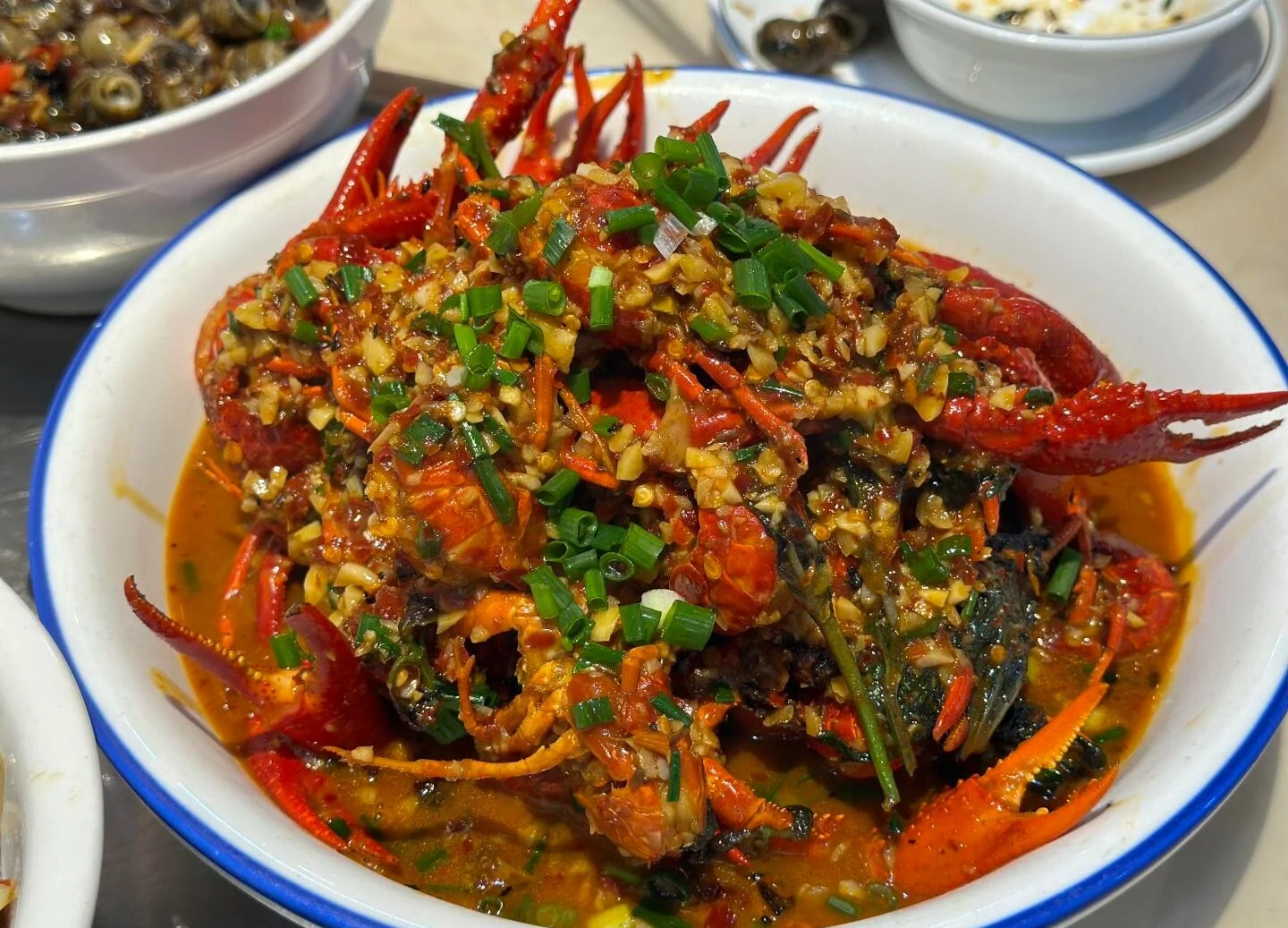
A summer night staple, these bright red crawfish are coated in secret spicy marinade.
The blend of numbing, spicy, fresh, and aromatic flavors explodes in your mouth.
Slurp the rich roe, dip the peeled meat in sauce, and wash it down with a cold beer.
Night markets at Sifangping and Dongguashan are always buzzing with diners savoring this fiery feast.
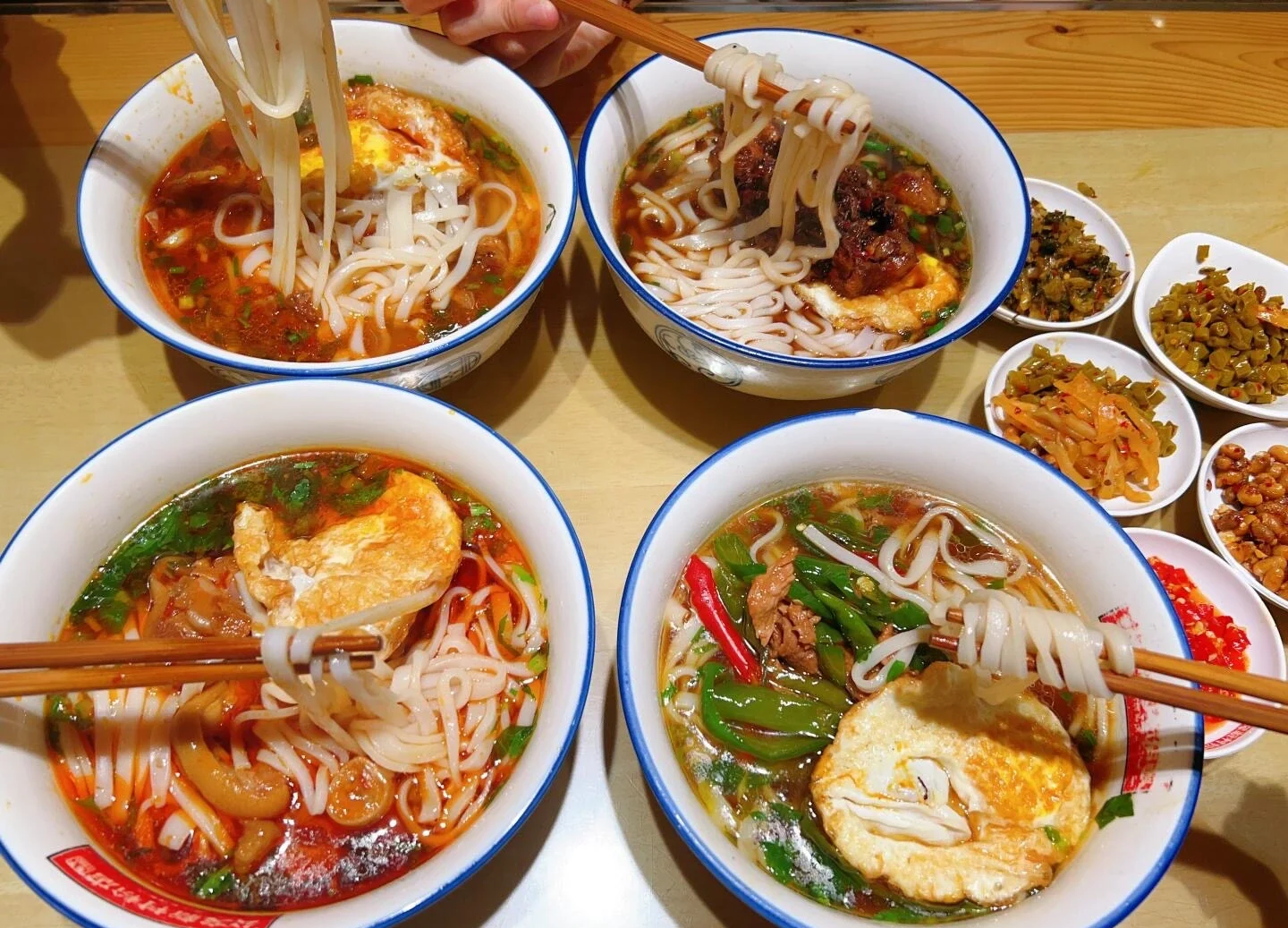
A morning ritual, Hunan rice noodles shine at famous spots like Heji Noodle House.
The beef broth is creamy and rich, hand-pulled noodles tender yet chewy, topped with stewed beef and crunchy pickled mustard greens.
The satisfying slurp echoes the city’s everyday life and warmth.

A nostalgic sweet treat from old Changsha, these sticky rice balls are fried until golden and coated in caramelized sugar.
Crispy outside, soft inside, they’re sweet without being overpowering.
Street vendors push carts with these hot delights, tempting passersby to take a bite despite the heat.

A classic Hunan “hard dish,” this tender fish head soaks up the sharp, spicy chopped chili sauce perfectly.
The steamed meat melts in your mouth, and the flavorful broth is perfect for soaking into steamed rice—three bowls no problem.
When this dish hits the table, you know the real meal has begun.
See also: What to Eat in Changsha

A historic food hub where you can sample stinky tofu, sugar oil baba, Mao-style braised pork, and more.
The traditional setting often hosts local Xiang opera performances, blending culture with cuisine for a full sensory experience.

Filled with small eateries hiding delightful surprises, from the iconic black stinky tofu to the famous old Changsha sausages.
Walking here, you can snack as you go, and near Jia Yi’s former residence, refresh your palate with a cup of perilla peach ginger tea—perfect for cooling down the heat.

Local favorites with spicy sausage grilled to juicy perfection, paired with garlicky small chili peppers—fiery enough to make you dance but too good to stop eating.
The night markets come alive with crawfish, crab claws, snails, and ice-cold mung bean drinks, creating the perfect spicy-and-cool night vibe.

A local secret known for its smoky, oily sausages and potent chili sauces.
Pair these with the sweet-tart perilla peach ginger drink for a complete flavor journey.
Choosing the right area to stay can greatly enhance your Changsha experience, whether you seek the vibrant city center, a peaceful cultural neighborhood, or convenient transport links.
Here are some top neighborhood recommendations to suit different travel styles:

Recommended Hotel: Niccolo Changsha at IFS
This iconic luxury hotel is located right inside the IFS International Finance Square.
Step downstairs to Huangxing Road Pedestrian Street and Wuyi Square Metro Station, with famous food streets like Pozi and Taiping within walking distance.
The modern design offers city skyline views from some rooms, while the rooftop bar is perfect for nighttime panoramas.
Ideal for shoppers and nightlife lovers, this spot puts the city’s vibrant energy right at your doorstep.

Recommended Hotel: Changsha Meixi Lake Jumeirah Luxury Collection
This lakeside luxury hotel near Meixi Lake sits beside Zaha Hadid’s iconic Culture and Arts Center.
Metro Line 2 connects you easily to Tianxin’s vibrant food streets and nightlife.
Enjoy elegant rooms with stunning lake views, diverse dining options, and a relaxing indoor infinity pool.
Perfect for guests wanting a stylish retreat close to Tianxin’s culinary and entertainment hotspots.

Recommended Hotel: Changsha Xianglu Mountain Villa
Set near Changsha’s government area and Xiangjiang New Area, this villa-style hotel offers a peaceful escape with easy access to downtown.
With 65 well-appointed rooms and lush gardens, it’s ideal for travelers wanting to explore Yuelu Mountain and nearby universities.
A quiet, refined base blending comfort and culture.

Recommended Hotel: Vienna International Hotel Changsha South Station
Just 1 km from Changsha South Railway Station, a 10-minute walk or one-stop metro ride on Line 2, this hotel is ideal for travelers arriving or departing by high-speed train.
It offers spacious, clean rooms and shuttle services to and from the station.
With supermarkets and local restaurants nearby, it covers all your accommodation needs with convenience and value.
From here, it takes just 20 minutes by metro to Wuyi Square, balancing ease and affordability for short trips.
See also: Where to Stay in Changsha
Changsha’s surrounding region is rich with spectacular natural wonders and cultural gems, perfect for day trips or short getaways.
Here are some top nearby destinations worth exploring:

Known as the inspiration for the floating “Hallelujah Mountains” in Avatar, this UNESCO World Heritage site offers breathtaking quartz sandstone pillars shrouded in mist.
Take the Bailong Elevator to soar from the base to the summit in just 66 seconds, and wander through the scenic Yuanjiajie area where the iconic “Southern Sky Column” pierces the clouds.
Don’t miss the crystal-clear waters of Golden Whip Stream, where playful monkeys often make appearances.
For a thrill, walk the glass skywalk at Tianmen Mountain, suspended 1,430 meters above ground, and marvel at the awe-inspiring Tianmen Cave, a natural “gate to heaven.”
Spend 2-3 days here to fully experience the magical landscape, stay in traditional stilted inns nearby, and catch sunrise over the peaks and starry nights filled with nature’s sounds.

This charming riverside town is famous for its wooden stilt houses lining the Tuojiang River.
In the early morning mist, the ancient town looks like a traditional Chinese ink painting.
Wander the cobblestone streets visiting Shen Congwen’s former residence and immerse yourself in the stories of the famous novel Border Town.
Watch local Miao artisans embroider silver jewelry that glimmers in the sunlight.
At dusk, take a boat ride on a black-sailed wooden boat as lanterns light up the riverbanks, reflecting beautifully on the water’s surface.
Sample spicy and sour Miao-style fish soup and cured meats at the bustling Hongqiao Night Market.
If visiting during a Miao festival, enjoy traditional dances and the delightful clinking of silver ornaments.

Famous for the majestic Dongting Lake and the historic Yueyang Tower, this city offers stunning panoramic views from the three-story wooden tower, built without nails using traditional mortise and tenon techniques.
The famous essay Memorial to Yueyang Tower by Fan Zhongyan is etched inside, inspiring visitors with its timeless call to duty.
From the top, gaze out over the vast misty lake dotted with fishing boats and the lush green Junshan Island.
Don’t miss tasting the local Dongting silverfish—transparent and delicate—prepared either fried with eggs or in soup, alongside savory grilled skewers paired with local beer.
The lakeside breeze completes this peaceful and flavorful experience.

One of China’s Five Great Mountains, Nanyue Hengshan is renowned for its magnificent peaks and rich Buddhist and Taoist heritage.
Take the scenic shuttle to the South Heavenly Gate and hike to the summit, passing ancient temples like Fuyan Temple with its golden ginkgo trees and Nantai Temple where temple bells resonate.
The mountain’s cool summer temperatures (average 25℃) make it a perfect escape from the heat, with waterfalls and streams providing a refreshing soundtrack.
In winter, the snow-covered slopes and bright red temple walls create a stunning ink-painting scene.
At the peak, the bustling Zhuru Pavilion offers a spiritual atmosphere with incense smoke rising, while the observation deck reveals endless rolling mountains bathed in mist, as if reaching out to touch the sky.
These itineraries focus on Changsha and its surrounding region. For travelers planning a multi-city trip across China, China Travel Guide offers a nationwide route overview.

Start your morning wandering through the misty trails of Mount Yuelu.
Enter Yuelu Academy through its iconic red gates, where ancient scholars once gathered.
Climb up to Aiwan Pavilion, surrounded by autumn leaves and serene mountains.
For lunch, savor a bowl of beef rice noodles at Heji Noodle Shop near Hunan University.
In the afternoon, visit the Hunan Provincial Museum—book in advance to see Lady Xinzhui’s remarkably preserved tomb and experience AR technology bringing the Han tomb to life.
End your day at Orange Island, strolling along the riverside to Mao’s youth statue.
If it’s Saturday, enjoy the spectacular fireworks lighting up the Xiang River at night.
Finish with local street food on Pozi Street—crispy stinky tofu, sweet sugar oil rice cakes, and spicy snails to cap off the evening.

Begin at Tianxin Pavilion, where ancient city walls meet the modern skyline.
Walk to Jia Yi’s Former Residence, absorbing the quiet scholarly atmosphere.
Lunch along Taiping Street with classic stinky tofu and savory local sausages, complemented by refreshing perilla peach ginger drink.
Spend the afternoon at IFS Mall, snapping photos with the famous KAWS sculpture and shopping for trendy souvenirs along Huangxing Road Pedestrian Street.
As night falls, dive into the vibrant nightlife of Jiefang West Road with live rock shows and neon-lit bars.
Late-night street food stalls offer delicious stir-fried rice noodles and cold beer—the perfect way to experience Changsha’s lively “city that never sleeps.”

Take a morning high-speed train to Shaoshan, Mao Zedong’s hometown.
Tour his modest clay and tile home, listen to stories of his youth, and visit the solemn statue plaza.
Explore Dripping Water Cave, where Mao penned famous lines surrounded by tranquil bamboo groves.
Return to Changsha for dinner at Dongguashan Night Market—try the crispy grilled meat sausages coated in spicy garlic chili and cool down with tangy perilla peach ginger drink.
Grab some crispy fried snacks while soaking up the authentic local vibe.

Spend the morning at Meixi Lake, admiring Zaha Hadid’s lotus-inspired cultural arts center and cycling the scenic lakeside path, where black swans glide peacefully and seasonal flowers bloom.
Head to Yanghu Wetland Park in the afternoon, walking wooden boardwalks through reeds and learning about wetland wildlife at the ecology center.
Families will enjoy kite flying and relaxing by the water’s edge.
End the day with dinner at Wenheyou (Hisense Plaza), an 80s-themed food court serving spicy crayfish and classic local dishes amid nostalgic neon lights and vintage decor.

Days 1-2: Follow the 1-2 day Changsha itinerary to explore the city’s highlights and savor its famous snacks like stinky tofu and sugar oil rice cakes.
Days 3-5: Head to Zhangjiajie for a magical hiking experience in the “Avatar Mountains.” Walk the glass skywalk on Tianmen Mountain, explore Yuanjiajie’s floating peaks, and trek alongside Golden Whip Stream where monkeys play. Stay in traditional hillside lodges to catch spectacular sunrises and tranquil evenings surrounded by nature.
Days 6-7: Travel by car to Fenghuang Ancient Town. Wander through riverside stilt houses lit by lanterns at night, stroll along quiet morning mist-covered streets, and visit historic sites like Shen Congwen’s former home. Enjoy Miao ethnic culture, savor local delicacies, and soak in the town’s timeless charm as you watch sunset by the river while listening to folk songs.
To understand daily expenses across different Chinese cities, see Cost of Travel in China.
For first-time visitors, see China Travel Tips: The Best Guide You Can Find.


Discover Jiangsu, a land of Wu charm and Han elegance, with scenic lakes, rich culture, historic treasures, and renowned local delicacies.

A warm, steady 2026 forecast for people born in 1953, covering career, finances, relationships, health, and practical guidance for peaceful, balanced living.

The Wood Rooster corresponds to the years 1945, 2005, and 2065 (Nayin “Spring Water”). In the Five Elements system

Explore the vibrant world of Wu Opera, a traditional Chinese theater art known for its intricate costumes, expressive makeup, and powerful storytelling.

The Fire Rooster corresponds to the years 1957, 2017, and 2077, with the Nayin of “Mountain Fire.” In the Five Elements system

Explore the vibrant world of Chinese New Year prints (年画), from folk traditions to modern styles, rich in symbolism, blessings, and festive charm.

Share your travel ideas, and we’ll help you plan a smooth, personalized trip across China.

Share your travel ideas, and we’ll help you plan a smooth, personalized trip across China.
We’re looking for experienced, part-time local guides to serve international travelers.
Requirements:
• Fluent in at least one foreign language
• 3–5 years guiding international visitors
• Able to operate in multiple regions in China
• Competitive and reasonable pricing
• Proven customer reviews or testimonials
• Professional, reliable, and responsive
• Flexible availability for custom trips
Hi there!
Just a quick heads-up — a helpful user named Volker let me know that some of the non-English content on this site may not be accurate.
This site is a one-person project I run part-time. I research and publish all the content myself, and the translations are currently done by machine (Google Translate). Balancing accuracy and accessibility across multiple languages is a real challenge.
If you spot any errors, I recommend switching to the English version using the button at the bottom left. I’ll continue working to improve the translations over time.
I truly appreciate your understanding. And if you have any suggestions, feel free to leave a comment — it means a lot to me.
— Anthony 2025.6.18


