Written by
Anthony

Welcome to Chengdu, a city full of history, culture, and some of the best food you’ll ever taste. Founded over 2,300 years ago, Chengdu is one of China’s oldest cities and is known as the birthplace of the ancient Shu civilization. Walking through its streets, you can feel the deep roots of history all around you.
But Chengdu isn’t just about the past. It’s famous for its relaxed way of life — locals call it the “slow life.” Here, people take time to enjoy the little things, whether it’s sipping tea in a cozy teahouse or watching a traditional Sichuan opera. It’s a perfect place to slow down, unwind, and soak in the city’s unique vibe.
Food lovers, get ready! Chengdu is recognized worldwide as a UNESCO City of Gastronomy, and for good reason. From spicy hotpot to savory snacks, its culinary scene is vibrant, diverse, and absolutely delicious. Whether you’re a foodie or just curious, Chengdu’s flavors will leave you wanting more.
Choosing the right time to visit Chengdu can make your trip even more enjoyable. Here’s a quick guide to what each season offers:
Spring is a wonderful time to explore Chengdu. With mild temperatures between 15 and 25°C (59–77°F), it’s perfect for outdoor adventures. Don’t miss the cherry blossom season, when parks and streets bloom in soft pinks, creating a magical atmosphere.
Summers in Chengdu are warm, ranging from 25 to 32°C (77–90°F). It’s a great season to escape the city heat by heading to nearby mountains like Mount Qingcheng or taking a relaxing river cruise. Just be prepared for occasional rain showers.
Autumn brings pleasant weather, with cooler temperatures and less humidity. This season is ideal for visiting Chengdu’s historical sites and enjoying local festivals. The comfortable climate makes sightseeing a breeze.
Winters are cool but not too cold, averaging 5 to 15°C (41–59°F). It’s the perfect time to cozy up with a steaming bowl of spicy Sichuan hotpot and experience Chengdu’s rich cultural events. Plus, the city is less crowded, giving you a more relaxed vibe.
For a broader, country-wide seasonal overview, see Best & Worst Time to Visit China.
Traveling to and around Chengdu is convenient with multiple options for international, domestic, and city transport.
For a system-level overview of how to travel between cities and regions in China, see our China Transportation Guide.
Shuangliu International Airport (CTU)
One of China’s busiest airports, offering direct flights to over 130 cities worldwide. In 2023, it ranked second nationwide with 50.2 million passengers.
Tianfu International Airport (TFU)
Focused mainly on international flights, connecting Chengdu to global hubs like Paris and London. Conveniently linked to the city center by Metro Line 18.
Fast connections to nearby cities include:
Chongqing in 1.5 hours
Xi’an in 4.5 hours
Emei Mountain in 1 hour
Major train stations like Chengdu East and Chengdu South serve as key transport hubs.
For a full overview of routes, tickets, and stations, see China’s High-Speed Rail (HSR).
Metro System: With 13 lines covering core attractions, including transfer hubs at Chunxi Road and Tianfu Square, metro fares range from 2 to 10 RMB.
Chengdu offers a rich mix of history, nature, and modern city life. Whether you’re a history buff, nature lover, or urban explorer, there’s something here for you.
Wuhou Shrine & Jinli Ancient Street
Visit the only shrine in China that honors both ruler and minister together. At night, stroll through Jinli’s lantern-lit streets and enjoy a lively Three Kingdoms-themed night market, including the famous Sichuan opera face-changing performances.
Du Fu Thatched Cottage
Explore the former residence of the great Tang dynasty poet Du Fu. The 19-hectare garden-style museum is stunning, especially in spring when cherry blossoms bloom against the iconic red walls.
Mount Qingcheng & Dujiangyan Irrigation System
This UNESCO World Heritage Site offers Taoist temple hikes on Qingcheng Mountain, paired with a visit to Dujiangyan — an ancient irrigation marvel that’s been operating for over 2,200 years.
Chengdu Research Base of Giant Panda Breeding
The world’s largest panda breeding center. Arrive early between 7:30 and 9:00 AM to watch adorable panda cubs nursing — arriving an hour early to queue is recommended.
Xiling Snow Mountain
Just 1.5 hours from downtown Chengdu, this mountain offers Asia’s largest ski resort in winter and a refreshing escape with average 22°C temperatures in summer.
Dongjiao Memory
A trendy industrial-style cultural park transformed from an old electronic tube factory, hosting music events and contemporary art exhibitions.
Kuan Zhai Alleys (Wide and Narrow Alleys)
These Qing dynasty streets showcase three distinct lifestyles — leisure in Wide Alley, slow-paced living in Narrow Alley, and bustling daily life in Well Alley. Don’t miss trying traditional tea served in lidded bowls and the unique ear-cleaning experience.
People’s Park
The epitome of Chengdu’s relaxed lifestyle. Sip traditional “big bowl tea” at the century-old Heming Teahouse while watching classic Sichuan opera lantern shows.
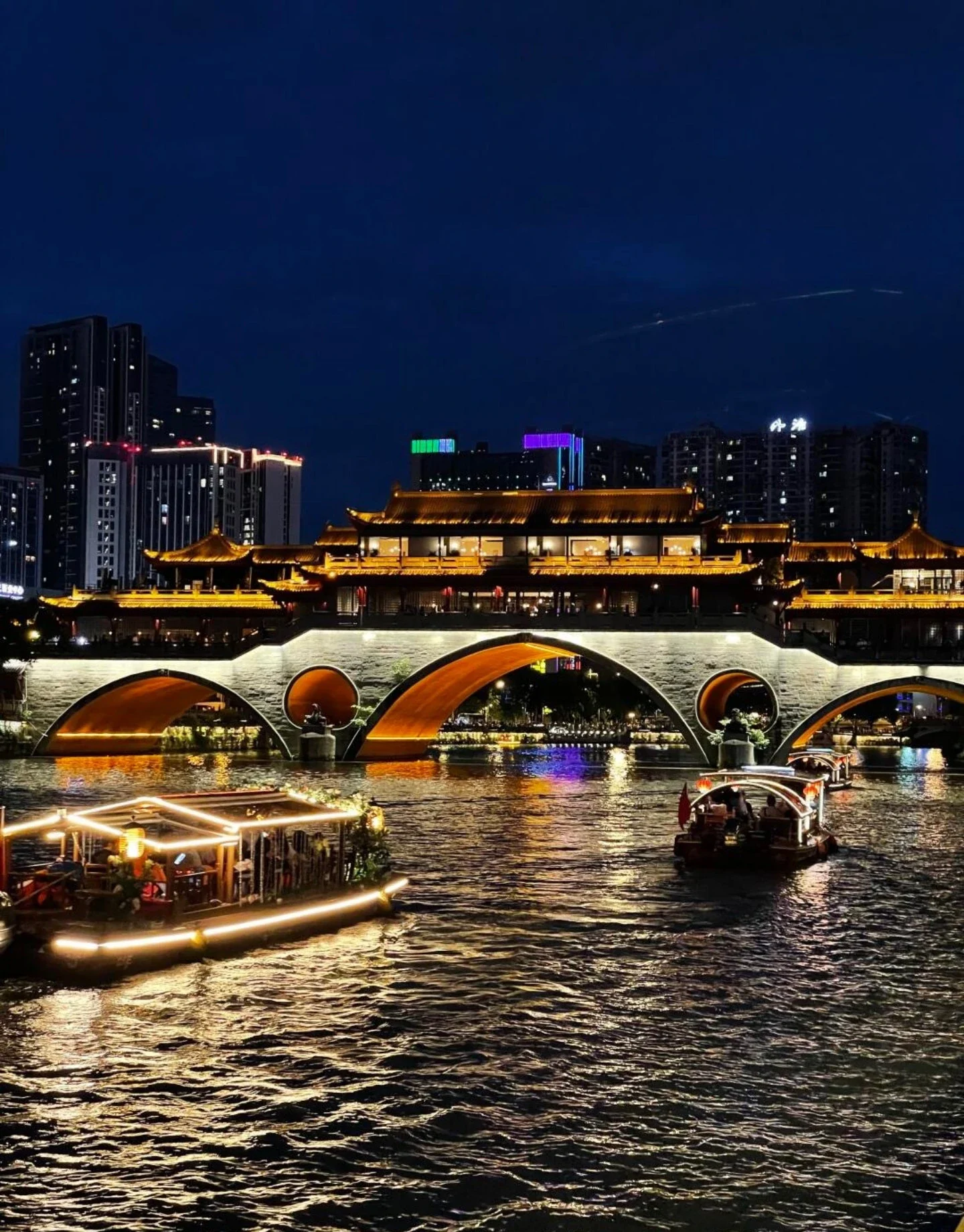
Jiu Yan Qiao (Nine Eyes Bridge) Bar Street
Located along the Jin River, this vibrant nightlife spot offers riverside bars and night cruises for a romantic and lively “Night Chengdu” experience.
Chengdu IFS (International Finance Square)
The iconic landmark of the Chunxi Road shopping district, famous for its 7th-floor rooftop sculpture of a “Climbing Panda” — a beloved city mascot.
Sichuan Museum
The largest comprehensive museum in Southwest China, featuring permanent exhibitions like Zhang Daqian’s paintings and Tibetan Buddhist artifacts.
Luhu Ecological City
A modern art community with scenic spots like Red Stone Park and Cloud Park, ideal for photography, plus the A4 Art Museum showcasing avant-garde exhibitions.
To see how Chengdu compares with other major destinations nationwide, refer to Best Places & Cities to Visit in China.
If Chengdu is part of a longer multi-city journey—especially across Southwest China—see the China Travel Guide for a structured overview of regions, routes, and travel styles nationwide.
Chengdu is a food lover’s paradise, famous worldwide for its bold, spicy flavors and rich culinary traditions. Here are some must-try dishes when you visit.
Nothing says Chengdu like a bubbling Sichuan hotpot. Dive into a pot full of spicy, numbing broth where you can cook fresh meats, vegetables, and tofu. The fiery flavors will awaken your taste buds and give you a true taste of Sichuan cuisine.
These two iconic dishes are staples of Sichuan cooking. Mapo tofu is a flavorful mix of silky tofu, minced meat, and spicy chili bean paste, while Kung Pao chicken offers a perfect balance of heat, sweetness, and crunch from peanuts.
Don’t miss the lively street food scene. Try the famous dan dan noodles, a spicy noodle dish with savory sauce, or grab some spicy skewers grilled to perfection. These snacks are perfect for tasting local flavors on the go.
See also: What to Eat in Chengdu
Chengdu offers a wide range of hotels to suit every traveler’s taste and budget. Based on real traveler reviews from popular Chinese platforms like Meituan, Ctrip, and Dianping, here are some top picks to help you choose the perfect stay.
Located in Qingyang District, this hotel is just an 8-minute walk to Wenshu Monastery and offers direct metro access to Luomashi Station. Guests enjoy city view rooms with smart controls, free laundry, and family-friendly options. It’s only a 5-minute walk from the subway and close to Kuixinglou food street — perfect for exploring local flavors.
Situated in the High-Tech Zone, this designer hotel blends Sichuan and Western styles and features giant screen projectors, capsule coffee machines, and a rooftop bar. It’s just a 3-minute walk to Century City Station and near the Global Center. Travelers praise its excellent design and rich breakfast options.
Located in Jinjiang District beside the Jin River and a 5-minute walk to Chunxi Road, Wanda Reign offers river view rooms, smart toilets, private services, and Michelin dining. It’s known for ultimate luxury and top-notch service.
Right in the heart of Jinjiang District on Chunxi Road South, this hotel boasts an executive lounge, stunning skyline views, state-of-the-art B&O sound systems, and a Michelin hot pot restaurant. Guests love its flawless service and outstanding dining experience.
See also: Where to Stay in Chengdu
Chengdu offers a vibrant mix of shopping and entertainment, blending modern luxury with rich cultural experiences. Whether you want to shop, dine, or enjoy live performances, Chengdu has it all.
This sleek, modern shopping complex features a wide range of international brands, stylish boutiques, and trendy cafes — perfect for a day of retail therapy in the heart of the city.
Step onto this charming pedestrian street and discover traditional crafts, local snacks, and souvenirs. It’s a great place to soak up Chengdu’s historic atmosphere while tasting authentic flavors.
As evening falls, head to this lively riverside bar street. Enjoy live music, stunning water views, and a buzzing nightlife scene popular with both locals and visitors.
Don’t miss the chance to see a traditional Sichuan opera, famous for its incredible face-changing and fire-spitting acts. These performances are a thrilling glimpse into the region’s rich artistic heritage.
Whether you have just a few days or a full week, these suggested itineraries will help you make the most of your time in Chengdu.
Visit the famous Panda Base to see these adorable creatures up close. Then stroll through the historic Kuan Zhai Alley, a perfect spot for tea and local snacks. End your day exploring Jinli Street, full of traditional shops and lively street food.
Dive into history with visits to Wuhou Shrine, the Du Fu Thatched Cottage, and the Sichuan Museum — a rich cultural day.
Head out for a nature day with a hike at Mount Qingcheng, followed by a tour of the ancient Dujiangyan Irrigation System. Wrap up your trip with a delicious local hot pot dinner.
Discover spiritual and artistic heritage at Wenshu Monastery, then explore the Chengdu Museum and relax in People’s Park.
Experience mountain adventure at Xiling Snow Mountain, followed by a guided tour sampling authentic local cuisine.
Travel to see the awe-inspiring Leshan Giant Buddha, then hike the scenic trails of Mount Emei.
Take a day trip to Chongqing, enjoy the bustling city sights, and cap off with a spicy hot pot experience.
To compare daily travel costs across different cities in China, see Cost of Travel in China.
Before you set off to explore Chengdu, here are some useful tips to make your trip smooth and enjoyable.
Mandarin is the official language in Chengdu. While many people in tourist areas speak some English, learning a few basic Mandarin phrases can go a long way to help you communicate and connect with locals.
The currency used in Chengdu is the Chinese Yuan (CNY). Credit cards are widely accepted in big stores and hotels, but it’s handy to carry some cash for smaller shops and street markets.
Chengdu is known as a safe city for travelers. Usual travel precautions apply—keep an eye on your belongings, especially in crowded places, and avoid poorly lit areas at night.
Some international websites and apps are restricted in China. To stay connected with your favorite online services, consider setting up a VPN before your trip.
For first-time visitors and general planning advice, see China Travel Tips: The Best Guide You Can Find.
If you have extra time, these nearby destinations offer unforgettable experiences just a short trip from Chengdu.
About two hours from Chengdu, the Leshan Giant Buddha is a UNESCO World Heritage Site and the world’s largest stone Buddha statue. You can explore the site by foot or take a scenic boat ride to admire the statue from the river.
One of China’s Four Sacred Buddhist Mountains, Mount Emei offers beautiful hiking trails, ancient temples, and stunning natural scenery. It’s a perfect spot for both spiritual reflection and outdoor adventure.
Step back in time at Huanglongxi, a well-preserved ancient town featuring Qing dynasty architecture, narrow streets, and traditional teahouses. It’s a peaceful place to experience authentic Sichuan culture away from the city buzz.

Learn the 1992 Water Monkey dates, Ren-Shen meaning, Sword-Edge Metal Na Yin, traditional personality traits, compatibility, and zodiac boundaries.
Plan a winter trip to China with the best places for snow, culture and winter sun, plus December–February weather, Chinese New Year, routes and packing tips.

Plan spring travel in China with the best places, March–May weather, flower timing, Qingming and May Day crowds, routes, packing and practical tips.

Discover what to eat in Hangzhou, from West Lake fish and Dongpo pork to noodles, snacks, prices, areas, and ordering tips.

Discover the 1988 Earth Dragon dates, Wu-Chen meaning, Great Forest Wood Na Yin, personality traits, compatibility, and zodiac boundaries explained clearly.

Find the best area to stay in Fuzhou for first-time visits, old-town walks, city stays, and practical rail or airport stopovers.
Share your travel ideas, and we’ll help you plan a smooth, personalized trip across China.
We’re looking for experienced, part-time local guides to serve international travelers.
Requirements:
• Fluent in at least one foreign language
• 3–5 years guiding international visitors
• Able to operate in multiple regions in China
• Competitive and reasonable pricing
• Proven customer reviews or testimonials
• Professional, reliable, and responsive
• Flexible availability for custom trips
Hi there!
Just a quick heads-up — a helpful user named Volker let me know that some of the non-English content on this site may not be accurate.
This site is a one-person project I run part-time. I research and publish all the content myself, and the translations are currently done by machine (Google Translate). Balancing accuracy and accessibility across multiple languages is a real challenge.
If you spot any errors, I recommend switching to the English version using the button at the bottom left. I’ll continue working to improve the translations over time.
I truly appreciate your understanding. And if you have any suggestions, feel free to leave a comment — it means a lot to me.
— Anthony 2025.6.18