
 Written by
Anthony
If you’re curious about the world’s oldest living civilization, you’re in the right place. Chinese history isn’t just about emperors and battles—it’s a story of invention, culture, and transformation that has shaped both Asia and the modern world.
From ancient bronze tools and the Silk Road to paper, gunpowder, and the Great Wall, China has always been a center of innovation. It’s one of the few places on Earth where a single culture has continued, evolved, and thrived for thousands of years.
China’s history stretches back more than 3,000 years with written records—and even earlier if we count prehistoric cultures. To make it easier to follow, historians usually divide it into three major periods:
This era includes the mythical Xia dynasty, the Bronze Age Shang dynasty, and the Zhou dynasty, which introduced many traditions that lasted for centuries. It ends when Qin Shi Huang united the country and became China’s first emperor.
For over 2,000 years, emperors ruled China through dynasties like the Han, Tang, Song, Yuan, Ming, and Qing. This was the age of Confucian learning, civil service exams, the Silk Road, inventions like paper and printing, and impressive cities like Chang’an and Beijing.
Starting with the fall of the last dynasty (Qing), this period includes the Republic of China, the Civil War, the founding of the People’s Republic of China in 1949, the Cultural Revolution, and today’s rapidly developing China.
Unity vs. Fragmentation: China often moved between strong central empires and periods of division, but always returned to reunification.
Innovation vs. Tradition: From the compass and printing press to Confucian exams and imperial rituals, Chinese history is a balancing act of bold new ideas and lasting traditions.
Isolation vs. Globalization: For centuries, China developed mostly on its own. But at key times—like the Silk Road era or modern trade days—it opened to the world in major ways.
While the Han Chinese make up the majority today, China has always been shaped by diverse peoples:
The Mongols established the Yuan Dynasty.
The Manchus founded the Qing.
Ethnic minorities like Tibetans, Uyghurs, Zhuang, and many others have contributed to China’s art, religion, military, and politics.
Long before China had emperors or great cities, people were already living across its land. This early period—known as Pre-Qin China—laid the foundation for everything that came after.
China’s story begins with some of the oldest human fossils in Asia, like Yuanmou Man and Peking Man. As time went on, early farmers created advanced Neolithic cultures:
Yangshao Culture (5000–3000 BCE): Famous for painted pottery and village life.
Longshan Culture (3000–1900 BCE): Known for black pottery and early city walls.
These communities learned to farm, raise animals, and build organized societies.
Xia Dynasty (c. 2070–1600 BCE): Often seen as China’s first dynasty, though mostly legendary. Archaeologists link it with the Erlitou culture.
Shang Dynasty (c. 1600–1046 BCE): China’s earliest proven dynasty. People used oracle bones to tell the future and created amazing bronze tools and weapons.
Zhou Dynasty (1046–256 BCE): The Zhou kings brought in feudalism, gave power to local lords, and promoted a culture of rites and music to keep order.
As the Zhou weakened, their land broke into many smaller kingdoms. This led to two important periods:
Spring and Autumn Period (770–476 BCE): Local states fought and grew stronger.
Warring States Period (475–221 BCE): Warfare became brutal, but innovation exploded. States reformed armies, taxes, and laws.
In these chaotic times, great thinkers asked: What makes a good society?
Confucianism (by Confucius): Focused on respect, family, and moral leaders.
Daoism (by Laozi): Believed in living with nature and going with the flow.
Legalism (by Han Feizi): Said strict laws and punishments were the best way to rule.
These ideas shaped China for thousands of years—and they still matter today.
After centuries of war and chaos, China was finally unified under one ruler. The Qin and Han dynasties laid the foundation for China’s long imperial history.
In 221 BCE, Qin Shi Huang became China’s first emperor. He didn’t just unite the land—he changed how it worked:
Standardized laws, weights, coins, and writing across the empire.
Built the first version of the Great Wall to stop northern invasions.
Ruled with strict Legalist policies, using harsh laws and punishments.
But his rule was short-lived. People rebelled against heavy taxes and forced labor. The dynasty collapsed just 15 years later.
In 206 BCE, the Han Dynasty took over. It lasted over 400 years and is often seen as one of China’s greatest eras.
Founded by Liu Bang (Emperor Gaozu), who blended old traditions with new policies.
Emperor Wu (Han Wudi) expanded the empire and opened the famous Silk Road, connecting China with Central Asia and beyond.
Confucianism became the official state philosophy, replacing Legalism.
The Western Han created a strong, centralized government that balanced power between the emperor and local officials.
The Han dynasty split into two parts. After a short break, the Eastern Han restored the empire in 25 CE.
It continued to grow in power and culture, but corruption and uprisings weakened the state.
The famous Yellow Turban Rebellion showed how unstable things had become.
In 220 CE, the Han fell, leading to centuries of division.
The Han period wasn’t just about politics—it was also a time of amazing ideas:
Paper was invented by Cai Lun, changing how people wrote and kept records.
Sima Qian, a court historian, wrote the Records of the Grand Historian, a masterpiece that tells the story of China from ancient times to the Han.
The Qin and Han dynasties gave China its imperial structure, shaped its culture, and created legacies that still influence the world today.
After the fall of the Han Dynasty, China entered a long period of division. But even in the midst of chaos, this era brought deep cultural growth and ethnic integration that helped shape future dynasties.
The collapse of the Han led to one of the most famous chapters in Chinese history: the Three Kingdoms—Wei, Shu, and Wu. These states fought constantly, and their legends live on in tales like Romance of the Three Kingdoms.
Eventually, the Western Jin briefly reunited China, but internal conflicts and the “War of the Eight Princes” soon tore it apart. This opened the door to invasions from northern nomadic tribes.
From the 4th to 6th centuries, China was split into two distinct regions:
Northern China was ruled by non-Han dynasties like the Northern Wei, founded by the Tuoba Xianbei, a nomadic people. Over time, these rulers adopted Han customs and language in a process called sinicization.
Southern China was controlled by a series of Han-led dynasties such as the Eastern Jin and the Southern Dynasties (Liu Song, Qi, Liang, and Chen), preserving traditional Chinese culture and Confucian ideals.
Despite political separation, both regions saw increased cultural exchange and economic development, especially in the Yangtze River basin.
One of the most profound transformations of this era was the spread of Buddhism across China. Originally from India, Buddhist teachings became widely accepted, especially in the north.
This led to an explosion of religious art and architecture:
The Yungang Grottoes near Datong feature thousands of intricate Buddhist statues carved into cliffs.
The Longmen Grottoes, near Luoyang, hold some of the finest examples of Chinese cave art, blending Indian and Chinese styles.
Though marked by war and fragmentation, this period planted seeds of cultural fusion, religious depth, and ethnic integration. It paved the way for the next great unification under the Sui and Tang dynasties.
After centuries of division, China was once again united under the Sui Dynasty, setting the stage for one of the most remarkable golden ages in world history—the Tang Dynasty.
The Sui Dynasty, though brief, played a vital role in rebuilding China.
Reunification: Emperor Wen of Sui brought the north and south together for the first time in over 300 years.
Grand Canal: This massive waterway connected the Yangtze and Yellow Rivers, boosting trade and agriculture.
Legal and administrative reforms laid the foundation for the Tang.
However, heavy taxes and forced labor on big projects (like the canal and campaigns into Korea) led to rebellion, and the dynasty quickly collapsed.
The Tang Dynasty followed, bringing unmatched prosperity, innovation, and global influence.
Chang’an (modern Xi’an) became one of the world’s largest and most international cities, filled with traders, scholars, and diplomats from across Asia, the Middle East, and beyond.
The Silk Road thrived, linking China to Central Asia, Persia, and the Mediterranean.
Foreign embassies, Buddhist monks, and Muslim merchants all coexisted in this open and vibrant empire.
Tang culture was rich and dynamic:
Tang poetry flourished, with legendary poets like Li Bai and Du Fu capturing everyday life and timeless emotion.
Buddhism, Daoism, and Islam coexisted, while Christian missionaries and Zoroastrians also arrived.
Painting, sculpture, and music reached new heights, with styles influenced by foreign cultures and court tastes alike.
Even great empires face challenges. The Tang struggled with:
The An Lushan Rebellion (755–763), which weakened the empire and caused massive loss of life.
Rising power of eunuchs at court, who often controlled the emperor.
Regional warlords gaining too much autonomy, leading to political fragmentation.
This era left a lasting mark on Chinese identity, art, government, and global standing. Many still consider the Tang Dynasty the high point of Chinese civilization.
The Song and Yuan dynasties brought big changes to China. The Song saw incredible growth in the economy and technology, while the Yuan marked the first time all of China was ruled by foreigners—the mighty Mongols.
The Song Dynasty is known for brains over brawn. Though often militarily weak, the Song led a commercial revolution and became one of the most advanced economies in the world.
Inventions like movable-type printing, the compass, and gunpowder changed not just China, but the world.
Paper money was first widely used during this time, showing how advanced the financial system had become.
Cities like Kaifeng and later Hangzhou were massive urban centers filled with shops, tea houses, and markets.
The civil service exam system flourished, allowing talented scholars (not just nobles) to work in government based on merit.
Despite all this, the Song faced constant threats from powerful neighbors and eventually lost northern China to the Jurchens, then all of it to the Mongols.
Founded by Kublai Khan, the Yuan Dynasty was part of the larger Mongol Empire. This was the first time China was ruled by a non-Han ethnic group across its entire territory.
The Mongols introduced a new provincial system, dividing the empire for easier rule.
Society was divided into four classes, with Mongols at the top, followed by Central Asians, then northern Chinese, and lastly southern Chinese.
While the Yuan rulers kept many Chinese institutions, they relied heavily on foreign advisors and military.
Even under foreign rule, Chinese culture continued to grow:
Drama and theater flourished, especially Yuan zaju, a mix of music, storytelling, and poetry.
Marco Polo, the Venetian traveler, visited the Yuan court and wrote about China’s wonders, sparking European curiosity for centuries.
Mongol openness to trade brought in many new ideas, goods, and people from across Eurasia.
The Song gave us major technological, urban, and cultural innovations, while the Yuan introduced global connections and a multi-ethnic model of rule. Together, they shaped a China that was more connected to the outside world than ever before.
The Ming and Qing dynasties were China’s last two imperial dynasties. They ruled for nearly 500 years combined, overseeing great cultural achievements, booming populations, and, eventually, serious crises that opened the door to foreign intervention.
The Ming Dynasty began after Chinese rebels overthrew the Mongol-led Yuan. It brought back Han Chinese rule and created a powerful, centralized government.
The emperor had total control, with powerful ministries like the Censorate watching over local officials.
Zheng He’s voyages (1405–1433) showed off China’s naval strength, reaching as far as East Africa with huge treasure ships.
Ming China rebuilt the Great Wall and beautified Beijing, building the Forbidden City as a grand imperial palace.
Fiscal reforms like the Single Whip Law simplified tax collection and increased government revenue.
But eventually, the Ming struggled with weak emperors, corruption, and rising pressure from both internal revolts and Manchu tribes in the northeast.
Founded by the Manchus, the Qing Dynasty was China’s second time under non-Han rule. They kept Chinese systems but added their own.
The Qing ruled a multi-ethnic empire, expanding into Tibet, Xinjiang, Mongolia, and Taiwan.
Under emperors Kangxi, Yongzheng, and Qianlong, the Qing saw a golden age of peace, prosperity, and cultural flowering.
China’s population exploded, rising from about 150 million to over 400 million by the 1800s.
But that growth came with problems.
By the late 1700s and early 1800s, Qing China faced deep troubles:
Corruption weakened the government.
Peasant uprisings, like the White Lotus Rebellion, challenged Qing rule.
The closed-door policy kept foreign trade restricted, leading to tensions with Western powers.
The Opium crisis began as British merchants smuggled drugs into China, draining silver and causing social chaos.
This period ended with the First Opium War (1839–1842), marking the start of China’s “Century of Humiliation.”
China’s path from empire to modern nation was full of pain, conflict, and big changes. Between the 1840s and 1949, the country faced foreign invasion, civil war, and a long struggle to rebuild itself.
In 1840, China fought the First Opium War against Britain after Chinese officials tried to stop the illegal opium trade. China lost and was forced to sign the Treaty of Nanjing, giving Britain Hong Kong and opening “treaty ports” to foreign trade.
The Second Opium War (1856–1860) made things worse. Western powers gained even more control, including the right to station troops and preach Christianity in China. These defeats began what many call China’s “Century of Humiliation.”
Some Chinese leaders wanted to make China strong again. From the 1860s to the 1890s, the Self-Strengthening Movement tried to modernize the military and industry. But many reforms were too limited or blocked by conservative officials.
In 1898, the young emperor launched the Hundred Days Reform to modernize education, the economy, and the army. It failed in less than three months.
In 1900, the Boxer Rebellion broke out, led by people who wanted to push foreigners out. The rebellion was crushed by a foreign alliance, and China had to pay huge fines.
In 1911, the Qing Dynasty collapsed after over 2,000 years of imperial rule. Sun Yat-sen and the Revolution of 1911 created the Republic of China.
But the new republic was weak. From 1916 to the 1920s, warlords—regional military leaders—fought for control, plunging the country into chaos.
In 1919, the May Fourth Movement started a wave of student protests against foreign control and old traditions. It sparked new ideas about science, democracy, and national pride.
In the 1930s and 1940s, China faced two major wars at once:
The Second Sino-Japanese War (1937–1945) was part of World War II. Japan invaded China, capturing cities like Nanjing, where the Nanjing Massacre shocked the world.
At the same time, the Nationalists (KMT) and Communists (CCP) paused their rivalry to fight Japan but went back to war soon after victory.
By 1949, the Communists, led by Mao Zedong, had defeated the Nationalists, who retreated to Taiwan. The People’s Republic of China was born.
China’s modern story is one of massive change. Since 1949, the country has gone from poverty and war to becoming one of the most powerful nations in the world.
In 1949, the People’s Republic of China (PRC) was founded by Mao Zedong and the Communist Party. At first, China focused on land reforms and rebuilding the country.
In the 1950s, Mao launched collectivization, where private farms were merged into large communes. This led to the Great Leap Forward (1958–1962), an attempt to speed up industry and farming. But it failed badly—millions died in a widespread famine.
In the 1960s, Mao started the Cultural Revolution (1966–1976), encouraging young people (Red Guards) to attack old traditions, teachers, and officials. It created chaos across the country and caused lasting damage to education, culture, and society.
After Mao’s death in 1976, Deng Xiaoping took power and led China in a new direction. Starting in 1978, he launched the Reform and Opening-Up policy:
Farmers were allowed to grow and sell their own crops.
Private businesses were allowed to grow.
China welcomed foreign investment and trade.
This new mix of “socialism with Chinese characteristics” helped China move from a planned economy toward a market economy.
In 2001, China joined the World Trade Organization (WTO), opening its doors to the global economy and speeding up its rise.
In the early 2000s, China experienced massive urbanization. Villages turned into cities. Millions moved to urban areas for jobs. Skyscrapers, highways, and factories spread fast.
China also became the “world’s factory,” exporting goods everywhere. At the same time, it invested in big global projects like the Belt and Road Initiative, a plan to build trade routes across Asia, Europe, and Africa.
Today, China is a leader in technology, from 5G and e-commerce to AI and high-speed rail.
The country is also pushing for a greener future by investing in solar, wind, and electric vehicles. It’s now the largest producer of clean energy in the world.
Geopolitically, China is more active than ever—hosting summits, building global partnerships, and influencing global policy. Whether in business, climate talks, or diplomacy, China is now a major global player.
China’s history isn’t just about wars and emperors. It’s also the story of everyday people—how they lived, learned, worked, and changed with time. Let’s look at how Chinese society and culture evolved over thousands of years.
In ancient China, family was the center of society, and the structure was deeply influenced by Confucian values. Men held most of the power, while women were expected to stay at home, raise children, and follow the authority of their father, husband, and son (the “Three Obediences”).
In imperial times, especially during the Song and Ming dynasties, footbinding became widespread among Han Chinese women as a symbol of beauty and social status.
However, Manchu women (during the Qing Dynasty) did not practice footbinding, reflecting ethnic diversity in customs.
In the 20th century, women gained more rights, especially after 1949. The new marriage law in 1950 gave women the right to divorce and outlawed arranged marriages.
Today, Chinese women are active in education, business, politics, and beyond.
Education has always been a key path to success in China. As early as the Han dynasty, scholars were respected, and Confucian classics were required knowledge for officials.
During the Tang and Song dynasties, the imperial examination system (keju) allowed men from non-noble families to become officials—an early form of meritocracy.
This system lasted for over 1,000 years and shaped China’s emphasis on education and testing.
In modern China, education continues to be highly valued. The Gaokao, China’s national college entrance exam, is seen as a major gateway to a better life.
China’s written language is one of the oldest in the world. It began over 3,000 years ago with oracle bone inscriptions during the Shang dynasty—characters carved into animal bones for divination.
Over time, the script evolved:
The Seal Script and Clerical Script during the Qin and Han periods.
The Regular Script, used in calligraphy today, became standardized by the Tang dynasty.
In the 1950s, the government introduced Simplified Chinese characters to improve literacy, mainly used in mainland China. Traditional characters are still used in Hong Kong, Taiwan, and overseas communities.
Despite the changes, the writing system has maintained continuity, allowing modern readers to study ancient texts with some effort.
Chinese law has shifted across dynasties:
In early imperial China, law was shaped by Confucian ideals, focusing on harmony and moral behavior over strict punishment.
During the Qin dynasty, Legalism emphasized harsh laws and punishments to maintain order.
Later dynasties, like Tang and Ming, codified complex legal systems blending Confucian ethics with written laws.
After 1949, China adopted a socialist legal framework, which has evolved into a system of modern civil, criminal, and administrative law.
Today, the Chinese legal system continues to grow with codified laws, anti-corruption campaigns, and social credit systems, reflecting the country’s efforts to govern a massive and fast-changing society.
China’s spiritual and philosophical landscape is rich, layered, and deeply connected to its history. Over the centuries, different belief systems shaped the way people lived, governed, and understood the world. Some came from within, while others traveled from far away—but all left lasting marks on Chinese culture.
Confucianism isn’t a religion in the usual sense. It’s more like a moral and social guide, created by Confucius (Kongzi) around 500 BCE. His teachings stressed:
Respect for elders and authority
Duty to family and country
Harmony through proper behavior (礼, li)
For over 2,000 years, Confucian values shaped Chinese education, government exams, family life, and everyday manners. Even today, ideas like filial piety and social order are deeply rooted in Chinese society.
Daoism (or Taoism), founded by Laozi, focuses on living in harmony with the Dao (the Way)—the natural force behind all things. Daoists seek balance with nature, value simplicity, and believe in wu wei (non-interference or effortless action).
Daoism inspired:
Traditional Chinese medicine
Martial arts like Tai Chi
Feng shui, alchemy, and inner cultivation
Temples, mountain retreats, and immortal legends all reflect Daoist influence in Chinese culture.
Alongside major traditions, folk religion has always played a big role in everyday life. Many Chinese people pray to local gods, city spirits, kitchen gods, and especially ancestors for protection, health, and fortune.
Offerings at home altars
Ghost festivals and temple fairs
Superstitions and lucky customs
These practices blend naturally with Confucian and Daoist ideas, showing how flexible belief systems can be.
Buddhism arrived from India around the 1st century CE and became deeply rooted in China.
There are different branches, but Chinese Mahayana Buddhism focuses on compassion and enlightenment for all beings. Monasteries, statues, and cave temples spread across the land—especially during the Tang dynasty.
Key figures: Bodhisattvas, Guanyin (Goddess of Mercy)
Zen Buddhism (Chan 禅): a Chinese form of meditation-based Buddhism
Islam came to China via trade routes like the Silk Road, especially during the Tang and Yuan periods. Many Hui Muslims still live in cities across China today, with notable mosques in Xi’an and Beijing.
Christianity arrived later:
Nestorian Christianity came in the Tang era
Jesuit missionaries like Matteo Ricci brought Catholicism in the Ming dynasty
Protestant missions spread in the 19th and 20th centuries
While these religions had smaller followings, they introduced new ideas and exchanges with the West.
China’s rulers often had a complicated relationship with religion:
The Han dynasty supported Confucianism as the state ideology.
The Tang and Yuan tolerated multiple faiths, even encouraged cultural mixing.
The Ming and Qing sometimes restricted foreign religions while promoting traditional ones.
In modern times, religion is managed by the state, with registered places of worship and rules around practice.
Still, belief in China is alive and diverse—blending old traditions with modern values in unique ways.
From ancient dynasties to the digital age, China has always been a land of brilliant ideas and bold inventions. Many everyday tools we take for granted today actually began in China centuries ago. Let’s look at how Chinese innovation has shaped not just its own history—but the whole world.
These four discoveries changed human history and spread far beyond China:
Paper (Han dynasty, ~2nd century BCE): Invented by Cai Lun, paper made writing cheaper and easier, helping knowledge travel and schools grow.
Printing (Tang and Song dynasties): Woodblock and movable-type printing made books and documents more common—long before Europe’s printing press.
Gunpowder (Tang dynasty): Originally used in fireworks and military defense, it later transformed warfare around the globe.
Compass (Han to Song dynasties): First used in feng shui, then for navigation. It helped Chinese explorers and later guided world seafaring.
These inventions show how ancient China was ahead of its time in science and technology.
In imperial times, Chinese thinkers and craftsmen made huge advances in many fields:
Astronomy: Imperial astronomers tracked solar eclipses, comets, and planetary movement. They built observatories and created detailed calendars.
Medicine: Traditional Chinese Medicine (TCM) used herbs, acupuncture, and holistic approaches. Key texts like the Huangdi Neijing shaped medical ideas for centuries.
Civil Engineering: The Great Wall, Grand Canal, and ancient bridges reflect China’s skill in large-scale construction. Hydraulic systems and water management projects—like Dujiangyan—are still admired today.
Mathematics & Mechanics: Early Chinese mathematicians worked on algebra and geometry, and mechanical engineers built intricate clocks and automata.
Today, China is once again a global innovation powerhouse:
Aerospace: China has sent astronauts into space, built its own space station (Tiangong), and landed rovers on the Moon and Mars.
5G & AI: Chinese tech firms lead in next-generation internet speeds and artificial intelligence applications—from facial recognition to smart cities.
Green Energy: As the world’s largest solar panel producer and a leader in wind energy, China is investing heavily in renewables and electric vehicles.
High-Speed Rail: With the world’s largest bullet train network, China combines engineering and infrastructure on a massive scale.
China has always played a big role on the world stage—just not always in the way Western powers have. From ancient diplomacy to today’s global influence, China’s approach to international relations has been unique and deeply rooted in its history.
For centuries, China didn’t expand through colonization like European powers. Instead, it built a tributary system—a diplomatic network where nearby kingdoms would offer gifts to the Chinese emperor in exchange for trade, titles, and peace.
Not about conquest: These relationships weren’t based on taking land or ruling others, but on symbolic respect and mutual benefit.
Widespread network: Korea, Vietnam, Japan, and even kingdoms as far as Africa once sent tribute missions to China.
This system showed China’s cultural confidence. China believed in harmony over domination—a key difference from the colonial empires of the West.
China’s global influence also spread through trade. The Silk Road, both overland and by sea, connected China with the Middle East, Africa, and Europe for over a thousand years.
Goods and ideas: China exported silk, porcelain, tea, and paper, and in return imported glassware, spices, and religious ideas like Buddhism and Islam.
Zheng He’s voyages (1405–1433): Long before Columbus, Admiral Zheng He led giant fleets to Southeast Asia, India, the Middle East, and East Africa. His expeditions showed Chinese strength, but they focused on diplomacy—not conquest.
These exchanges made China a key player in early globalization and helped shape world culture.
In the 21st century, China continues to grow its global influence—mainly through soft power, meaning culture, trade, and diplomacy instead of force.
Cultural exports: Chinese food, language (Mandarin), martial arts, traditional festivals, and TV dramas are now enjoyed worldwide.
Confucius Institutes: These centers promote Chinese language and culture in over 100 countries.
Belt and Road Initiative (BRI): China is investing in infrastructure projects across Asia, Africa, and Europe, building roads, railways, and ports that revive the ancient Silk Road in a modern form.
Tech and business: Chinese apps, smartphones, electric cars, and green tech are reaching markets around the world.
After thousands of years of rise, fall, and renewal, what can we learn from China’s long and complex history? More than you might think—these lessons still shape China’s national identity and offer insights into today’s world.
If there’s one clear pattern in Chinese history, it’s the dynastic cycle: a strong dynasty rises, grows wealthy, then declines due to corruption or unrest—and is eventually replaced.
What causes decline? Often internal issues: unfair taxes, weak leadership, natural disasters, or social inequality.
What brings renewal? Reform, new leaders, or outside influences often kickstart recovery.
This long view reminds us that no era lasts forever. China’s history shows how societies can rebuild and transform, again and again.
China has never been one-size-fits-all. From the Tang dynasty to modern times, ethnic diversity has always been part of the story.
Minority contributions: Groups like the Mongols (Yuan) and Manchus (Qing) once ruled the empire—and introduced new ideas and systems.
Cultural blending: Buddhism from India mixed with Daoist beliefs; Persian traders shaped cities like Xi’an during the Tang.
Managing unity across so many languages, regions, and traditions is no small task—but it’s a skill China developed early and still uses today.
History in China isn’t just about the past—it’s part of how people see themselves now.
National pride: Ancient inventions, great dynasties, and literary classics are taught in every school.
Modern identity: Government messaging often links today’s growth with the glory of past empires—framing the present as a “national revival.”
Global relevance: Understanding China’s past helps make sense of its current goals, diplomacy, and even how it sees the world.
China’s history is more than a timeline—it’s a story of resilience, reinvention, and big ideas that still echo today. Whether you’re planning a trip, studying world affairs, or just curious, knowing this story helps you see China—and the world—a little more clearly.
To help you quickly review what you’ve learned—or dive deeper into key facts—we’ve included this handy appendix with timelines, leaders, and must-know concepts.
| Period | Dynasty / Era | Key Events |
|---|---|---|
| Prehistoric | — | Early humans in Yuanmou and Zhoukoudian; Neolithic cultures |
| Pre-imperial | Xia, Shang, Zhou | Bronze Age, oracle bones, feudalism, Hundred Schools of Thought |
| Imperial (221 BCE–1911) | Qin to Qing | Unification, dynastic cycles, inventions, global trade, foreign invasions |
| Republican (1912–1949) | ROC Era | Fall of Qing, warlordism, Japanese invasion, civil war |
| Modern (1949–today) | PRC Era | Founding of People’s Republic, reforms, global rise |
Qin Shi Huang (Qin) – First emperor, unified script, law, and weights
Han Wudi (Han) – Expanded territory and Confucian state ideology
Empress Wu Zetian (Tang) – Only female emperor; promoted Buddhism and talent
Kublai Khan (Yuan) – Mongol founder of Yuan dynasty, introduced provincial system
Yongle Emperor (Ming) – Moved capital to Beijing, commissioned Zheng He’s voyages
Kangxi & Qianlong (Qing) – Stabilized and expanded empire, presided over population and cultural boom
Sun Yat-sen – Led the 1911 Revolution, founded the Republic of China
Mao Zedong – Founded the PRC, led socialist campaigns including the Cultural Revolution
Deng Xiaoping – Opened China’s economy, launched reforms in the late 20th century
Mandate of Heaven – Ancient belief that heaven granted emperors the right to rule
Dynastic Cycle – The pattern of rise, golden age, decline, and fall of dynasties
Civil Service Exam – Exam system used for over 1,000 years to select officials based on merit
Silk Road – Ancient trade routes linking China with Central Asia, the Middle East, and Europe
Sinicization – Process of non-Han peoples adopting Han culture
Confucianism – Philosophy focused on morality, relationships, and social harmony
Great Leap Forward – 1958–61 campaign to boost China’s economy, led to major famine
Cultural Revolution – 1966–76 political movement aimed at enforcing communist ideology


Find the 1975 Wood Rabbit’s exact dates, Yi-Mao meaning, traits, compatibility, lucky signs, and traditional outlooks for 2026 and 2027, with clear limits.

Discover the 2007 Fire Pig zodiac meaning and 2026 forecast, including academics, relationships, health, lucky elements, personal growth, and practical advice.

Find the best and worst times to visit China with tips on weather, crowds, festivals, and regional seasons to plan a smooth and unforgettable trip.

Plan your first Jiangxi trip with the best routes, top places, timing, transport tips, and practical ideas for Jingdezhen, Wuyuan, and Jiangxi’s mountain lines.
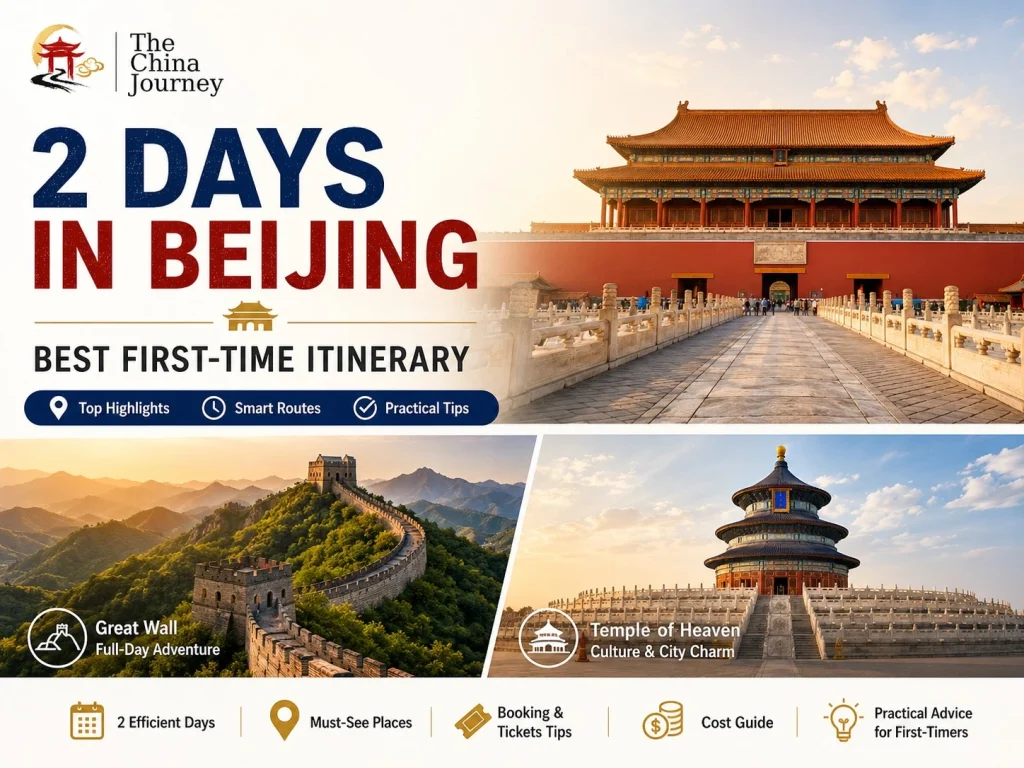
Plan 2 days in Beijing with the Forbidden City, Great Wall options, costs, route trade-offs, booking tips, and a safe short itinerary.

Plan your first Xinjiang trip with the best routes, places, seasons, travel tips, and regional choices from Urumqi to Kashgar and beyond.

Share your travel ideas, and we’ll help you plan a smooth, personalized trip across China.

Share your travel ideas, and we’ll help you plan a smooth, personalized trip across China.
We’re looking for experienced, part-time local guides to serve international travelers.
Requirements:
• Fluent in at least one foreign language
• 3–5 years guiding international visitors
• Able to operate in multiple regions in China
• Competitive and reasonable pricing
• Proven customer reviews or testimonials
• Professional, reliable, and responsive
• Flexible availability for custom trips
Hi there!
Just a quick heads-up — a helpful user named Volker let me know that some of the non-English content on this site may not be accurate.
This site is a one-person project I run part-time. I research and publish all the content myself, and the translations are currently done by machine (Google Translate). Balancing accuracy and accessibility across multiple languages is a real challenge.
If you spot any errors, I recommend switching to the English version using the button at the bottom left. I’ll continue working to improve the translations over time.
I truly appreciate your understanding. And if you have any suggestions, feel free to leave a comment — it means a lot to me.
— Anthony 2025.6.18


