
 Written by
Anthony
Chinese New Year, also known as the Spring Festival (春节 Chūnjié) or Lunar New Year, is China’s most important traditional holiday. It marks the start of the lunar year and is centered on family reunion, saying goodbye to the old year, and welcoming a fresh beginning together.
Key dates for Chinese New Year 2026:
New Year’s Eve (Reunion Dinner): February 16, 2026
Chinese New Year’s Day: February 17, 2026
Lantern Festival: March 3, 2026
Zodiac year: 2026 is the Year of the Horse (often called the Fire Horse in English sources).
This guide explains the key dates, traditions, daily customs, etiquette, lucky foods, greetings, and practical travel tips to help you understand and experience Chinese New Year in a clear, cultural, and respectful way.
This section is designed for quick reference. Many readers skim this part first to understand how Chinese New Year works before diving into details.
Chinese New Year – the most widely used term internationally, highlighting its cultural roots
Lunar New Year – emphasizes the lunar calendar system, often used in multicultural contexts
Spring Festival – the official and most commonly used name inside China, distinguishing it from January 1st
Chinese New Year follows the traditional lunar calendar, which is based on moon phases and seasonal markers. A lunar year is about 11 days shorter than a solar year, so an extra leap month is added roughly every three years. As a result, Chinese New Year usually falls between late January and mid-February, close to the beginning of spring.
Standard duration: 15 days, from New Year’s Eve to the Lantern Festival
In practice: celebrations often stretch 16–20 days if pre-festival customs are included
The busiest and most important period is New Year’s Eve through the first seven days
February 15–23, 2026, totaling 9 days
As usual, this includes adjusted workdays before or after the holiday week.
This is the peak of Spring Festival travel season, the busiest travel period of the year in China
Trains, flights, and highways are extremely crowded
Many small local shops, wet markets, and family-run restaurants close from New Year’s Eve to about the third day
Large shopping malls, major attractions, hotels, and chain restaurants generally remain open, though with heavier crowds
From experience, planning ahead—and adjusting expectations—is essential if you’re traveling during this week.
China uses Beijing Time (UTC+8) nationwide.
The symbolic “new year moment” happens at midnight between New Year’s Eve and New Year’s Day, when families stay up together, welcome the new year, and mark the transition with fireworks or quiet rituals, depending on local rules.
Overseas Chinese communities usually celebrate according to local time. Some events align with Beijing Time for symbolic reasons, while others blend local customs with traditional elements. Regardless of location, the core traditions—family meals, red envelopes, and New Year greetings—remain the same.
Many people know the date changes every year, but the details—especially around New Year’s Eve—can be confusing. Here’s how it works for 2026.

Chinese New Year’s Day (Day 1): February 17, 2026
Chinese New Year’s Eve: February 16, 2026
In 2026, the final lunar month has 29 days, not 30. Because of this, New Year’s Eve falls on the 29th day of the twelfth lunar month, making it the very last day of the old year.
Culturally, New Year’s Eve is the emotional center of the entire festival. It is the moment of letting go—saying goodbye to the old year through reunion dinners, staying up late, and household rituals meant to clear away bad luck and welcome a fresh start. From personal experience, this evening often feels more meaningful than New Year’s Day itself, especially within families.
Chinese New Year begins on the first new moon of the lunar calendar, which marks the start of the first lunar month.
Two ideas guide this system:
The new year starts on a new moon, not a fixed solar date
It always falls close to the Beginning of Spring, reflecting the traditional belief that a new year should begin with the return of life and growth
This is why Chinese New Year usually appears sometime between late January and mid-February, rather than on a fixed date like January 1.
Several smaller festivals help set the rhythm of the season before New Year’s Day arrives.
Laba Festival (腊八节 Làbā Jié) – January 26, 2026
Often seen as the unofficial start of the New Year season. Families eat Laba porridge, made from mixed grains, beans, and dried fruits, symbolizing abundance and a good harvest.
Little New Year (小年 Xiǎo Nián)
Northern China: February 10, 2026
Southern China: February 11, 2026
This is when households traditionally begin serious preparations—cleaning the home, shopping for New Year goods, and honoring the Kitchen God in some regions.
Reunion Dinner
Held on New Year’s Eve, this is considered the most important meal of the entire year. No matter where people work or live, many make a special effort to return home for this dinner. For travelers staying in China, this night offers a rare look into the heart of family life.
Gregorian Date | Lunar Date | Occasion | What Usually Happens |
|---|---|---|---|
Jan 26 | 8th day, 12th month | Laba Festival | Laba porridge, early New Year preparations |
Feb 10 | 23rd day, 12th month | Little New Year (North) | House cleaning, light shopping |
Feb 11 | 24th day, 12th month | Little New Year (South) | Cleaning, food preparation |
Feb 16 | 29th day, 12th month | New Year’s Eve | Reunion dinner, staying up late, decorations |
Feb 17 | 1st day, 1st month | Chinese New Year | Family visits, greetings, red envelopes |
Feb 18 | 2nd day, 1st month | Visiting parents’ home | Married daughters visit their families |
Mar 3 | 15th day, 1st month | Lantern Festival | Lantern displays, riddles, glutinous rice balls |
This timeline gives you a clear sense of how Chinese New Year unfolds—not just on one day, but as a season of events and traditions.

In Chinese culture, the Horse has long been a symbol of movement, energy, loyalty, and success. Before modern transportation, horses were essential for travel, communication, and military strength, which is why they became closely associated with progress and achievement.
Traditional expressions often link horses with success and vitality. The idea of a “thousand-mile horse” refers to exceptional talent, while phrases connected to horses are commonly used to wish someone a strong spirit, steady progress, and forward momentum. For the New Year, the Horse represents starting strong and moving confidently into the future.
Chinese zodiac years are not defined by animals alone. Each year also combines with one of the Five Elements—Wood, Fire, Earth, Metal, and Water.
The year 2026 corresponds to Bǐngwǔ (丙午):
Bǐng is associated with the Fire element
Wǔ represents the Horse
Because of this pairing, many English-language guides refer to 2026 as the Year of the Fire Horse. This term is meant to convey cultural symbolism rather than predict destiny. In everyday usage, it suggests a year associated with energy, initiative, and action, rather than a set of fixed outcomes.
The Chinese zodiac follows a 12-animal cycle:
Rat, Ox, Tiger, Rabbit, Dragon, Snake, Horse, Goat, Monkey, Rooster, Dog, and Pig.
Each animal year repeats every 12 years and is rooted in China’s ancient calendar system. Today, zodiac signs remain part of everyday life in China. People commonly mention their zodiac in casual conversation, New Year greetings, and gift choices. During the Spring Festival, zodiac imagery appears everywhere—from decorations and red envelope designs to souvenirs and festive artwork.
Horses appear frequently in Chinese language and visual culture. Idioms connected to horses often express speed, success, and confidence. In art and festival decorations, horses are shown in dynamic poses, symbolizing strength and optimism.
During Chinese New Year celebrations, it’s common to see horse-themed ornaments, paper cuttings, embroidery, and gift items. These designs are not meant to predict the future, but to express a shared hope for progress, vitality, and a positive year ahead.
To understand Chinese New Year, it helps to look beyond the rituals and dates. What makes this festival truly important is the meaning people attach to it in everyday life.

At its heart, Chinese New Year is about coming home.
Every year, the Spring Festival triggers the largest seasonal movement of people in China. Trains sell out, highways fill up, and flights are packed—not because people are traveling for leisure, but because returning home for the New Year is deeply ingrained. No matter how far someone works from their hometown, many will try their best to be back for the reunion dinner.
That shared meal is more than food. It is often the only time in the year when the entire family sits at the same table. From personal experience, even simple dishes feel special on this night, because what matters most is the presence of everyone together.
Chinese New Year is also a moment of renewal.
Customs such as cleaning the house, putting up new decorations, and wearing new clothes all carry the same idea: leaving behind the troubles of the old year and starting fresh. It’s not about erasing the past, but about making space for a better year ahead.
Many people see this period as a mental and emotional reset. Wishes for peace, health, and harmony are repeated again and again—not because they are poetic, but because they reflect what people genuinely hope for after a long year of work and responsibility.
For some families, Chinese New Year also includes honoring ancestors. This may involve offering food, lighting incense, or simply taking a moment to remember those who came before. These practices help keep family history alive and remind younger generations where they come from.
Beyond the household, the tradition of visiting relatives and friends serves a wider purpose. It reconnects extended family members and strengthens social ties that may have faded during the year. In this sense, Chinese New Year helps bring scattered relationships back together.
How Chinese New Year is celebrated often depends on where you are.
What remains the same everywhere is the focus on reunion—family meals, red envelopes, and New Year greetings are still central. What has changed is the way these traditions are expressed.
In major cities, celebrations are often simpler and more modern. Fireworks may be restricted, ancestral rituals less common, and digital greetings more popular. Shopping districts and public events now play a larger role.
In hometowns and rural areas, traditions tend to feel more complete. Preparations start earlier, rituals are more carefully observed, and the New Year atmosphere lasts longer. From experience, the contrast between city and hometown celebrations highlights how Chinese New Year continues to adapt, while still holding on to its core values.
Chinese New Year is not a single day. It unfolds as a season, with each stage carrying its own meaning and customs. Understanding this flow makes the festival much easier to follow—especially for first-time visitors.

Buying New Year's Goods

Cutting Year Meat

Kitchen God Worship

Cleaning the House

Pasting Red Decorations

New Year's Eve Dinner

Staying Up Late on New Year's Eve
Giving Lucky Money

God Parade

Visiting the Temple Fair

New Year Greetings

Setting Off Firecrackers
Preparations usually begin after Little New Year. Families clean the house thoroughly—from ceilings to floors—to symbolically remove bad luck from the old year. In daily life, this feels less like a ritual and more like a shared family task that marks the mental shift toward the New Year.
People buy:
New clothes, to represent a fresh start
Snacks and sweets, for visiting guests and family gatherings
Decorations such as couplets, red paper cuttings, and lanterns
Ingredients for the reunion dinner, including fresh produce and preserved foods
Some households honor the Kitchen God with simple offerings, while others focus on making traditional snacks or preserved foods. These details vary widely by region—northern areas often prepare cured meats, while southern regions dry or preserve seasonal ingredients.
New Year’s Eve centers on the reunion dinner, which symbolizes family unity and abundance. Dishes with lucky meanings—such as fish or dumplings—are common, and meals are usually generous in both size and variety. Seating follows family hierarchy, with elders given the place of honor. Toasts are typically offered to older family members first.
Families stay awake until midnight to welcome the new year together. This time is often spent talking, watching the Spring Festival Gala, or playing games. At midnight, some areas allow fireworks or firecrackers, while others mark the moment quietly due to local regulations.
The day begins with wearing new clothes and greeting elders. Younger family members offer New Year wishes, and elders give red envelopes as blessings for health and good fortune. Later, people may visit nearby relatives or close family friends.
Many families avoid sweeping, breaking objects, or using unlucky words on this day. If something is accidentally broken, people often say phrases wishing peace to soften the moment. These customs are not strict rules but reflect the shared hope of keeping good fortune close.
The second day traditionally focuses on visiting the wife’s parents, especially for married couples. From the third day onward, families visit relatives, friends, and sometimes colleagues, usually following an order based on closeness and seniority.
In northern China, dumplings remain a staple, and some areas avoid visiting others on the third day.
In southern regions, rice cakes and sweet dumplings are more common, and some families host a “first gathering of the year” meal to continue celebrations.
The Lantern Festival marks the official close of Chinese New Year. Families eat glutinous rice balls, symbolizing reunion and completeness, and cities host lantern displays, riddle games, and lion or dragon dances. In some places, this is the most visually festive moment of the entire season.
Around the eighth day, many businesses reopen with simple ceremonies to welcome good fortune. The days leading up to the Lantern Festival are calmer, focused on preparation rather than visiting.
North: Dumplings dominate New Year meals, and Little New Year usually falls on the 23rd day of the twelfth lunar month.
South: Rice cakes, sweet dumplings, and regional dishes such as tray meals are common, with Little New Year typically on the 24th. Some areas feature flower markets or raw fish dishes as part of local tradition.
| Category | Northern China | Southern China |
|---|---|---|
| Xiaonian | Lunar December 23: Families thoroughly clean their homes to prepare for the New Year celebrations. | Lunar December 24: Similar house cleaning traditions, ensuring everything is fresh and ready for the New Year. |
| New Year’s Eve | Stay up all night, making dumplings while watching the New Year’s Gala. Special fillings like coins and dates symbolize luck. | Gather around the stove after the reunion dinner, chatting, snacking, and enjoying family time together. |
| First Day of Lunar New Year | Eat dumplings resembling ancient gold ingots, symbolizing wealth and new beginnings for the year ahead. | Prepare and eat Nian Gao (rice cake) for good fortune and Tangyuan to symbolize family togetherness and unity. |
| Second Day of Lunar New Year | Cold soup noodles made from dumpling dough are eaten to represent smoothness and harmony in the coming year. | Enjoy ‘Starting the Year’ meal, with roasted meats and symbolic dishes like lettuce for prosperity. |
| Fifth Day of Lunar New Year | Firecrackers are set off to drive away bad luck, bringing prosperity and clearing away negative spirits. | Red envelopes (‘Li Shi’) are distributed to employees, accompanied by dragon and lion dance performances. |
| Ethnic Group | Customs and Traditions |
|---|---|
| Mongolian | Known as “White Festival,” celebrated in white attire and decor. Families prepare lavish feasts, offer symbolic gifts, and gather for blessings. |
| Tibetan | Celebrates Tibetan New Year with religious ceremonies, family feasts, and offering barley wine. Key rituals include prayer flag renewal and temple visits. |
| Korean | Family gatherings, traditional music, and “moon viewing” rituals mark the festival, with dances and games following cultural customs. |
| Manchu | Red lanterns adorn homes, dumplings are prepared with hidden coins for luck, and New Year’s greetings are exchanged on New Year’s Eve and Day. |
| Zhuang | Celebrations include singing competitions, traditional games, and feasts featuring chicken and rice. Special “phoenix dumplings” symbolize good fortune. |
| Daur | Families burn straw heaps for good fortune, enjoy hand-pulled meat dishes, and honor ancestors with ceremonial food offerings. |
| Gaoshan | Villagers gather for group dances and feasts, holding fishing and sports competitions like pole climbing and ball games. |
| Li | Families enjoy communal meals and sing “New Year songs.” Village-wide hunting games provide shared meals from the hunt. |
| Buyei | Families make festive foods like rice cakes, hang lanterns, and gather for ancestor worship and traditional dances. |
| Gelao | Celebrate New Year with prayer rituals for bountiful harvests, often combining with Qingming Festival. Traditional meals and family reunions are highlights. |
| Hui | The festival is celebrated with special foods like noodles and meat, focusing on prayer and family reunions. Traditions blend Islamic and Chinese customs. |
| Kyrgyz | Marked by feasts and prayers, the “Nowruz” festival resembles the Lunar New Year, celebrating spring and new beginnings. |
| Yi | “Kuo Shi” involves prayers for prosperity and rituals to ward off evil. Feasting on homemade bread and wine, families gather to celebrate. |
| Bai | Known for water-fetching rituals at midnight, symbolizing diligence, with lion dances, dragon parades, and traditional food exchanges. |
In many cities abroad, Chinese New Year is celebrated with parades, lion and dragon dances, and street festivals. These events often blend local culture with traditional elements. While the setting may differ, core customs—family meals, red envelopes, and New Year greetings—remain unchanged.
Chinese New Year decorations are not random ornaments. Each item is placed with a clear purpose: to welcome good fortune, protect the household, and set the tone for a fresh start.

Spring couplets are pairs of poetic lines written on red paper, traditionally in black or gold ink. They are placed on both sides of the front door and express wishes for health, prosperity, and harmony in the coming year.
There is a simple placement rule that many families still follow:
The first line goes on the right side of the door
The second line goes on the left side (when facing the door from outside)
A short horizontal phrase is placed above the door frame
Beyond decoration, couplets mark a symbolic boundary—inviting good luck in and keeping negative influences out. Even in modern apartments, posting them signals that the New Year has officially begun.
The character Fu, meaning “good fortune” or “blessing,” is often placed upside down on doors, windows, cabinets, or even trash bins. This is a wordplay tradition: the word “upside down” sounds the same as “arrive,” creating the meaning “good fortune has arrived.”
There is one common exception. On the main entrance door, many families place the Fu character upright. This is seen as a more formal way of welcoming fortune directly and respectfully into the home.
These red paper designs feature zodiac animals, flowers, birds, or auspicious characters like “Spring” and “Fortune.” Placed on windows, they brighten the home and symbolize joy, protection, and renewal.
Lanterns are one of the most recognizable symbols of Chinese New Year. Hung at doorways, balconies, or along streets, they represent warmth, unity, and prosperity. When lit at night, they create the unmistakable festive atmosphere associated with the Spring Festival.
Door gods are images placed on the front door to guard the household. The most common figures are two historical generals, Qin Qiong (秦琼 Qín Qióng) and Yuchi Gong (尉迟恭 Yùchí Gōng), known for their loyalty and strength.
The tradition dates back to ancient beliefs about protecting the home from harmful forces. Today, door gods are less about fear and more about symbolism—expressing a wish for peace, safety, and stability in the year ahead.
Red is the dominant color of Chinese New Year. It represents happiness, vitality, and protection. From decorations and clothing to red envelopes, the color is believed to drive away negative influences and amplify festive energy.
Gold symbolizes wealth, abundance, and dignity. It is often paired with red in decorations, couplets, and envelopes to express wishes for financial stability and success in the new year.
Food plays a central role in Chinese New Year celebrations. Every dish on the table carries meaning, and the way people eat together matters just as much as what is served.

The reunion dinner is built around the idea of togetherness and abundance. Families aim for a generous spread, often with an even number of dishes—such as eight or ten—to symbolize completeness and prosperity.
Beyond symbolism, the meal reflects hospitality. Serving a full table is a way for families to express care for one another and confidence in welcoming the new year with stability and warmth.
Fish is a must-have dish at the reunion dinner. Steamed fish—often carp or sea bass—is especially common. The word for fish sounds the same as “surplus,” creating the wish for abundance year after year. Many families intentionally leave part of the fish uneaten to represent carrying extra fortune into the new year.
In northern China, dumplings are essential. Their shape resembles ancient gold ingots, symbolizing wealth. Some families hide a coin inside one dumpling; whoever finds it is said to have extra luck in the coming year.
Noodles represent longevity. They are usually served long and uncut, expressing the hope for health and a long life. A simple broth with symbolic ingredients is often preferred during the festival.
Rice cake is especially popular in southern China. Its name sounds like “year by year higher,” making it a symbol of progress and improvement. It can be prepared sweet or savory, depending on regional taste.
Citrus fruits are associated with good luck and success. Bowls of oranges are commonly placed in homes and offered to guests as a sign of blessing for the new year.
If you’re invited to a Chinese New Year meal, a few small habits go a long way.
Avoid finishing the entire fish; leaving some is considered polite and symbolic
When toasting, offer your glass to elders or the host first, and keep your glass slightly lower as a sign of respect
Wait for elders or the host to begin eating before you start
Try a bit of everything, avoid wasting food, and don’t hesitate to compliment the cooking
These gestures show appreciation and help you blend naturally into the celebration.
Northern regions often feature hearty stews, fried spring rolls, and preserved meats. In northeastern China, dishes like pickled cabbage with pork are common. Southern regions highlight tray meals, raw fish salads, and elaborate banquet-style dishes such as braised seafood or specialty chicken.
At the end of the New Year season, families eat round glutinous rice balls. In northern China, they are rolled by hand and firmer in texture; in the south, they are wrapped with soft fillings. Both symbolize reunion and completeness.
For travelers or visitors celebrating in restaurants, these dishes are easy and meaningful choices:
Dumplings – Look for pork and cabbage or chive fillings for classic flavors
Steamed fish (清蒸鱼 Qīngzhēng Yú) – Simple, symbolic, and widely available
Rice cake – Sweet or savory versions reflect southern traditions
Glutinous rice balls (汤圆 Tāngyuán) – Especially popular during the Lantern Festival
Ordering these dishes not only fits the season but also helps you experience Chinese New Year dining in a respectful and culturally meaningful way.
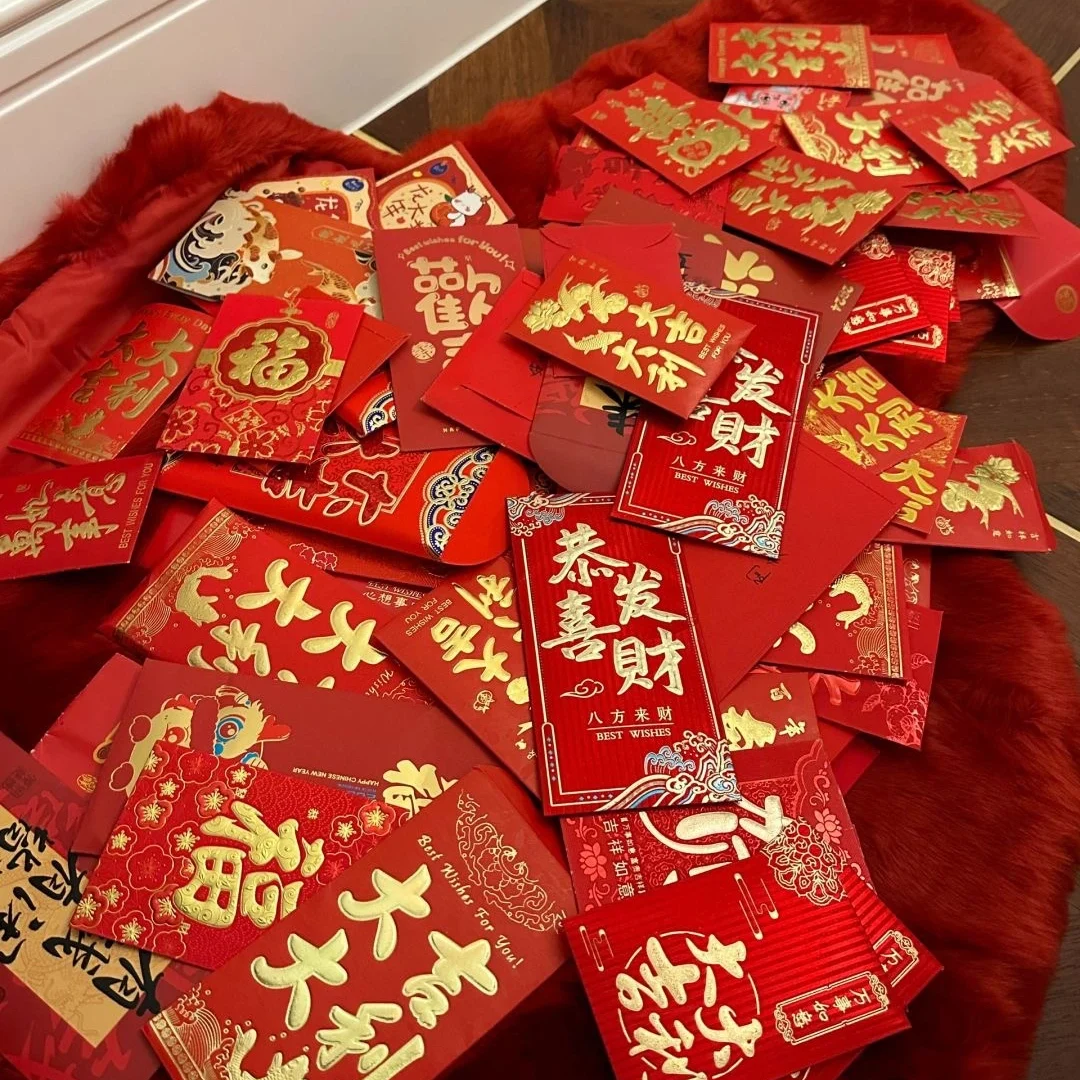
Red envelopes are one of the most recognizable parts of Chinese New Year. More than money, they represent good wishes, care, and the passing on of blessings.

Traditionally, red envelopes—called hongbao (红包 Hóngbāo), or lai see in Cantonese-speaking areas—are given by elders to younger family members. This includes children, grandchildren, and unmarried nieces or nephews. Married adults usually give red envelopes to unmarried relatives as a sign of seniority and goodwill.
In offices, it’s common for managers to give small red envelopes to employees as a festive gesture. Colleagues may also exchange small online red envelopes, especially in group chats. These are meant to be light-hearted and voluntary, not competitive or obligatory.
Numbers matter more than exact amounts.
6 – associated with smooth progress
8 – associated with wealth and success
Examples include 66, 88, 168, or 288 (the meanings come from positive number sounds)
The appropriate amount depends on your relationship and comfort level. Thoughtfulness matters far more than size.
4, because its pronunciation is associated with bad luck
Amounts like 44 or 144 are generally avoided. Even numbers are preferred, as they symbolize harmony and completeness.
Simple, warm phrases are best:
“Happy New Year—wishing you health and happiness.”
“Just a small token for the New Year. All the best for the year ahead.”
There’s no need to mention the amount.
Say thank you clearly and sincerely
Offer a New Year wish in return, such as good health or strong spirits
Accept the envelope with both hands if possible
Avoid opening it immediately unless the family custom suggests otherwise
These small gestures show respect and appreciation.
Digital red envelopes have become a normal part of modern New Year celebrations. On platforms like WeChat, people send:
Random-amount group envelopes
Personalized envelopes for friends or colleagues
During Chinese New Year, themed envelope designs—often featuring the year’s zodiac animal—are widely used. As with physical envelopes, it’s best to keep amounts modest and focus on participation rather than comparison.
If giving money feels uncomfortable, small symbolic gifts are perfectly acceptable, especially for visitors.
Good alternatives include:
Tea gift boxes
Fruit baskets or citrus fruits
Nut or candy gift sets
Small decorative items featuring the Year of the Horse
These options carry festive meaning without the pressure of choosing a cash amount, and they’re often appreciated just as much.
Chinese New Year greetings are short, warm, and purpose-driven. You don’t need to memorize many phrases—using the right one in the right situation matters more than variety.
This is the most iconic Chinese New Year greeting. It’s widely used among family, friends, and especially in business settings. The message focuses on success, good fortune, and smooth progress in the coming year.
A universal greeting that works in almost every situation. It’s friendly, neutral, and safe to use with anyone, including strangers or casual acquaintances.
Commonly used when greeting elders. It expresses respect and wishes for good health, energy, and a positive mindset.
A flexible and polite phrase suitable for both personal and formal situations. It conveys well-rounded good wishes without focusing on one specific outcome.
Xīnnián kuàilè(新年快乐)
Wànshì rúyì(万事如意)
Xīnxiǎng shì chéng(心想事成 / May all wishes come true)
Qiánchéng sì jǐn(前程似锦 / Wishing you a bright future)
Shēntǐ jiànkāng(身体健康 / Good health)
Lóngmǎ jīngshén(龙马精神 / Strong vitality)
Fú rú dōnghǎi(福如东海 / Endless blessings)
Shòu bǐ nánshān(寿比南山 / Long life)
Gōngxǐ fācái(恭喜发财)
Shìyè xīnglóng(事业兴隆 / Prosperous business)
Cáiyuán guǎngjìn(财源广进 / Abundant wealth)
Hézuò gòngyíng(合作共赢 / Win-win cooperation)
You don’t need a long reply. Simple and sincere works best.
“Thank you—Happy New Year to you too.”
“Thanks, and wishing you the same.”
“Thank you. Wishing you and your family good health and a smooth year ahead.”
Returning the greeting shows courtesy and keeps the exchange warm and natural.
2026 马年大吉,恭喜发财,平安喜乐!
火马迎春,万事顺意,龙马精神伴我行 ✨
新年新气象,愿你万事皆可期,财源滚滚来。
Happy Year of the Fire Horse! May prosperity and joy be with you.
(2026 火马年快乐,祝你财源广进、喜乐常伴。)
Wishing you a vibrant Year of the Horse, full of success and good luck.
(祝你马年活力满满,事事顺遂、好运连连。)
These short messages work well for posts, captions, and greetings across cultures.
Chinese New Year customs include a number of traditional “don’ts,” but they are best understood as expressions of hope and caution, not strict laws. How seriously they are followed often depends on family tradition and personal attitude.
On the first day of the lunar year, some families try to avoid:
Sweeping or taking out trash
Breaking objects
Using negative or unlucky words
Washing hair or bathing (in certain regions)
The shared idea behind these customs is to keep good fortune close at the very start of the year. Today, many people follow them lightly or symbolically. Customs vary widely by region and household, so there’s no need to stress—being considerate is more important than being exact.
Cutting hair during the first lunar month is avoided in some areas, based on wordplay and old beliefs
Washing clothes is sometimes avoided early in the New Year to prevent “washing away” good luck
Using knives or scissors is traditionally limited to avoid conflict or disharmony
Most younger people do not strictly observe these rules. However, older family members may still care about them. From experience, the easiest approach is to adapt to the household you’re visiting—if something matters to the elders, it’s usually best to follow along quietly.
Fruit baskets or citrus fruits
Nut assortments or candy boxes
Tea gift sets
Gifts are usually given in even numbers and wrapped in red or gold packaging to match the festive mood.
Clocks (associated with endings)
Umbrellas (associated with separation)
Pears (associated with parting)
White flowers linked to funerals, such as chrysanthemums or white lilies
Choosing the right gift is less about cost and more about showing care and awareness.
In reality, attitudes vary greatly:
Older generations often see these customs as a form of respect for tradition
Younger people tend to value intention and atmosphere over strict rules
The key is flexibility. There’s no need to debate or dismiss traditions. Being respectful, observing how others act, and adjusting your behavior accordingly will help you navigate Chinese New Year customs smoothly.
Chinese New Year can feel very different depending on where you are and how you experience it. For visitors and foreigners living in China, this period offers some of the most memorable cultural moments—as long as you know what to expect.

Temple fairs are one of the easiest ways to experience traditional New Year culture in public. You’ll find food stalls, folk crafts, and live performances such as sugar painting, shadow puppetry, and dough figurine making. For many travelers, this is where Chinese New Year feels most alive and approachable.
From the days leading up to the Lantern Festival, many cities host large lantern displays and lion or dragon dances. These events combine bright visuals with loud drums and community energy, making them especially engaging even if you don’t speak Chinese.
Fireworks are now regulated in many cities, but some areas still allow them at designated times and locations. New Year’s Eve and the Lantern Festival are when the atmosphere is most intense. Always check local rules in advance to avoid fines.
Often called “the world’s top lantern festival,” Zigong is known for massive, highly detailed lantern installations that blend traditional craftsmanship with modern lighting technology.
Set along the Qinhuai River, this festival pairs glowing lanterns with historic architecture and water reflections, creating a strong sense of classical elegance.
Places like Ditan Park (地坛 Dìtán) and Longtan Park (龙潭 Lóngtán) host well-known temple fairs with folk performances, traditional snacks, and seasonal activities that feel festive without being overwhelming.
Small family-run restaurants
Local markets and neighborhood shops
Repair services and some courier stations
Most closures happen from New Year’s Eve through the third day of the New Year, with gradual reopening afterward.
Large shopping malls and supermarkets
Tourist attractions and theme parks
Hotels and chain restaurants
Some museums and libraries (often with reduced hours or reservation systems)
Planning meals and daily needs ahead of time makes the holiday much smoother.
The Spring Festival travel season (January 28–March 5, 2026) is the busiest time of year. High-speed train and flight tickets often sell out quickly. Booking as soon as tickets become available is essential.
Flights and hotels may cost 20–50% more than usual
Train ticket prices stay fixed, but seats are harder to get
Stations, airports, and major attractions are extremely crowded
If possible, avoid traveling on New Year’s Eve, the first day of the New Year, and the final return days of the holiday.
Public transport may run less frequently, food delivery takes longer, and ride-hailing apps can be harder to use during peak hours. Building extra buffer time into your plans helps reduce stress.
If you’re not traveling, you can still experience the holiday in a meaningful way:
Put up spring couplets or a Fu character
Cook dumplings or sweet rice balls with family or friends
Share online greetings and red envelopes
Watch the Spring Festival Gala or Lantern Festival shows
Decorate with red lanterns or zodiac-themed items
Even a few small traditions can create a strong New Year atmosphere.
If you search for information about the festival, you’ll quickly notice two terms being used. They often cause confusion, especially for international readers, but in practice they refer to the same celebration.
This term highlights the Chinese cultural origin of the festival. It is widely used in international media, overseas Chinese communities, and Chinese restaurants around the world. When people say “Chinese New Year,” they are usually referring to the traditions, customs, and symbols that developed in China.
This name focuses on the calendar system rather than cultural origin. It is often used by international organizations and in multicultural settings to sound more inclusive. In everyday usage, it still points to the same holiday period and traditions rooted in the Chinese Spring Festival.
In short, the difference is about context and emphasis, not about different holidays.
Several Asian cultures celebrate New Year based on the same lunar calendar, while developing their own customs over time.
Korea celebrates Seollal (설날), which includes family reunions, ancestral rites, wearing traditional clothing, and eating rice cake soup.
Vietnam celebrates Tết, marked by flower markets, family gatherings, and traditional rice cakes.
While details differ, the shared themes—family reunion, good wishes, and fresh beginnings—remain consistent across cultures.
In modern China, the lunar New Year is officially called Spring Festival. The name reflects its timing near the solar term that marks the beginning of spring and helps distinguish it from the Gregorian New Year on January 1.
Today, “Spring Festival” is the most commonly used term within China, both officially and in daily life. It emphasizes seasonal renewal and carries strong cultural identity, making it the most natural name for the holiday in a Chinese context.
This section is not about prediction or fate. In Chinese culture, zodiac outlooks are a New Year conversation starter—a way to reflect, set intentions, and talk about the year ahead in a positive tone.
From a cultural perspective, zodiac outlooks express hope for a better year. People read them to think about goals, timing, and personal balance.
Psychologically, they also offer emotional value. They help people feel prepared and motivated at the start of a new year. In modern life, zodiac talk is more about mindset and direction than belief, and it’s often shared casually among friends during the holiday season.
2026 is the Year of the Horse, associated with movement, enthusiasm, and momentum. As a cultural theme, the Fire Horse year is often described as energetic and action-oriented.
A balanced interpretation focuses on:
Taking initiative while staying grounded
Embracing change without rushing blindly
Turning motivation into steady progress
Rather than making absolute claims, this theme encourages active but thoughtful choices throughout the year.
(Guidance, not fortune-telling)
As a zodiac year of your own sign, it’s wise to stay steady. Keep your energy high but avoid impulsive decisions. Paying extra attention to rest and health helps maintain balance.
These signs are traditionally seen as compatible with the Horse. The year favors cooperation, travel, and expanding social or professional networks. It’s a good time to explore opportunities with others.
Often described as a contrasting sign to the Horse. A calm, low-key approach works best. Focus on stability, avoid unnecessary risks, and use the year for reflection and preparation.
A generally stable year. Progress comes from consistency rather than speed. Balancing work responsibilities with family life brings the best results.
A shared theme applies: move forward at a comfortable pace, stay adaptable, and focus on practical actions rather than expectations. The emphasis is on mindset, not outcomes.
If you’re interested in deeper zodiac symbolism or year-based traditions, you can explore our Chinese Zodiac Guide and Year of the Fire Horse feature pages for cultural background, history, and lifestyle interpretations.
Chinese New Year offers many simple ways for families to connect across generations. For children especially, the festival becomes meaningful when traditions are experienced, not just explained.

Simple crafts are one of the most effective ways to introduce New Year culture.
Families often start with:
Paper cuttings of the Year of the Horse, using red paper and simple shapes
DIY red lanterns, made from old red envelopes or colored paper
Writing the “Fu” character, using brushes or markers
While working together, parents can casually explain what these symbols represent—good fortune, protection, and fresh beginnings. These activities build creativity and help children form a positive emotional connection to tradition.
Food preparation is another natural learning moment.
Making dumplings or glutinous rice balls together allows children to participate from start to finish—mixing fillings, shaping dough, and helping serve the meal. While cooking, parents often explain why these foods matter, such as dumplings symbolizing wealth or round rice balls representing family unity.
From experience, children remember these shared moments far more clearly than any explanation alone.
When talking about symbolism, simple and rational explanations work best.
Instead of framing customs as superstition, parents can say:
Turning the Fu character upside down is a playful way to say “good fortune has arrived.”
Leaving some fish on the plate expresses the hope of having extra resources in the year ahead.
This approach helps children understand that these traditions are expressions of hope and care, not rigid beliefs. Over time, they learn to appreciate cultural meaning while thinking independently.
Chinese New Year is one of the most visually rich times of the year. With a bit of awareness, you can capture meaningful moments while staying respectful to people and traditions.

Some scenes naturally tell the story of the festival:
Streets lined with red lanterns, especially at dusk or night
Traditional doorways covered in spring couplets and Fu characters
Reunion dinner tables, highlighting symbolic dishes like fish or dumplings
Temple fairs and traditional craft demonstrations
Lantern Festival displays, where light and color create strong visual impact
Year of the Horse decorations, which subtly mark 2026
Focusing on warmth, togetherness, and detail often creates stronger images than wide crowd shots.
Respect is as important as composition.
In temples or during folk performances, follow posted rules and avoid blocking views or interrupting activities
Never touch exhibits, performers, or ritual objects
Always ask before photographing elders, private family meals, or close-up moments
Avoid photographing red envelopes or personal exchanges, which are considered private
These small considerations help maintain trust and cultural sensitivity.
火马迎春,年味正浓,平安喜乐常伴 ✨
一盏灯笼,一顿团圆饭,便是新年最好的模样。
元宵灯会,赴一场红色的浪漫与圆满。
Welcoming the Year of the Fire Horse with family and joy.
A reunion dinner and red lanterns—this is the true spirit of Spring Festival.
Lantern Festival: celebrating the perfect end of a wonderful Spring Festival.
These short captions work well across platforms and pair naturally with festive images.
Chinese New Year in 2026 falls on February 17, which is the first day of the lunar year. New Year’s Eve is February 16.
2026 is the Year of the Horse, known in the traditional calendar as the Fire Horse Year.
The festival traditionally lasts 15 days, from New Year’s Eve on February 16 to the Lantern Festival on March 3. The busiest celebrations usually happen during the first week.
New Year’s Eve in 2026 is on February 16, which falls on the 29th day of the twelfth lunar month.
The Lantern Festival takes place on March 3, 2026, marking the official end of the Chinese New Year period.
Typical customs include the reunion dinner, staying up late on New Year’s Eve, visiting family, giving red envelopes, putting up spring couplets, attending temple fairs, and eating glutinous rice balls during the Lantern Festival.
Common symbolic foods include fish, dumplings, rice cakes, glutinous rice balls, and oranges. Each represents good fortune, abundance, or family unity.
Good options include fruit baskets, nut gift boxes, or tea. Gifts are usually given in even numbers and wrapped in red or gold packaging. Avoid clocks, umbrellas, and pears.
Some families avoid sweeping, breaking items, or using unlucky words on the first day. Customs vary widely, and the best approach is to follow the household you’re visiting.
Small local shops often close from New Year’s Eve through the third day of the holiday. Large shopping malls, tourist attractions, hotels, and chain restaurants usually stay open, though hours may be shorter.
They refer to the same festival. “Chinese New Year” emphasizes cultural origin, “Lunar New Year” highlights the calendar system, and “Spring Festival” is the official and most common term used in China.
At its core, Chinese New Year is not defined by complex rituals or strict rules. It is about reunion and renewal—the value placed on family, the act of letting go of the past year, and the shared hope for a better one ahead.
You don’t need to understand every tradition to feel its meaning. Even a small gesture—putting up a Fu character, sharing a simple New Year wish, or sitting down for a reunion meal—can make the season feel special. These moments carry the warmth and continuity that have kept Chinese New Year alive for thousands of years.
If you’d like to explore more, you can continue with our Chinese Zodiac guides, Spring Festival travel tips, and Lantern Festival features, where we go deeper into the stories, places, and experiences that shape this celebration today.
However you choose to experience it, Chinese New Year offers a rare chance to slow down, reconnect, and begin again—with intention and hope.


Discover the rich history, iconic costumes, and captivating performances of Peking Opera, featuring traditional music, props, and cultural artistry.

Compare flights and high-speed trains to Chongqing, choose the right station, and plan transfers from CKG or major cities with practical booking tips.

Climbing Mount Tai typically takes between 3 to 8 hours, depending on the route, pace, and whether you hike, take a cable car, or combine both.

Explore Tibet, the Roof of the World, with sacred sites like Potala Palace and Everest, rich Tibetan culture, unique festivals, ancient traditions, and stunning natural beauty.

Plan solo travel in China with practical advice on safety, payments, apps, trains, hotels, female travel, easy cities, backup plans and realistic routes.
A complete guide to the Wood Pig zodiac: personality traits, career, love, health, Five Elements analysis, and the 2026 fortune forecast for those born in 1935 and 1995.

Share your travel ideas, and we’ll help you plan a smooth, personalized trip across China.

Share your travel ideas, and we’ll help you plan a smooth, personalized trip across China.
We’re looking for experienced, part-time local guides to serve international travelers.
Requirements:
• Fluent in at least one foreign language
• 3–5 years guiding international visitors
• Able to operate in multiple regions in China
• Competitive and reasonable pricing
• Proven customer reviews or testimonials
• Professional, reliable, and responsive
• Flexible availability for custom trips
Hi there!
Just a quick heads-up — a helpful user named Volker let me know that some of the non-English content on this site may not be accurate.
This site is a one-person project I run part-time. I research and publish all the content myself, and the translations are currently done by machine (Google Translate). Balancing accuracy and accessibility across multiple languages is a real challenge.
If you spot any errors, I recommend switching to the English version using the button at the bottom left. I’ll continue working to improve the translations over time.
I truly appreciate your understanding. And if you have any suggestions, feel free to leave a comment — it means a lot to me.
— Anthony 2025.6.18


