Written by
Anthony

Standing on the Tsim Sha Tsui promenade, you’ll see Victoria Harbour shimmering like liquid gold under the neon glow. Across the water, Central’s glass towers pierce the sky, their lights twinkling like stars. Yet a short walk into the back alleys takes you to Temple Street Night Market, where the call of “curry fish balls!” mixes with old Cantonese songs. Hong Kong is a city of contrasts—where skyscrapers and street stalls coexist in perfect rhythm.
This is Hong Kong: a city where East meets West, and old traditions collide with futuristic skylines. One moment you’re sipping coffee in a Central café, the next you’re queuing for pineapple buns and milk tea in a local cha chaan teng. From the fast-paced suits of the financial district to the slow charm of island tea stalls, Hong Kong thrives on its unique blend of “new and old,” “fast and slow,” making every corner an adventure waiting to unfold.
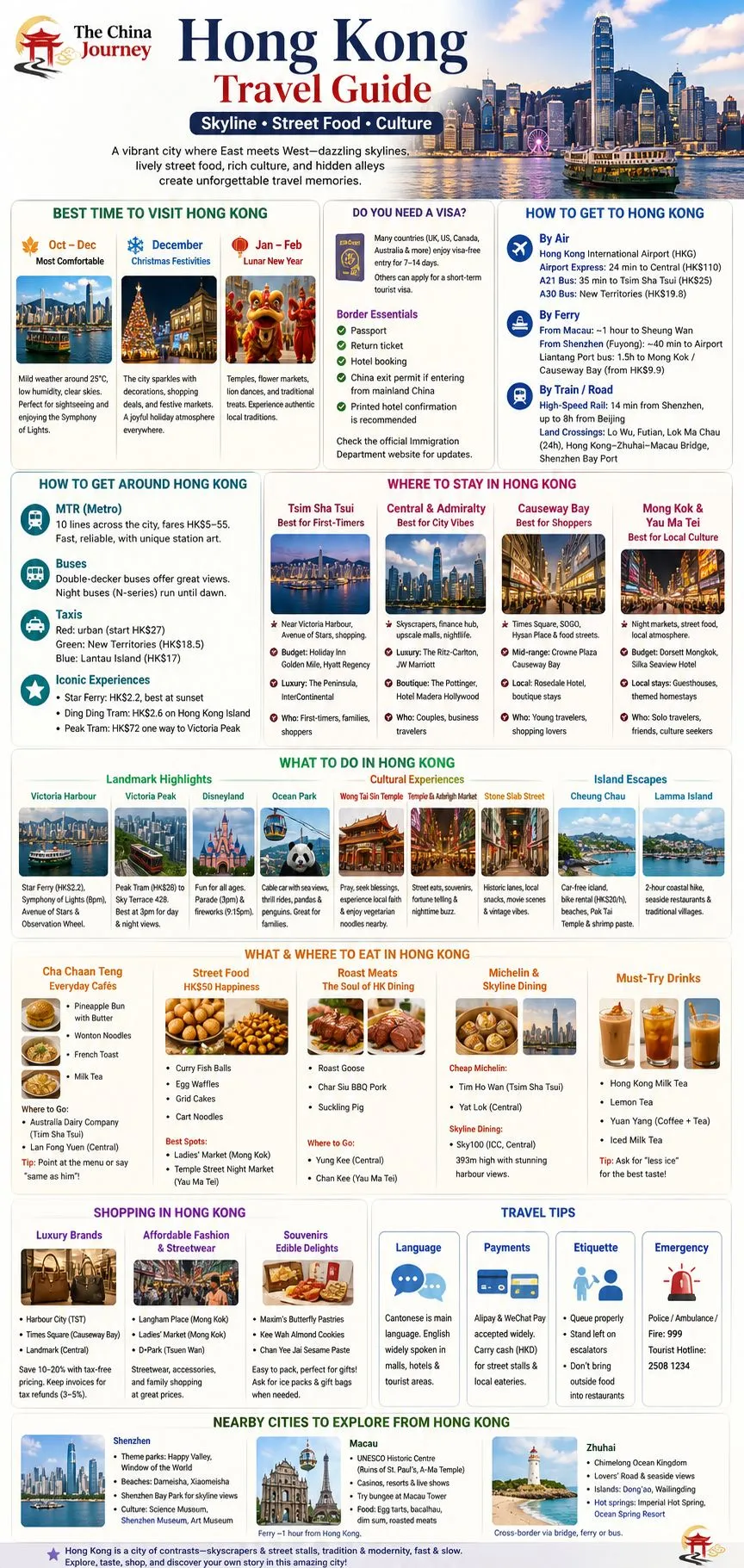
Hong Kong’s autumn is mild and pleasant, with daytime highs around 25°C and little humidity. Clear skies make it perfect for riding the tram, taking ferries, or climbing Victoria Peak for panoramic views. Sunset at Victoria Harbour is especially stunning, leading into the famous Symphony of Lights.
From late November, Hong Kong transforms into a glowing Christmas wonderland. Central streets light up with decorations, giant Christmas trees appear in shopping malls, and tramcars sparkle with festive colors. Shoppers enjoy major holiday discounts, while street markets and performers add a lively holiday spirit.
During Lunar New Year, Hong Kong bursts with traditional charm. Flower markets fill Victoria Park, temples host lion dances and rituals, and locals enjoy sticky rice cakes as festive treats. The city slows down from its commercial pace, giving travelers a chance to experience authentic community celebrations.
For a broader, country-wide seasonal overview, see Best & Worst Time to Visit China.
For most visitors, entering Hong Kong is straightforward. Travelers holding passports from the UK, US, Canada, Australia, and many other countries enjoy visa-free entry for 7–14 days (check the official Immigration Department website for the updated list). If your passport isn’t on the list, you’ll need to apply for a short-term tourist visa through the Chinese consulate in your country, usually processed within 1–2 weeks.
At the border, make sure you have your passport, return ticket, and hotel booking ready. If flying directly, these are enough. If crossing from mainland China (via Lo Wu or Futian checkpoints), you’ll also need a valid China exit permit in addition to your passport and visa. Having printed hotel confirmation helps in case immigration officers ask for details.
If your trip also includes mainland China, see Visa Strategies for Foreigners Visiting China for entry options and planning tips.
Hong Kong is one of Asia’s most connected travel hubs, with extensive air, rail, sea, and land links to mainland China and the rest of the world.
If you’re planning to travel between Hong Kong and other Chinese cities, it helps to understand the broader transport system first. For a system-level overview of how to travel between cities and regions in China, see our China Transportation Guide.
Hong Kong International Airport (HKG) connects with over 220 cities worldwide. Once you land, there are two classic ways to reach the city center:
Airport Express – 24 minutes to Central (HK$110). Spacious, fast, and equipped with free Wi-Fi, making it ideal if you’re carrying heavy luggage.
A21 Bus – 35 minutes to Tsim Sha Tsui (HK$25). A slower but scenic ride through Yau Ma Tei and Mong Kok, perfect for budget travelers. For those heading to the New Territories, the A30 Bus (HK$19.8) is a cost-friendly option.
From Macau: Ferries depart from Macau Outer Harbour and Taipa terminals, reaching Hong Kong’s Sheung Wan Ferry Terminal in just 1 hour. Evening rides are recommended for stunning sunset views over the Pearl River Delta.
From Shenzhen: High-speed ferries from Fuyong Port reach Hong Kong Airport in about 40 minutes, with through-check luggage service for flights.
New Option (2025): The Liantang Port cross-border bus service takes just 1.5 hours from Shenzhen East to Mong Kok or Causeway Bay, with tickets starting at HK$9.9.
High-Speed Rail: Over 40 mainland cities, including Beijing, Shanghai, and Guangzhou, connect directly to Hong Kong West Kowloon Station. Travel time ranges from just 14 minutes (Shenzhen) to 8 hours (Beijing). Border clearance uses the “one-stop” system, usually within 10 minutes.
For routes, tickets, and station details across China, see China’s High-Speed Rail (HSR).
Land Crossings: Popular checkpoints include Lo Wu, Futian, and Lok Ma Chau (open 24 hours). Drivers can also enter via the Hong Kong–Zhuhai–Macau Bridge or Shenzhen Bay Port.
The MTR runs 10 lines covering Hong Kong Island, Kowloon, and the New Territories, with direct routes to Disneyland and the border. Fares range from HK$5–55, and most rides take under 30 minutes. Download the MTR Mobile App for live train updates. Bonus: some stations (like Tin Hau and Disneyland Resort Line) feature unique art and design worth a quick photo stop.
Hong Kong’s double-decker buses are like moving viewing decks. Try Citybus 970X from Austin to Aberdeen for skyline and harbor views. Night owls can hop on N-series night buses (like N118), which run until dawn at the same daytime fares.
Red taxis – Cover almost everywhere except southern Lantau. Starting fare: HK$27.
Green taxis – Operate in the New Territories. Starting fare: HK$18.5.
Blue taxis – Exclusive to Lantau Island, convenient for Disneyland and the airport. Starting fare: HK$17.
Star Ferry: Tsim Sha Tsui to Central (HK$2.2). Best taken at sunset for the full Victoria Harbour experience.
Ding Ding Tram: The 120-year-old double-decker tram on Hong Kong Island (HK$2.6) lets you roll past neon signs, markets, and skyscrapers—like stepping into an old Hong Kong movie.
Peak Tram: The historic funicular railway to Victoria Peak (HK$72 one way) climbs at a thrilling 45° incline, revealing sweeping views of Central’s skyline.
Tsim Sha Tsui is Hong Kong’s landmark hub. Stay here and you’re within minutes of Victoria Harbour, the Avenue of Stars, and the nightly Symphony of Lights show. Shopping is unbeatable with Harbour City, SOGO, and DFS Duty Free all nearby.
Stay Options:
Budget-friendly: Holiday Inn Golden Mile, Hyatt Regency Tsim Sha Tsui
Luxury: The Peninsula, InterContinental (both offer rooms with harbor views)
Who it’s for: First-time travelers, families, and shoppers who want attractions and transport right outside their door.
If you love skyscrapers and luxury, Central and Admiralty are where business meets style. Hotels sit among glass towers, upscale malls, and nightlife hotspots like Lan Kwai Fong. You’re also steps from the Peak Tram for the best city view.
Stay Options:
Luxury: The Ritz-Carlton (inside ICC), JW Marriott Hong Kong
Boutique: The Pottinger, Hotel Madera Hollywood
Who it’s for: Couples, business travelers, and visitors who want a sleek city atmosphere and easy access to dining and nightlife.
Causeway Bay is Hong Kong’s shopping paradise. With Times Square, SOGO, and Hysan Place all within walking distance, you can shop till closing time and be back at your hotel in minutes. The area is also full of lively food streets.
Stay Options:
Mid-range: Crowne Plaza Causeway Bay
Local vibe: Rosedale Hotel Hong Kong, boutique stays near Lockhart Road
Who it’s for: Young travelers, shopping lovers, and night owls who enjoy being in the heart of the action.
Want to experience old-style Hong Kong? Mong Kok and Yau Ma Tei are full of neon signs, street markets, and late-night food stalls. Temple Street Night Market and Ladies’ Market are steps away, making it the best spot for street food and souvenirs.
Stay Options:
Budget: Dorsett Mongkok, Silka Seaview Hotel
Local stays: Family-run guesthouses or themed homestays
Who it’s for: Solo travelers, friends, or anyone who wants to dive into local culture, night markets, and authentic eats.
See also: Where to Stay in Hong Kong
Take the Star Ferry (HK$2.2, Tsim Sha Tsui ↔ Central) at sunset for the best views. Skyscrapers glow in gold, the sea sparkles, and by the time you dock, the Symphony of Lights show begins at 8 pm. For photos, try:
Avenue of Stars (with Bruce Lee statue)
Hong Kong Observation Wheel (HK$20 for a bird’s-eye view)
Or simply enjoy noodles in a harbourfront café—local flavor meets skyline magic.
Ride the century-old Peak Tram (HK$28) as towers tilt outside your window. From Sky Terrace 428, you’ll see the harbour, Kowloon, and distant islands. For a quieter spot, walk 10 minutes to Lugard Road Lookout.
Best Time: Arrive around 3 pm to catch both daylight cityscapes and the glowing skyline after dark.
From the Space Mountain coaster to the gentle “It’s a Small World,” fun suits every age. At 3 pm, join the parade in front of the castle; at night, don’t miss the firework show (9:15 pm). Find a grassy spot, lean back, and let the magic unfold.
Ride the free cable car across the bay for jaw-dropping sea views. Up top, you’ll find roller coasters, a panda garden, and the penguin-filled Polar Adventure. Families love the animal zones, while couples can stay for night rides and a romantic view from the Ferris wheel.
One of Hong Kong’s busiest Taoist temples. Locals burn incense, shake fortune sticks, and touch the golden qilin for luck. Visitors are welcome—just avoid photographing the statues. Afterward, try vegetarian noodles and iced lemon tea at nearby tea houses for a true local break.
Once police housing, now a hub of creative studios. Browse handmade crafts, postcards, and weekend markets filled with ceramics and soaps. Stop at the rooftop garden for a city view, or sip coffee surrounded by vintage Hong Kong posters.
Cobblestone lanes, century-old tong lau (tenement houses), and shops selling traditional snacks and paper crafts make this street feel like a film set. Many Hong Kong movies were shot here—walk slowly, snap photos, and end the stroll with milk tea at a nearby café.
Only an hour from Central by ferry, Cheung Chau feels like another world. Rent a bike (HK$20/hour), snack on red bean pancakes, and visit Tung Wan Beach for soft sand and calm seas. Don’t miss the historic Pak Tai Temple and take home a jar of local shrimp paste.
From Yung Shue Wan, follow the 2-hour coastal trail to Sok Kwu Wan. Along the way, discover mangroves, beaches, and seafood restaurants by the shore. End your hike with fresh prawns at a seafront eatery and a bowl of silky tofu pudding from an old street vendor.
Hong Kong’s food scene doesn’t need a “language pass.” Even if you only say “this one,” tea house aunties will smile and point at the menu, and street vendors will wave samples at you. Wherever you go, you’ll taste authentic Hong Kong flavor.
These neighborhood diners are Hong Kong’s comfort zone—morning scrambled eggs, afternoon milk tea, late-night instant noodles. Locals might visit twice a day. Menus look overwhelming, but just remember these classics:
Pineapple Bun with Butter (菠萝油): A warm, crispy bun with a slab of cold butter that melts inside. Pair with iced milk tea for the ultimate combo.
Australia Dairy Company (Tsim Sha Tsui): Famous for silky scrambled eggs on toast and almond-flavored steamed milk pudding.
Lan Fong Yuen (Central): The birthplace of Hong Kong milk tea. Try it hot, with a crispy pork chop bun on the side.
Don’t be shy. Say “iced lemon tea, less ice” or point to the next table and say “same as him.” Staff are quick but friendly—they’ll get it.
For less than HK$50, you can snack your way through the streets. Vendors often speak basic English, and you can just point at the display.
Curry Fish Balls (咖喱鱼蛋): Spicy, chewy fish balls on skewers, dripping in yellow curry sauce.
Mong Kok Ladies’ Market: Snack as you walk—fish balls at one end, waffles at the other.
Temple Street Night Market (Yau Ma Tei): Lights, smells, sizzling woks, and fortune tellers. Grab a bowl of cart noodles and watch the chaos.
Glass windows filled with glistening meats are a city signature. Just point to what you want and the butcher will chop it fresh.
Roast Goose (烧鹅): Best from the leg—crispy amber skin, tender meat, and plum sauce for balance.
Yung Kee (Central): Legendary roast goose, once served to royalty.
Chan Kee (Yau Ma Tei): Local favorite for daily-fresh char siu, best around mid-afternoon.
Tim Ho Wan (Tsim Sha Tsui): Known as the “cheapest Michelin-star restaurant.” Don’t miss the baked BBQ pork buns and har gow shrimp dumplings.
Yat Lok (Central): Michelin-starred roast goose with chewy rice noodles and gravy.
Sky100 (ICC, Central): Dine 393 meters above the city with panoramic harbor views. Even just a cocktail here feels luxurious. Perfect for dates or a special night out.
Hong Kong has long been called a “shopping paradise.” But getting the best deals—and avoiding tourist traps—means knowing where to shop according to your budget. Whether you’re after luxury handbags, affordable streetwear, or edible souvenirs, here’s how to shop smart in the city.
If you’re hunting for LV, Gucci, or Chanel, don’t waste time running between stores. Hong Kong’s top malls cluster luxury boutiques under one roof, and thanks to tax-free pricing, you can often save 10–20% compared to Europe or the US, especially on watches and cosmetics.
Harbour City (Tsim Sha Tsui): Hong Kong’s largest mall, with two full floors of designer boutiques. After shopping, head to the 3rd-floor observation deck for Victoria Harbour views.
Times Square (Causeway Bay): Easy to explore if you’re nearby. Luxury brands on the lower floors, light-luxury (Coach, Michael Kors) upstairs, and plenty of food options in between.
Landmark (Central): Known for high-end, niche labels like Valextra and Brunello Cucinelli. Quieter, with a refined atmosphere for leisurely browsing.
Pro Tip: Keep your invoices and receipts. Many luxury items qualify for airport tax refunds (3–5%). Receipts also make returns or exchanges within 30 days much smoother.
Hong Kong isn’t just about luxury—there’s plenty of budget-friendly style tucked into malls and night markets. From streetwear to quirky accessories, these spots are perfect for younger shoppers or bargain hunters.
Langham Place (Mong Kok): A streetwear hub, with floors dedicated to BAPE, Stussy, Champion, and Japanese brands like BEAMS. Ride the “express escalator” up 12 floors and shop your way down.
Ladies’ Market (Mong Kok): Hong Kong’s iconic night market. Expect HK$50 T-shirts, HK$100 necklaces, and cute tote bags with city prints. Bargaining is part of the fun—but stick to inexpensive items.
D•Park (Tsuen Wan): Best for families. Stocked with imported baby products, toys, and diapers at prices around 15% lower than in Mainland stores. There’s even a kids’ play area and mother-baby room.
Forget fridge magnets—Hong Kong’s most authentic souvenirs are edible. Easy to pack, tasty to share, and available in both bakeries and convenience stores.
Maxim’s Butterfly Pastries: Buttery, flaky, and packed in travel-friendly boxes. Available in major malls.
Kee Wah Almond Cookies: A century-old bakery brand. Nutty, not overly sweet, with elegant packaging perfect for gifts.
Chan Yee Jai Sesame Paste: A traditional dry-goods classic. Just add hot water for a rich, aromatic drink. Widely sold at 7-Eleven and Circle K.
Shopping Hack: Ask for free gift bags when buying boxed pastries, and request ice packs if you’re purchasing multiple items—perfect for keeping delicate sweets like butterfly pastries fresh until you get home.
Cantonese is the main local language, but most staff in malls, restaurants, and tourist spots speak basic English—enough for simple conversations. Some also speak Mandarin. If you need directions, just ask: “Excuse me, could you tell me how to get to…?” Locals are generally friendly and willing to help.
Hong Kong supports Alipay and WeChat Pay in many malls and restaurants. However, street stalls, dai pai dongs (local eateries), and traditional tea houses often only accept cash (HKD). It’s smart to exchange some small bills (HK$10, HK$20, HK$50) at the airport before heading into the city.
For a full breakdown of mobile payments, cards, and cash use nationwide, see How to Pay in China.
Queue properly: Whether buying tickets or boarding the MTR, cutting in line is frowned upon.
Stand left on escalators: Keep the right side clear for those in a hurry.
Dining etiquette: Don’t bring outside food into restaurants unless allowed. When finished, leave used dishes on the table—staff will clear them for you.
Police / Ambulance / Fire: Dial 999 (operators speak English, Cantonese, and Mandarin).
Tourist Hotline: 2508 1234 (Hong Kong Tourism Board), available for visitor inquiries and assistance.
Planning more destinations in China? Start with China Travel Tips: The Best Guide You Can Find.
Just across the border, Shenzhen is a vibrant mix of fun and innovation. The city is famous for its theme parks—from the thrill rides at Happy Valley to the miniature landmarks at Window of the World, where you can “travel the globe” in a single day. For seaside relaxation, head to Dameisha and Xiaomeisha beaches, known for soft sand and clear waters. Stroll or bike along Shenzhen Bay Park for stunning views of both Shenzhen and Hong Kong. Culture seekers will enjoy the Shenzhen Science Museum, Shenzhen Museum, and Guan Shanyue Art Museum, which showcase cutting-edge technology and rich cultural heritage.
A short ferry ride away, Macau offers a fascinating mix of East and West. Its Historic Centre, a UNESCO World Heritage Site, includes the iconic Ruins of St. Paul’s, A-Ma Temple, and Leal Senado Building, all reflecting Macau’s unique Portuguese-Chinese legacy. For entertainment, Macau is world-famous for its casinos, resorts, and live shows, with hotspots like the Venetian and Studio City. Adventurers can also try bungee jumping at the Macau Tower. Don’t miss the city’s culinary highlights—Portuguese egg tarts, bacalhau dishes, Cantonese dim sum, and roasted meats. For food lovers, Taipa’s Rua do Cunha (Food Street) is the best place to taste and shop for local delicacies.
Known as the “City of a Hundred Islands,” Zhuhai is perfect for those seeking a laid-back coastal escape. Its star attraction, Chimelong Ocean Kingdom, is one of the world’s largest ocean-themed parks, featuring dolphins, whale sharks, roller coasters, and dazzling shows—ideal for families. Along the coast, Lovers’ Road offers romantic seaside views, especially at sunset. For island getaways, Dong’ao Island and Wailingding Island are known for their unspoiled beaches and crystal-clear waters. Zhuhai is also a hot spring paradise, with resorts like Imperial Hot Spring and Ocean Spring Resort, where travelers can unwind with spa treatments and mineral baths.

Explore The Bund, Shanghai’s iconic waterfront showcasing stunning historic architecture, vibrant city views, and the dazzling Huangpu River skyline.

Plan your Shanghai Disneyland trip with ticket tips, must-ride attractions, food hacks, and smart ways to skip lines.

Discover essential hotpot tips, including safe ingredient combinations, proper cooking times, and the best practices to avoid foodborne risks and ensure a flavorful meal.

Check 1969 Earth Rooster dates, Ji-You element layers, personality traits, compatibility, lucky signs, and traditional folk outlooks for 2026 and 2027.

The Mooncake Festival, or Mid-Autumn Festival, is celebrated on the 15th day of the 8th lunar month, usually in September or October.

Plan one perfect day in Wuhan with a practical first-time route, food stops, river views, costs, transport tips, and what to skip.
Share your travel ideas, and we’ll help you plan a smooth, personalized trip across China.
We’re looking for experienced, part-time local guides to serve international travelers.
Requirements:
• Fluent in at least one foreign language
• 3–5 years guiding international visitors
• Able to operate in multiple regions in China
• Competitive and reasonable pricing
• Proven customer reviews or testimonials
• Professional, reliable, and responsive
• Flexible availability for custom trips
Hi there!
Just a quick heads-up — a helpful user named Volker let me know that some of the non-English content on this site may not be accurate.
This site is a one-person project I run part-time. I research and publish all the content myself, and the translations are currently done by machine (Google Translate). Balancing accuracy and accessibility across multiple languages is a real challenge.
If you spot any errors, I recommend switching to the English version using the button at the bottom left. I’ll continue working to improve the translations over time.
I truly appreciate your understanding. And if you have any suggestions, feel free to leave a comment — it means a lot to me.
— Anthony 2025.6.18