How to Get to Beijing: Best Travel Options

How to get to Beijing by flight high speed train bus and car travel options - How to Get to Beijing: Best Travel Options 2026 - The China Journey - How to Get to Beijing: Best Travel Options 2026 - The China Journey
Learn how to get to Beijing by flight, high-speed train, regular train, bus, or car, with airport transfers, ticket tips, costs, and arrival mistakes to avoid.
How to get to Beijing by flight high speed train bus and car travel options - How to Get to Beijing: Best Travel Options 2026 - The China Journey - How to Get to Beijing: Best Travel Options 2026 - The China Journey

In This Guide

Quick Answer: How Do You Get to Beijing?

Beijing is one of China’s easiest major cities to reach. International travelers usually fly into Beijing Capital International Airport (PEK) or Beijing Daxing International Airport (PKX). If you are already in China, high-speed rail is often the most practical choice for medium-distance routes, while domestic flights make more sense for many long-distance trips.

  • Best overall way: High-speed train for many domestic routes in China.
  • Best for international travelers: International flight to PEK or PKX.
  • Best for domestic travelers: High-speed train for trips under about 1,000 km; flight for many longer routes.
  • Best budget option: Regular train or overnight sleeper train.
  • Best for nearby cities: High-speed rail or intercity train.
  • Main rule: Do not compare only ticket prices. Compare door-to-door time, airport or station transfers, luggage, waiting time, budget, and comfort.

For a broader city overview, start with our Beijing Travel Guide.

Beijing travel options infographic comparing flights trains buses transfers costs booking tips and arrival mistakes - How to Get to Beijing: Best Travel Options 2026 - The China Journey
Beijing travel options infographic

Main Ways to Get to Beijing

Your best way to reach Beijing depends mainly on distance. Flights work best for overseas and long domestic routes, high-speed trains are usually strongest for medium-distance travel inside China, and buses or private transfers are useful only in specific situations.

Transport OptionBest ForApproximate Travel TimeCost LevelMain AdvantageMain Limitation
International flightOverseas travelersDepends on departure city$$$Direct access from major global citiesImmigration, baggage claim, and airport transfer add time
Domestic flightFaraway Chinese cities2–5 hours flight time, longer door-to-door$$–$$$Fast for long distances over about 1,000 kmAirports are far from the city and delays can happen
High-speed trainMost domestic city-to-Beijing tripsAbout 30 minutes to 8+ hours depending on city$$Punctual, comfortable, city-station accessTickets can sell out during holidays
Regular train / overnight trainBudget travelers and flexible schedulesOften 2–3 times longer than high-speed rail$Cheap; sleepers can save one hotel nightSlower, noisier, and less private
Long-distance busTowns or counties without good rail accessUsually long and traffic-dependent$Reaches some places trains do notLeast comfortable and least reliable
Car / private transferFamilies, groups, heavy luggage, nearby citiesDepends on distance and traffic$$–$$$Door-to-door convenienceBeijing traffic, parking, and entry rules can be difficult

Getting to Beijing by International Flight

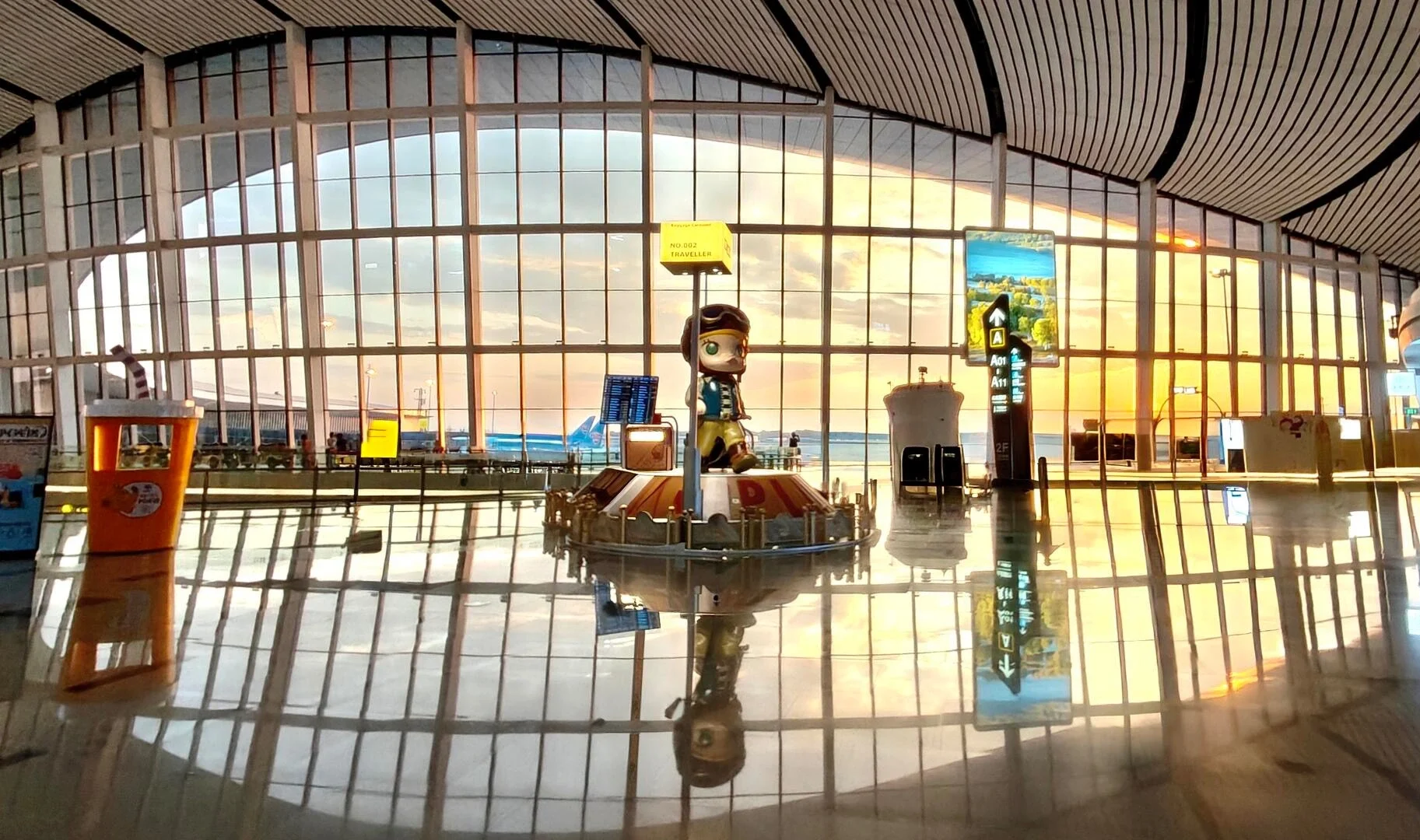
Beijing Daxing International Airport terminal interior at sunset with glass windows and reflections - How to Get to Beijing: Best Travel Options 2026 - The China Journey
Beijing Daxing International Airport

For most international visitors, flying is the main way to reach Beijing. The city has two major airports: Beijing Capital International Airport (PEK) and Beijing Daxing International Airport (PKX). Capital Airport has the more established international network, while Daxing is newer, highly modern, and used by many domestic and international routes. Always check your airport code carefully. PEK and PKX are far apart, and confusing them can cause serious transfer problems.

After landing, follow the Arrivals / 到达 signs. The usual process is immigration, baggage claim, customs, and then the arrival hall. During peak travel periods or when several international flights land together, immigration and baggage collection can take 30–60 minutes or longer.
  • Best for: International travelers arriving from overseas. For most long-haul visitors, this is the most direct and realistic way to reach Beijing.
  • Arrival process: Follow arrival signs, pass immigration, collect checked luggage, go through customs, then enter the public arrival area.
  • Airport-to-city options: Use the Airport Express, taxi, ride-hailing, or airport shuttle bus. Capital Airport Express connects toward Sanyuanqiao and Dongzhimen. Daxing Airport Express connects toward Caoqiao.
  • Time and cost: Airport express lines can reach key transfer points in about 20–30 minutes. Taxi or ride-hailing usually takes about 40–90 minutes, depending on airport, hotel location, and traffic. A rough fare is about ¥80–¥150 from PEK and about ¥120–¥200 from PKX to central areas.
  • Watch out for: Do not use drivers who approach you inside the arrival hall. Use official taxi queues, app-based ride-hailing, airport rail, or a pre-booked transfer.
  • Best practical tip: Save your hotel’s Chinese name, full Chinese address, and phone number before arrival. This is much more useful than showing an English hotel name to a driver.

Getting to Beijing by Domestic Flight

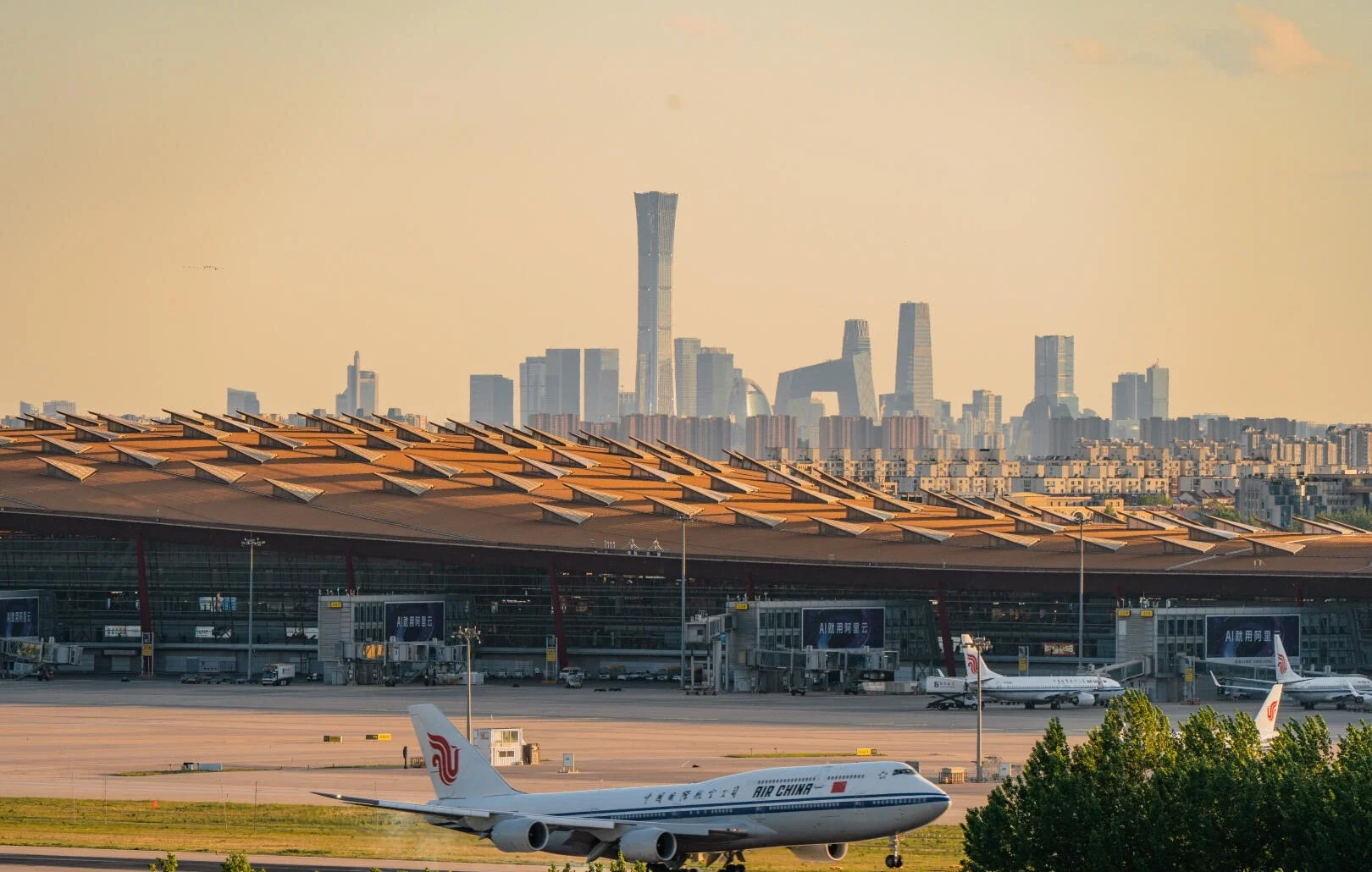
Beijing Capital International Airport runway with Air China aircraft and Beijing skyline at sunset - How to Get to Beijing: Best Travel Options 2026 - The China Journey
Beijing Capital International Airport

Domestic flights are useful when Beijing is far from your starting city. From places such as Guangzhou, Shenzhen, Kunming, or Urumqi, flying can save time, especially when the route is over about 1,000 km. For shorter routes, compare the full door-to-door journey because airport transfers, check-in, security, baggage claim, and city transfer time can weaken the flight advantage.

  • Best for: Long-distance domestic routes from far southern, western, or northwestern China.
  • When it beats high-speed rail: When the distance is long, flight prices are reasonable, and the arrival time still works well with your city transfer.
  • When it may not be ideal: For medium or short routes where high-speed rail stations are closer to city centers.
  • Airport transfer: Domestic flights mainly arrive at PEK or PKX. Confirm the airport before booking and again before departure.
  • Booking note: Use the original ID document used for booking. Chinese travelers use ID cards; foreign travelers usually use passports.
  • Travel tip: Arrive 1.5–2 hours before a domestic flight. Early morning flights can be cheaper, but only choose them if airport transport is practical.

Getting to Beijing by High-Speed Train

Beijing West Railway Station exterior with traditional tower style architecture and busy road traffic - How to Get to Beijing: Best Travel Options 2026 - The China Journey
Beijing West Railway Station

High-speed rail is often the best way to get to Beijing from major cities inside China, especially on medium-distance routes. It is punctual, comfortable, easy to book, and often more convenient than flying once airport transfers and security time are included. The biggest advantage is city access: Beijing’s main train stations connect to subway lines or local transport, so you avoid long airport transfers.

Beijing Train StationCommon DirectionCity AccessMain AdvantageWatch Out For
Beijing South Railway StationShanghai, Tianjin, Nanjing, Hangzhou, and many east / southeast routesSubway Lines 4 and 14Major high-speed rail hub with strong city accessVery busy during weekends and holidays
Beijing West Railway StationXi’an, Chengdu, Guangzhou, Shenzhen, and many west / south routesSubway Lines 7 and 9Good for southwest, northwest, and southbound routesLarge station; allow time to find the right gate
Beijing Chaoyang Railway StationNortheast routes such as Shenyang and HarbinSubway, bus, taxi, or ride-hailing connectionsUseful for northeast high-speed trainsCity access is generally less convenient than Beijing South or Beijing West
  • Best for: Most travelers coming from major Chinese cities, especially Tianjin, Shanghai, Nanjing, Hangzhou, Wuhan, Xi’an, Zhengzhou, Shenyang, and similar routes.
  • Ticket booking: The official 12306 website or app is the most reliable option. Foreign travelers can buy tickets with a passport. First-time users or travelers needing passport verification should allow extra time.
  • Station process: Enter the station, pass security, check the departure screen, find your gate, and wait for ticket inspection. Arrive 30–60 minutes early; for holidays, weekends, large stations, or your first China rail trip, allow more time.
  • Luggage note: High-speed rail is usually more flexible than flying, but large suitcases still need to fit on racks or in large-luggage spaces near carriage doors.
  • Best practical tip: During Spring Festival, National Day, May Day, and summer peaks, tickets can sell out fast. Use 12306 as soon as tickets are released, and use the official waitlist function if direct tickets are gone.

For wider train planning, read our China High-Speed Rail Guide.

Getting to Beijing by Regular Train or Overnight Train

Regular trains, including K, T, and Z trains, are slower than high-speed rail but much cheaper. They work best for travelers with limited budgets, flexible schedules, or an interest in China’s older train culture. Overnight sleeper trains can also save one hotel night, but they are not as quiet, clean, private, or comfortable as high-speed rail.

  • Best for: Students, backpackers, low-budget travelers, and people with flexible travel time.
  • Main advantage: Low price. A sleeper train can also turn a long journey into overnight travel and reduce hotel cost.
  • Main downside: Travel time is often 2–3 times longer than high-speed rail. Noise, shared space, hygiene, and sleep quality can vary.
  • Seat / sleeper choice: Hard seat is only suitable for short trips or very tight budgets. Hard sleeper is the best value for many overnight trips. Soft sleeper is more private and comfortable, usually with fewer people per compartment.
  • Watch out for: Keep valuables close, especially overnight. Beijing Railway Station and Beijing West Railway Station are common arrival points for regular trains, so check your station carefully.
  • Best practical tip: Bring earplugs, an eye mask, tissues, a water bottle, and disposable slippers. Trains usually provide hot water, so many travelers bring tea or instant noodles.

Getting to Beijing by Long-Distance Bus

Long-distance buses are no longer a mainstream way to get to Beijing. In most cases, trains are faster, safer, more reliable, and easier to connect with city transport. A bus only makes sense if you start from a town or county without convenient rail service.

  • Best for: Travelers starting from smaller towns, counties, or rural areas where direct rail service to Beijing is limited.
  • Main advantage: Buses may reach places that do not have a useful railway connection.
  • Main downside: Comfort, punctuality, safety confidence, and city access are usually weaker than train travel.
  • Better alternative: Travel first to a larger nearby city with a railway station, then take a high-speed train or regular train to Beijing.
  • Watch out for: Beijing has several bus stations, such as Liuliqiao, Sihui, and Zhaogongkou. Buy tickets only through official stations or reliable booking platforms, and avoid unlicensed private cars or “black taxis.”

Getting to Beijing by Car or Private Transfer

Driving or booking a private transfer can be useful, but it is not the best choice for most first-time visitors entering central Beijing. It works better for families, business travelers, groups, people with heavy luggage, or travelers coming from nearby cities. The main value is door-to-door convenience. The main problem is Beijing traffic.

  • Best for: Families, small groups, business travelers, travelers with heavy luggage, and visitors coming from nearby areas such as Tianjin or parts of Hebei.
  • Main advantage: Door-to-door travel is easier when you have children, elderly travelers, several suitcases, photography gear, or a fixed hotel drop-off point.
  • Main challenge: Non-Beijing vehicles entering within the Sixth Ring Road need a Beijing Entry Permit, which can be applied for through the Beijing Traffic Police app. Driving inside Beijing also means traffic restrictions, expensive parking, limited parking spaces, and heavy rush-hour congestion.
  • Cost factors: Private airport or station transfers to the city often cost around ¥300–¥600 depending on distance, vehicle type, and service level. A cross-city transfer from Tianjin to Beijing may cost around ¥500–¥1,000.
  • Watch out for: Book through formal platforms or hotel-arranged services. Confirm whether the quoted price includes tolls, parking fees, waiting time, and night surcharges.
  • Best practical tip: For ordinary visitors, I would not recommend driving around central Beijing. A better plan is to arrive by car or transfer, leave the car at the hotel or outside the core area, and use the subway, taxi, or ride-hailing inside the city.

Which Beijing Arrival Point Should You Choose?

The best arrival point depends on your route, hotel direction, arrival time, and luggage. Do not choose only by ticket price. A cheaper flight or train can become inconvenient if it arrives far from your hotel, after subway hours, or at a station with weaker city connections.

Arrival PointBest ForCity Transfer OptionsApproximate Transfer TimeMain AdvantageWatch Out For
Beijing Capital International Airport (PEK)Most international flights; travelers heading toward Dongzhimen, Sanyuanqiao, Wangjing, Guomao, or northeast BeijingCapital Airport Express, taxi, ride-hailing, airport busAirport Express to key transfer points takes about 20–30 minutes; taxi to central areas often takes 40–90 minutesMature airport with strong international routes and good city transportTerminals are large, and road traffic into the city can be slow during peak hours
Beijing Daxing International Airport (PKX)Some international and domestic flights; travelers heading toward Caoqiao, southern Beijing, or areas near Beijing West transfer routesDaxing Airport Express, taxi, ride-hailing, airport bus, rail linksAirport Express to Caoqiao takes about 20 minutes; taxi to central areas often takes 60–100 minutesModern facilities and fast rail access to southern city transfer pointsFarther from central Beijing, so taxi costs can be higher
Beijing South Railway StationHigh-speed trains from Tianjin, Shanghai, Nanjing, Hangzhou, and many east / southeast routesSubway Lines 4 and 14, taxi, ride-hailingSubway to central areas often takes about 20–30 minutesMajor high-speed rail hub with strong subway accessVery crowded during holidays and weekends; taxi queues can be long
Beijing West Railway StationTrains from Xi’an, Chengdu, Guangzhou, Shenzhen, and many west / south routesSubway Lines 7 and 9, taxi, ride-hailingSubway to central-west areas often takes about 15–25 minutesUseful for southwest, northwest, and southbound routesLarge, busy station; allow extra time to exit, find transfers, or meet a driver
Beijing Chaoyang Railway StationHigh-speed trains from northeast routes such as Shenyang, Harbin, and ChengdeSubway, bus, taxi, or ride-hailing connectionsTaxi to areas such as Sanlitun or Guomao may take about 30–60 minutes depending on trafficImportant station for northeast high-speed railCity access is generally less convenient than Beijing South or Beijing West, especially with luggage

For late-night arrivals, heavy luggage, or family travel, taxi, ride-hailing, or a pre-booked transfer may be easier than public transport. For daytime arrivals with light luggage, airport express lines and subway connections are usually the most reliable choice.

How to Get from Beijing Airport or Train Station to the City

After you arrive in Beijing, the best way to reach your hotel depends on your arrival point, luggage, budget, and time of day. For most daytime arrivals with light luggage, subway or airport express lines are the most reliable choice because they avoid road traffic. For late-night arrivals, families, or travelers with large bags, a taxi, Didi, or pre-booked transfer is usually easier.

Transfer MethodBest ForCost LevelTime ReliabilityLuggage ConvenienceWatch Out For
Subway / Airport ExpressSolo travelers, couples, light luggage, daytime arrivals$HighMediumThe Capital Airport Express links PEK with areas such as Sanyuanqiao and Dongzhimen. The Daxing Airport Express links PKX with Caoqiao. Airport express fares are roughly ¥25–¥35, but check the current fare and operating time before travel. Beijing subway hours are generally around 5:00–23:00, but exact times vary by line and station.
TaxiFamilies, heavy luggage, late arrivals, direct hotel transfer$$MediumHighUse the official taxi queue at airports and stations. Traffic can make the trip slow and more expensive during rush hours.
Ride-hailing / DidiTravelers comfortable using apps and Chinese pickup points$$MediumHighYou need mobile data, payment access, and the ability to find the designated ride-hailing pickup area, which can be confusing in large terminals.
Airport Shuttle BusBudget travelers with light luggage and a stop near their hotel$Low to mediumMediumCheaper than taxis, but slower and affected by road traffic. You may still need a subway, taxi, or walk after getting off.
Hotel Shuttle / Private TransferFamilies, business travelers, late-night arrivals, first-time visitors with luggage$$$Medium to highVery highMost convenient but usually the most expensive. Confirm the pickup point, waiting time, night surcharge, tolls, and parking fees before booking.

Before arrival, save your hotel’s Chinese name, full address, and phone number. This is especially important for taxi drivers, ride-hailing pickup problems, and late-night arrivals when English support may be limited.

Best Way to Get to Beijing from Different Starting Points

The best way to reach Beijing depends more on your starting point than on one universal rule. My rule is to compare the full door-to-door journey, not just the ticket price or the scheduled travel time.

Starting Point TypeBest Transport OptionWhy It WorksWhen to Choose Another Option
Overseas / international departureInternational flightFor most overseas travelers, flying into Beijing Capital International Airport (PEK) or Beijing Daxing International Airport (PKX) is the only practical choice.If you are already near a land border route or traveling slowly across Asia, rail or overland routes may be possible, but they are much slower and less practical for most visitors.
Faraway Chinese citiesDomestic flightFrom cities such as Guangzhou, Shenzhen, Kunming, Urumqi, or other long-distance routes, flying often saves time once the distance is over about 1,000 km.Choose high-speed rail if the flight is expensive, poorly timed, or likely to create long airport transfers.
Medium-distance Chinese citiesHigh-speed trainFrom cities such as Shanghai, Wuhan, Xi’an, Zhengzhou, Nanjing, and similar routes, high-speed rail is often the best balance of speed, comfort, punctuality, and city-center access.Choose a flight only if the fare is much better and the airport transfer still keeps the door-to-door time reasonable.
Nearby citiesHigh-speed rail / intercity trainFrom places such as Tianjin, Shijiazhuang, Baoding, or nearby Hebei cities, trains are usually faster and easier than driving or buses.Consider a private transfer if you have heavy luggage, elderly travelers, children, or a door-to-door group need.
Heavy luggage / family / groupPrivate transfer or car serviceDoor-to-door transport avoids repeated stairs, security checks, subway transfers, and station navigation with bags.Use high-speed rail plus taxi if the route is long and a full private transfer is too expensive.
Very tight budgetRegular train / hard sleeperRegular trains and overnight sleepers can cost much less than flights or high-speed rail, and overnight trains may save one hotel night.Avoid this if you need comfort, privacy, reliable rest, or a short travel time.
Very limited timeFlight for long distance; high-speed rail for medium distanceThe fastest option depends on the full route, including airport access, check-in, security, delay risk, station access, and final hotel transfer.Do not choose a “fast” flight if the airport is far, the arrival is late, or the delay risk is high.

How to Buy Tickets to Beijing

Buying transport tickets to Beijing is usually straightforward, but foreign travelers need to watch ID rules, passport verification, and payment support. Use the same name and passport number when booking, and always carry the original document used for the ticket.

  • Flights: International and domestic flights can be booked through airline websites, Skyscanner, Trip.com/Ctrip, Qunar, Fliggy, and other major platforms. For domestic flights, check both fare and airport code because Beijing has PEK and PKX.
  • High-speed trains: The official 12306 website or app is the most authoritative channel. Foreign travelers can buy tickets with a passport, but first-time account verification or passport checks may take extra time.
  • Regular trains: Use the same channels as high-speed rail, mainly 12306 or reliable third-party platforms. Check train type carefully: G / D / C trains are high-speed or intercity services, while Z / T / K trains are regular-speed trains.
  • Buses: Long-distance bus tickets can be bought at bus stations or through platforms such as Ctrip bus tickets and Bus365-style services. Online availability may be less complete than train tickets.
  • Private transfers: Airport pickup, station pickup, cross-city transfers, and chartered cars can be booked through platforms such as Trip.com/Ctrip, Fliggy, Huangbaoche, or Didi premium car services.
  • ID requirement: Chinese citizens use a resident ID card. Foreign travelers use a passport. Bring the original ID document used for booking, not just a photo.
  • Train station access: Foreign travelers may need to use manual channels for ticket checks or passport verification, especially when the automatic gates do not recognize the passport smoothly.
  • Booking timing: For domestic flights and high-speed trains, start checking 15–30 days ahead. For Spring Festival, National Day, May Day, and summer holidays, plan earlier and be ready when tickets are released. For international flights, start watching prices around 2–3 months ahead.
  • Payment note: Chinese platforms commonly support Alipay, WeChat Pay, and UnionPay. Foreign cards may not work on every platform or for every booking, so test payment access early or use a platform that clearly supports international cards.

How Much Does It Cost to Get to Beijing?

The cost of getting to Beijing depends heavily on your starting point, travel season, booking time, and seat or cabin class. Use the prices below as rough one-way ranges, not fixed fares. During Chinese public holidays, summer vacation, and last-minute booking periods, flights and trains can become much more expensive or sell out quickly.

Transport TypeTypical Cost RangeWhat Affects the PriceBest For
International flightsAround ¥3,000–¥10,000+ for economy classDeparture country, airline, season, layover, booking time, and baggage rulesOverseas travelers flying directly or with one transfer to Beijing
Domestic flightsAround ¥500–¥2,500Route distance, airline, discount level, holiday demand, and arrival airportLong-distance routes such as Guangzhou, Shenzhen, Kunming, Urumqi, or Harbin
High-speed trainAround ¥200–¥1,000 for second classDistance, train type, route demand, and travel dateMedium-distance routes where city-center access matters
Regular train / sleeperHard seat around ¥100–¥300; hard sleeper around ¥200–¥500; soft sleeper around ¥300–¥800Distance, train type, seat or sleeper class, and overnight timingBudget travelers, students, backpackers, and flexible schedules
Long-distance busAround ¥100–¥400Distance, route availability, departure station, and road conditionsSmall towns or counties without convenient train access
Private transfer / car serviceAround ¥300–¥1,500+ per tripDistance, vehicle type, group size, time of day, tolls, parking, and pickup pointFamilies, groups, business travelers, or travelers with heavy luggage

For airport or train-station transfers inside Beijing, a private pickup from the airport or station to the city often costs around ¥300–¥600, depending on vehicle type and arrival point. A cross-city transfer, such as Tianjin to central Beijing, can range roughly from ¥500–¥1,000. Always confirm whether tolls, parking fees, waiting time, and night surcharges are included.

Best Time and Booking Tips for Getting to Beijing

Timing matters, especially for trains and holiday travel. In normal weeks, getting to Beijing is usually simple. During Chinese holiday peaks, popular flights and train routes can sell out or become much more expensive.

  • Normal periods: Start checking domestic flights and high-speed trains about 15–30 days before travel. Train ticket release rules can change, so confirm the current 12306 presale window.
  • Peak travel periods: Spring Festival, National Day, May Day, and summer vacation are the hardest periods. Friday evenings, Sunday afternoons, and days around public holidays can also be tight.
  • Best arrival time: Try to arrive between 8:00 and 20:00, when subway, airport express, taxis, ride-hailing, and hotel check-in are easier.
  • Avoid if possible: Avoid late-night arrivals without a transfer plan. After rail services stop, taxis and ride-hailing become more important and waits can increase.
  • Booking rule: Confirm major transport before finalizing hotels. For international travelers, avoid non-refundable flights before visa or entry eligibility is clear.
  • Practical tip: If train tickets sell out, use 12306’s official waitlist function instead of ticket scalpers.

Common Mistakes When Traveling to Beijing

  • Confusing PEK and PKX: Beijing Capital International Airport (PEK) and Beijing Daxing International Airport (PKX) are far apart. Check the airport code before booking transfers or hotels.
  • Confusing Beijing train stations: Beijing South, Beijing West, Beijing Chaoyang, and Beijing Railway Station are different stations. Check the exact station name on your ticket before planning transfers.
  • Only comparing ticket prices: A cheap flight can become less attractive after adding airport transfers, check-in time, baggage wait, late arrival, and city transport.
  • Arriving late with no transport plan: Beijing’s subway usually stops around late evening. If you arrive after normal operating hours, arrange a taxi, Didi, hotel pickup, or private transfer in advance.
  • Buying tickets too late during holidays: Spring Festival, National Day, May Day, summer vacation, and weekend peaks can sell out quickly, especially on popular high-speed rail routes.
  • Not preparing local payment: Alipay, WeChat Pay, or some RMB cash will make transport and transfers much easier. Do not rely only on a foreign credit card.
  • Not saving your hotel address in Chinese: Many drivers will not recognize English hotel names. Save the Chinese hotel name, full address, and phone number.
  • Underestimating large transport hubs: Daxing Airport, Beijing South Station, and Beijing West Station can involve long walking distances, security checks, queues, and confusing pickup zones.
  • Choosing complex transfers with heavy luggage: If you have large suitcases, children, elderly travelers, or special equipment, a taxi or private transfer may be worth the extra cost.
  • Depending only on Google-based tools: Google Maps, Gmail, WhatsApp, and some other international tools may not work normally in mainland China.
  • Not downloading local tools: Prepare Amap or Baidu Maps for navigation, Didi for ride-hailing, and offline screenshots of bookings and hotel addresses before arrival.

Final Advice: What Is the Best Way to Get to Beijing?

The best way to get to Beijing depends on where you start. International travelers usually fly into PEK or PKX. Inside China, high-speed rail is often best for medium-distance routes, while domestic flights work better for many long-distance trips. Nearby cities are easiest by high-speed rail or intercity train, and overnight sleepers remain useful for tight budgets.

The key is door-to-door efficiency. Compare total time, cost, transfers, luggage, arrival time, and comfort. A cheap ticket is not always better if it creates a late arrival, long airport transfer, or difficult connection to your hotel.

FAQs About Getting to Beijing

What is the easiest way to get to Beijing?

For most domestic travelers, high-speed rail is the easiest way to get to Beijing from major Chinese cities. The stations are usually easier to reach than airports, and the process is simple. For international travelers, flying into Beijing Capital International Airport (PEK) or Beijing Daxing International Airport (PKX) is the most direct option.


For trips over 1,000 kilometers, flying is often faster, especially from cities such as Guangzhou, Shenzhen, Kunming, or Urumqi. For routes under about 1,000–1,500 kilometers, high-speed rail is often easier because it avoids airport transfers, check-in, baggage claim, and flight delay risk. Always compare door-to-door time.


Beijing Capital International Airport (PEK) has more mature international connections and is convenient for areas such as Dongzhimen, Sanyuanqiao, Wangjing, and Guomao. Beijing Daxing International Airport (PKX) is newer but farther from central Beijing, and it can be convenient for southern Beijing or Caoqiao. Choose based on flight price, airline, hotel location, and arrival time.


Beijing South Railway Station is common for high-speed trains from Tianjin, Shanghai, Nanjing, Hangzhou, and other eastern or southeastern routes. Beijing West Railway Station is common for routes from Xi’an, Chengdu, Guangzhou, Shenzhen, and southwestern or southern China. Beijing Chaoyang Railway Station mainly serves northeastern routes. Your ticket decides the station, so check it carefully.


Yes. Foreign travelers can buy train tickets with a passport through the official 12306 website or app, or through third-party platforms. Bring the same passport used for booking when entering the station. Some foreign travelers may need to use the manual verification or ticket-checking channel, so arrive earlier the first time.


In normal periods, start checking domestic flights and train tickets about 15–30 days before travel. During Spring Festival, National Day, May Day, and summer vacation, book as early as possible. For trains, follow the official 12306 release time and use the waitlist function if tickets sell out.


The Airport Express is usually the most punctual option because it avoids road traffic. Taxis and ride-hailing are better for heavy luggage, late arrivals, or family travel. Airport shuttle buses are cheaper but slower. Before arrival, save your hotel’s Chinese name, full address, and phone number.

Avoid confusing PEK with PKX, or Beijing South with Beijing West or Beijing Chaoyang. Do not arrive late at night without a transport plan. Avoid relying only on foreign credit cards, English hotel names, or Google-based apps. Also avoid unofficial drivers approaching you inside arrival halls or station exits.


Interesting Articles for You

Fujian delicacies served in a modern dining atmosphere with seafood - Fujian Cuisine, A Flavorful Taste of Tradition 2026 - The China Journey - How to Get to Beijing: Best Travel Options 2026 - The China Journey
Food

Fujian Cuisine

Discover the rich flavors of Fujian cuisine, famous for its fresh seafood, delicate soups, and unique cooking techniques, offering a true taste of southern China.

Famous Chinese baijiu brands displayed with traditional packaging and bottles on a black background. - What is Baijiu? The China's Traditional Spirit 2026 - The China Journey - How to Get to Beijing: Best Travel Options 2026 - The China Journey
Culture

What is Baijiu?

Baijiu is a traditional Chinese spirit, typically distilled from fermented grains like sorghum, with a high alcohol content (40-60% ABV) and a distinct, pungent flavor.

Ningbo travel guide cover showing coastal skyline temples culture highlights and The China Journey logo - 2026 Ningbo Travel Guide: Culture, Coast & Temples - The China Journey - How to Get to Beijing: Best Travel Options 2026 - The China Journey
Travel Guide

Ningbo Travel Guide

Explore Ningbo’s ancient temples, seaside escapes, rich history, and local cuisine in this complete travel guide for first-time and return visitors alike.

happy tourists exploring city map diverse travelers sitting in park checking map and planning urban sightseeing route - How to Get to Beijing: Best Travel Options 2026 - The China Journey

Plan Your China Trip with Our Experts

Share your travel ideas, and we’ll help you plan a smooth, personalized trip across China.

 
travelers planning route with map group of international tourists reading map outdoors with backpacks and guide - How to Get to Beijing: Best Travel Options 2026 - The China Journey
happy tourists exploring city map diverse travelers sitting in park checking map and planning urban sightseeing route - How to Get to Beijing: Best Travel Options 2026 - The China Journey

Work with Us as a Local Guide in China

travelers planning route with map group of international tourists reading map outdoors with backpacks and guide - How to Get to Beijing: Best Travel Options 2026 - The China Journey

We’re looking for experienced, part-time local guides to serve international travelers.

Requirements:

• Fluent in at least one foreign language
• 3–5 years guiding international visitors
• Able to operate in multiple regions in China
• Competitive and reasonable pricing
• Proven customer reviews or testimonials
• Professional, reliable, and responsive
• Flexible availability for custom trips

Hi there!

Just a quick heads-up — a helpful user named Volker let me know that some of the non-English content on this site may not be accurate.

This site is a one-person project I run part-time. I research and publish all the content myself, and the translations are currently done by machine (Google Translate). Balancing accuracy and accessibility across multiple languages is a real challenge.

If you spot any errors, I recommend switching to the English version using the button at the bottom left. I’ll continue working to improve the translations over time.

I truly appreciate your understanding. And if you have any suggestions, feel free to leave a comment — it means a lot to me.

— Anthony 2025.6.18

Xian long image for popup form - How to Get to Beijing: Best Travel Options 2026 - The China Journey

Planning a Trip to China?

Changzhou Skyline at Dusk The Changzhou skyline illuminated at dusk, with city lights reflecting on the water and buildings glowing in the evening light. - How to Get to Beijing: Best Travel Options 2026 - The China Journey
Do any of these sound familiar from your past trips?
Let our trusted partner travel agency handle the details.
👉 Get a custom plan within your budget and enjoy the best of China — stress-free.