

Jiaxing is not just a city, and it is not simply shorthand for Wuzhen or Xitang. It works better as a combined destination: a place where downtown Jiaxing, one main water town, and one optional cultural or scenic extension can be shaped into a more complete Jiangnan trip.
The real question is usually not whether Jiaxing is worth visiting, but how to structure it well. This guide helps you decide what to prioritize, how long to stay, and which route logic fits best, so you can build a clearer first-trip plan instead of trying to treat every part of Jiaxing as equally important.
| Field | Quick Take |
|---|---|
| Chinese name | Jiaxing (嘉兴) |
| Province role | An important node in northern Zhejiang and the Yangtze Delta, rather than the region’s strongest single-sight destination |
| Best first-time role | A flexible Jiangnan stop built around one main water town plus a supporting city layer |
| Best known for | Wuzhen, Xitang, South Lake, Jiaxing zongzi, and the Qiantang tidal-bore extension |
| Best trip length | 2–3 days is the safest first-trip length |
| Best time to visit | Spring and autumn are usually the most comfortable overall |
| Best for | Travelers interested in water towns, slower pacing, light culture, and local food |
| Travel style | Arrive by rail, choose either a city or water-town stay, then combine one main water town, a city layer, and selective extensions |
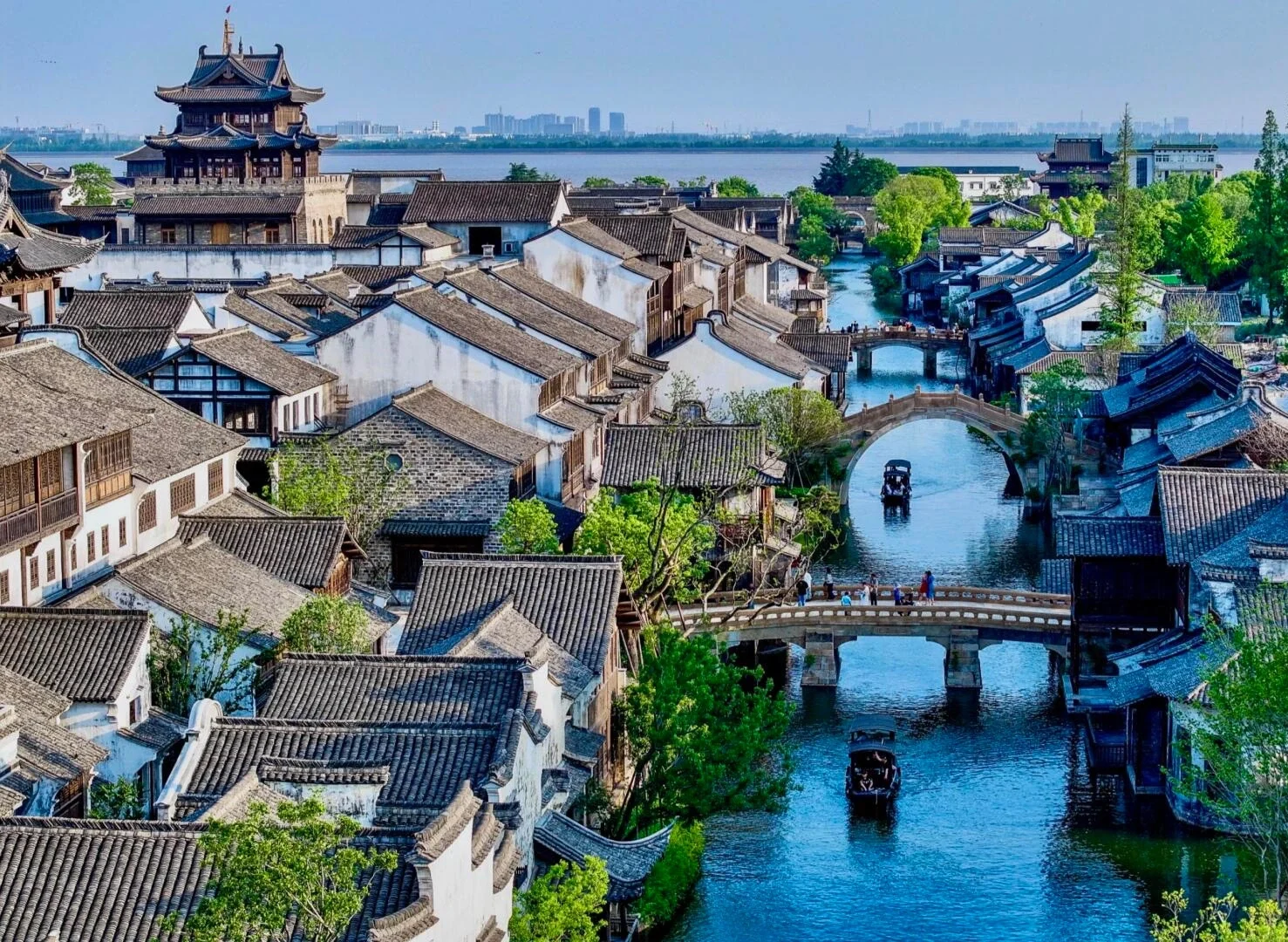
Jiaxing is worth visiting not because it delivers one overwhelming landmark, but because it gives you a flexible Jiangnan structure that works unusually well for first-time route planning. Its real strength is how easily it combines water-town atmosphere, a usable city stop, local food identity, and one or two selective extensions without forcing a heavy itinerary.
It gives you real water-town choice in one compact region, which means you can select Wuzhen, Xitang, or another style instead of committing blindly to one version of Jiangnan.
South Lake gives Jiaxing a genuine downtown anchor, so the trip is not only about ancient towns but also about a city with historical weight and a clearer cultural center.
It works exceptionally well inside a Shanghai–Hangzhou–Suzhou route, where it can carry the water-town theme without requiring major transport detours.
Yanguan adds unusual value because the tidal bore is not a generic scenic add-on but a rare natural spectacle that can completely change the tone of a Jiaxing trip when timed well.
Jiaxing has unusually strong food recognition for a city of its type, especially through zongzi and its broader everyday Jiangnan eating culture, which gives the trip a clear flavor identity.
The overall pace is softer and lower-pressure than bigger East China cities, which makes Jiaxing especially useful when you want to slow the rhythm rather than intensify it.
Few Yangtze Delta destinations make route-building this easy: Jiaxing lets you combine one main water town, one city component, and one optional extension without making the trip feel scattered.

Jiaxing is strongest for travelers who understand that the destination is built through combination, not through one blockbuster sight. The trip usually feels strongest when you choose a clear main theme, keep the structure selective, and let pace matter as much as sightseeing volume.
Good fit for…
Travelers who specifically want a water-town-focused trip, and prefer choosing one strong Jiangnan town over trying to chase every famous name.
People building a wider East China route and needing one stop to carry the water-town theme between Shanghai, Hangzhou, and Suzhou.
Travelers who prefer slower pacing, lighter cultural depth, local food, and atmosphere over nonstop major-sight consumption.
Visitors willing to make clear trade-offs, such as choosing one main water town first and treating the city layer or special extensions as support rather than equal priorities.
Maybe not ideal if…
You mainly want China’s biggest standalone landmarks and expect every stop to compete with Beijing, Shanghai, or West Lake-level icons.
You do not care about ancient towns, canals, or Jiangnan aesthetics, because Jiaxing’s main appeal depends heavily on that travel language.
You want one major highlight every hour and feel dissatisfied when a place works through mood, pacing, and layered combinations instead of constant spectacle.
You try to fit everything into one short trip, because Jiaxing gets weaker when every town, lake, and extension is treated as an equal must-see.

Jiaxing makes the most sense when you stop treating it like a checklist destination. Its value does not come from trying to “complete” every famous name in the area. For most first-time visitors, the real task is to choose one clear structure, then let the rest of the trip support that choice.
Pattern 1: one main water town + optional downtown layer
This is the safest first-trip structure for most travelers. Pick one main water town first, then add downtown Jiaxing only if time and energy allow. This gives the trip a clear center instead of splitting attention too early.
Pattern 2: downtown Jiaxing + one nearby water town
This works if you want a more balanced city-and-water-town combination. Downtown Jiaxing gives you a cultural anchor, while one nearby water town provides the classic Jiangnan atmosphere without turning the trip into town-hopping.
Pattern 3: Jiaxing as a mid-route Yangtze Delta stop
This works especially well between Shanghai, Hangzhou, and Suzhou. In this role, it is less a stand-alone headline destination and more a water-town-and-rhythm module inside a larger East China route.
The key is simple: choose your main layer first, then add only what strengthens it.
In practical terms, Wuzhen is the strongest all-round major water-town choice, Xitang is the lighter and more lived-in alternative, South Lake is the downtown anchor rather than a full-trip driver, Yuehe is the most useful city add-on, Yanguan is a seasonal special extension, and Puyuan is a style-driven supplement rather than a default first pick.
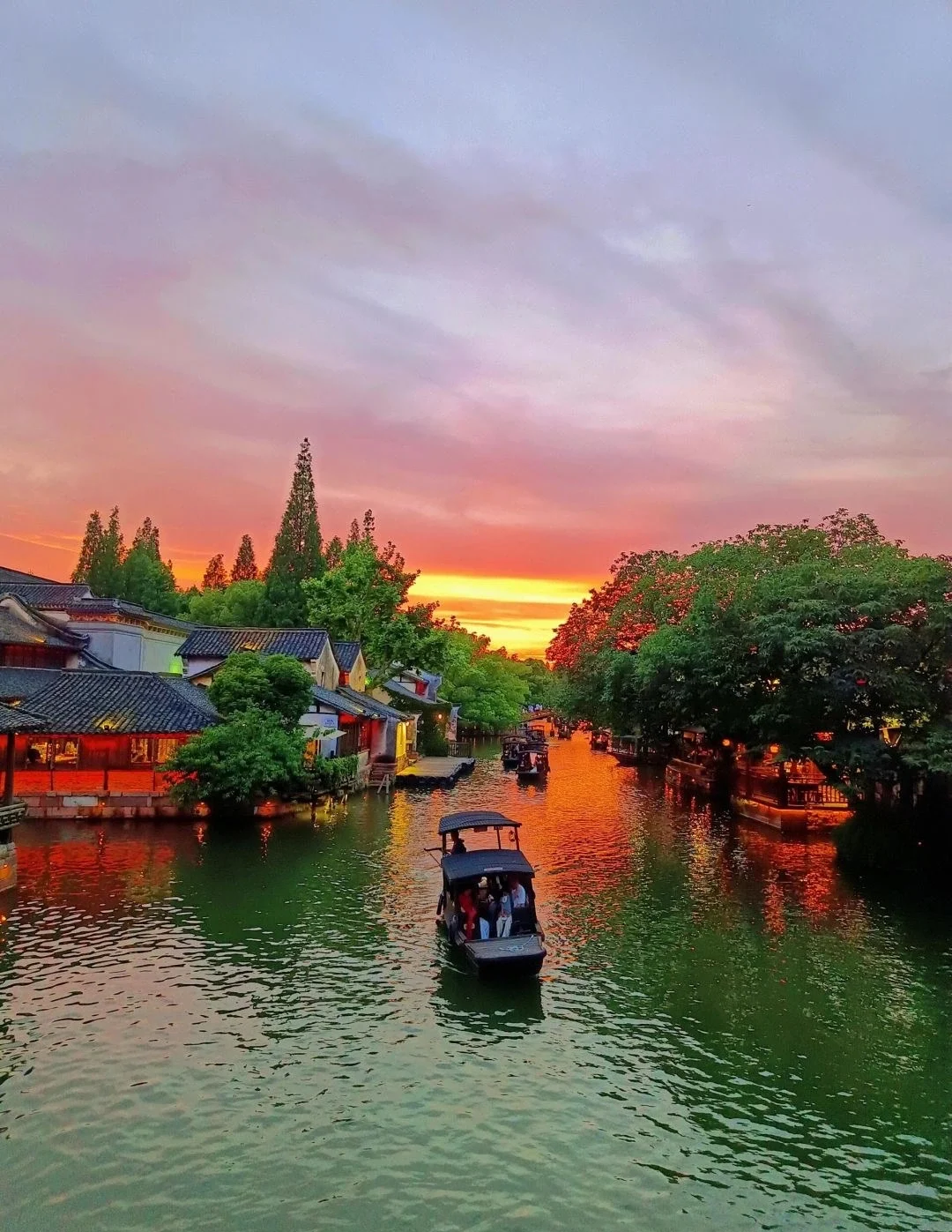
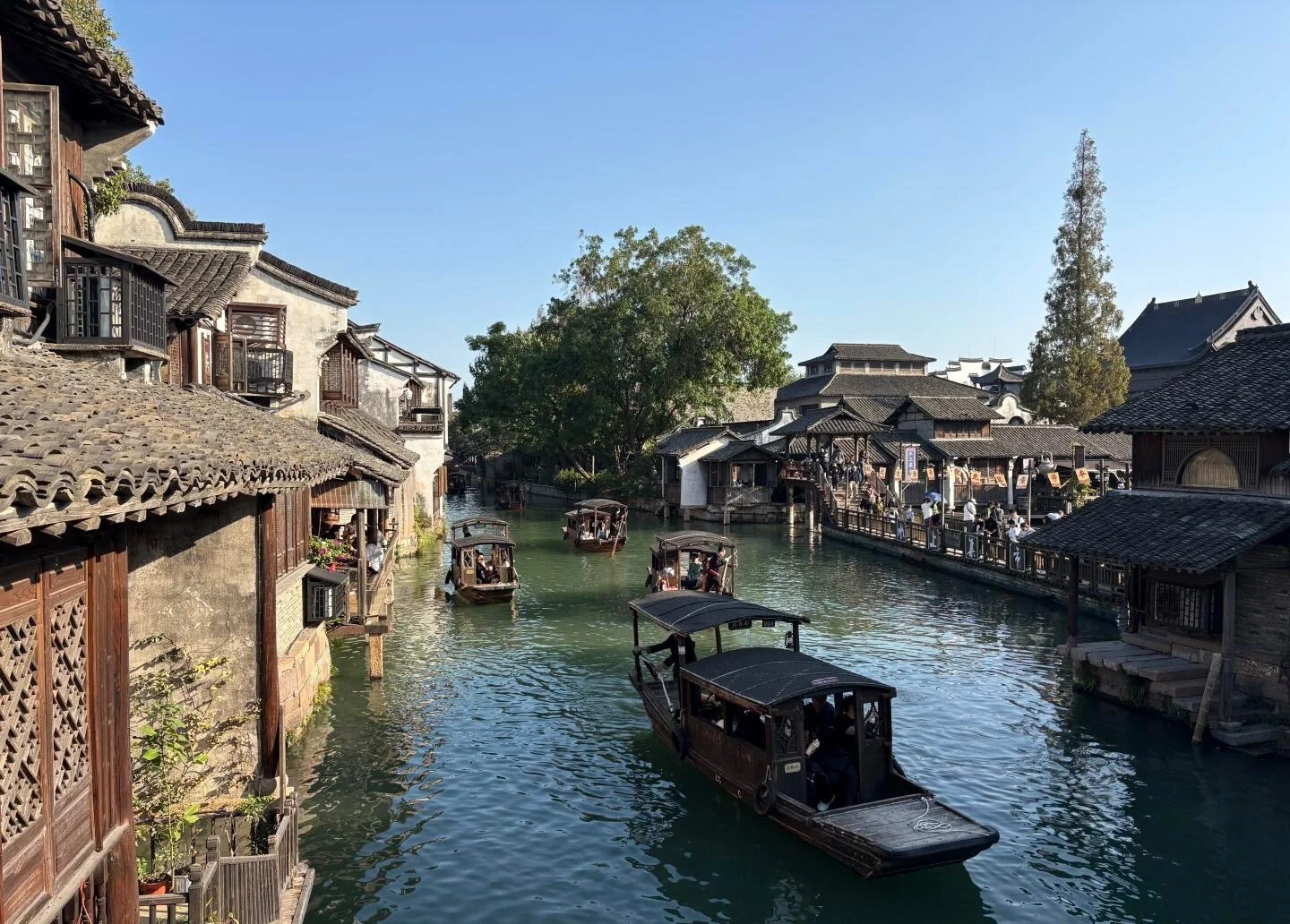
Wuzhen (乌镇) is the strongest all-round water-town choice in Jiaxing and the safest first pick for most travelers. It is worth visiting because it delivers the most complete version of the Jiangnan water-town experience in one place: canals, bridges, preserved streets, night views, lodging inside the scenic area, and a fuller day-to-night rhythm. It suits first-time visitors who want one major, polished, easy-to-use water town rather than a lighter or rougher version. In a Jiaxing route, this is usually the primary trip anchor rather than a side stop. If you only choose one water town, Wuzhen should usually be the first choice.

Xitang (西塘) is worth visiting if you want a lighter, more lived-in alternative to Wuzhen. Its appeal comes from a looser, more everyday water-town feel, with covered walkways, smaller lanes, and a more casual rhythm that can feel less staged than the bigger flagship options. It suits travelers who prefer flexibility, lower-pressure wandering, and a water-town stop that feels easier to fit into a shorter or more relaxed plan. In a Jiaxing route, Xitang works best as the main substitute for Wuzhen, not as a compulsory second town. Choose it when you want lighter texture over fuller polish.

South Lake (南湖) is the downtown Jiaxing anchor and the clearest reason not to reduce the trip to water towns alone. It is worth visiting because it gives the city historical weight and a stronger civic identity. It suits travelers who want city context, light historical interest, and a stop that breaks up the canal-town pattern. In a Jiaxing route, it works best as the downtown core, usually paired with Yuehe or a food layer, not as the core reason for a long stay.
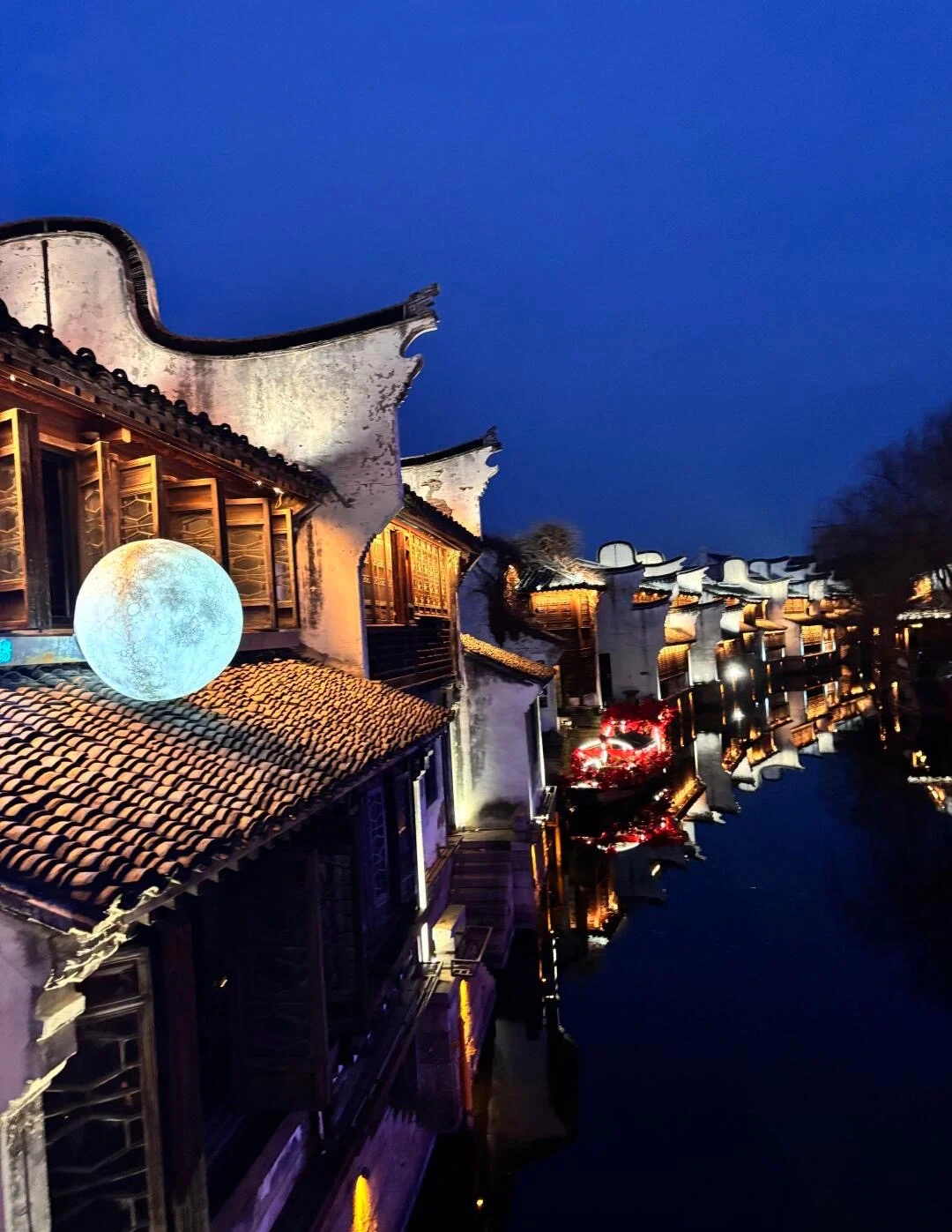
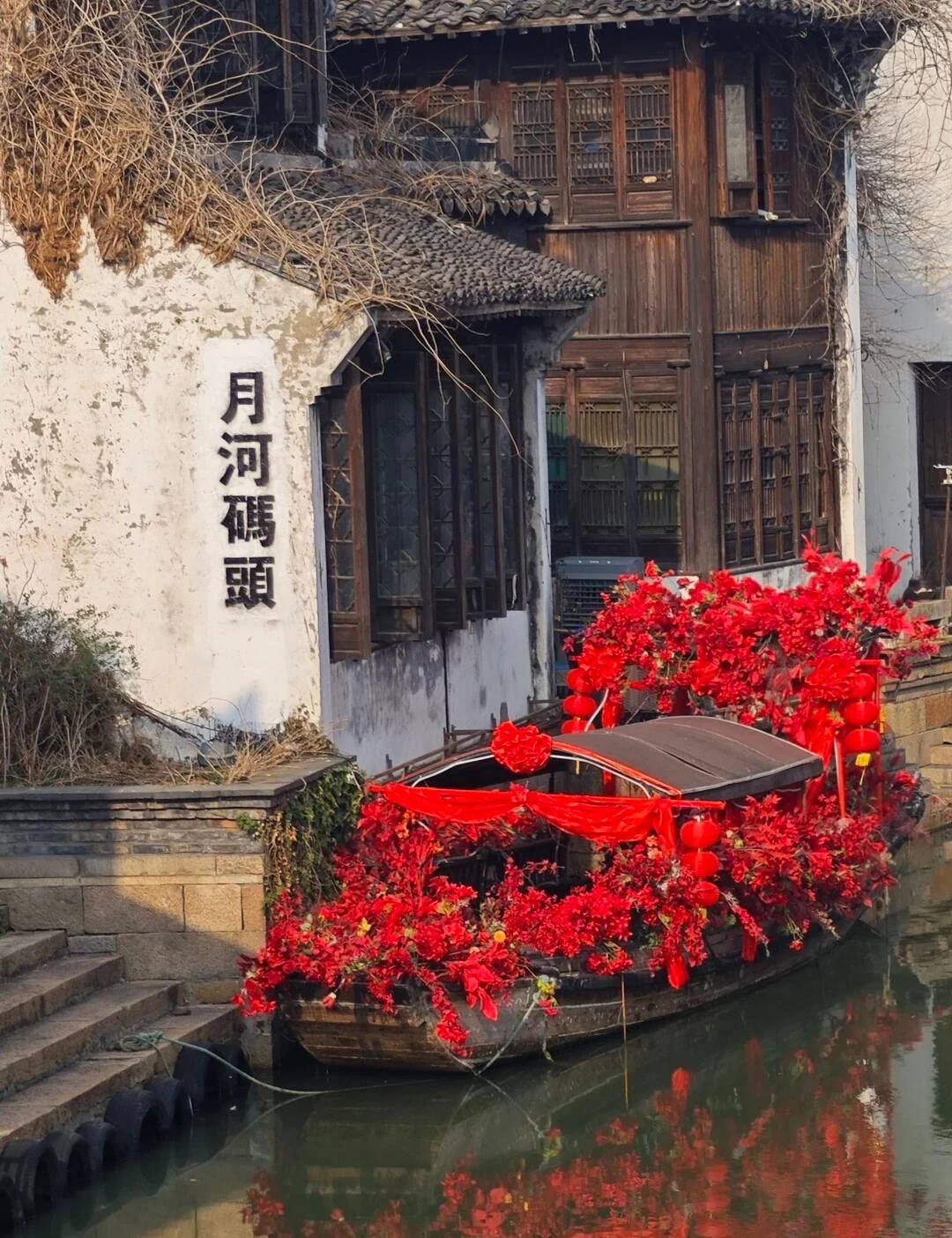
Yuehe Historic District (月河历史街区) is worth visiting as Jiaxing’s most useful city add-on. It works because it gives you an easier, lower-pressure downtown layer built around canal-side walking, old streets, local snacks, and evening atmosphere without requiring a heavy sightseeing block. It suits travelers who want to round out a Jiaxing city stop with food, casual strolling, and a more everyday urban-historic mood. In a Jiaxing route, Yuehe should usually come after South Lake, not before it. It is not a destination that carries the trip on its own, but it is one of the best supporting stops for making downtown Jiaxing feel complete.
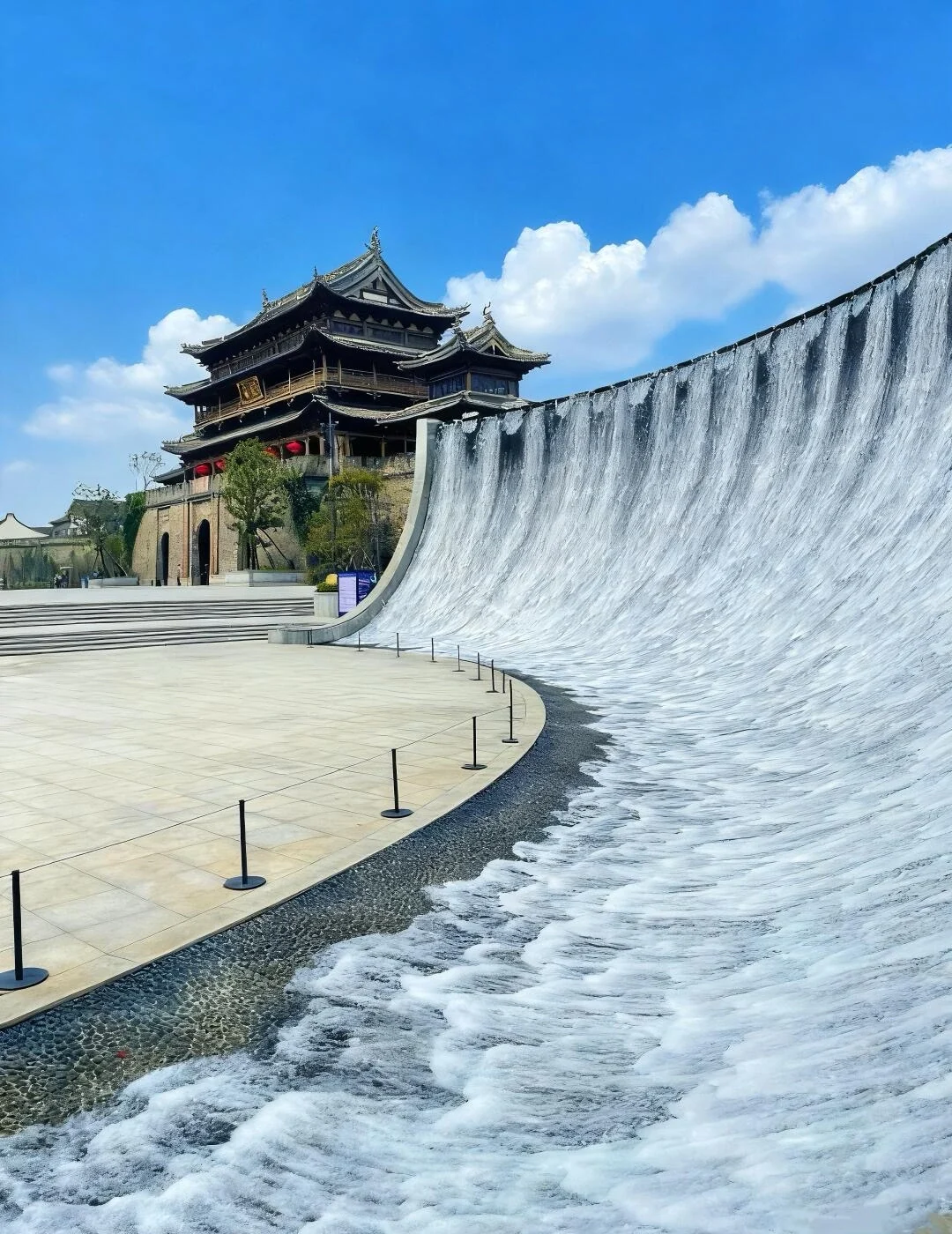
Yanguan Ancient Town (盐官古镇) is worth visiting mainly because of the Qiantang tidal bore, not because it is the default best ancient-town stop in the area. When the timing is right, this becomes one of Jiaxing’s most distinctive extensions, adding a seasonal natural spectacle that no standard water-town route can replace. It suits travelers visiting in the right season, especially those with a strong interest in tidal phenomena, photography, or special-interest side trips. In a Jiaxing route, Yanguan is a seasonal special-interest add-on, not a standard first-trip core stop. If the tidal timing does not work, its priority drops sharply.

Puyuan Fashion Ancient Town (濮院时尚古镇) is worth visiting if you want a more design-led, style-conscious, and less traditional supplement to the classic Jiaxing water-town formula. Its value lies in atmosphere, visual control, and a more curated environment rather than deep historical weight or everyday lived-in texture. It suits travelers who care about aesthetics, newer boutique-style environments, and a quieter alternative after already seeing more classic canal towns. In a Jiaxing route, Puyuan works best as an optional style-driven supplement, not as the first place to choose. It makes more sense as a second-layer addition than as the main reason to visit Jiaxing.

The Jiaxing Zongzi Culture Museum (嘉兴粽子文化博物馆) is worth visiting if you want Jiaxing’s food identity to feel more concrete. It turns zongzi from a familiar snack into a place-based cultural marker. It suits travelers who enjoy food culture, small museums, and short local-interest stops. In a Jiaxing route, this is a lower-priority downtown add-on rather than a primary route priority, but it adds useful depth when paired with Yuehe or a food-focused half day.
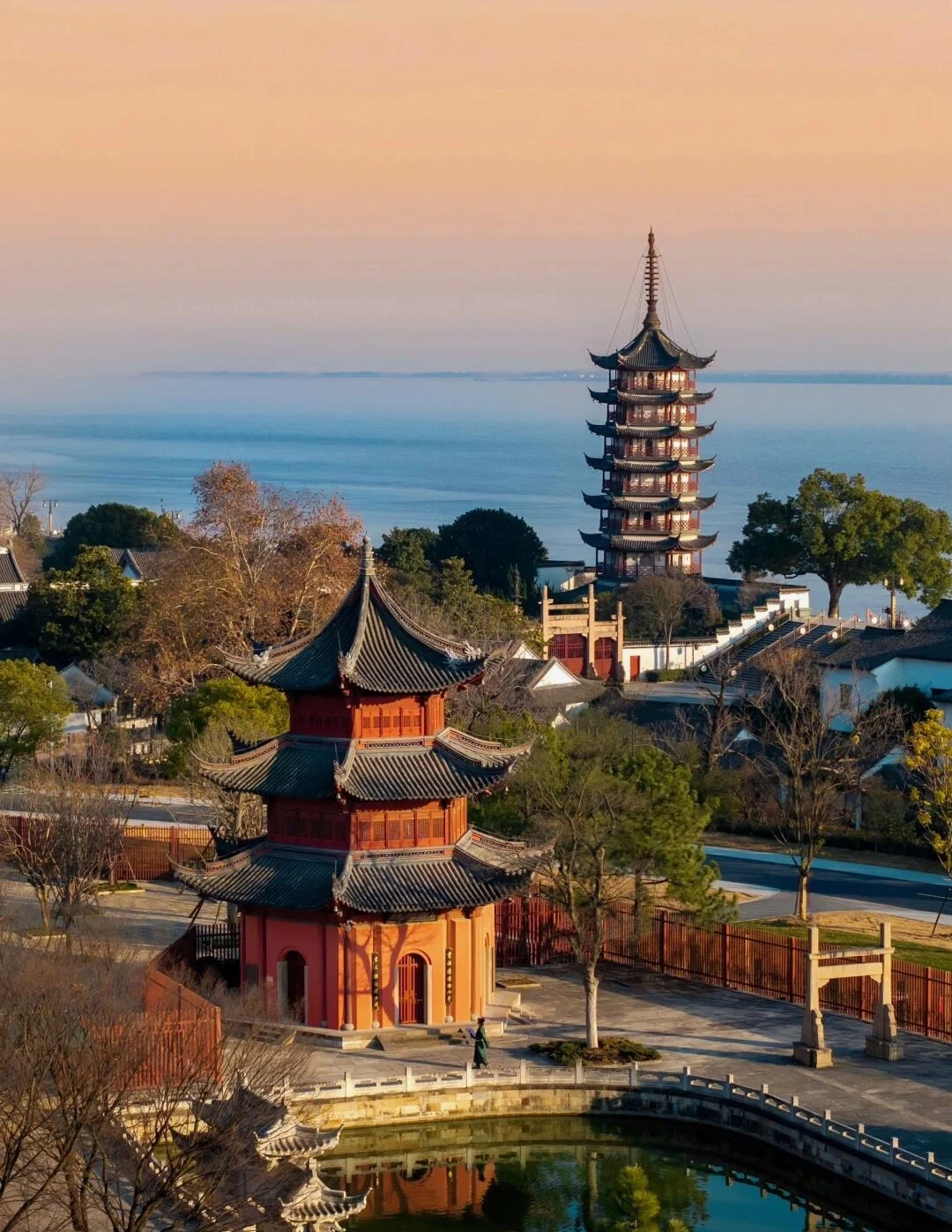
Jiaxing is strongest when you build the trip around one clear priority rather than trying to cover everything. For most first-time visitors, the safest answer is not “see more,” but “structure better.”
1 day: Only enough for a single-track choice. You should either focus on one main water town or stay in downtown Jiaxing for South Lake plus Yuehe. Trying to combine too much in one day weakens the trip fast.
2 days: This is the safer lower limit for a first visit. It gives you room for one main water town + one downtown component, which is the most stable short-trip structure.
3 days: This is the most mature answer for most travelers. You can do the core water-town-and-city combination without rushing, or stay longer inside one water town and still add Jiaxing city properly.
4+ days: Best only if you want a slower pace or more selective extensions. This is when Yanguan, Puyuan, or a deeper overnight water-town stay starts to make sense without overloading the route.
For most first-time visitors, 2–3 days is the clearest answer: long enough to get Jiaxing right, short enough to keep your wider East China route efficient. If you are planning a longer national trip, it also helps to think through How Long to Spend in China.
Who it’s for
Travelers with very limited time who can only make one strong Jiaxing choice.
Route logic
Treat Jiaxing as a single-focus destination for the day. Do not try to cover both multiple water towns and the city layer. Pick either one main water town or one downtown-historical route.
Main stops
Option A: Wuzhen or Xitang
Option B: South Lake + Yuehe Historic District
Why this itinerary works
One day in Jiaxing only works when you accept that it must be selective. A water-town-first version gives you the stronger iconic Jiangnan experience, while a downtown-first version gives you Jiaxing’s city identity more directly. What fails is trying to squeeze both into a rushed checklist. For most first-time visitors, one water town is the stronger one-day answer. The downtown component becomes much more useful once you have at least two days.

Who it’s for
Most first-time visitors who want the safest short-trip structure.
Route logic
Build the trip around one main water town + one downtown layer. This is the most balanced and reliable first-time framework.
Main stops
Day 1: Wuzhen or Xitang
Day 2: South Lake + Yuehe Historic District
Why this itinerary works
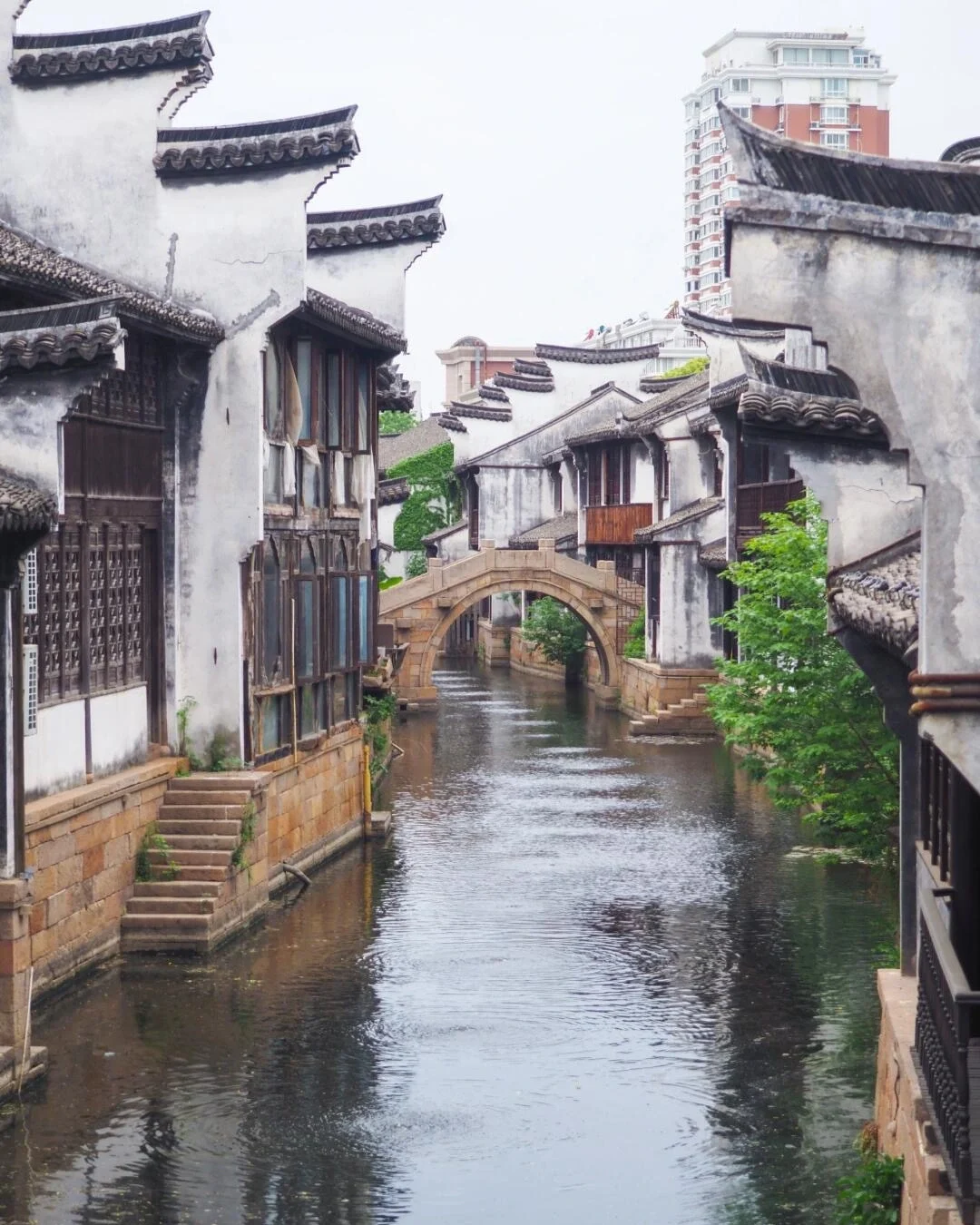
Two days is the safer lower limit because it lets Jiaxing show both of its main sides: the classic water-town experience and the city’s own historical anchor. This structure avoids the biggest first-trip mistake, which is trying to compare too many towns while leaving no time for Jiaxing itself. Wuzhen is usually the strongest first choice if you want the fullest water-town experience; Xitang works if you want something lighter. Then South Lake and Yuehe give the trip downtown weight without requiring another heavy travel day.
Who it’s for
Travelers who want the most mature, well-paced Jiaxing experience.
Route logic
Keep the core structure of one main water town + downtown layer, then use the third day for either a deeper stay or one selective extension.
Main stops
Day 1: Wuzhen or Xitang
Day 2: South Lake + Yuehe Historic District
Day 3: Deeper water-town stay, Puyuan, or seasonal Yanguan
Why this itinerary works
Three days is the most mature answer because it gives you room to experience Jiaxing without rushing and without turning the trip into town-hopping. You can stay overnight in your chosen water town, return for a proper downtown Jiaxing day, and still have one extra slot for either style, depth, or seasonality. Puyuan works if you want a more design-led supplement. Yanguan works only if the tidal timing is right. This version keeps the trip coherent while still allowing personal preference to shape the last layer.

Who it’s for
Travelers moving through Shanghai, Hangzhou, Suzhou, or the wider Yangtze Delta and needing one clear water-town segment.
Route logic
Use Jiaxing to carry the water-town portion of the larger route instead of trying to scatter that theme across multiple cities.
Main stops
One main water town, plus optional South Lake or Yuehe depending on time
Why this itinerary works
Jiaxing is especially strong inside a wider Yangtze Delta route because it works as a focused water-town module between bigger city stops. Instead of trying to make Shanghai, Suzhou, and Hangzhou all do the same job, Jiaxing can carry the canal-town atmosphere more cleanly and efficiently. In this role, you usually do not need everything. One main water town is the priority, and the downtown layer is optional depending on pacing. That makes Jiaxing one of the best places to handle the water-town segment in a larger East China itinerary.
For broader planning, see How to Plan a China Trip.

Stay one night in a real water town and do the full water-route + stone-bridge + night-view sequence. Jiaxing’s water-town layer works far better after day-trippers leave and before the next wave arrives, and that is when the Jiangnan mood becomes most convincing.
Choose Wuzhen or Xitang by travel style, not by fame alone. Wuzhen is stronger for a fuller, more polished first-time experience; Xitang works better if you want something lighter and more lived-in.
Give downtown Jiaxing at least half a day. South Lake and Yuehe give the trip a city identity and stop it from feeling like just another water-town pass-through.
Add Yanguan only when the timing is right. If the tidal-bore window works, it becomes a powerful special extension; if not, it should not displace the stronger core route.
Eat a proper Jiaxing zongzi rather than treating it as a souvenir snack. It is one of the clearest local identity markers and part of understanding the city beyond scenery.
Accept that Jiaxing is a combination destination, not a single blockbuster destination. It is strongest when you combine one main water town, one city layer, and only the right extensions.
Protect the trip from overloading. Jiaxing usually gets better when you do less, but more clearly, instead of trying to cover every famous town in one pass.
Jiaxing works in all four seasons, but not equally well year-round. For most first-time visitors, spring and autumn are the safest choices because the weather is milder, walking is easier, and the overall route feels more comfortable. For broader national timing, see Best Time to Visit China.
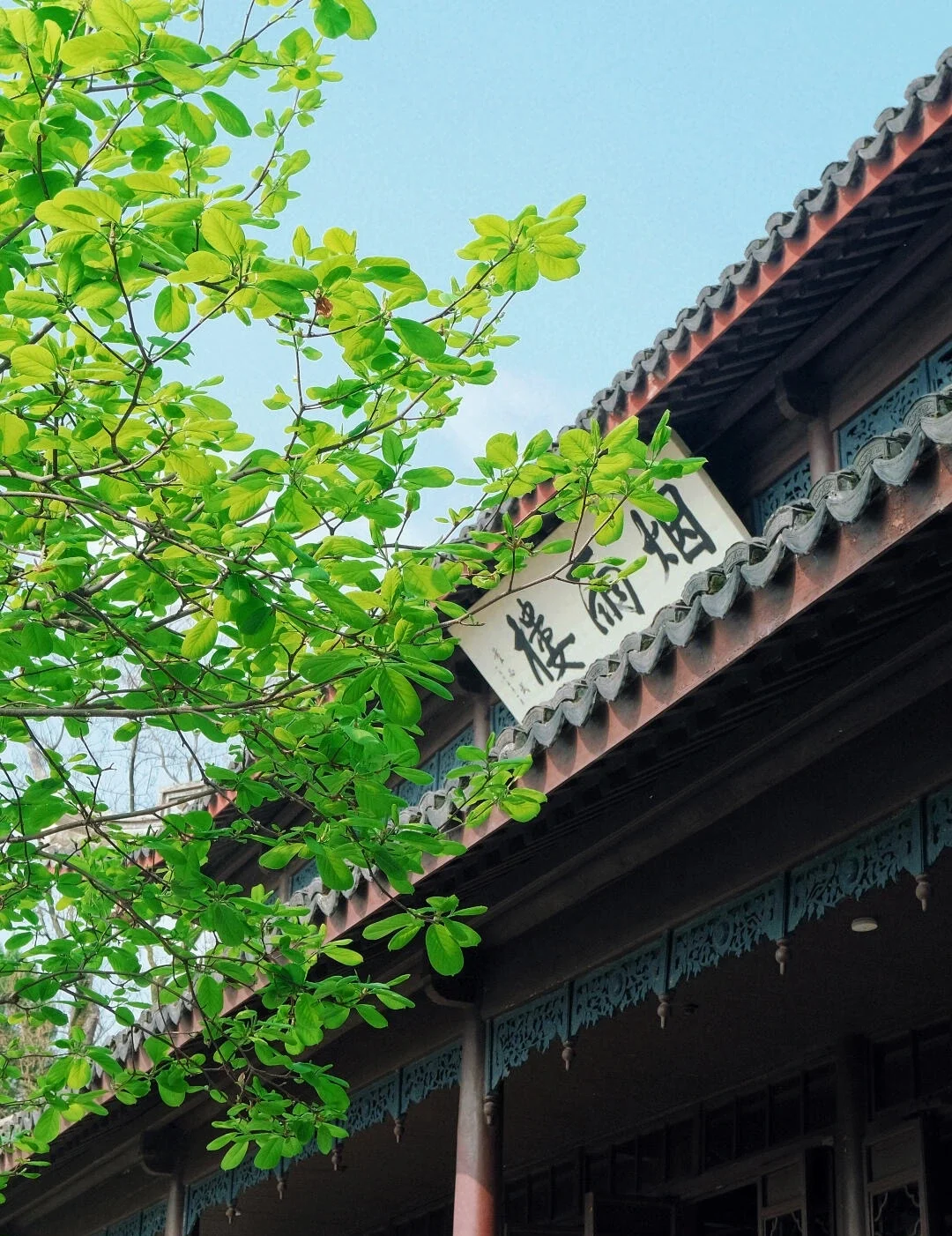
Spring is one of the safest seasons for a first Jiaxing trip. Temperatures are comfortable, canals and trees look fresh, and the water-town atmosphere usually feels well balanced. The tradeoff is rain: spring can be damp and changeable, with wet streets and grey skies at times. Still, light rain often suits Jiangnan towns, especially for slower walking and evening views. Crowds begin to rise, but outside major holidays the season is still manageable.
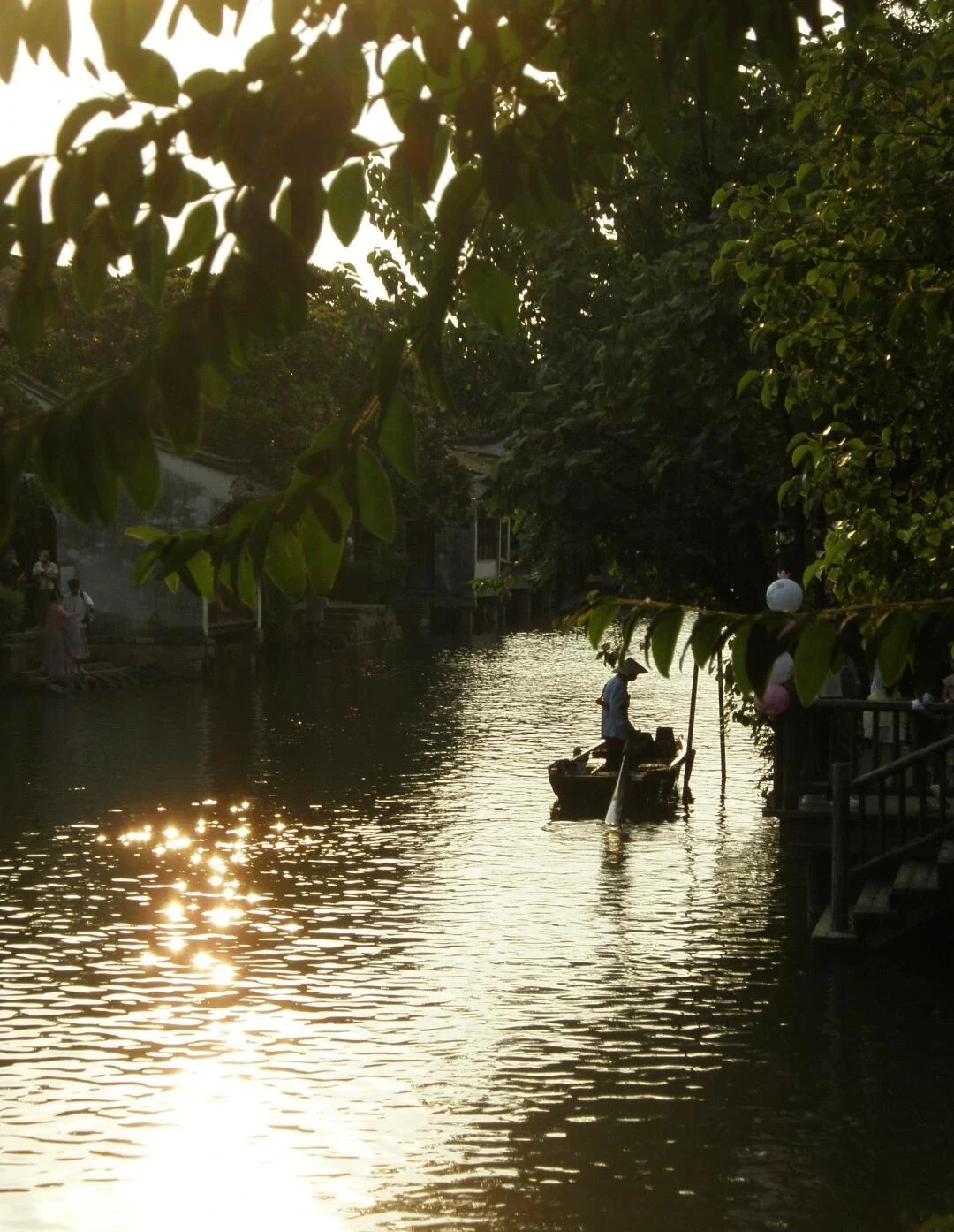
Summer is humid, greener, and rainier, but still usable with realistic expectations. Water towns can look lush, especially around dusk and after rain, and night views remain a strong point. The downside is heat and humidity, which make daytime walking tiring, while heavy rain can disrupt plans. It is not the easiest season, but it can still work if you slow the pace and avoid peak-holiday periods.
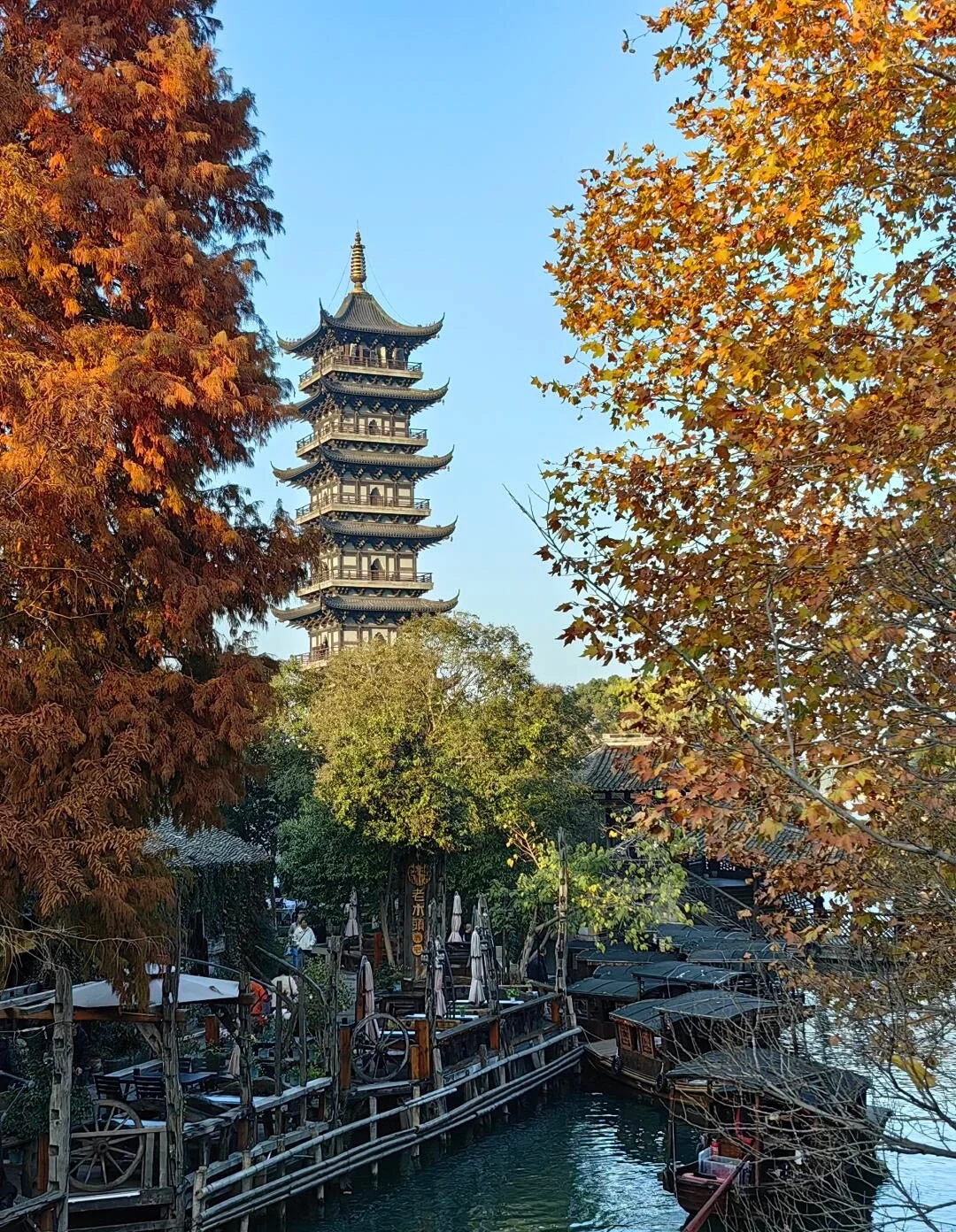
Autumn is usually the best overall season. The weather is drier, walking is easier, and the city-to-water-town combination feels cleaner and more comfortable. It is also the key season for Yanguan, since the Qiantang tidal bore becomes the most relevant special extension at this time. Crowds can rise, especially around famous water towns and tidal-bore periods, so timing still matters.
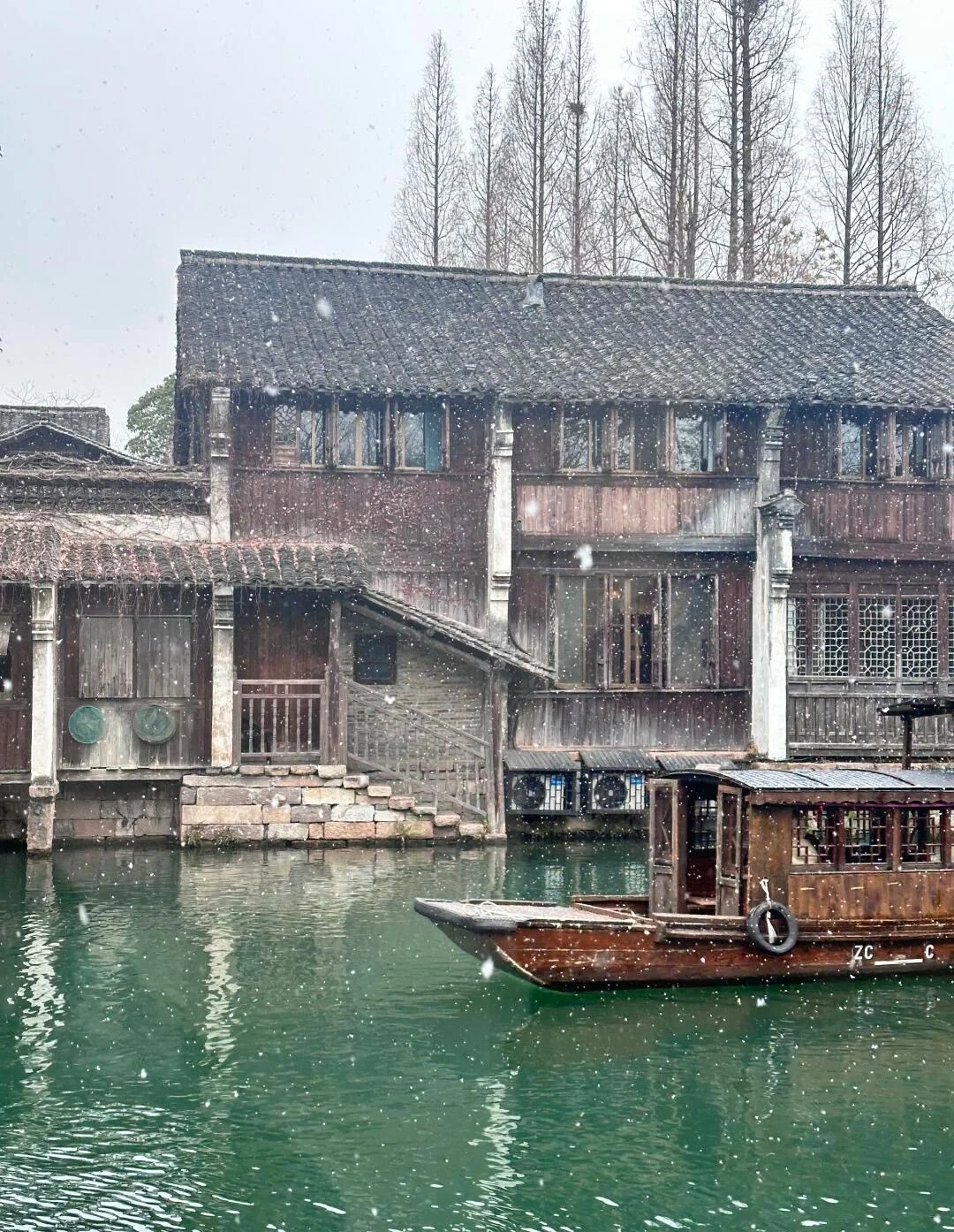
Winter is quieter, calmer, and lower-pressure. The scenery is less lush, but the tradeoff is fewer crowds and a more relaxed pace, especially in the water towns after dark. It works well for travelers who value atmosphere and space more than peak visual conditions. It is also easier to enjoy the trip without heavy tourist density.
Jiaxing is one of the easiest Yangtze Delta destinations to reach, especially from Shanghai, Hangzhou, or Suzhou. For most visitors, rail is the main way in. The key planning point is simple: entering Jiaxing city is not the same as entering the Jiaxing region. Your best station depends on where you want to go first.
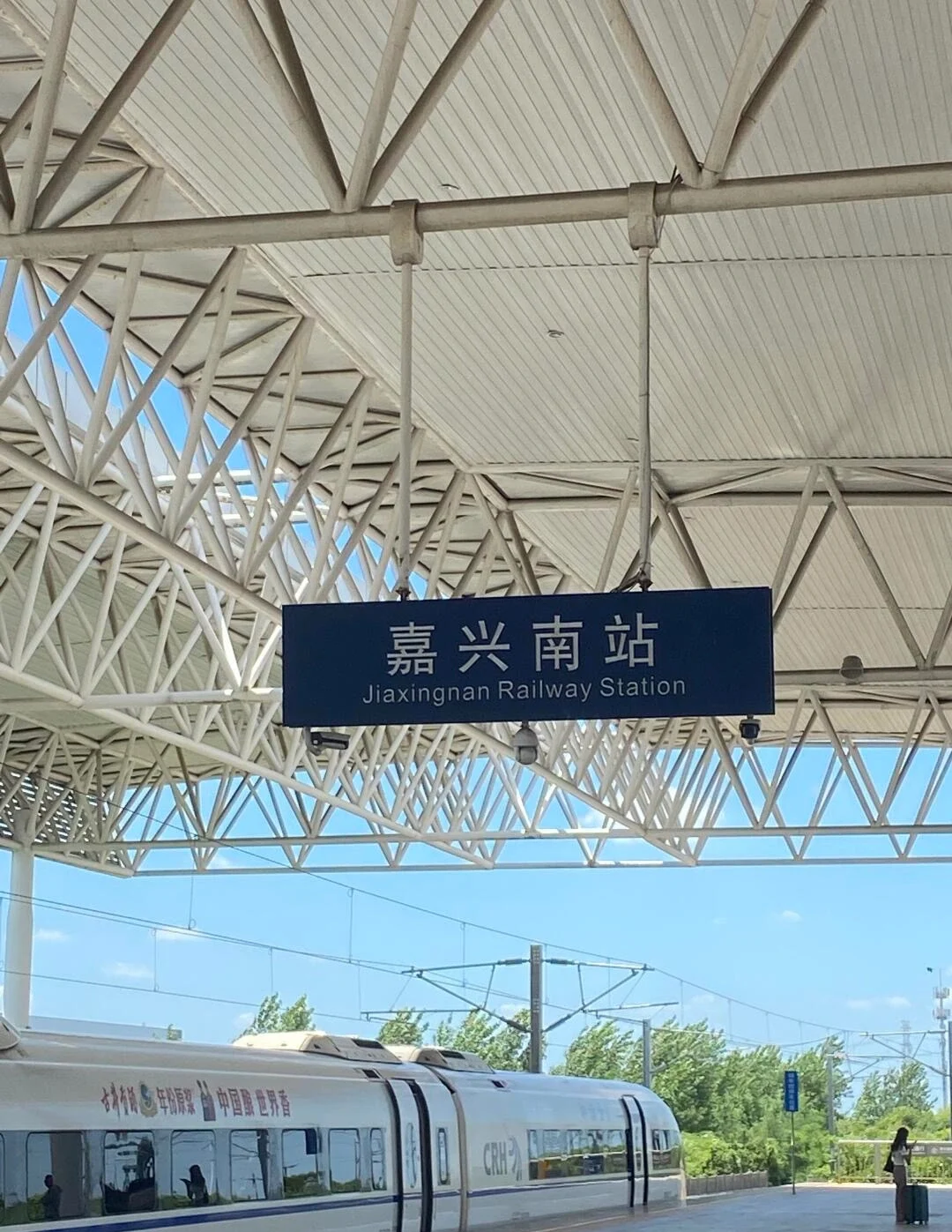
High-speed rail is the default entry method for most travelers. Jiaxing sits in a very strong position within the Yangtze Delta network, so train access is fast and straightforward from nearby major cities. If your first stop is downtown Jiaxing, stations serving the city make the most sense. But if your real goal is Wuzhen, Xitang, or another outer-area stop, the smartest rail plan may involve entering through a different nearby station and then continuing by road.

Jiaxing itself is usually reached through the wider region rather than as a direct flight-first destination. Most travelers fly into Shanghai or Hangzhou, then continue by rail. That is why Jiaxing works so well inside larger East China itineraries: air gets you into the region, but rail is what usually gets you into the right part of Jiaxing.
Your first stop determines your best station. If you begin in downtown Jiaxing, rail into the city proper is the cleanest option. If you begin with a water town, choose the station and transfer logic that supports that town first, instead of forcing an unnecessary detour through downtown.
For broader planning, see China Transportation Guide.
Jiaxing is easy to move through once you stop thinking of it as one compact sightseeing zone. Downtown movement is simple, but regional movement is more about point-to-point travel than spontaneous hopping.
| Route | Best way to travel | What to know |
|---|---|---|
| Rail station ↔ downtown Jiaxing | Taxi / ride-hailing / short local transit | This is usually straightforward. If your hotel is central, the last stretch is usually simple and quick. |
| Downtown ↔ South Lake / Yuehe | Walking + short taxi | These are the easiest downtown layers to combine. Much of the value here comes from walking rather than transport. |
| Jiaxing ↔ Wuzhen | Point-to-point car or direct transfer | Best treated as a dedicated move, not a casual side hop. This is one of the most important regional transfers to plan clearly. |
| Jiaxing ↔ Xitang | Point-to-point car or direct transfer | Similar logic to Wuzhen. It works well as a dedicated half-day or day move, but not as something to stack too casually with other outer stops. |
| Jiaxing ↔ Puyuan | Taxi / ride-hailing / private transfer | Easier when treated as one focused extension. Better as a deliberate add-on than an impulsive extra. |
| Jiaxing / Haining ↔ Yanguan | Point-to-point car / direct regional transfer | Best planned around the tidal-bore schedule if that is your reason for going. Timing matters more here than distance alone. |
| Between water towns | Direct car transfer | Do not assume all water towns are easy to casually chain together. Point-to-point road movement is usually the cleanest option. |
Inside downtown Jiaxing, walking plus short taxi rides is usually enough. Outside the city core, treat movement as planned point-to-point transfer, not casual sightseeing drift. Jiaxing works much better when you use one main base and one clear next move.
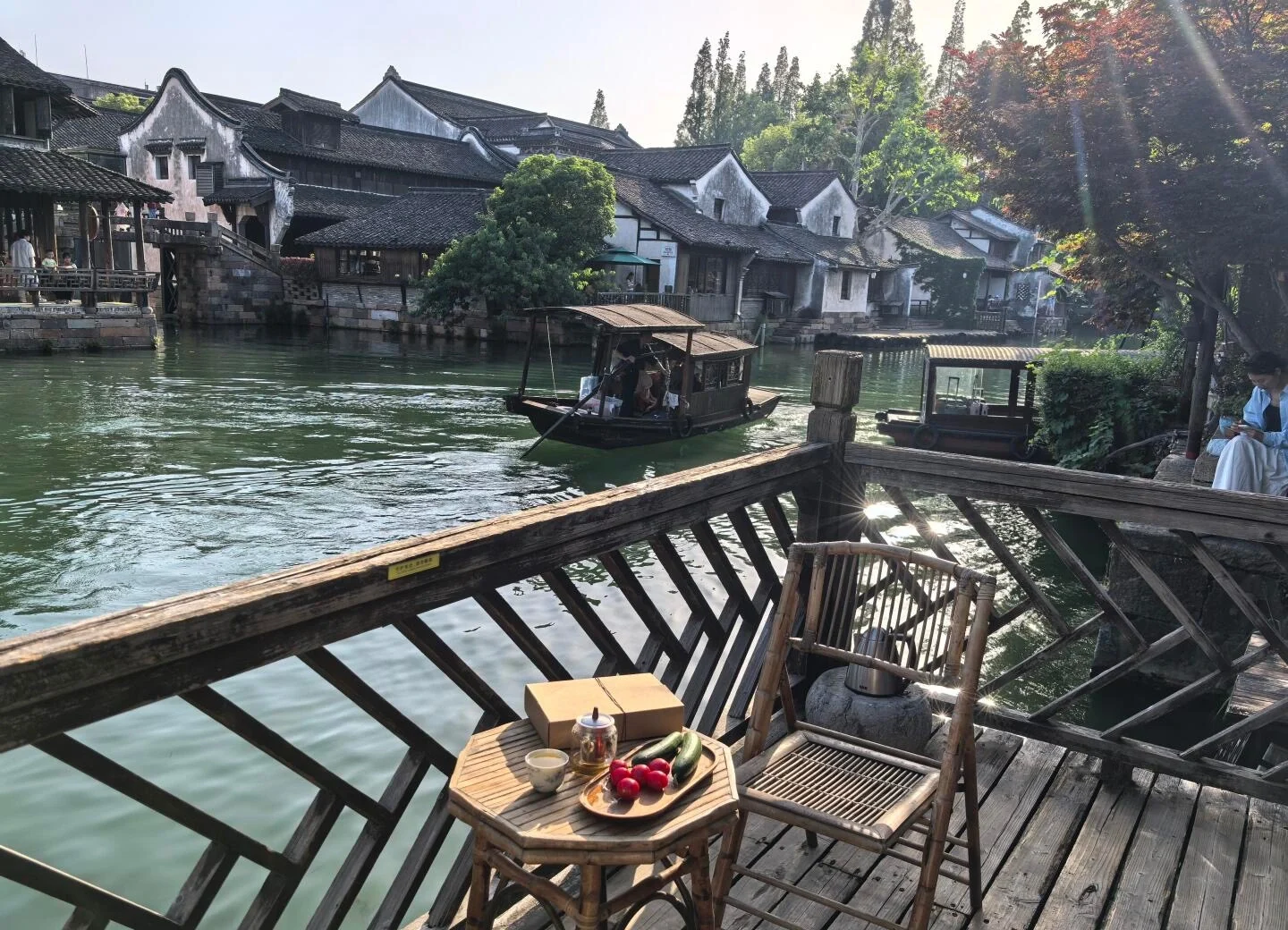
Where you stay matters more than how many points you try to cover. In Jiaxing, the right overnight base usually shapes the trip more than adding one extra stop.
Stay in Wuzhen if… water-town atmosphere is your top priority and you want the safest full-experience stay. Wuzhen is usually the strongest first choice because it gives you the most complete day-to-night rhythm, with the clearest payoff after daytime crowds thin out.
Stay in Xitang if… you want a lighter, more relaxed water-town stay with a more lived-in feel. Xitang works well for travelers who care less about the most polished full-package version and more about easier pacing and a simpler overnight atmosphere.
Stay in downtown Jiaxing if… your plan is built around the city layer plus one regional extension. It works as a city-base option, especially for South Lake and Yuehe, but it is not always the best first choice if your real priority is a water town.
Stay near South Lake only if… the downtown historical layer matters more to you than water-town immersion. This can work for travelers who want Jiaxing’s city identity first, but it is too narrow if your real goal is a classic Jiangnan overnight experience.
Stay in Puyuan only if… you want a style-driven, quieter, more design-led stay. This is less about classic first-time Jiaxing and more about choosing a specific aesthetic mood over the strongest all-round water-town logic.
Stay in Jiaxing as part of a wider route if… you are using the area to carry the water-town segment within a larger Yangtze Delta trip. In that case, stay in the layer that matters most to your route, not in the most central place by default.
See also: Where to Stay in Jiaxing

Food is part of Jiaxing’s identity, not just an add-on between stops. The city’s eating style is more local-daily than banquet-driven, which is exactly why it matters. Jiaxing food helps explain the region through everyday staples, braised flavors, seasonal produce, and one nationally famous item that most travelers already know by name.
Jiaxing zongzi (嘉兴粽子) — Jiaxing’s clearest food symbol and the one thing most visitors should try properly, not casually. It matters because it connects the city to everyday tradition, festival culture, and regional identity more directly than almost any other food.
Sauce duck (酱鸭) — one of the strongest examples of Jiaxing’s local braised flavor logic. It suits travelers who want something savory, slightly sweet, and more grounded in daily Jiangnan eating than tourist-facing “special dishes.”
Local braised dishes (本地红烧风味菜) — these are worth trying because they show how Jiaxing handles soy-based depth, gentle sweetness, and slower-cooked comfort food. They help explain the city’s everyday table better than headline dishes alone.
Seasonal local produce (时令本地食材) — depending on the season, Jiaxing’s produce layer can add freshness and locality to the trip. This matters because the region’s food identity is tied not only to famous dishes, but also to what is grown and eaten in rhythm with the local calendar.
Jiangnan snack layer (江南小吃) — smaller snack foods are part of how Jiaxing is actually eaten. They are useful not because each one is world-famous, but because together they show the city’s more local, daily, and less banquet-driven food character.
Jiaxing food is more local-daily and more rooted in Jiangnan eating patterns than many first-time visitors expect. It is not about spice, banquet spectacle, or luxury signaling. Its value lies in soy-braised depth, rice-based staples, familiar textures, and ingredients that fit the region’s slower rhythm.
Compared with Shanghai, Jiaxing often feels less urban-polished and more grounded. Compared with Hangzhou, it is usually less refined in presentation and more everyday in tone. Compared with Suzhou, it can feel a little less delicate and a little more direct. That difference is useful: Jiaxing’s food identity is not elite Jiangnan dining, but a more local version of it.
Focus on one proper zongzi, one clearly local braised dish, and one lighter snack-layer experience. That gives you a better understanding of Jiaxing than trying to build the section around famous names alone.
Jiaxing itself is not an expensive destination by East China standards, but your total cost changes a lot depending on how you use Jiaxing. A simple day trip is very different from an overnight water-town stay, and staying inside a major scenic town usually raises the budget more than food or local transport does.
| Travel style | Typical daily range | What it usually means |
|---|---|---|
| Budget-ish day trip or simple stay | RMB 300–600 | Rail in, one focused stop, simple meals, basic hotel or no overnight stay |
| Mid-range classic water-town stay | RMB 700–1,300 | One main water town, one-night stay, better meals, smoother transfers |
| Comfortable multi-layer stay | RMB 1,400–2,500+ | Scenic-area hotel or boutique stay, city + water-town structure, more flexible transport |
Staying inside a major water town raises costs quickly. Wuzhen in particular can shift the trip from moderate to premium depending on hotel choice.
Transport is manageable. Rail access is efficient, and regional movement is usually affordable if you plan point-to-point rather than zigzagging.
Day trip vs overnight changes both budget and experience. A day trip costs less, but it also cuts out the most valuable water-town hours: evening and early morning.
Downtown Jiaxing is usually cheaper than water-town lodging. That makes city-base planning more budget-friendly, even if it is not always the best first-time experience.
The cost logic depends on structure. Jiaxing stays affordable when you do one thing clearly, but costs rise when you add scenic-area lodging, multiple transfers, or layered overnight plans.
Overall, Jiaxing can be done cheaply, but its best version often comes from spending a little more on the right overnight layer rather than trying to cram everything into a rushed day trip.
For a broader benchmark, see Cost to Travel in China.
Do not treat Jiaxing as a checklist city. It works best when you build a clear structure instead of trying to cover every famous town and extension.
Decide first whether you want a water-town-first trip or a city-plus-water-town trip. That one choice will shape your best station, hotel base, and pacing.
Choose between Wuzhen and Xitang instead of forcing both by default. Wuzhen is the safer full-experience choice; Xitang is the lighter, more lived-in alternative.
Use downtown Jiaxing as a supporting part of the route, not automatically as the center of the whole trip. South Lake and Yuehe are worthwhile, but they do not replace the water-town experience.
Treat Yanguan as timing-dependent. It becomes highly valuable when the tidal-bore window is right, but much weaker as a routine first-trip add-on.
Remember that an overnight stay changes everything. Water towns become far more convincing after the day-trip crowds thin out and before the next wave arrives.
Weather matters more here than many first-time visitors expect. Rain can slow movement, but it can also improve the Jiangnan mood. Night views matter in all seasons, which is one reason overnights are so important.
Set realistic expectations for downtown Jiaxing. It is useful, comfortable, and culturally relevant, but it is not the region’s strongest single-sight city layer.
Build your days around point-to-point travel, not casual chaining. Jiaxing gets weaker when you treat all outer stops as if they are easy to string together on impulse.
Pack for rain, walking, and seasonal variation: comfortable shoes for stone streets and long walks, a light rain layer or umbrella, and temperature-flexible clothing depending on season.
If Jiaxing is part of a wider East China route, review China Travel Tips and What to Pack for China before finalizing the plan.
Water-town-first travelers — Jiaxing is strongest as a water-town choice zone. Its advantage is not just having one famous town, but letting you choose the right version of Jiangnan: Wuzhen for the fullest stay, Xitang for a lighter and more lived-in feel, and Puyuan for a more style-led extension.
Yangtze Delta route builders — Jiaxing is especially strong as the water-town segment inside a wider Shanghai–Hangzhou–Suzhou route. It helps balance bigger city stops with a slower canal-town layer and improves the pacing of the whole trip.
Slow-travel Jiangnan seekers — Jiaxing is well suited to travelers who want a lower-pressure Jiangnan stay. Its best role is not blockbuster sightseeing, but letting you slow down through canals, walking, night views, and selective cultural layers.
Food-and-light-culture travelers — Jiaxing works well as a local-culture stop with a clear food identity. Zongzi, local braised flavors, South Lake, and Yuehe make it more than a scenic detour, especially for travelers who want culture without a heavy museum-style trip.
Seasonal special-interest travelers — Jiaxing becomes much stronger when it serves as a seasonal event base, especially for Yanguan and the Qiantang tidal bore. At the right time, it shifts from a soft Jiangnan stop into a destination with a very specific natural-payoff window.

In Chinese zodiac, the Metal Horse corresponds to individuals born in the years 1930, 1990, and 2050 (associated with the Nayin “Lupang Tu”).

Learn what yin and yang mean, how the symbol developed, why balance is dynamic, and how the concept shaped Chinese philosophy and culture.

Foshan is the birthplace and thriving center of Lingnan Cantonese culture, rich in history, traditional arts, and famous for its martial arts, ceramics, and cuisine.

A clear and structured 2026 forecast for people born in 2015, focusing on learning growth, confidence building, relationships, health, and practical guidance.

Discover China’s major festivals and holidays—Spring Festival, Mid-Autumn, ethnic celebrations, and modern holidays—your guide to culture and travel timing.

Discover Mount Tai, a UNESCO World Heritage site in China, renowned for its breathtaking views, historic temples, sunrise vistas, and cultural significance.


