Explore Lanzhou, famous for its delicious beef noodles, rich ethnic diversity, and scenic Yellow River landmarks like Zhongshan Bridge and White Pagoda Mountain.
Table of Contents
About Lanzhou
Lanzhou, the capital of Gansu Province, is a key city in China’s northwest and an important national transportation hub.
Located in central Gansu, it serves as a center for politics, culture, economy, and education in the province.
With a history spanning over 2,000 years, Lanzhou has played a crucial role as a military stronghold and trade center.
Known as the “Pearl of the Yellow River,” it features a diverse landscape of mountains, valleys, and river basins.
Lanzhou is a major industrial base specializing in petrochemicals, equipment manufacturing, biopharmaceuticals, and new materials, contributing significantly to China’s development.
Category
Detail
Category
Detail
Nickname
Jincheng
Administrative Level
Prefecture-level city
Region
Gansu Province, China
Location
Northwest China, Central Gansu
Area
13,085.6 km²
Subdivisions
5 districts, 3 counties
Postal Code
730000
Climate
Temperate semi-arid climate
Population
4.4251 million (2023)
Notable Attractions
Yellow River Iron Bridge, Baita Mountain, Xinglong Mountain, Wuqian Mountain, Qincheng Ancient Town, Jintian Temple
Airport
Lanzhou Zhongchuan International Airport
Railway Stations
Lanzhou West, Lanzhou, Lanzhou New Area, Zhongchuan Airport, Gaolan Station
License Plate Code
Gan A
GDP
348.73 billion RMB (2023)
City Tree
Pagoda Tree (Sophora japonica)
City Flower
Rose
Abbreviation
Lan
Major Universities
Lanzhou University, Northwest Normal University, Lanzhou University of Technology
Dialect
Lanzhou-Yinchuan Mandarin (Northern Mandarin)
Coordinates
102°35′58”–104°34′29”E, 35°34′20”–37°07′07”N
Lanzhou Travel Overview
Lanzhou boasts a rich array of tourist attractions, including Wuqian Mountain, Baita Mountain, Shifo Valley, Lutu Tusi Yamen, Hekou Ancient Town, Qingcheng Ancient Town, and newer sites like Shuimo Danxia, Yellow River Tower, Wildlife Park, and Lijiazhuang Rural Complex.
As of January 2024, Lanzhou is home to 10 AAAA-rated, 22 AAA-rated, and 6 AA-rated scenic spots. In the first half of 2024, Lanzhou welcomed 57.34 million tourists, a 42.98% increase, generating tourism revenue of 38.62 billion RMB.
According to Ctrip, Lanzhou ranked sixth among Chinese provincial capitals in summer tourism growth.
A comprehensive museum showcasing rich historical artifacts and natural specimens, including the famous "Galloping Horse Treading on a Flying Swallow."
Baita Mountain
A scenic mountain featuring the iconic White Pagoda, offering panoramic views of Lanzhou, the Yellow River, and Zhongshan Bridge.
Zhongshan Bridge
Known as the "First Bridge on the Yellow River," this century-old bridge is a significant landmark of Lanzhou.
Shuimo Danxia
A stunning geological landscape featuring red rock formations, vibrant canyon scenery, and breathtaking natural beauty.
Yellow River Tower
A cultural landmark by the Yellow River, combining traditional and modern architectural elements, offering stunning river and city views.
Lanzhou Old Street
A cultural and commercial street showcasing Ming and Qing architecture, featuring traditional performances and a lively night economy.
Lanshan Santai Pavilion
A historical pavilion on Gaolan Mountain, providing a perfect viewpoint to admire Lanzhou’s urban and natural landscapes.
Nanguan Night Market
A famous night market with over 180 stalls, offering a variety of Lanzhou's signature delicacies and live traditional performances.
Dunhuang Art Museum
A museum dedicated to Dunhuang culture, featuring replicas, multimedia exhibits, and an immersive exploration of Mogao Grottoes’ artistic heritage.
Great Wall Western Film Studio
A large film set with ancient-style architecture, used for numerous movies and TV shows, allowing visitors to experience cinematic culture.
Wuquan Mountain
A historic site named after five famous springs, featuring ancient temples, stone carvings, and lush greenery.
Waterwheel Expo Park
A theme park on the Yellow River’s south bank, displaying traditional Lanzhou waterwheels and the historical significance of water-powered mills.
Zhengning Road Night Market
A bustling food street open until late night, offering iconic Lanzhou snacks like milk-egg liquor, embodying the city's vibrant night culture.
Shifo Valley Scenic Area
A tranquil retreat featuring ancient Buddhist temples, lush mountains, and fresh air, ideal for relaxation and summer escapes.
Shichuan Ancient Pear Orchard
Home to the world's largest ancient pear orchard, famous for breathtaking spring blossoms and delicious autumn pears.
Xinglong Mountain
A scenic nature reserve with dramatic peaks, lush forests, and a striking cloud bridge, making it a popular summer retreat.
Food Culture in Lanzhou
Lanzhou’s cuisine is predominantly wheat-based, with rice being secondary, complemented by oil, vegetables, meat, and seasonings.
Traditional beverages include tea, boiled water, sour soup (jiangshui), and kiln-fragrant baijiu.
Historically, rural and lower-income urban households primarily consumed coarse grains, while wealthier families enjoyed refined wheat products, oils, and meats.
Since the 1980s, with economic growth, noodles, dumplings, steamed buns, and rice dishes became daily staples.
The consumption of lamb has since dominated the local meat market, and seafood availability has expanded significantly.
Lanzhou is famous for its hand-pulled beef noodles, cold noodles, stuffed skins, sweet fermented grains, gray beans, milk egg wine mash, and lamb offal soup.
Must-eat Food
Niangpi
Made from wheat flour, these translucent noodles are cut into strips and served with soy sauce, vinegar, and spices for a tangy, chewy taste.
Lanzhou Beef Noodles
Known for its clear broth, tender beef, and hand-pulled noodles, available in various shapes, creating a rich and savory flavor.
Spicy Potato Slices
Thinly sliced potatoes are boiled and mixed with chili, Sichuan pepper, and seasonings, offering a crispy and spicy bite.
Fried Noodle Pieces
Hand-torn noodles stir-fried with onions, tomatoes, and lamb slices, creating a chewy and aromatic dish.
Lanzhou BBQ
Features grilled lamb skewers and lamb kidneys, coated in cumin and spices, offering a smoky, juicy, and flavorful taste.
Sweet Fermented Barley Milk Tea
A fusion of fermented barley with milk tea, combining a mild alcoholic tang with a creamy and refreshing flavor.
Sour Soup Noodles
Thin noodles served in a fermented sour broth with celery and herbs, known for its cooling and digestion-aiding properties.
Stir-Fried Cold Jelly
Made from mung bean starch, stir-fried with lard and scallions, offering a soft yet crispy texture with a fragrant taste.
Apricot Peel Tea
A golden-hued drink made from Li Guang apricot peels, delivering a sweet and tangy taste, ideal for refreshing the palate.
Jiao Tuan
A thick wheat-based porridge served with chives and pickled vegetables, boasting a smooth and hearty texture.
Hand-Pulled Mutton
Boiled mutton served with salt and dipping sauces, highlighting its tender, juicy texture and rich, natural flavor.
Ash Pea Soup
A sweet soup made from peas, jujubes, and sugar, known for its soft, melt-in-the-mouth texture and nutty aroma.
Milk & Egg Fermented Rice
A warm, nourishing dessert made with boiled milk, egg, and fermented rice, offering a rich milky and slightly alcoholic taste.
Covered Bowl Tea
A traditional Lanzhou tea served in a lidded bowl with green tea, chrysanthemum, and rock sugar for a soothing aroma.
Lanzhou Cold Noodles
Cold noodles mixed with stir-fried vegetables and spicy chili oil, offering a chewy, refreshing, and flavorful experience.
Jia Sha Rou
Deep-fried pork coated in starch, then steamed to achieve a tender, juicy bite with a rich and savory taste.
Intangible Cultural Heritage in Lanzhou
Lanzhou has made significant efforts in preserving its intangible cultural heritage.
As of June 2024, the city boasts five national-level intangible cultural heritage (ICH) projects, along with 42 at the provincial level and 77 at the municipal level.
It is home to six national ICH inheritors, 41 provincial, and 113 municipal-level inheritors.
Lanzhou has established a comprehensive protection system by enacting policies, setting up ICH training centers, and publishing an 11-volume ICH book series.
The city has also built the Lanzhou Intangible Cultural Heritage Exhibition Hall and 44 training centers, nurturing thousands of inheritors to ensure cultural preservation and transmission.
Lanzhou Intangible Cultural Heritage
Lanzhou Taiping Drum
A traditional drum dance with a strong Northwest style. Performers wear traditional attire and use intricate drumming techniques, creating a powerful and dynamic performance symbolizing peace and prosperity.
Lanzhou Yellow River Waterwheel Craft
An ancient irrigation technology using river currents. These towering wooden waterwheels require intricate craftsmanship, showcasing the ingenuity of ancient Chinese laborers and representing Yellow River culture.
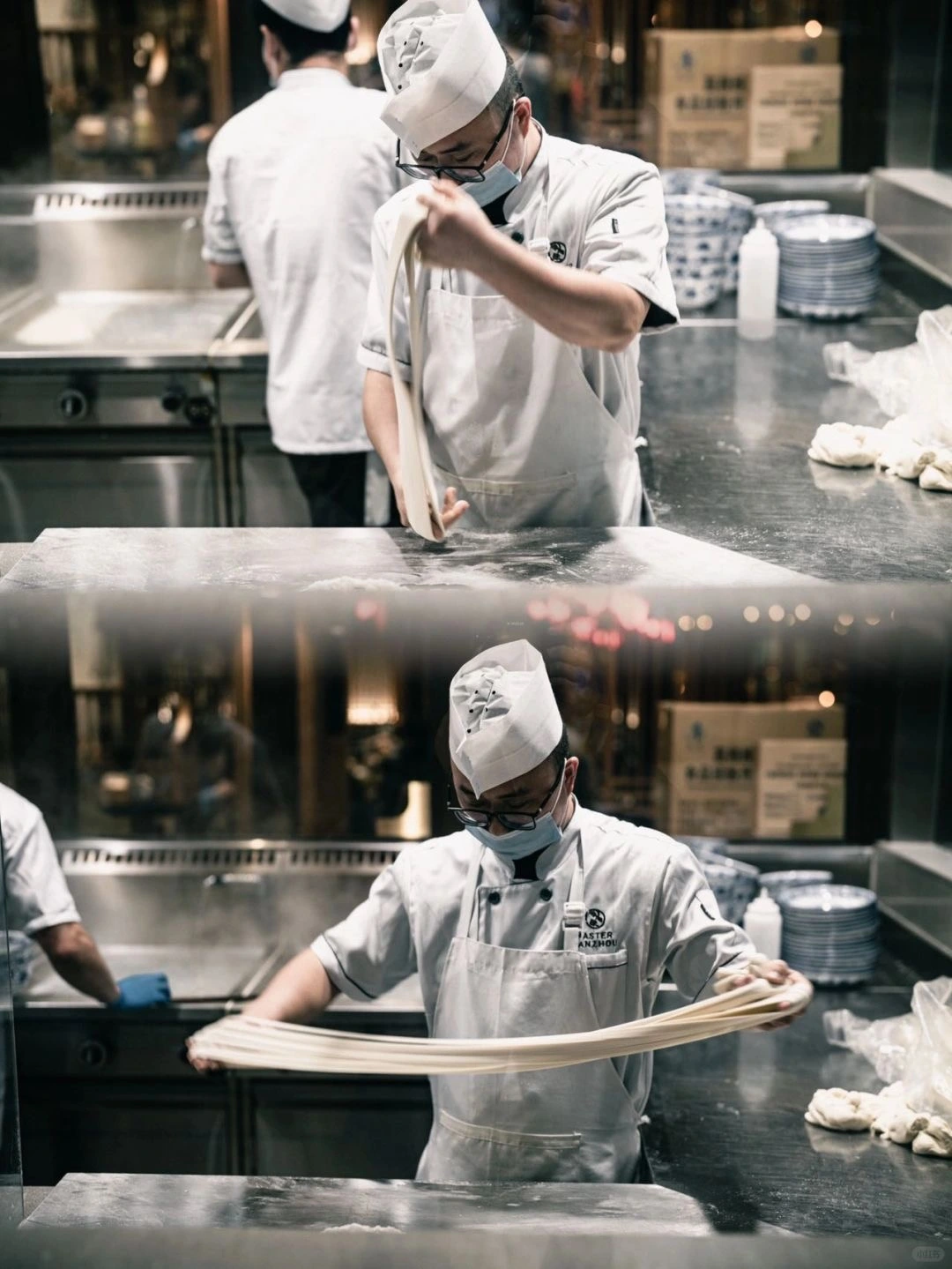
Traditional Lanzhou Beef Noodle Craft
Known for its five key elements—clear broth, white radish, red chili oil, green herbs, and yellow noodles. The process includes meticulous dough selection, hand-pulling, and soup preparation, making it a nationally renowned dish.
Lanzhou Lantern Festival
A folk festival celebrated during Chinese New Year with intricately designed lanterns in various shapes, including palace lanterns and animal figures. The festival creates a festive atmosphere rich in local culture and traditions.
Featuring bold and expressive designs, this folk art depicts daily life, animals, and floral motifs. The craft involves delicate scissor work, producing intricate and lively paper art that reflects the beauty of Lanzhou’s folk traditions.
Kushui High-Stilt Performance
A stilt-walking performance from Kushui, where performers wear colorful costumes and execute daring acrobatics like jumps, flips, and splits to the beat of traditional drums, making it highly entertaining and visually striking.
Lanzhou Gourd Carving
A delicate folk art that involves engraving intricate designs of landscapes, figures, and animals onto gourds. The refined craftsmanship and flowing lines create exquisite collectible art pieces.
Lanzhou Sheepskin Raft
A traditional watercraft made of inflated sheepskin and wooden frames. Once an essential means of transportation on the Yellow River, it is now a unique cultural tourism experience showcasing ancient river navigation.
A vibrant embroidery technique from Honggu, featuring auspicious patterns on clothing, shoe insoles, and pillows. The detailed stitches and vivid colors reflect the local women's craftsmanship and their wishes for happiness.
Honggu Black Pottery Craft
Made from locally sourced clay, this black pottery is crafted through molding, carving, and firing. Its sleek black surface and elegant shapes give it a distinctive aesthetic, representing Lanzhou's rich ceramic heritage.
Origin of Lanzhou’s Name
Lanzhou was historically known as “Jincheng” (Golden City), a name derived from the discovery of gold during the city’s initial construction.
Another interpretation links the name to the Chinese phrase “Jincheng Tangchi”, symbolizing an impregnable fortress.
In 583 AD, during the Sui Dynasty, the Jincheng Commandery was renamed Lanzhou, and a general administration office was established.
The new name “Lanzhou” was inspired by Gaolan Mountain, located south of the city.
This historical evolution reflects Lanzhou’s strategic importance as a fortified city and regional center in ancient China.
Lanzhou’s Population
As of the end of 2023, Lanzhou’s permanent population reached 4.4251 million, an increase of 9,800 people from the previous year.
The urban population accounted for 3.7545 million, with an urbanization rate of 84.85%.
The city recorded 26,300 births (birth rate: 5.96‰) and 27,800 deaths (death rate: 6.29‰), resulting in a natural population growth rate of -0.33‰.
Lanzhou is a historically diverse city, home to 56 ethnic groups.
As of 2019, ethnic minorities made up 5.22% of the population, with the Hui, Dongxiang, Tibetan, Manchu, and Mongolian communities being the most prominent.
Customs in Lanzhou
Wedding Customs
In some western areas of Yongdeng County, a small goat is gifted to the bride’s family during the wedding.
In places like Gaolan County, the bride’s hair is ceremonially combed before she enters the groom’s house, accompanied by blessings for prosperity and longevity.
In many parts of Lanzhou, the groom must personally fetch the bride, while in some Gaolan areas, he waits at home instead.
Hui Muslim weddings in Lanzhou include playful traditions like smearing black ash on in-laws’ faces, a practice that some Han families later adopted in the 1980s.
Birthday and Longevity Customs
Birthday celebrations vary across Lanzhou.
While urban families focus on children’s birthdays, rural areas emphasize elderly longevity celebrations, particularly in Yongdeng and Honggu, where grand feasts are held at ages 61, 73, 85, and 97.
These festivities can rival weddings in scale.
Rural communities also practice “huanyuan” rituals, offering thanks to deities for protecting a child, often marked by a ceremonial haircut and a family feast.
Funeral Traditions
In Lanzhou, once an elder turns 60, sons prepare a coffin and daughters sew burial clothes, which the elderly may try on during festivals.
Traditional burial rites have remained largely unchanged since ancient times.
Historically, nomadic groups practiced burial or cremation due to land constraints.
Cremation was introduced in the 1960s, but resistance persisted until the 1980s when urban land shortages led to broader acceptance.
Wealthier families now purchase elaborate burial plots.
Funeral customs differ by region—some communities conduct burials before sunrise, while others prefer afternoon processions.
Shehuo Festival (Fire Performances)
Shehuo, a traditional folk performance, is widely celebrated across Lanzhou.
Yongdeng County’s Hejiaying Village features unique acts such as “Tai Fu Lantern” and rolling lantern performances at night, traditions brought by settlers from Hezhou.
In Yuzhong’s Gancaodian, horseback Shehuo involves performers on horseback.
Some villages perform rigid lion dances, while others use soft lion props.
Historically, women were excluded, but since the 1990s, they have joined in drumming and folk dance teams.
Today, Shehuo has transitioned from a superstitious ritual to a vibrant cultural celebration.
Lanzhou’s Dialect
Lanzhou dialect, commonly referred to as “Lanzhouhua”, is a variety of Lan-Yin Mandarin, spoken by locals in Lanzhou and parts of neighboring Baiyin City.
Compared to Standard Mandarin, Lanzhou dialect has 25 initials, four more than Mandarin (z, pf, pf‘, v) but lacks the n initial. It also features 32 finals, four fewer than Mandarin.
Lanzhouhua exhibits unique grammar, such as reduplicated nouns (桌桌子, 草草子) and adjectives with diminutive suffixes (花儿红丢丢儿的, 水清亮亮儿的).
The dialect consists of seven sub-dialects, with the most significant variations found in Honggu and eastern Yuzhong, influenced by Qinghai and Dingxi dialects.
Religious in Lanzhou
Lanzhou is home to Buddhism, Taoism, Islam, Catholicism, and Christianity, with approximately 504,000 religious adherents as of 2019, accounting for 11.4% of the city’s population.
Buddhism and Taoism have long histories in Lanzhou, with Buddhist temples dating back to the Tang Dynasty and Taoist temples such as Jintian Temple built during the Ming Dynasty.
Islam arrived in Lanzhou during the Ming Dynasty, leading to the establishment of several mosques, while Christianity was introduced later.
The city has 424 registered religious sites, including Buddhist temples, Taoist shrines, mosques, and churches.
Since the 1980s, religious freedom has been gradually restored, allowing for the revival and expansion of religious communities.
Lanzhou City Flower: Rose
Lanzhou’s city flower is the Kushui Rose, a unique variety named after Kushui Town in Yongdeng County.
It is one of China’s four major rose varieties, known for its rich fragrance and medicinal value.
The tradition of rose cultivation in Lanzhou dates back centuries, with historical records from the Qing Dynasty’s Gansu Gazetteer mentioning “Roses from Lanzhou.”
Kushui Roses are highly prized for their superior quality and are widely used in perfumes, teas, and traditional Chinese medicine.
Lanzhou City Tree: Pagoda Tree (Sophora japonica)
The Pagoda Tree (Guohuai) was officially designated as Lanzhou’s city tree in 1984.
It was selected through a public vote conducted across the city’s districts and counties.
This tree symbolizes resilience and longevity, thriving in Lanzhou’s semi-arid climate.
Known for its lush green foliage and fragrant white flowers, the Pagoda Tree plays an essential role in urban greening.
It is commonly planted along streets and in parks, providing shade and enhancing the city’s ecological environment.
Historical Overview of Lanzhou
Lanzhou has a rich history dating back to the Late Paleolithic Era (15,000 years ago), with continuous human habitation. Below are key historical periods and significant events in Lanzhou’s history:
Pre-Qin Period (Before 221 BC)
Around 5,000–4,000 years ago, Lanzhou was part of the Majiayao and Qijia Cultures.
During the Xia, Shang, and Zhou Dynasties, it was a pastoral area for the Qiang and Rong tribes.
In the Warring States period (475–221 BC), the Xiongnu invaded and occupied the region.
Qin to Southern and Northern Dynasties (221 BC–581 AD)
214 BC: Emperor Qin Shi Huang established Yuzhong County, marking Lanzhou’s first administrative division.
121 BC: General Huo Qubing of the Han Dynasty led an expedition against the Xiongnu and established Jincheng County.
81 BC: The Western Han Dynasty established Jincheng Commandery.
60 BC: The region became a key center for Han governance after Zhao Chongguo’s pacification of the Western Qiang.
184 AD: The Qiang uprising led by Beigong Boyu resulted in unrest in the region.
During the Three Kingdoms period, Jincheng County belonged to Cao Wei’s Liangzhou.
The Sixteen Kingdoms period saw frequent changes in rule, with Former Liang, Former Qin, Later Liang, Southern Liang, Later Qin, and Western Qin controlling the area.
Sui, Tang, and Song Dynasties (581–1279)
581 AD: The Sui Dynasty established Lanzhou, named after Gaolan Mountain.
763 AD: The Tibetan Empire occupied Lanzhou.
1036 AD: The Western Xia Dynasty took control of Lanzhou.
1081 AD: The Northern Song Dynasty defeated Western Xia and regained Lanzhou, constructing new defensive forts.
Yuan, Ming, and Qing Dynasties (1279–1912)
1226 AD: The Mongols occupied Lanzhou.
1369 AD: The Ming Dynasty took over Lanzhou and downgraded it to Lanzhou County.
1669 AD: Lanzhou became the capital of Gansu Province.
1738 AD: Lanzhou was upgraded to Lanzhou Prefecture, and Gaolan County was established.
Republic of China Period (1912–1949)
1941 AD: Lanzhou City was formally established as a county-level city.
1949 AD: The People’s Liberation Army liberated Lanzhou, making it a provincial capital and a prefecture-level city.
People’s Republic of China (1949–Present)
1958 AD: Lanzhou expanded by incorporating Yongdeng and Gaolan Counties.
2012 AD: The State Council approved Lanzhou New Area, making it the first national-level new area in Northwest China.
Location of Lanzhou
Lanzhou is located in northwestern China, in the central part of Gansu Province, serving as the geometric center of China’s land territory.
Positioned between longitude 102°35′58” to 104°34′29” and latitude 35°34′20” to 37°07′07”, it borders Dingxi City to the east, Linxia Hui Autonomous Prefecture to the south, and Minhe Hui and Tu Autonomous County of Qinghai Province to the southwest.
To the west and northwest, it connects with Wuwei City, while to the north and northeast, it shares a boundary with Baiyin City.
As of 2024, Lanzhou covers a total area of 13,085.6 square kilometers.
Topography of Lanzhou
Lanzhou is situated in the transition zone between the western Loess Plateau and the Qinghai-Tibet Plateau.
The terrain consists of three major landform types: tectonic-denudation areas, piedmont slope accumulation zones, and river erosion-deposition areas.
The city’s topography includes mountains, hills, intermountain basins, and river valleys.
The Yellow River flows from southwest to northeast, cutting through mountains and forming a string of valleys and basins.
Lanzhou’s landscape is divided into three regions: the northern Qilian Mountains, the central valley-basin region, and the southern mountain ranges, including Maxian Mountain, Xinglong Mountain, and Wusu Mountain.
The Qinwangchuan Basin, the largest in Lanzhou, spans 470 square kilometers with an elevation between 1,850 and 2,300 meters.
Climate in Lanzhou
Lanzhou has a temperate semi-arid climate, characterized by abundant sunshine, significant temperature variations, and low annual precipitation.
The city experiences four distinct seasons, with warm summers and mild winters.
The average annual temperature is 10.9°C, with historical extremes ranging from -21.7°C (January 27, 1964) to 39.8°C (July 24, 2000).
Lanzhou receives around 2,374 hours of sunshine annually and has a frost-free period of 172 days.
The average annual precipitation is about 300mm, with most rainfall occurring between July and September, peaking in August.
Droughts and other extreme weather conditions are common in the region.
Hydrology and Water Resources of Lanzhou
Lanzhou’s river system belongs to the Yellow River Basin, with a total river length of 1,179.7 km and a runoff volume of 33.8 billion cubic meters.
The city’s major rivers include the Huangshui River, Zhuanglang River, Wanchuan River, and Datong River, with the Huangshui River being the largest tributary, spanning 57 km within Lanzhou.
Many rivers in the region are seasonal, with some remaining dry most of the year.
As of 2020, Lanzhou had 15 reservoirs, including Gao’ya Reservoir, Heishi Reservoir, and Dachuan Reservoir.
Gao’ya Reservoir, formed in 1958, collects floodwater from the Wanchuan River and serves as an important water storage facility for the region.
Geology of Lanzhou
Lanzhou is primarily covered by Quaternary loose sediments, with exposed bedrock mainly found in the southern, western, and northern mountainous areas.
The city’s geological formations include Precambrian, Paleozoic, Mesozoic, and Cenozoic strata, with the most widespread being Cretaceous formations, Tertiary red beds, and Quaternary loess.
Lanzhou lies on the Qilian-Qinling suture zone, formed by the collision of the North China and South China plates. Geological structures mainly include folds and faults, with significant folding events occurring during the Caledonian and Pre-Caledonian periods.
The region has experienced intense tectonic activity due to the collision between the Indian and Eurasian plates, shaping its current geological landscape.
Lanzhou’s Natural Resources
Lanzhou is rich in natural resources, including water, land, and minerals.
The city’s annual water resources total over 33 billion cubic meters, mainly from precipitation, surface water, and groundwater.
Agricultural land covers 260,417 hectares, with significant portions used for orchards, forests, and grasslands.
Lanzhou also has abundant mineral resources, including coal, limestone, quartzite, and clay, with 222 active mining sites.
Geothermal energy and mineral water reserves add to the city’s resource wealth.
Most mining activities are concentrated in Yongdeng, Gaolan, and Yuzhong counties, supporting industrial development and construction in the region.
Lanzhou’s Biodiversity
Lanzhou boasts rich biodiversity, with over 600 wild plant species, including medicinal herbs like licorice, angelica, and ephedra.
The region is home to 435 species of terrestrial vertebrates, including 339 bird species, 75 mammal species, and 15 reptile species.
89 species are under national protection, including the desert cat, sika deer, and golden eagle.
The city also has two national nature reserves—Xinglongshan and Liancheng—along with three national forest parks.
Xinglongshan, covering 29,000 hectares, is a key biodiversity hub, sheltering rare plants, endangered animals, and diverse fungi species, making it a crucial conservation area in central Gansu.
Lanzhou’s Administrative Divisions
As of the end of 2023, Lanzhou governs five districts and three counties, with the municipal government located in Chengguan District.
The districts include Chengguan, Qilihe, Xigu, Anning, and Honggu, while the counties are Yongdeng, Gaolan, and Yuzhong.
Chengguan District, the administrative center, is the most developed urban area, while Qilihe and Xigu are known for industry and residential zones.
Anning is an educational and technological hub, and Honggu has a strong industrial presence.
The three counties encompass rural landscapes, agricultural zones, and natural reserves, contributing to Lanzhou’s diverse geography and economy.
Lanzhou’s Economy
Lanzhou has been a key industrial hub in China since the founding of the People’s Republic, playing a crucial role in petrochemicals, equipment manufacturing, biopharmaceuticals, and new materials.
The city also supports aerospace, new energy, nuclear fuel, green metallurgy, and food processing industries.
In 2023, Lanzhou’s GDP reached 348.7 billion yuan, growing 4.4% year-on-year.
The tertiary sector dominated, contributing 65.8% of the economy.
The city’s fiscal revenue increased by 15.6%, with tax revenue rising 25.4%.
Urban disposable income averaged 48,039 yuan, while rural income reached 18,604 yuan, both showing steady growth.
Consumer prices remained stable, with slight increases in essential goods and services.
Education in Lanzhou
Lanzhou is a significant educational and research hub, home to 34 higher education institutions and over 1,200 research institutions, including Lanzhou University, one of China’s top universities.
Founded in 1909, Lanzhou University was the first modern higher education institution in Northwest China.
It has since become a “Double First-Class” A-category university, previously recognized under Project 211 and Project 985.
The university excels in chemistry, atmospheric sciences, ecology, and grassland science, with 15 disciplines ranking in the ESI global top 1%.
It operates on two campuses, offering doctoral, master’s, and postdoctoral programs, making it a leader in scientific research and higher education in Western China.
Lanzhou’s Air Transportation
Lanzhou Zhongchuan International Airport, originally Donggang Airport, is located 71.8 km north of Lanzhou in Lanzhou New Area.
Established in the late 1960s and operational since 1970, it serves as the main air gateway of Gansu Province and a key aviation hub in Northwest China.
By the end of 2023, the airport operated 193 routes, connecting 108 cities, with a total passenger throughput of 15.63 million, surpassing 15 million passengers for the second time since 2019.
The Phase III expansion, a major national transportation project, aims to support 38 million passengers annually by 2030 and is expected to be operational within 2024.
Lanzhou’s Railway Transportation
Lanzhou serves as a major railway hub in Northwest China, with nine main railway lines totaling 771 km, including 153 km of high-speed rail.
These railways connect Lanzhou directly to 22 provincial capitals.
By 2024, new railway projects, including Lanzhou-Zhongwei Railway, Lanzhou-Zhangye High-Speed Rail, and Lanzhou Zhongchuan Airport Ring Railway, will be completed.
Lanzhou West Railway Station, the largest rail hub in western China, opened in 2014 and has handled nearly 75 million passengers in a decade.
It features a three-level structure designed for efficient passenger flow, with 13 platforms and 28 tracks.
Lanzhou’s Waterway Transportation
Lanzhou has a rich water transport history, with the Yellow River running through the city.
In ancient times, sheepskin rafts and wooden boats facilitated trade and travel, connecting Lanzhou with regions like Ningxia and Inner Mongolia.
As of 2024, Lanzhou’s navigable Yellow River section spans 118.4 km, with 27 docks and three water bus routes covering 20.1 km.
Tourist cruises and sheepskin raft rides highlight the city’s river culture, while eco-friendly initiatives focus on green upgrades for vessels and pollution control.
The “Lanzhou Water Bus” now offers regular service, enhancing public transportation along the river.
Lanzhou’s Highway Network
Lanzhou serves as a key transportation hub in western China, connecting eastern and central regions with the northwest, including Gansu, Ningxia, and Qinghai.
As of 2024, the city’s total highway length reaches 10,300 km, including 443.9 km of expressways, 1,331.3 km of national and provincial roads, and 8,565.2 km of rural roads.
The national expressway network is nearly complete, with 86.09% of national highways being second grade or higher.
A comprehensive road system has been established, integrating expressways, major highways, and rural roads to enhance regional connectivity.
Lanzhou’s Public Transportation System
Lanzhou has a well-developed public transportation network, integrating buses, taxis, rail transit, and intercity transport.
As of 2024, the city has 134 bus routes, serving 2390 vehicles with a daily ridership of 1.3 million passengers.
The subway system includes Line 1 (25.9 km, 20 stations) and Line 2 (9.06 km, 7 stations), handling over 105 million passengers annually.
Taxis and ride-hailing services operate extensively, with over 12,000 taxis and 4,068 registered ride-hailing cars.
Long-distance and tourist bus services connect Lanzhou with other provinces, ensuring smooth regional and intercity travel.
FAQs About Lanzhou
What is Lanzhou most famous for?
Lanzhou is famous for several things. First and foremost is Lanzhou Beef Noodles, known for its unique “one clear, two white, three red, four green, and five yellow” characteristics. It is a globally recognized culinary symbol of Lanzhou. The city is also renowned for the Yellow River Scenic Belt, featuring landmarks such as Zhongshan Bridge—often called “the First Bridge on the Yellow River”—and White Pagoda Mountain. Additionally, the Gansu Provincial Museum is a must-visit, housing a rich collection of cultural artifacts, including the world-famous Flying Horse of Gansu.
What is the ethnicity of Lanzhou?
Lanzhou has a diverse ethnic composition, with the Han people as the majority. However, the city is also home to various ethnic minority groups, including the Hui, Tibetan, Dongxiang, Tu, and Manchu. These different ethnic groups coexist harmoniously, contributing to Lanzhou’s rich cultural and historical heritage.
What language is spoken in Lanzhou, China?
The primary language spoken in Lanzhou is Mandarin Chinese, specifically a dialect classified under Lanyin Mandarin. With increasing communication and integration with other regions, Standard Mandarin is widely used in schools, government institutions, and commercial settings. Additionally, some ethnic minorities speak their native languages. For example, Hui Muslims may incorporate Arabic or Persian words in religious and family settings, and the Dongxiang people have their own Dongxiang language.
What is the traditional food of Lanzhou?
Lanzhou boasts a rich variety of traditional foods. Besides the famous Lanzhou Beef Noodles, other local delicacies include:
Niangpi – A cold, chewy wheat starch noodle dish, served with chili oil and vinegar.
Tian Peizi – A sweet oat or barley-based dessert with a rich malt flavor.
Hui Douzi – A sweet and soft pea-based dessert made with wood ash water.
Shouzhua Mutton – Tender, fatty lamb served in large chunks, a favorite local dish.
Jiangshui Noodles – A unique sour and tangy noodle dish fermented with pickled water.
I’m Anthony, the founder and editor of The China Journey.
I create practical, experience-based guides covering travel, food, and culture across China, with a focus on helping international travelers make clear planning decisions.
A structured 2026 forecast for people born in 1951, covering career, wealth, relationships, health, and practical guidance for a peaceful, steady year.
Explore the Summer Palace in Beijing, a stunning UNESCO World Heritage site. Discover its rich history, breathtaking landscapes, and magnificent Chinese architecture.
Explore Yiwu, China’s global trading hub! Discover local markets, cultural gems, food, and travel tips in this complete guide for international visitors.
Plan Your China Trip with Our Experts
Share your travel ideas, and we’ll help you plan a smooth, personalized trip across China.
Plan Your China Trip with Our Experts
Share your travel ideas, and we’ll help you plan a smooth, personalized trip across China.
Work with Us as a Local Guide in China
We’re looking for experienced, part-time local guides to serve international travelers.
Requirements:
• Fluent in at least one foreign language • 3–5 years guiding international visitors • Able to operate in multiple regions in China • Competitive and reasonable pricing • Proven customer reviews or testimonials • Professional, reliable, and responsive • Flexible availability for custom trips
Just a quick heads-up — a helpful user named Volker let me know that some of the non-English content on this site may not be accurate.
This site is a one-person project I run part-time. I research and publish all the content myself, and the translations are currently done by machine (Google Translate). Balancing accuracy and accessibility across multiple languages is a real challenge.
If you spot any errors, I recommend switching to the English version using the button at the bottom left. I’ll continue working to improve the translations over time.
I truly appreciate your understanding. And if you have any suggestions, feel free to leave a comment — it means a lot to me.