
 Written by
Anthony

Luoyang is one of China’s oldest cities, with over 4,000 years of urban history. From the Erlitou ruins, believed to be the capital of China’s first dynasty, to its golden age as the Tang dynasty’s eastern capital, Luoyang has always stood at the heart of Chinese civilization. It was once the eastern gateway of the Silk Road, welcoming traders, ideas, and cultures from across Eurasia.

Walk its old streets or stand by the Yi River at Longmen Grottoes, where the 17-meter-tall Lu Shena Buddha still smiles after 1,300 years. In spring, wander through fields of blooming peonies, once admired by Tang emperors. Here, every stone and petal tells a story. Luoyang is more than a city—it’s a living museum of China’s past.

Luoyang holds a unique place in both Chinese history and global heritage:
World Heritage Site: The Longmen Grottoes, a UNESCO site since 2000, house over 100,000 Buddhist carvings, representing the peak of ancient Chinese religious art and creativity.
Capital of 13 Dynasties: With dynasties from the Xia to the Tang calling Luoyang home, it earned the phrase: “Half of China’s history is written in Luoyang.”
Buddhism’s First Stop: White Horse Temple, the first official Buddhist temple in China, stands as a symbol of the religion’s arrival and growth in the East.
City of Peonies: Luoyang’s peonies, especially rare breeds like ‘Yao Huang’ and ‘Wei Zi’, are celebrated every April during the Peony Festival—a floral spectacle that draws visitors worldwide.
Tang Sancai Ceramics: Originating here, these colorful glazed figures once traveled the Silk Road, blending Chinese art into global trade and culture.
Luoyang offers something beautiful in every season—whether it’s blooming flowers in spring, colorful landscapes in autumn, or peaceful snowy scenes in winter.

April is the most popular and romantic time to visit. Over 1,000 types of peonies blossom across the city, with highlights at Wangcheng Park and the National Peony Garden. Famous varieties like Yao Huang (golden yellow) and Wei Zi (deep purple) turn Luoyang into a floral wonderland.
Don’t miss the Peony Festival (April 1 – May 10), with hanfu parades, flower-themed art shows, and colorful light displays at night. It’s also the perfect season to visit Longmen Grottoes, where soft spring sunlight gently lights up the giant Buddha’s face.
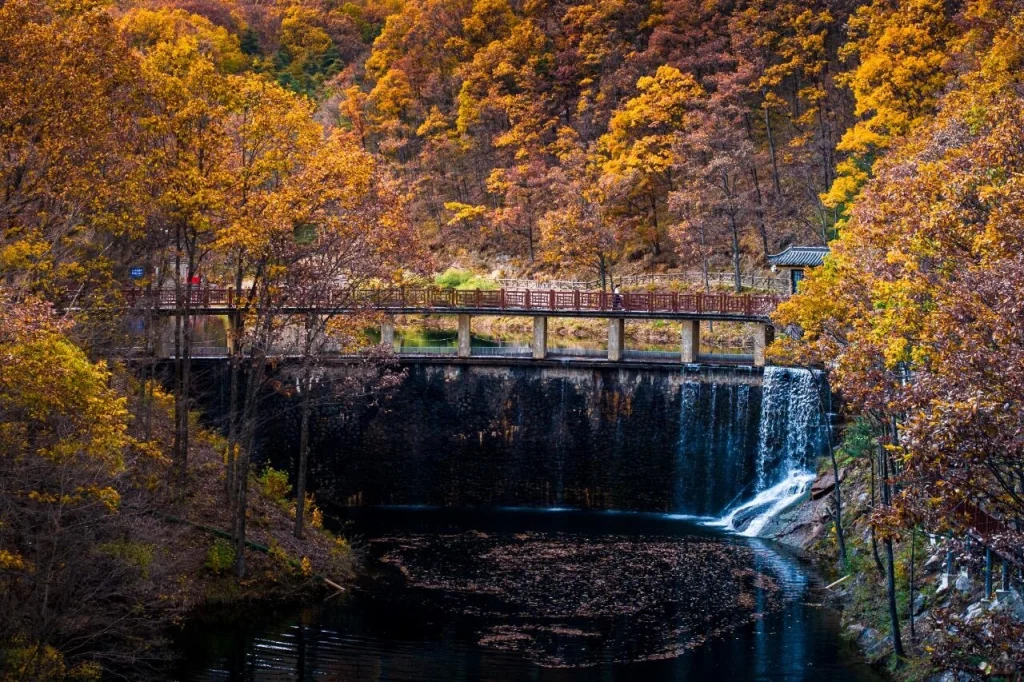
Fall brings cool, dry weather (15–22°C) and fewer tourists. You can explore the Longmen Grottoes in peace, walk cliffside paths, or catch sunset views along the Yi River.
In the mountains, Laojun Mountain glows with red leaves and morning cloud seas, while White Horse Temple becomes especially tranquil under golden ginkgo trees. It’s an ideal time for hiking, slow travel, and quiet reflection.

Though cold (–2 to 8°C), Luoyang in winter has a quiet, timeless beauty. Snow turns ancient temples and stone carvings into scenes from a Chinese ink painting.
Visit Longmen Grottoes after snow for a peaceful walk and stunning photos. At White Horse Temple, red walls and white snow create a striking contrast—perfect for travelers seeking solitude or photographers chasing that dreamlike winter shot.
For a broader, country-wide seasonal comparison, see Best & Worst Time to Visit China.
Luoyang is well connected by air and rail, with flexible options whether you’re arriving domestically or internationally.
For a system-level overview of how to travel between cities and regions in China, see our China Transportation Guide.

Location: About 10 km north of downtown, the airport is the most direct way to reach Luoyang.
Getting to the city:
• Taxi or Didi: ~20 minutes, around ¥30.
• Airport Shuttle Bus: Runs based on flight schedules, drops off at Peony Square. Fare: ¥10, ~30 minutes. Great for budget travelers.
If direct flights to Luoyang are limited, fly to Zhengzhou first, then take the high-speed train:
Transfer Route:
• Take the intercity train from the airport to Zhengzhou East Station (15–20 minutes, ~¥13).
• Switch to a high-speed train to Luoyang Longmen Station.
Total Travel Time & Cost:
• ~1.5 hours in total.
• Second-class high-speed train ticket: ¥65.5.
• Trains run every 30 minutes from 6:00 to 22:00.
Best For: International travelers—Zhengzhou has more flight options and smoother global connections.

Main Station for Tourists: Serves G- and D-series trains from major cities like Beijing, Xi’an, and Shanghai. Located in Luolong District.
City Access:
• Metro Line 2: Right outside the station. First train at 6:32, last at 22:32. Reach downtown or the Old City in under 30 minutes. Fare: ¥2–¥5.
• Bus / Taxi: Tourist shuttle lines like 76 or 99 available (¥1). Taxi or Didi to Lijing Gate takes ~25 mins, around ¥20.
Closer to the Old Town: Serves slower trains but is just 1.5 km from Lijing Gate—great if you’re focused on exploring Luoyang’s historic center.
City Access:
• Walk: 15 minutes to the heart of the Old Town via Zhongzhou East Road.
• Metro Line 2 or Bus 56: Easy access to major attractions. Bus fare: ¥1, ~40 minutes.
For route planning, ticket types, and station guidance, see China’s High-Speed Rail (HSR).
Luoyang’s public transportation system is easy, affordable, and tourist-friendly, with metro lines and scenic bus routes connecting major landmarks across the city.

Luoyang currently operates two metro lines (Line 1 & Line 2), forming a cross-shaped network that links the Old Town, Luolong District, and Xigong District. The metro is the best choice for short trips and visiting key sights without traffic stress.
Line 2 (North–South):
• Starts at Luoyang Longmen Station (high-speed rail).
• Direct access to White Horse Temple Station (10-min walk to temple entrance).
• Also connects to Luoyang Station (regular trains) and Jiefang Road Station (interchange with Line 1).
Line 1 (East–West):
• Ideal for reaching cultural and shopping areas.
• Transfer to Line 2 at Jiefang Road Station.
• Stops at Bali Tang Station (15-min walk or shuttle to Longmen Grottoes East Gate), Wangcheng Park Station (top peony viewing spot in spring), and Lijingmen Station (main gate to the Old Town).
How to Ride: No ticket needed—simply scan the “Luoyang Metro QR Code” in Alipay (supports international credit cards).
Fares: ¥2–¥5, depending on distance.
Hours:
• Summer: 6:30 AM – 10:30 PM
• Winter: 6:30 AM – 10:00 PM
• Entry closes 10 minutes before last train.
Pro Tip: Download the “Luoyang Metro” app for real-time train schedules and station info.

Luoyang’s bus system includes special tourist routes that connect major historical and cultural sites. Fares are low (just ¥1), and some buses even offer English stop announcements.
Route 53 (Longmen Grottoes → White Horse Temple)
• Known as the Buddhist Culture Line
• Starts at the northwest gate of Longmen Grottoes, ends at White Horse Temple
• Stops at Guanlin Temple (related to Three Kingdoms culture)
• Ride time: ~50 minutes | Fare: ¥1
• Some buses include English signage and bilingual announcements.
Route 99 (Luoyang Station → Luoyang Museum)
• Known as the History & Culture Line
• Stops at Wangcheng Park, Zhougong Square, and Luoyang Museum
• Ride time: ~30 minutes | Fare: ¥1
• High frequency: every 5 minutes during rush hours.
Local Routes: For Old Town areas (like Shizi Street), routes like 10 and 34 are useful.
Language Tip: Not all buses offer English, so download the “Luoyang Xing” (洛阳行) app for live maps, stop reminders, and route planning.
Payment: Use Alipay’s “Luoyang Bus QR Code” or prepare exact change (cash only, no credit cards accepted).
Before diving into Luoyang’s historic sites, temples, and cultural experiences, it helps to understand how this ancient capital fits into a broader China travel route. For a nationwide overview of regions, major cities, and travel styles, see our China Travel Guide.
“The Pinnacle of Chinese Stone Carving” – UNESCO World Heritage Site

Carved into cliffs along the Yi River, the Longmen Grottoes feature over 2,300 caves and 100,000 Buddhist statues, created over 400 years from the Northern Wei to the Tang dynasty. The highlight is the Lu Shena Buddha, a 17.14-meter-tall masterpiece said to reflect Empress Wu Zetian’s face—her gentle smile glowing in the morning light.
Must-See Areas:
West Hill Caves (Lu Shena Buddha, Binyang Cave, Lotus Cave)
East Hill Caves (Jingjing Temple, Leigutai)
Xiangshan Temple (poetry site of Empress Wu)
Bai Garden (home and tomb of poet Bai Juyi)
Travel Tips:
Rent an English audio guide at the gate (~¥40).
Visit near sunset for stunning views of the Buddha glowing against the evening sky.
Opening Hours:
Peak season (Apr–Oct): 8:00–18:30 | Night show: 18:30–21:00
Off-season (Oct–Mar): 8:00–17:30
Entry Fee: ¥90 (includes all areas)
“China’s First Buddhist Temple” – Cradle of Chinese Buddhism

Founded in 68 AD, this was the first official Buddhist temple in China, built by order of Emperor Ming of the Eastern Han dynasty. Named after the white horse that carried scriptures from India, the temple features ancient halls, international pavilions, and deep spiritual roots.
What to See:
Main Gate & Grand Hall (from Yuan and Ming dynasties)
Qingliang Terrace (scripture translation site)
International Pavilions: Thai golden-roof hall, Burmese jade-inlaid hall, Indian-style stupa
Traveler Highlights:
Try the sutra copying experience (free, book via WeChat)
Take photos with the unique mix of Southeast Asian architecture and classic red walls
Opening Hours:
Summer: 7:40–18:40 | Winter: 8:00–17:30
Entry Fee: ¥35 | Half-price for students
“An Encyclopedia of Luoyang’s History”

This modern museum houses over 400,000 artifacts, tracing Luoyang’s history from the Erlitou ruins to the Tang dynasty. Key exhibits include Tang Sancai pottery, bronze ware, and Han figurines.
Highlights:
Tang Sancai Black-Glazed Horse – the only one of its kind
Cao Wei Jade Cup – minimalistic and elegant
Silk Road Camel Figurines – colorful and lively
Must-Do:
Experience the VR station for virtual pottery making (free)
Visit the souvenir shop for mini Tang Sancai figures (~¥50–100)
Opening Hours:
Tue–Sun: 9:00–17:00 (last entry 16:30)
Closed Mondays (except holidays)
Admission: Free with advance online reservation
“The Heart of Peony Season” – Historic Garden Meets Floral Fame

Built atop the ancient Zhou Dynasty royal city ruins, Wangcheng Park is both a public garden and a living museum. It’s Luoyang’s oldest peony park and the main site of the annual Peony Festival in April.
Things to See:
Peony Goddess Pavilion and Shenxiang Tower – rare varieties like Yao Huang and Wei Zi
Zhou Dynasty Wall Remains
Zoo area with pandas and monkeys – great for kids
What to Do:
Dress in hanfu for flower photoshoots (rentals available: ~¥80/2 hrs with makeup)
Taste local snacks like peony cakes and flower tea sold in the park (¥10–20)
Opening Hours:
Park: 6:00–21:30 | Zoo: 7:00–19:00
Entry Fee:
• Peony season (April): ¥50 | Students: ¥25
• Off-season: Free (zoo entry: ¥15)
“Taoist Sanctuary Meets Scenic Wonder” – 5A National Park

Mount Laojun is both a sacred Taoist site and a breathtaking natural escape. It’s named after Laozi, founder of Taoism, who is said to have lived here in seclusion. From golden temples on the summit to misty pine forests and sweeping ridgelines, the experience feels truly otherworldly.
Top Sights:
Laojun Temple Complex (originally built in Tang dynasty)
Golden Summit (Yuhuang Top) – gleaming temples at 2,200 m
Ten-Mile Gallery – dramatic granite ridges, especially stunning in autumn
Glass Viewing Platform – suspended walkway above the cliffs
Must-Do:
Ride the Level 1 cable car (¥70 one way) to Zhongtian Gate, then hike to the summit
In fall, come after rain for the “Sea of Clouds + Golden Peak” view—perfect photo spot
Opening Hours:
Scenic area open daily | Cable car: 7:30–18:00 (may extend in summer)
Entry Fee: ¥100 | Online pre-sale ~¥90
Cable Cars: Level 1: ¥130 round trip | Level 2: ¥80 round trip
Night climb only available in summer (22:00–24:00)
“Immersive Nightlife in a Tang-Style Town” – Cultural Landmark

Luoyi Ancient City is a reconstructed Tang-style district built over the old city site. With lantern-lit alleys, hanfu parades, and traditional craftsmanship, it brings “living history” to life.
Highlights:
Rebuilt Streets & Bridges styled after Sui–Tang era
Wenfeng Pagoda (climb for a panoramic night view)
Cultural Workshops – try Tang Sancai pottery or peony porcelain making
Live Performances – hanfu parades, Tang dances at 3:00 PM and 7:00 PM daily
What to Do:
Rent hanfu (¥100 / 3 hours with makeup) and explore the lantern-lit streets
Watch the water-screen light show at Wenfeng Pagoda (8:00 PM)
Buy local crafts or snacks at open-air markets
Opening Hours:
Free admission with online booking
Peony Festival period: ¥29.9 per person
Most performances and shops run till 22:00
“Geological Masterpiece of Central China” – UNESCO Global Geopark
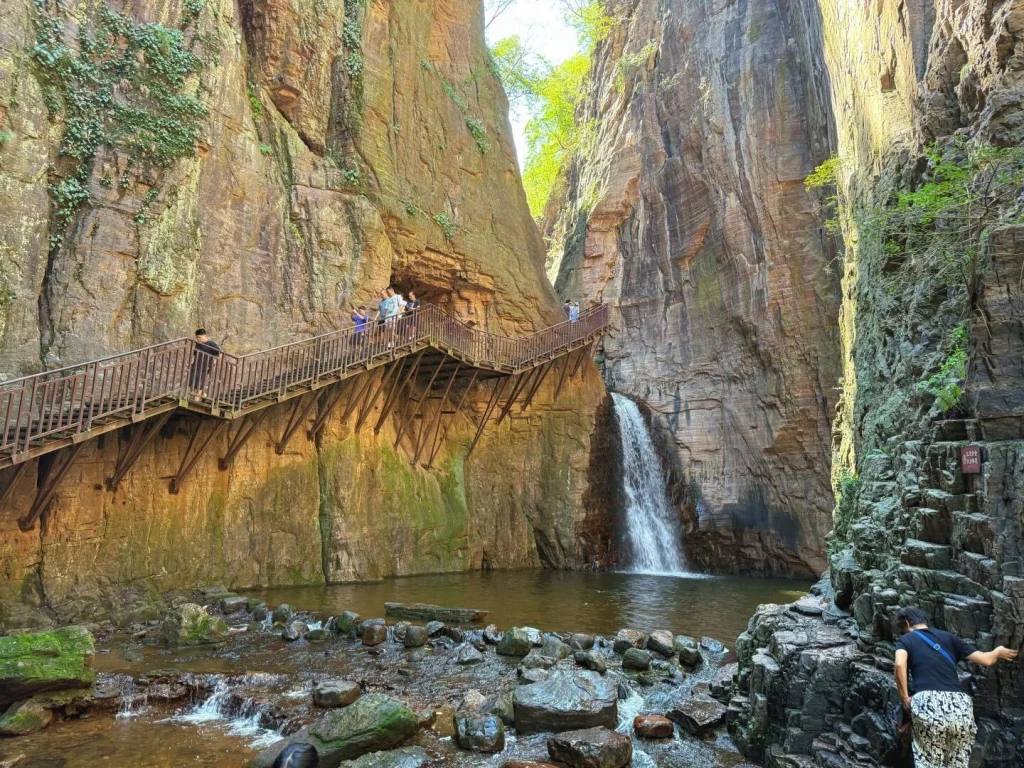
This vibrant red sandstone canyon was formed over 1.2 billion years ago. With narrow cliffs, hidden pools, and layered rock patterns, it’s a dream spot for nature lovers and photographers.
What to See:
Red Rock Cliffs and Wave Mark Stone Walls
Weng Valley – round, pot-like formations shaped by flowing water
Five-Dragon Waterfall – 30-meter cascade through five steps
16 Viewing Platforms along a 5-km trail (easy to walk)
Don’t Miss:
Take a full hike (~3 hrs, moderate, scenic)
Capture light beams at “One-Line Sky” slot canyon
Optional boat ride on Five-Dragon Pool (¥20/person)
Opening Hours:
Open daily | Best visited in spring or summer
Entry Fee: ¥80 | Students & seniors 60+ half-price
“Twin Gates of Ancient Glory” – Historic City Portals

These two monumental gates represent different dynasties and faces of Luoyang—the imperial past and everyday life.
Yingtian Gate:
Main gate of Sui-Tang Luoyang Palace
Features a 50m-tall reconstructed tower, underground museum, and nightly 3D projection show at 8:30 PM
Climb for a bird’s-eye view of the Heavenly Street ruins
Lijing Gate:
West gate of Ming–Qing Luoyang, reconstructed in 2002
Includes a local history exhibit and connects to Shizi Street night market, ideal for street food lovers
Tips for Visitors:
Entry to Yingtian Gate: ¥60 (combo ticket available)
Best time to climb: after 19:00 to enjoy evening lighting
Lijing Gate area is free to explore, ¥30 to climb the tower
“Peak of Central China’s Landscape” – 5A Scenic Area

Baiyun Mountain (literally “White Cloud Mountain”) is home to majestic peaks, waterfalls, and pristine forests. At 2,216 meters, Yuhuang Top is the highest summit in central China.
Top Sights:
Yuhuang Summit – sunrise views from the “roof of Henan”
Jiulong Waterfall – 123-meter cascade with rainbow mist
Forest Oxygen Bar – vast pine forest, clean air 37× above national standard
Daoist Culture: Mountaintop Yuhuang Pavilion and cliffside inscriptions
Must-Do:
Ride the cable car to Yuhuang Summit (¥80 one way)
Visit after rain for cloud seas and mountain reflections
Try the summer-only “First Drift of Central China” river rafting (¥158, open June–Aug)
Opening Hours:
Open daily year-round
Entry Fee: ¥75 | Free for non-local travelers in April
Beyond ancient architecture and scenic views, Luoyang offers deep cultural experiences rooted in religion, art, nature, and cuisine.

Luoyang is one of the birthplaces of Chinese Buddhism. It all began at White Horse Temple, where Indian monks introduced Buddhist scriptures, marking the start of Buddhism’s localization in China. Further south at Longmen Grottoes, faith meets art—Buddha carvings like the Lu Shena Buddha reflect a uniquely Chinese aesthetic, with serene smiles and elegant robes.
What to Do:
Listen to English-translated Dharma talks by monks at White Horse Temple (Saturday mornings)
Admire stone carvings like the “Emperor Worshipping the Buddha” panel in Binyang Cave, which tells sacred stories through sculpture

Known as China’s national flower, the peony has symbolized wealth, honor, and beauty since the Tang dynasty. Luoyang’s peonies are especially famous for their large blooms, vibrant colors, and rare varieties—over 1,000 types are cultivated here.
Best Time to Visit: April, during the Luoyang Peony Festival
What to Do:
Watch peony flower arranging or peony porcelain making workshops
Taste a local Peony Banquet, where ingredients like petals are used in dishes such as peony salad, petal cakes, and flower tea

Tang Sancai—meaning “Tang Three Colors”—refers to glazed ceramics with flowing hues of yellow, green, and white. The craft involves a double-firing technique and often features lifelike figures of horses, camels, and Silk Road traders.
Why It Matters: These figurines were not just tomb goods—they were trade symbols that traveled the Silk Road, representing the fusion of Chinese and foreign cultures. Luoyang is one of their main places of origin.
What to Do:
Visit Tang Sancai workshops in Luoyi Ancient City
Buy a mini Tang Sancai replica as a colorful keepsake
From royal banquets to street snacks, Luoyang’s food scene blends imperial heritage with everyday comfort.
A 1,000-Year Banquet Tradition

Luoyang’s most iconic meal is the 24-dish Water Banquet, named for the way dishes arrive in flowing succession. It began in Tang Dynasty court feasts and continues today as a symbol of local hospitality.
Signature Dishes:
Peony Swallow Dish – shredded radish in rich broth, shaped like bird’s nest
Sour Soup Sliced Pork – tender pork in a tangy broth with sweet potato noodles
Candied Sweet Potatoes – caramelized finale that balances the spice
Where to Try:
Zhen Bu Tong Restaurant (No. 393 Zhongzhou East Rd): Traditional full-course experience, ~¥62/person
Local Street Kitchens (Jiudu Rd area): Self-serve Water Banquet from just ¥15—great for budget foodies
Start Your Morning Like a Local

“A bowl of soup in the morning beats being a god,” say Luoyang locals. Rich broths made from slow-simmered beef, lamb, or donkey bones are the soul of local breakfasts.
Top Picks:
Beef Soup – classic! Try Majiéshan Beef Soup (Qiming East Rd 235), opens 5:00 AM
Donkey Soup – tender and clean flavor, found at Dashiqiao Donkey Soup (Jiudu East Rd 52)
“No-Flip Egg Soup” – a Luoyang special where egg skins cook without turning, served with vermicelli at Gaoji Qingxiangyuan (near Lijing Gate), ~¥10
Flavors from Every Alley

Sour Starch Noodles (Jiang Mian Tiao): Fermented mung bean broth with peanuts and celery—refreshing and tangy
Pan-Fried Dumplings: Crunchy outside, juicy inside. Try Xigong District’s Xiao Jie Guotie, only ¥3.5 per portion
Peony Pastries: Crisp layers with floral filling. Buy a box (~¥10) at Tianxianzhai near Dongguan Police Station
Tourist-Friendly, Culture-Rich Bites

Explore Ming-Qing style streets packed with time-tested eateries and lively night markets.
Don’t Miss:
Under Lijing Gate: Try Gaoji No-Flip Soup, Zhang’s Wontons (~¥10/bowl)
Shizi Street Night Market (6:00 PM–2:00 AM): Skewers, rose cakes, crispy pancakes—all under ¥10 each
Muslim Cuisine & Local Favorites

This area is the hub of Halal and traditional soup cuisine, popular with locals and full of hidden gems.
Top Picks:
Majiéshan Beef Soup – go early for “first-batch broth”
Tasi BBQ Village – lamb skewers + sour soup hotpot combo, ~¥50/person
Yang’s Restaurant – 30+ years serving legendary sour pork slices (Qiming East Rd 284)
Modern, Affordable & Youth-Friendly

Xin Du Hui Mall: Great mix of familiar brands and local snacks
Xiao Jie Tianfu Alley: Student-favorite street food zone. Grab pan-fried dumplings for ¥6, spicy tripe soup for ¥12
For History Lovers & Nightlife Seekers

Why Stay Here:
Steps from major sights: Walk to Lijing Gate, Shizi Street Night Market, and Luoyi Ancient City in 5–10 minutes
Atmospheric stays: Over 500 boutique guesthouses in restored Tang-style courtyards and creative heritage homes
Cultural nightlife: Catch Wenfeng Pagoda’s light show or hanfu parades right outside your door
Metro access: Just 300m from Lijingmen Station (Line 1)—easy ride to Yingtian Gate, Luoyang Museum, and more
Best For: Cultural travelers, hanfu enthusiasts, and night owls. Especially popular during Peony Festival season.
For Comfortable, Scenic, & Convenient Stays

Why Stay Here:
Direct metro to Longmen Grottoes: Ride Line 2 to Bali Tang Station, arrive early to beat the crowds
Modern hotels with style: Big names like Hilton and Marriott, often blending Tang garden design with lake views
Shop & relax: Surrounded by malls like Quanshun Plaza with family-friendly dining and entertainment
Best For: Families, leisure travelers, and anyone planning in-depth visits to Longmen Grottoes, Luoyang Museum, and Sui-Tang Botanical Garden. Great off-season value.
For Efficient Travel & Balanced Budgets

Why Stay Here:
Best metro hub: Transfer point between Line 1 and 2 at Jiefang Road Station—reach every major attraction in 30 minutes
Shop & snack: Walk to malls like Wangfujing and Xin Du Hui, and enjoy late-night eats like pan-fried dumplings and spicy noodle soups
Affordable options: From youth hostels (~¥60/night) to reliable mid-range hotels
Best For: First-time visitors, fast-paced travelers, and those catching early trains or transiting through multiple cities.
For Foodies & Local Life Seekers

Why Stay Here:
Food paradise: Wake up to beef soup at Majiéshan, unwind with lamb skewers at Tasi BBQ Village
Budget-friendly: Guesthouses from ¥60–150 per night; some within walking distance of Luoyi Ancient City
Easy temple access: Metro Line 2 runs directly to White Horse Temple Station, perfect for a “soup + temple” day
Best For: Food lovers, students, and travelers wanting to experience authentic local life without breaking the bank.
See also: Where to Stay in Luoyang
With two well-planned days, you can discover Luoyang’s rich Buddhist heritage, dynastic history, street flavors, and mountaintop wonders.
Recommended time: 7:30–11:00

Start your day early with Metro Line 2 to Bali Tang Station, then walk 15 minutes to the East Gate of Longmen Grottoes. Focus on the West Hill caves, where you’ll meet the 17.14-meter Lu Shena Buddha, glowing softly in the morning light. Follow the curve of history through the Binyang Caves, admiring sculpted robes and faces from the Northern Wei to the Tang Dynasty.
If you have energy, hike up to Xiangshan Temple for panoramic views over the Yi River, then explore Bai Garden, poet Bai Juyi’s serene final resting place.
Travel Tip: Use the electric shuttle inside the site (¥10), then take Bus 53 to Luoyang Museum (30 minutes, ¥2).
Recommended time: 13:00–16:00

Reserve in advance via WeChat and head straight to the 2nd Floor “Luoyang Treasures” exhibit. Highlights include the Tang Sancai Black Glazed Horse, the elegant Cao Wei Jade Cup, and lifelike camel figurines that tell Silk Road stories. Don’t miss the Heluo Civilization Hall, which traces 13 dynasties of Luoyang history.
Bonus: Try the free Tang Sancai VR experience on each floor. At the gift shop, grab a mini ceramic figurine as a souvenir (¥50–100).
Recommended time: 17:30–21:30

Dine at Zhen Bu Tong Restaurant for a curated Luoyang Water Banquet (¥60 per person). Try the signature Peony Swallow Dish, spicy pork slices in soup, and candied sweet potatoes for dessert.
After dinner, stroll 10 minutes to Lijing Gate. Climb the tower (¥30) for sweeping views, or head into the Shizi Street night market. Grab a bowl of “No-Flip Egg Soup” (¥10) and soak in the lights, lanterns, and hanfu-filled alleyways.
Recommended time: 8:00–11:00

Take Metro Line 2 to White Horse Temple Station, then walk 10 minutes to China’s first official Buddhist temple. Explore both the traditional Chinese temple section (with ancient scripture halls) and the International Pavilion, where Thai, Burmese, and Indian-style temples offer a stunning contrast.
Bonus: Join a sutra copying experience (free, reserve via WeChat) at the Grand Hall for a moment of mindful peace.
Best in April during Peony Festival

From the temple, take Bus 56 + Metro Line 1 to Wangcheng Park Station. Head to Chenxiang Tower to admire rare peonies like Yao Huang and Wei Zi. Rent a hanfu outfit (¥80 for 2 hours with makeup) and pose under the 100-year-old peony trees.
For lunch, visit Chuanshi Ji Liu Xiang Beef Soup Restaurant near the park. Order a bowl of beef bone broth with local bread slices for a classic Luoyang-style lunch.
Recommended time: 14:00–18:30

Take a direct tourist bus to Mount Laojun (~2 hrs, ¥60 round trip). Ride the first cable car (¥70) to Zhongtian Gate, then switch to the second cable car (¥65) to enter the scenic Ten-Mile Gallery trail. Hike through granite peaks and cloud seas, finally reaching the Golden Summit Temple Complex—a gilded mountaintop shrine glowing in the sunset.
Ideal for active travelers seeking dramatic views and spiritual serenity.
Most travelers need a China tourist visa (L visa) to visit Luoyang. Apply at your nearest Chinese embassy or consulate in advance.
English is limited in many areas, so basic Mandarin phrases help. Useful words:
Hello: 你好 (Nǐ hǎo)
Thank you: 谢谢 (Xièxiè)
Where is…?: …在哪里?(…zài nǎlǐ?)
How much?: 多少钱?(Duōshǎo qián?)
Apps like Google Translate (camera translation) are very helpful.
About payment, most places use Alipay or WeChat Pay. Set up Alipay with an international card before arrival. Some shops may still accept cash.
For a full breakdown of mobile payment, cards, and cash use, see How to Pay in China.
Luoyang is generally safe, even at night.
No special vaccinations required
Emergency number: 110 (police), 120 (ambulance)
Major hospitals include Luoyang Central Hospital, with some English-speaking staff
Bring basic travel meds and personal prescriptions
Spring/Autumn: Light jacket, layers, sneakers
Summer: Sunscreen, hat, breathable clothes
Winter: Warm coat, gloves, thermal wear
Other:
• Portable charger
• VPN (if you want access to Google/Facebook)
• Universal power adapter (China uses Type A/I plugs)
Go early: Sites like Longmen Grottoes and White Horse Temple are best visited before 9:00 AM to avoid tour groups
Avoid holidays: Major crowds during Golden Week (Oct 1–7) and Labor Day (May 1–3)
Weekdays and shoulder seasons (late spring, early autumn) offer the most relaxed experience
For first-time visitors and general planning advice, see China Travel Tips: The Best Guide You Can Find.
Traveling to Luoyang is affordable and flexible, whether you’re on a backpacker’s budget or seeking more comfort. Here’s a practical breakdown of estimated expenses for a 2-day core itinerary, based on official ticket prices and local rates.
| Category | Budget Option (RMB) | Comfort Option (RMB) |
|---|---|---|
| Local Transport Subway, bus, bike, taxi | ≈ 100 | ≈ 200 |
| Accommodation (2 nights) | ≈ 400 | ≈ 1000 |
| Attraction Tickets | ≈ 225 | ≈ 550 |
| Meals | ≈ 150 (2 days) | ≈ 600 |
| Total Estimate | ≈ 800 RMB / person | ≈ 2500 RMB / person |
To compare daily travel costs across different Chinese cities, see Cost of Travel in China.
Looking to extend your trip beyond Luoyang? Within just 1–2 hours by train or car, you’ll find three nearby cities with distinct charm—from martial arts legends to ancient capitals and hidden eco-retreats.

Top Highlights:
Shaolin Temple (Mount Song): The birthplace of Zen Buddhism and Shaolin Kung Fu. Visit the ancient ginkgo trees, forest of pagoda tombs, and the famous “Zen Shaolin” music show performed live in a natural mountain setting.
Songshan Geopark: A rare “5-eras-in-one” rock formation zone—hike to Sanhuangzhai Cliff Trail for panoramic views over granite peaks and floating clouds.
Yellow River Scenic Area: Take a hovercraft ride, or climb the platform beneath the Emperors Yan & Huang statues to feel the power of China’s mother river.
How to Get There:
High-speed train from Luoyang Longmen to Zhengzhou East in 38 minutes; ~1.5 hours by car to Shaolin Temple. Entry: ¥80.

Top Highlights:
Qingming Riverside Park: A full-scale recreation of the painting Along the River During the Qingming Festival. Watch horse battle reenactments by day and immersive light shows by night. Rent hanfu and walk through time on Rainbow Bridge.
Song Culture Immersion: See “Judge Bao” at Kaifeng Prefecture, chant with monks at Daxiangguo Temple, admire Qing woodcarvings at Guild Hall Museum, then feast at Drum Tower Night Market.
Local Life & Crafts: Print your own woodblock New Year prints in Zhuxian Town, browse antique books on Bookstore Street, and try Kaifeng snacks like sweet almond soup and spicy cold noodles.
How to Get There:
High-speed train from Luoyang Longmen to Kaifeng North in 35 minutes. Most sights reachable by bike share. Park ticket: ¥120.

Top Highlights:
Swan Lake Wetland Park: From October to March, thousands of Siberian swans winter here. Photograph them at sunset over Qinglong Lake—a must for bird lovers.
Shanzhou Underground Courtyard: Stay in a traditional “pit yard” home, an earthen village built below ground. Try local folk crafts like plant dye printing or hand loom weaving.
Yellow River Canyon Drive: Stand atop China’s first Yellow River dam, see thundering water releases, or drive the scenic Yellow River Highway for epic views at the border of Henan, Shanxi, and Shaanxi provinces.
How to Get There:
1 hour by train from Luoyang to Sanmenxia South Station; 20 minutes by car to Swan Lake. Pit yard ticket: ¥60.


Plan your first Henan trip with the best routes, top places, travel timing, transport tips, food highlights, and cost expectations.

A clear 2026 forecast for people born in 1958, covering career, wealth, relationships, health, and practical guidance for a stable, active, and harmonious year.

Discover the 1962 Water Tiger zodiac, exact Lunar New Year dates, Ren-Yin elements, personality, compatibility, and traditional folk outlooks for 2026–2027.

Choose the best area to stay in Yangzhou for old-town sights, Slender West Lake, city comfort, and rail stopovers with practical hotel picks.

Check all 78 Chinese zodiac pairings, including Six Harmonies, Three Harmonies, clashes, harms, punishments, breaks, and neutral matches.

Experience the magic of Inner Mongolia, where vast grasslands meet a rich tradition of song and wine, offering a unique cultural journey through nature and heritage.

Share your travel ideas, and we’ll help you plan a smooth, personalized trip across China.

Share your travel ideas, and we’ll help you plan a smooth, personalized trip across China.
We’re looking for experienced, part-time local guides to serve international travelers.
Requirements:
• Fluent in at least one foreign language
• 3–5 years guiding international visitors
• Able to operate in multiple regions in China
• Competitive and reasonable pricing
• Proven customer reviews or testimonials
• Professional, reliable, and responsive
• Flexible availability for custom trips
Hi there!
Just a quick heads-up — a helpful user named Volker let me know that some of the non-English content on this site may not be accurate.
This site is a one-person project I run part-time. I research and publish all the content myself, and the translations are currently done by machine (Google Translate). Balancing accuracy and accessibility across multiple languages is a real challenge.
If you spot any errors, I recommend switching to the English version using the button at the bottom left. I’ll continue working to improve the translations over time.
I truly appreciate your understanding. And if you have any suggestions, feel free to leave a comment — it means a lot to me.
— Anthony 2025.6.18


