
 Written by
Anthony
Macau, a Special Administrative Region of China, is located on the western side of the Pearl River Delta.
It is just 60 km from Hong Kong and 145 km from Guangzhou.
Comprising the Macau Peninsula, Taipa, Coloane, and Cotai, the region covers 33.3 square kilometers of land area.
With a population of approximately 686,400 people, Macau has both Chinese and Portuguese as official languages.
The region enjoys a subtropical climate with a coastal terrain, with the north featuring hills and mountains and the south dominated by plains.
Since its integration into China during the Qin Dynasty, Macau was later colonized by Portugal.
It returned to Chinese sovereignty in 1999.
Macau’s economy relies heavily on industries such as gaming, tourism, finance, and construction.
If you want help choosing routes, trip length, and the best places to combine on a first visit, see our Macau Travel Guide.
| Category | Detail | Category | Detail |
|---|---|---|---|
| Full Name | Macao Special Administrative Region (English) | Administrative Division | Special Administrative Region |
| Alternative Name | Eastern Gambling City, Garden of the Sea | Geographic Location | Southwestern Pearl River Delta, West Coast of the Pearl River Estuary |
| Administrative Code | 820000 | Climate | Subtropical Oceanic Monsoon Climate |
| Administrative Category | Special Administrative Region | Population | 686,400 (as of Q1 2024) |
| Geographic Location | Pearl River Delta, West Coast of the Pearl River Estuary | Famous Attractions | Historic Centre of Macau, Macau Tower, A-Ma Temple |
| Subdivisions | 7 Parishes | Airport | Macau International Airport |
| Government Headquarters | Macau South Bay, Macau SAR Government Headquarters | License Plate Codes | EX (test plates), ES (special plates), MA-MZ, Guangdong Z plates |
| Telephone Area Code | +853 | GDP | 181.74 billion MOP (as of 2024, in Macanese Patacas) |
| Current Chief Executive | Ho Iat Seng | First Chief Executive | Edmund Ho Hau Wah |
| Geographic Coordinates | East Longitude 113°31’41.4″ to 113°37’48.5″, North Latitude 22°04’36.0″ to 22°13’01.3″ | Official Languages | Chinese, Portuguese |
| Per Capita GDP | 234,529.2 MOP (as of 2022) | District Flower | Lotus Flower |
| Land Area | 33.3 km² (as of September 2024) | Marine Area | 85 km² |

Macau boasts a rich history of over 400 years of cultural exchange between the East and West, offering a unique blend of attractions.
The city features traditional mansions, ancient temples, and European-style architecture, including Baroque churches, making it an exceptional travel destination.
In the first half of 2024, Macau saw 16.72 million visitors, marking a 43.6% increase from the previous year.
Mainland Chinese visitors rose by 52.9%, making up 69% of the total, while visitors from Hong Kong increased by 4.5%.
Hotel occupancy rates rose to 84.2%, with a significant boost in five-star hotel bookings.
Visitors enjoyed longer stays, with the average being 1.7 nights, maintaining a stable trend.

Macau’s culinary culture is rich and diverse, blending various influences.
The fusion of Chinese and Portuguese cuisine is evident, with dishes like Portuguese chicken incorporating Chinese cooking techniques and ingredients like mushrooms and onions, creating richer flavors.
African chicken combines African, Portuguese, and local Macanese flavors.
As an international tourist city, Macau offers global dishes like Italian pizza, Japanese sushi, and Korean BBQ, often adjusted to local tastes.
Seafood is abundant, with dishes like crab congee and Portuguese seafood rice showcasing the fresh, natural flavors of the sea.
Macau’s snacks like pork chop buns and Portuguese egg tarts are unique and flavorful, while its desserts like double-skin milk and maize pudding highlight traditional craftsmanship.
Dining in Macau also offers a cultural experience, with a range of restaurant styles from Michelin-starred dining to local eateries, providing a taste of the region’s rich history.

Macao’s intangible cultural heritage is a significant cultural resource, with 70 projects included on the heritage list, covering various types such as artistic expressions, religious practices, cognitive traditions, and traditional craftsmanship.
The first batch of Macao’s intangible cultural heritage list was released in 2017, which included 15 projects like herbal tea preparation and wood carving of religious statues.
In June 2020, 55 additional projects were added to the list.
Notably, the local Cantonese drama was included as a national intangible cultural heritage in 2021.
The Cultural Affairs Bureau actively promotes the exchange of intangible cultural heritage between Macao and the Greater Bay Area, organizing participation in major events, enhancing Macao’s heritage visibility.
Furthermore, technological innovations are being used to present heritage in new ways, supporting its preservation and development.
It depends on the transportation method. It takes about 40 minutes by the Hong Kong-Zhuhai-Macao Bridge shuttle bus (Golden Bus), about 1.5 hours by the Hong Kong-Macao Express Line, about 1 hour by ferry, and about 50 minutes by chartered car service.
Macau is part of China. It is a special administrative region of the People’s Republic of China.
Yes, people in Macau do speak English. Although the official languages of Macau are Chinese and Portuguese, English is widely used, especially in the tourism industry and among the younger generation. Many locals can understand at least basic English.
Yes, Macau and Macao refer to the same place. Macao is the English spelling and Macau is the Portuguese spelling. Both are correct and officially accepted.
Macau is famous for its gambling industry, which is much larger than that of Las Vegas. It also has a unique blend of Portuguese and Chinese architecture, with its historic center being a UNESCO World Heritage Site. In addition, it’s renowned for its diverse cuisine and numerous tourist attractions like the Ruins of St. Paul’s, The Venetian Macao and Grand Lisboa.
Yes, Macau is generally safe to visit. It has a relatively low crime rate and a sound public security system. The local government attaches great importance to the safety of tourists and has taken a series of measures to ensure the safety of people and property.
Macau is rich mainly because of its developed gambling industry and tourism. The gambling industry in Macau is highly profitable and attracts a large number of gamblers and tourists from all over the world. In addition, the local government’s reasonable economic policies and infrastructure construction also contribute to the economic development of Macau.
There are many delicious foods in Macau, such as Portuguese egg tarts, pork chop buns, water crab porridge, Macanese almond cookies, bacalhau balls, Portuguese seafood rice, minced meat pudding and African chicken.


Plan your first Guangxi trip with the best routes for Guilin, Yangshuo, Longji, Detian, and Beihai, plus timing, transport, budgets, and practical travel tips.

Explore the vibrant world of Chinese New Year prints (年画), from folk traditions to modern styles, rich in symbolism, blessings, and festive charm.
Plan 5 days in Beijing with core sights, the Great Wall, museums, hutongs, costs, route tips, and flexible first-time travel advice.
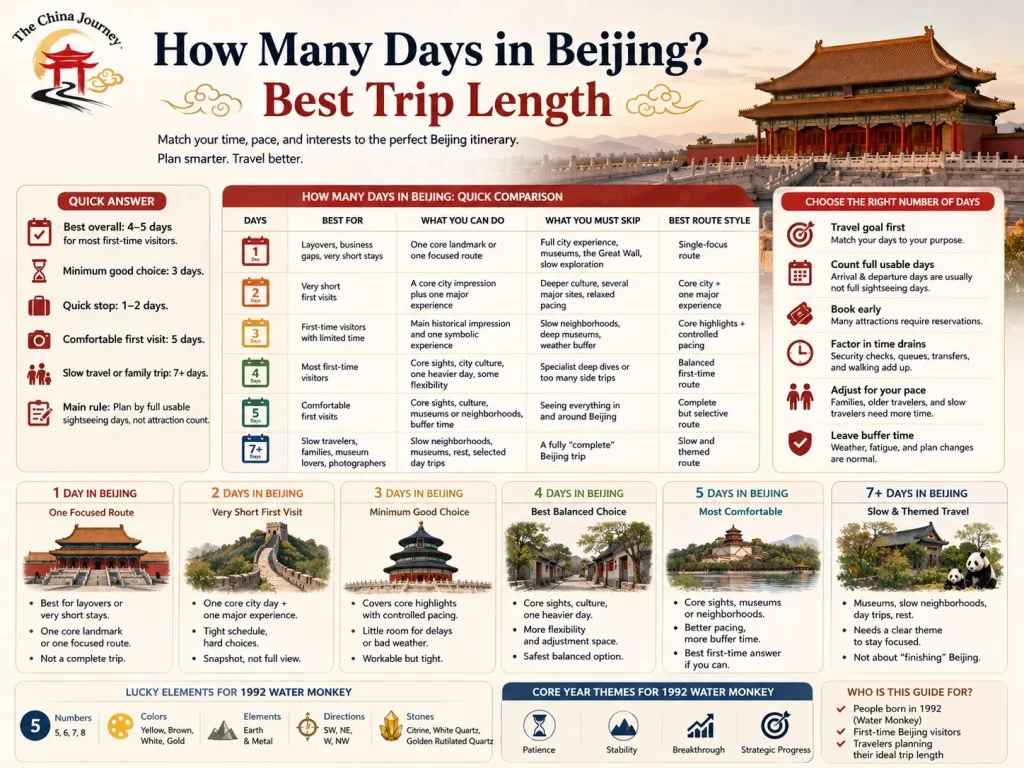
Most first-time visitors need 4–5 days in Beijing. Compare 1, 2, 3, 4, 5, and 7+ day trip lengths by pace, route, and travel style.

Tsinghua University is one of China’s top institutions, renowned for its academic excellence, rich history, and commitment to fostering global talent in various fields.

Plan your visit to Guangzhou’s Canton Tower with ticket prices, must-do rides, dining, transport, and travel tips for the city’s iconic landmark.

Share your travel ideas, and we’ll help you plan a smooth, personalized trip across China.

Share your travel ideas, and we’ll help you plan a smooth, personalized trip across China.
We’re looking for experienced, part-time local guides to serve international travelers.
Requirements:
• Fluent in at least one foreign language
• 3–5 years guiding international visitors
• Able to operate in multiple regions in China
• Competitive and reasonable pricing
• Proven customer reviews or testimonials
• Professional, reliable, and responsive
• Flexible availability for custom trips
Hi there!
Just a quick heads-up — a helpful user named Volker let me know that some of the non-English content on this site may not be accurate.
This site is a one-person project I run part-time. I research and publish all the content myself, and the translations are currently done by machine (Google Translate). Balancing accuracy and accessibility across multiple languages is a real challenge.
If you spot any errors, I recommend switching to the English version using the button at the bottom left. I’ll continue working to improve the translations over time.
I truly appreciate your understanding. And if you have any suggestions, feel free to leave a comment — it means a lot to me.
— Anthony 2025.6.18


