Religions in China

Celestial Master Temple Mount Longhu Taoist priests in red robes kneel before ornate deities inside the ancestral hall at Mount Longhu Jiangxi China - Religions in China 2026 - The China Journey - Religions in China 2026 - The China Journey
Discover the origins and cultural impact of China’s major religions—Buddhism, Taoism, Islam, Catholicism, and Protestantism—across history.
Celestial Master Temple Mount Longhu Taoist priests in red robes kneel before ornate deities inside the ancestral hall at Mount Longhu Jiangxi China - Religions in China 2026 - The China Journey - Religions in China 2026 - The China Journey

Table of Contents

China’s spiritual landscape reflects centuries of cultural exchange and innovation.

From the spread of Buddhism along ancient Silk Roads to the homegrown teachings of Taoism, belief systems have shaped Chinese art, philosophy, and daily life.

Islam arrived with maritime traders and integrated into local communities, while Catholicism and Protestantism brought new educational and healthcare legacies.

Today, these five traditions coexist, each contributing unique rituals, sacred sites, and festivals.

Exploring their history and cultural impact reveals how religion continues to influence China’s social fabric and global heritage.


Buddhism

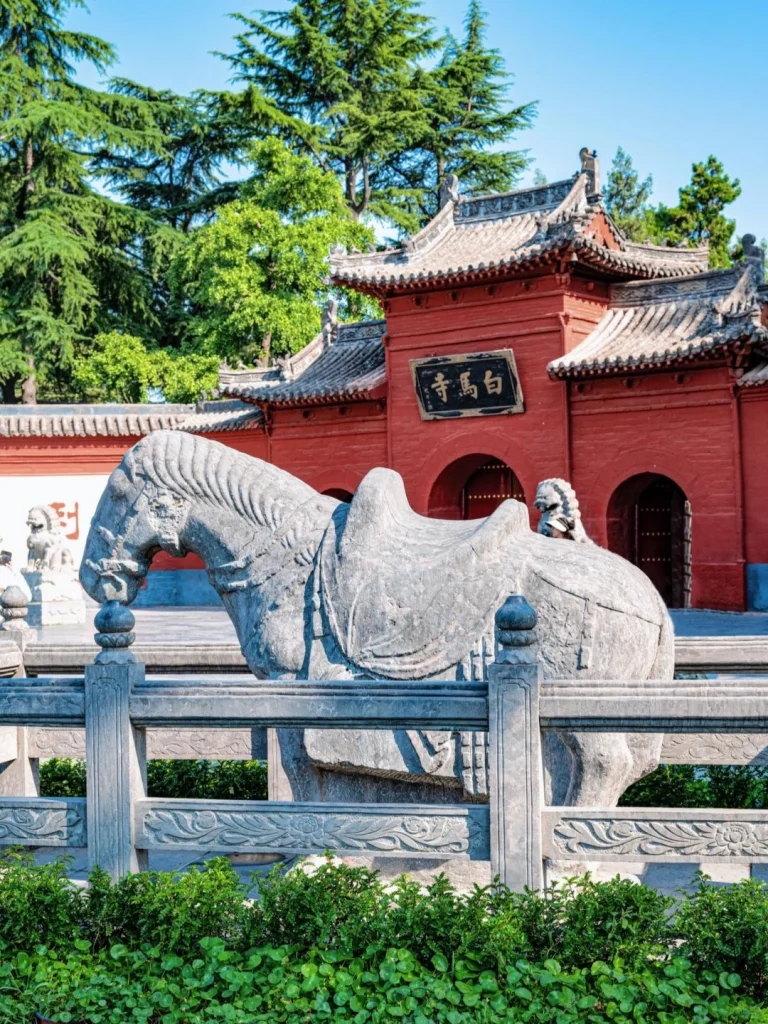
Chinese Buddhism first arrived during the late Western Han dynasty (1st century BCE) with the establishment of White Horse Temple under Emperor Ming.

Over time, it blended with Confucian and Taoist philosophies to create uniquely Chinese schools such as Chan, Tiantai, and Pure Land.

Tibetan Buddhism entered in the 7th century via Princess Wencheng and evolved into Nyingma, Sakya, Kagyu, and Gelug traditions.

Theravada Buddhism reached Yunnan’s Dai communities in the 1st century CE, and its temples remain cultural centers in Xishuangbanna and Dehong.

Today, more than 200 million adherents worship at over 30,000 registered temples with roughly 200,000 monks and nuns across China.

Iconic sites include Luoyang’s White Horse Temple, Hangzhou’s Lingyin Temple, Shaolin Monastery, Lhasa’s Potala Palace, and Jokhang Temple.

Buddhism’s rich legacy endures in the Dunhuang and Yungang grottoes, Zen-inspired art, monastic charity, and a vibrant vegetarian tradition.

Taoism

Taoism began in the Eastern Han (2nd century CE) when Zhang Daoling founded the Way of the Five Pecks of Rice and Zhang Jue created the Taiping Dao, based on the Dao De Jing.

During Wei–Jin, Ge Hong refined Daoist thought; under the Tang dynasty, Taoism became an imperial faith, and the Song and Yuan dynasties saw Wang Chongyang’s Quanzhen monastic order arise.

Today, about 5 million adherents worship at over 9,000 Taoist temples with 50,000 priests, mostly across northern and eastern China.

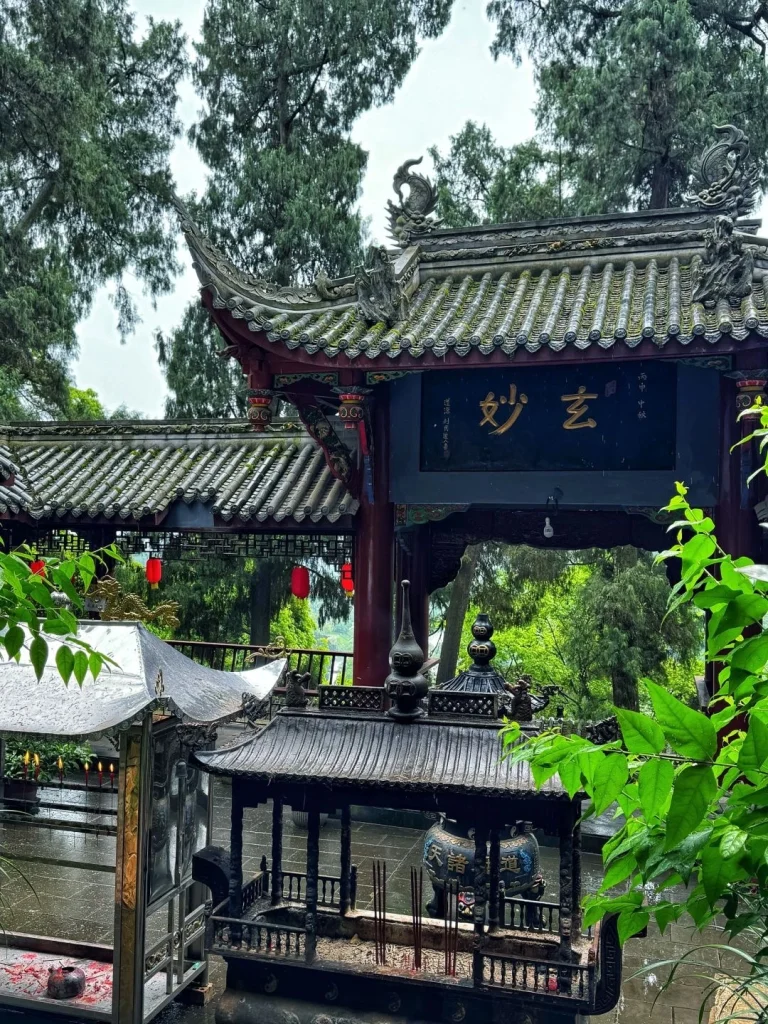
Two main schools are Quanzhen, emphasizing celibate monastic life at Beijing’s White Cloud Temple, and Zhengyi, with married priests practicing ritual magic at Mount Longhu.

Pilgrimage sites include White Cloud Temple, Shanxi’s Yongle Palace, Shaanxi’s Chongyang Palace, Quanzhou’s Xuanmiao Temple, and the Tianshi Mansion on Mount Longhu.

Taoism’s legacy appears in the “unity of heaven and man” shaping Chinese medicine and Taiji, early alchemy’s contributions, and folk traditions like door god paintings and sachets.


Islam

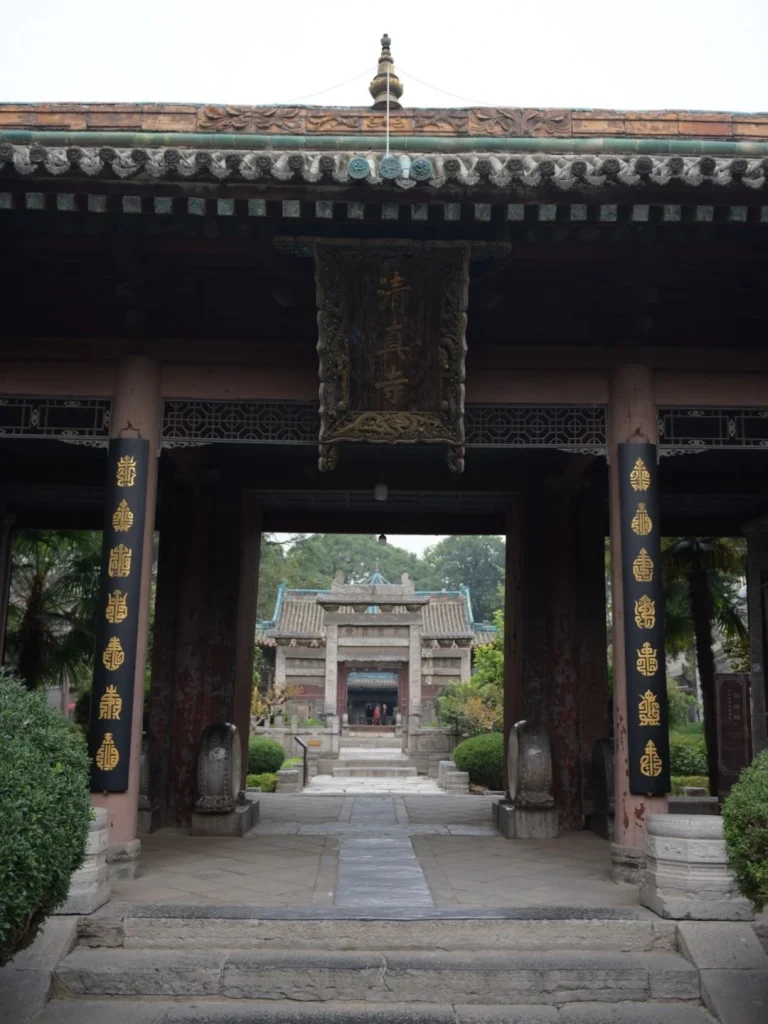
Chinese Islam first arrived in 651 CE when Arab envoys visited Chang’an, marking the faith’s initial entry into Tang China.

During the Song and Yuan dynasties, Muslim merchants settled in port cities like Quanzhou and Guangzhou, giving rise to the Hui community. Under the Ming and Qing, Sufi Menhuan orders developed in Xinjiang and Yunnan.

Today, about 20 million Muslims—primarily Hui and Uyghur—worship in over 35,000 mosques served by roughly 40,000 imams across China.

Sunni Islam predominates, expressed through Chinese Gedimu schools, Menhuan Sufi lineages led by local sheikhs, and early 20th‑century Ikhwan reformists emphasizing Quranic study.

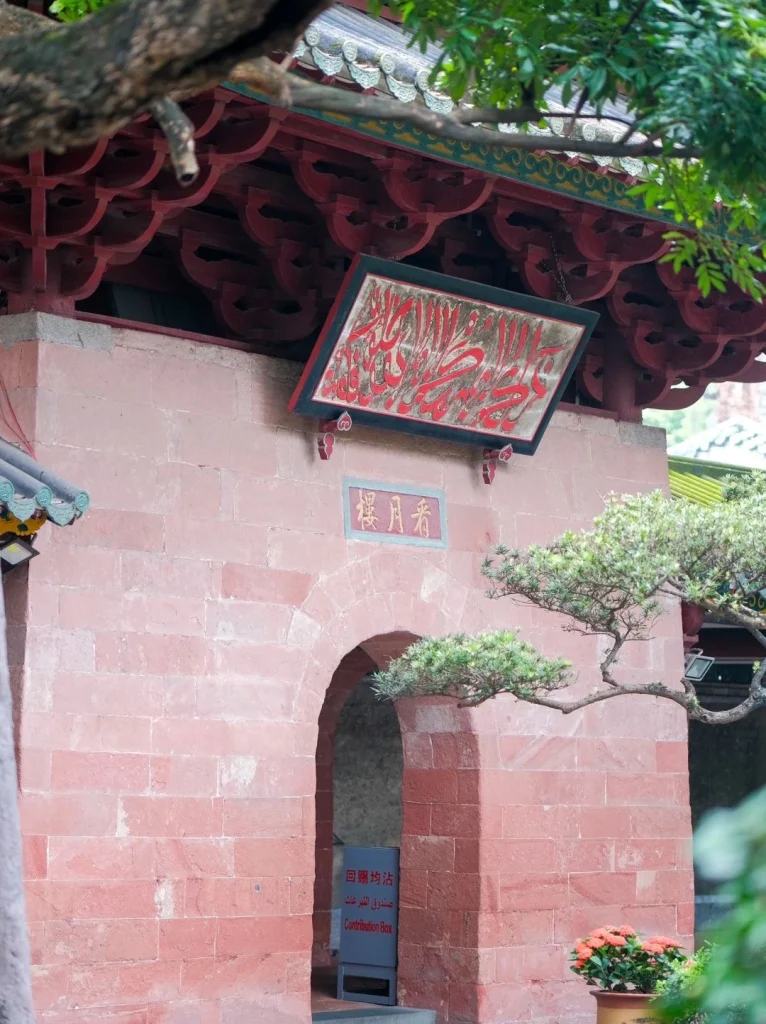
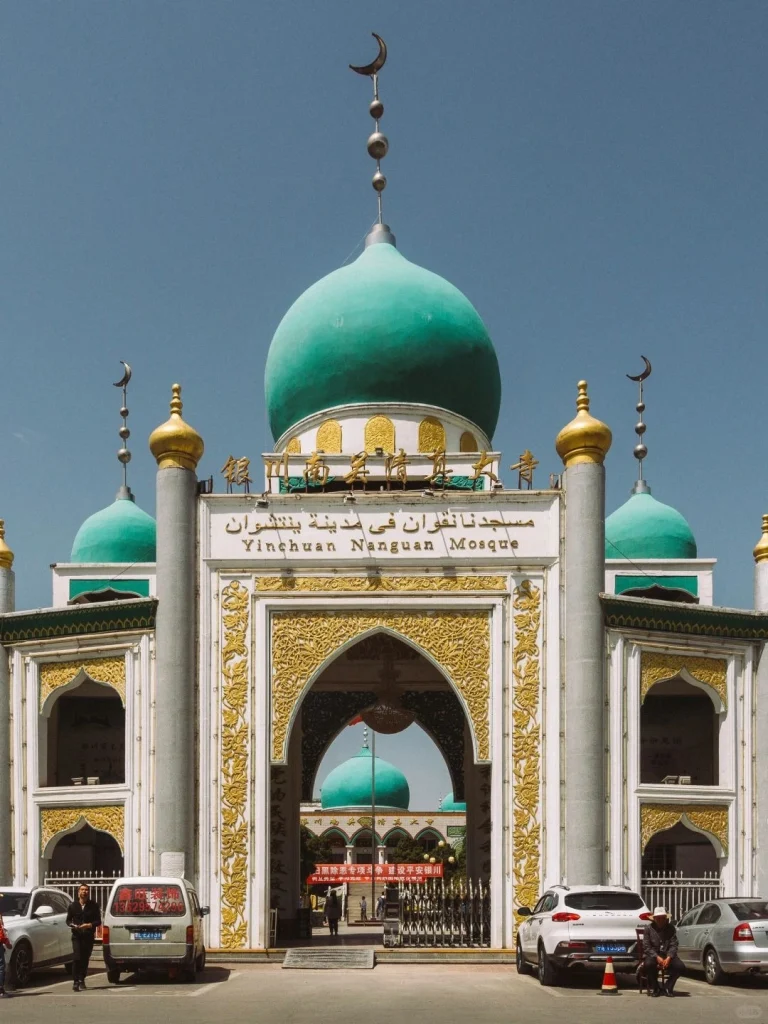
Iconic sites include Kashgar’s Id Kah Mosque, Urumqi’s Hong­tang Mosque, Yinchuan’s Nanguan Mosque, and Kunming’s South City Mosque.

Islam in China endures in halal culinary customs, the Uyghur Twelve Muqam musical tradition, Sino‑Islamic architectural blends, and vibrant Eid al‑Fitr and Eid al‑Adha celebrations.

Catholicism

Chinese Catholicism first appeared in 635 CE with the Nestorian (Jingjiao) mission, recorded on the Xi’an Stele.

During the Yuan dynasty, Catholic envoys served the Mongol court until fading, until Matteo Ricci’s Jesuit mission arrived in 1582.

After colonial‑era treaty expansion, by 1950 China’s Catholic Church reorganized into the independent Chinese Patriotic Catholic Association.

Today about 6 million faithful—mainly in Hebei, Shanxi, Shanghai, and Fujian—worship in over 6,000 churches served by 4,000 clergy.

Major sites include Shanghai’s Xujiahui Cathedral, Beijing’s Xishiku Church, and Hebei’s Xianxian Cathedral.

Matteo Ricci’s translation of Euclid’s Elements fostered Sino‑Western scientific exchange, while Catholic schools like Aurora University pioneered modern education.

Church hospitals and orphanages, precursors to Peking Union Medical College, have long provided social services, and liturgical music blends local folk melodies.

Christianity

Protestant Christianity first arrived in China in 1807 when Robert Morrison became its first missionary and lexicographer.

Following the Opium Wars, British and American mission societies expanded across coastal cities, sending Methodist and Presbyterian workers.

In 1954, Chinese churches unified under the Three‑Self Patriotic Movement, emphasizing self‑governance, self‑support, and self‑propagation.

Today, approximately 38 million believers worship in over 50,000 churches and meeting points in rural Anhui and Henan as well as urban Zhejiang and Guangdong.

Early Baptists and Methodists merged into a sinicized church under the China Christian Council, using Confucian “ren” to interpret Christian love.

Iconic sites include Beijing’s Gangwashi Church (1863), Shanghai’s Mune Church (1929), and Wenzhou’s Chongyi Church, Asia’s largest with 5,000 seats.

Missionaries founded Ningbo Female Academy in 1844 and Guangzhou Boji Hospital in 1835, while Morrison’s Chinese‑English Dictionary advanced linguistic studies.

Interesting Articles for You

Exterior night view of Shanghai Hongqiao Airport with glowing red signage and illuminated entrance canopy capturing nighttime traveler activity. - Shanghai Hongqiao International Airport 2026 - The China Journey - Religions in China 2026 - The China Journey
Travel Guide

Shanghai Hongqiao International Airport

Discover Shanghai Hongqiao Airport’s history, smart services, flight network, and travel tips. Your essential guide to China’s most connected domestic hub.

shanghai Lao Jishi Tianping Rd - Where to Eat in Shanghai 2026 - The China Journey - Religions in China 2026 - The China Journey
Travel Guide

Where to Eat in Shanghai

Find top Nanjing hotels with real local reviews. From budget to luxury, family, pet-friendly, river view, and historical stays near top attractions.

happy tourists exploring city map diverse travelers sitting in park checking map and planning urban sightseeing route - Religions in China 2026 - The China Journey

Plan Your China Trip with Our Experts

Share your travel ideas, and we’ll help you plan a smooth, personalized trip across China.
 
travelers planning route with map group of international tourists reading map outdoors with backpacks and guide - Religions in China 2026 - The China Journey
happy tourists exploring city map diverse travelers sitting in park checking map and planning urban sightseeing route - Religions in China 2026 - The China Journey

Plan Your China Trip with Our Experts

Share your travel ideas, and we’ll help you plan a smooth, personalized trip across China.

 
travelers planning route with map group of international tourists reading map outdoors with backpacks and guide - Religions in China 2026 - The China Journey
happy tourists exploring city map diverse travelers sitting in park checking map and planning urban sightseeing route - Religions in China 2026 - The China Journey

Work with Us as a Local Guide in China

travelers planning route with map group of international tourists reading map outdoors with backpacks and guide - Religions in China 2026 - The China Journey

We’re looking for experienced, part-time local guides to serve international travelers.

Requirements:

• Fluent in at least one foreign language
• 3–5 years guiding international visitors
• Able to operate in multiple regions in China
• Competitive and reasonable pricing
• Proven customer reviews or testimonials
• Professional, reliable, and responsive
• Flexible availability for custom trips

Hi there!

Just a quick heads-up — a helpful user named Volker let me know that some of the non-English content on this site may not be accurate.

This site is a one-person project I run part-time. I research and publish all the content myself, and the translations are currently done by machine (Google Translate). Balancing accuracy and accessibility across multiple languages is a real challenge.

If you spot any errors, I recommend switching to the English version using the button at the bottom left. I’ll continue working to improve the translations over time.

I truly appreciate your understanding. And if you have any suggestions, feel free to leave a comment — it means a lot to me.

— Anthony 2025.6.18

Xian long image for popup form - Religions in China 2026 - The China Journey

Planning a Trip to China?

Changzhou Skyline at Dusk The Changzhou skyline illuminated at dusk, with city lights reflecting on the water and buildings glowing in the evening light. - Religions in China 2026 - The China Journey
Do any of these sound familiar from your past trips?
Let our trusted partner travel agency handle the details.
👉 Get a custom plan within your budget and enjoy the best of China — stress-free.