
 Written by
Anthony
Tian’anmen Square is the symbolic heart of China—both politically and culturally. Located at the center of Beijing, it spans 440,000 square meters and stands as one of the largest public squares in the world. This iconic space has witnessed key moments in modern Chinese history, from imperial ceremonies to revolutionary movements and national celebrations.

Once an exclusive area for royal rituals, Tian’anmen Square has transformed into a place of public pride and memory. From the founding of the People’s Republic in 1949 to daily flag-raising ceremonies, it reflects the journey of China itself. Surrounded by landmarks like Tian’anmen Gate, the National Museum, and the Monument to the People’s Heroes, the square draws millions of visitors seeking to understand China’s past and present.

At the north end of the square stands the iconic red-walled, yellow-tiled Tian’anmen Gate. Once the imperial entrance to the Forbidden City, it now features the famous portrait of Chairman Mao and banners reading “Long Live the People’s Republic of China” and “Long Live the Unity of the World’s People.” Visitors can climb the tower (¥15, booking required via mini program) for sweeping views of the entire square and its symmetrical layout—ideal for panoramic photos.
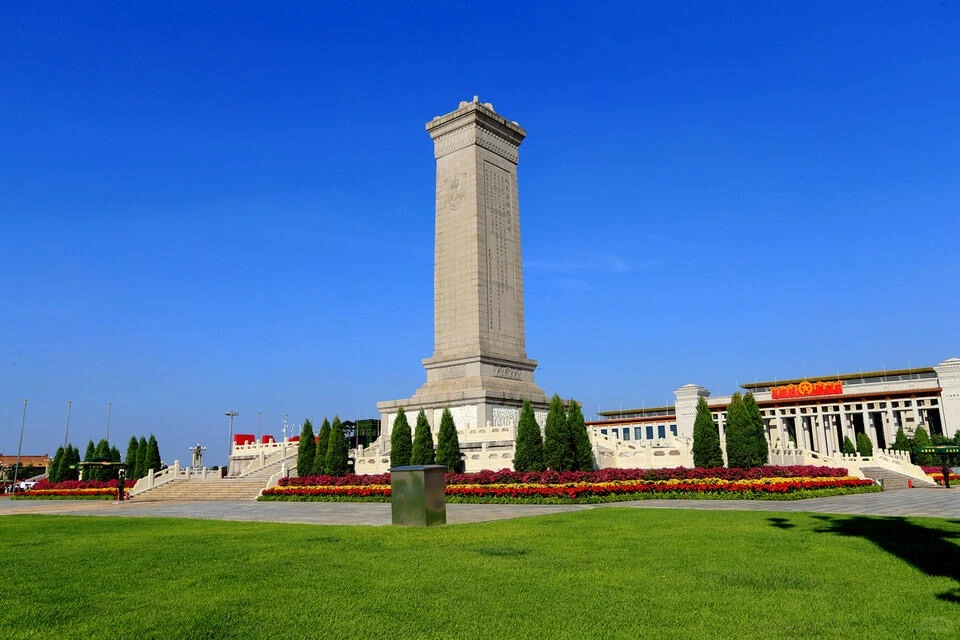
Rising 37.94 meters in the center of the square, this granite monument honors those who sacrificed for China’s independence and revolution. The eight surrounding relief carvings depict key moments in modern Chinese history, from the Opium War to the founding of the PRC. Mao Zedong’s golden inscription—“Eternal Glory to the People’s Heroes”—adds to the solemn atmosphere.

Located just south of the monument, this white marble building houses the preserved body of Chairman Mao. Entry is free but requires advance booking through the official WeChat account. Dress respectfully (no tank tops, slippers, or hats) and observe silence during your visit. Bags and water bottles are not allowed inside (locker rental available).

On the west side of the square, this grand building hosts China’s most important political meetings. Visitors (¥30) can tour areas like the 10,000-seat Auditorium (with its starry dome), banquet halls, and provincial rooms (such as Beijing and Shanghai Halls), each decorated with regional flair.

Facing the Great Hall, this massive museum holds over 1.8 million artifacts showcasing 5,000 years of Chinese civilization. Must-see exhibitions include Ancient China, The Road to Rejuvenation, and seasonal special exhibits like archaeology and calligraphy. Entry is free, but advance reservation is required. Allow 3–4 hours for a meaningful visit.

Each morning at sunrise, the national flag is raised in sync with the anthem. The guard unit marches solemnly from Tian’anmen Gate across Chang’an Avenue, creating a moment of pure patriotism. Check local platforms (e.g. “Beijing Bendibao”) for daily times, and arrive 1–2 hours early for the best view—east or west sides of the square are ideal for clear photos.

Held at sunset, the flag is lowered with the same precision and respect, but with fewer crowds—great for travelers seeking a quieter, reflective experience. With soft evening light, it’s also a perfect time to capture atmospheric photos of the ceremony.

Getting to Tian’anmen Square is easy and convenient, with metro and bus services offering the best access—especially helpful when traffic restrictions are in place.
Beijing’s subway is the most recommended way to reach the square, thanks to frequent service and clear signs.
Line 1:
Tian’anmen East Station (Exits A, B) and
Tian’anmen West Station (Exits B, C)
Both stations are just a 5–10 minute walk to the square entrance from the east or west side.
Note: Some exits may close temporarily for crowd control—follow station signs or staff instructions.
Line 2:
Qianmen Station (Exits C, D)
From here, walk east along Qianmen Street for about 10 minutes to enter the square from the south. This route passes Qianmen Gate and is ideal for those starting from the southern approach.
Several bus routes stop around Tian’anmen Square, with short walking distances from the drop-off points. Be sure to check for temporary reroutes during national events.
Tian’anmen East Stop: Routes 1, 2, 52, 59, 82, 120, Sightseeing Line 1, Line 2
Tian’anmen West Stop: Routes 1, 5, 52, 99, Sightseeing Line 1, Line 2
Qianmen Stop: Routes 2, 5, 8, 17, 20, 22, 48, 59, 66, 67, 82, 93, 120, 126, Sightseeing Line 1, Line 2
🚶♀️All stops are a 5–10 minute walk from the square.
Tip: For the latest route changes or service updates, especially during public holidays or national events, check the official Beijing Bus Group app or website before you go.
Tian’anmen Square enforces strict security checks for all visitors. To avoid delays and enjoy a hassle-free experience, keep these tips in mind:
No Restricted Items: Dangerous items like flammable materials, knives, and lighters are strictly prohibited. Bringing them may result in delays or confiscation.
Bag Scans Required: Backpacks, handbags, and water bottles must go through X-ray screening. To speed up entry, travel light—just carry your phone and passport if possible.
Passport Required: Your passport is your ticket in. All entrances and nearby attractions (like Tian’anmen Gate and the Chairman Mao Memorial Hall) require real-name verification with valid ID.

Tian’anmen Square is surrounded by iconic landmarks, and with smart planning, you can cover a lot in just a few hours. Here’s how to explore efficiently and deeply.
Suggested Time: Plan for 3–4 hours to catch the flag-raising, explore main sites, and get a quick look at the National Museum. For deeper visits like going up Tian’anmen Gate or touring the full museum, consider 5–6 hours.
Best Time of Day:
Sunrise: The flag-raising ceremony is the most solemn moment on the square. Arrive early (1–2 hours in advance during peak seasons) to witness the flag rise with the sun—an unforgettable, emotional scene.
9:00–11:00 AM: Avoid peak crowds and enjoy shorter security lines. It’s a great time to visit Chairman Mao Memorial Hall and climb Tian’anmen Gate in soft morning light.
Evening: The flag-lowering ceremony offers a peaceful, reflective moment with fewer tourists. The golden sunset makes for beautiful photos of the buildings’ silhouettes and the square’s warm glow.
For a broader seasonal overview beyond Beijing, see Best & Worst Time to Visit China.

Enter from Qianmen (South Entrance)
Watch the flag-raising ceremony
Pause at the Monument to the People’s Heroes for reflection and photos
Visit Chairman Mao Memorial Hall (based on your reservation time)
Walk west to admire Great Hall of the People from outside (classic shot with red flags and dome)
End at the National Museum of China, focusing on top exhibits like Ancient China and The Road to Rejuvenation (1.5 hrs)
Start by climbing Tian’anmen Gate Tower for sweeping views of the square and central axis symmetry
Stroll across the square to visit the People’s Heroes Monument
Spend 3–4 hours exploring the National Museum (take time to absorb the stories behind ancient artifacts)
Conclude with a guided interior visit to the Great Hall of the People—see the Grand Auditorium, banquet halls, and provincial rooms for a rich blend of politics and architecture
For budgeting and daily expense planning across China, refer to Cost of Travel in China.
Booking Reminders: Entry to Chairman Mao Memorial Hall, Tian’anmen Gate Tower, and the National Museum of China requires advance reservations. Use official platforms such as the “Mao Memorial” WeChat account, “Tian’anmen Tower Visit” mini program, or the National Museum’s website. During peak seasons, spots fill up quickly—reserve 1–3 days ahead.
Dress Code & Etiquette: To visit solemn sites like the memorial hall or go up the gate tower, wear respectful clothing (no flip-flops, tank tops, or flashy accessories). Stay quiet during tours and follow staff instructions.
Event Restrictions: Parts of the square may close temporarily for major events or ceremonies. Check official sources like “Beijing Bendibao” for up-to-date traffic control notices before your visit.
For first-time visitors to China, practical planning tips can be found in China Travel Tips.
Tian’anmen Square isn’t just a destination—it’s a perfect starting point for discovering the many faces of Beijing. These walkable spots offer a deeper dive into imperial grandeur, local charm, and cultural heritage—all in one day.

Just north of the square, pass through Duanmen Gate and you’ll find yourself at the entrance to the Forbidden City—the largest preserved wooden palace complex in the world. Highlights include the Hall of Supreme Harmony, Palace of Heavenly Purity, and the serene Imperial Garden. It’s a natural cultural continuation from the national symbolism of the square to the royal legacy of the Ming and Qing dynasties.

Walk 10 minutes south and you’ll arrive at Qianmen Street, where gray-brick arcades house Beijing’s most iconic old brands. Explore shops like Ruifuxiang (silk), Neiliansheng (traditional cloth shoes), and snack at Duyichu or Tianxingju for shaomai and fried liver. As the old-style tram rolls past, grab a tanghulu (candied hawthorn stick) and take in the laid-back charm of Beijing’s local life.

Just east and west of Tian’anmen Gate lie two hidden gems: the Imperial Ancestral Temple (now the Working People’s Cultural Palace) and the Altar of Earth and Grain (now Zhongshan Park). These spaces reflect the ancient Chinese ritual layout of “Zuo Zu You She” (“Ancestral Temple on the left, Earth Altar on the right”). Tall cypress trees, quiet paths, and solemn architecture make these spots perfect for a peaceful rest after your square visit.
To explore how Beijing compares with other major destinations, see Best Places & Cities to Visit in China.
Historically, Tiananmen was the main gate of the Imperial City during the Ming and Qing Dynasties in Beijing. It was the site for major celebrations and official proclamations. In modern times, it has witnessed numerous significant historical events, becoming an important symbol of China’s historical changes.


Baijiu is a traditional Chinese spirit, typically distilled from fermented grains like sorghum, with a high alcohol content (40-60% ABV) and a distinct, pungent flavor.

Explore Beijing’s top attractions, historical sites, and hidden gems. Your ultimate travel guide to China’s vibrant capital city.

Find where to stay in Chengdu, from Chunxi Road and Kuanzhai Alleys to Wenshu and Jiuyanqiao, with hotel picks, metro tips, and advice for first-time visitors.

Henan, located in central China, is the historical core of the Xia, Shang, and Zhou dynasties, rich in cultural heritage and significant archaeological sites. Explore Henan’s legacy!

Discover the best time to visit Jilin, where to go, what to see, and how to plan your trip—from rime views to Changbai Mountain and local culture.

Discover the 1998 Earth Tiger zodiac meaning and 2026 forecast, including personality, career, wealth, love, health, lucky elements, and practical advice.

Share your travel ideas, and we’ll help you plan a smooth, personalized trip across China.

Share your travel ideas, and we’ll help you plan a smooth, personalized trip across China.
We’re looking for experienced, part-time local guides to serve international travelers.
Requirements:
• Fluent in at least one foreign language
• 3–5 years guiding international visitors
• Able to operate in multiple regions in China
• Competitive and reasonable pricing
• Proven customer reviews or testimonials
• Professional, reliable, and responsive
• Flexible availability for custom trips
Hi there!
Just a quick heads-up — a helpful user named Volker let me know that some of the non-English content on this site may not be accurate.
This site is a one-person project I run part-time. I research and publish all the content myself, and the translations are currently done by machine (Google Translate). Balancing accuracy and accessibility across multiple languages is a real challenge.
If you spot any errors, I recommend switching to the English version using the button at the bottom left. I’ll continue working to improve the translations over time.
I truly appreciate your understanding. And if you have any suggestions, feel free to leave a comment — it means a lot to me.
— Anthony 2025.6.18


