
Changsha food is bold Hunan cooking: spicy, salty, oily, aromatic, and very good with rice. It is not only about chili. Garlic, fermented seasonings, perilla, sour pickles, wok heat, fried snacks, and late-night street energy all shape the city’s food scene.

Stinky Tofu (臭豆腐) is one of Changsha’s most famous and most debated snacks. The classic version is black, deep-fried until crisp outside, soft inside, then filled or topped with chili, garlic, herbs, and savory sauce. It is not only about the taste; it is also part of the city’s street-food atmosphere.
This is worth trying once, but do not spend an hour chasing one viral stall. A fresh, busy stall with a shorter line is often enough.
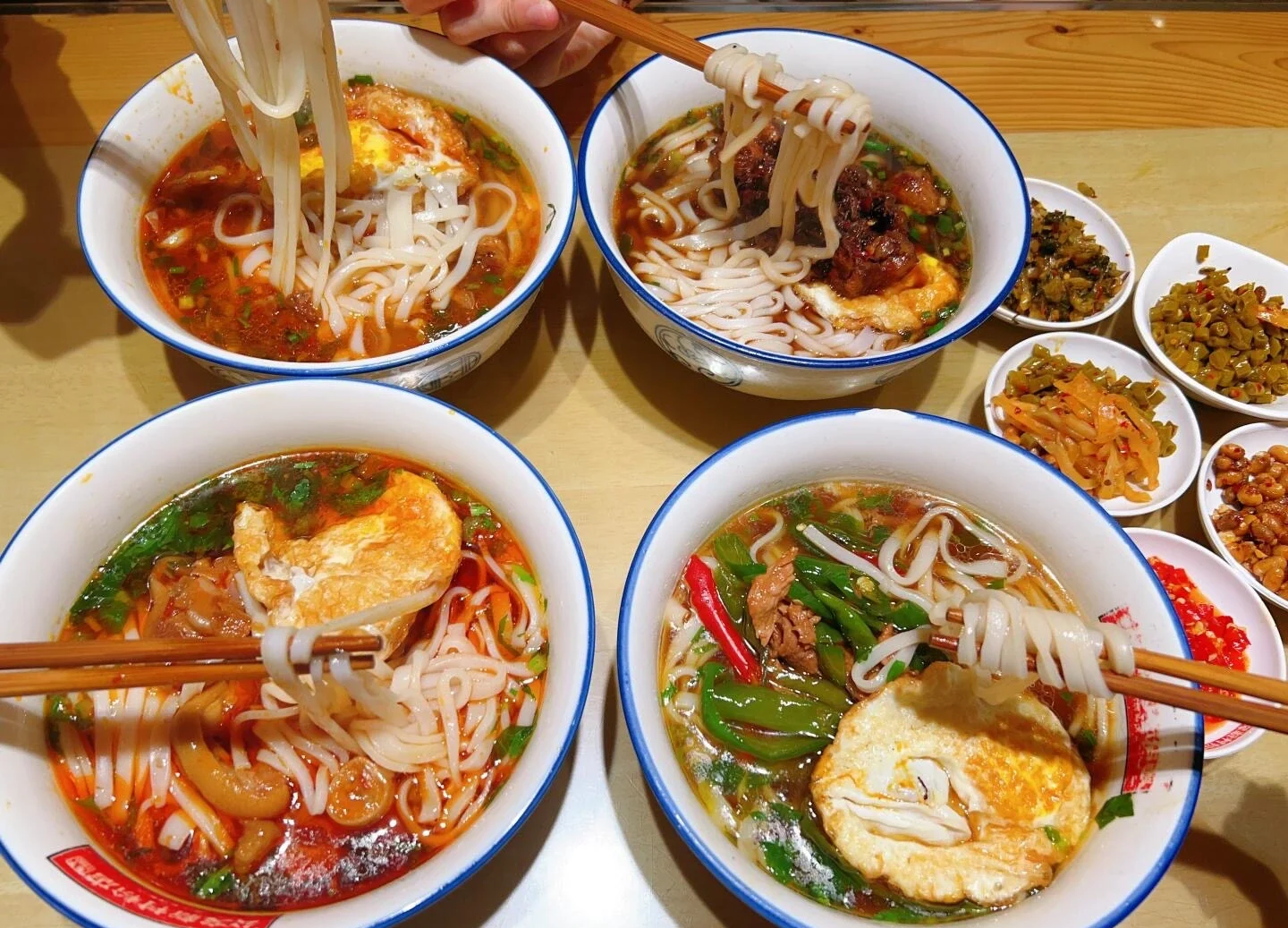
Changsha Rice Noodles (长沙米粉) are the city’s most useful everyday food. Locals eat them for breakfast and quick meals, and visitors can use them to taste daily Changsha food without committing to a full spicy dinner.
You usually choose the noodle type first, then the toppings, or mazi (码子). Flat noodles absorb flavor well, while round noodles feel chewier.
You do not need to chase the most famous noodle shop. A busy neighborhood shop near your hotel is often enough and saves time.

Chili-Fried Pork (辣椒炒肉) looks simple, but it is one of the best ways to judge a Hunan restaurant. It is usually made with pork, green chilies, garlic, fermented black beans, and strong wok heat. The dish is not fancy, but it shows the core of Changsha-style home cooking.
This is more useful than many novelty snacks if you want to understand the base flavor of Changsha food. Order it with rice and at least one milder dish.

Chopped Chili Fish Head (剁椒鱼头) is a large, bright, spicy Hunan dish made by steaming a fish head under a thick layer of chopped chili. It has a strong visual impact and works best as a shared dish, not as a solo meal.
This is a good group dish for 3–4 people or more. If you cannot eat spicy food, do not force it just because it is famous.

Sugar Oil Baba (糖油粑粑) is a traditional Changsha sweet snack made from glutinous rice dough fried with sugar and oil. It is simple, cheap, and useful as a sweet break between spicy foods.
This is good as a quick snack if you see it fresh. One skewer is enough for most people.
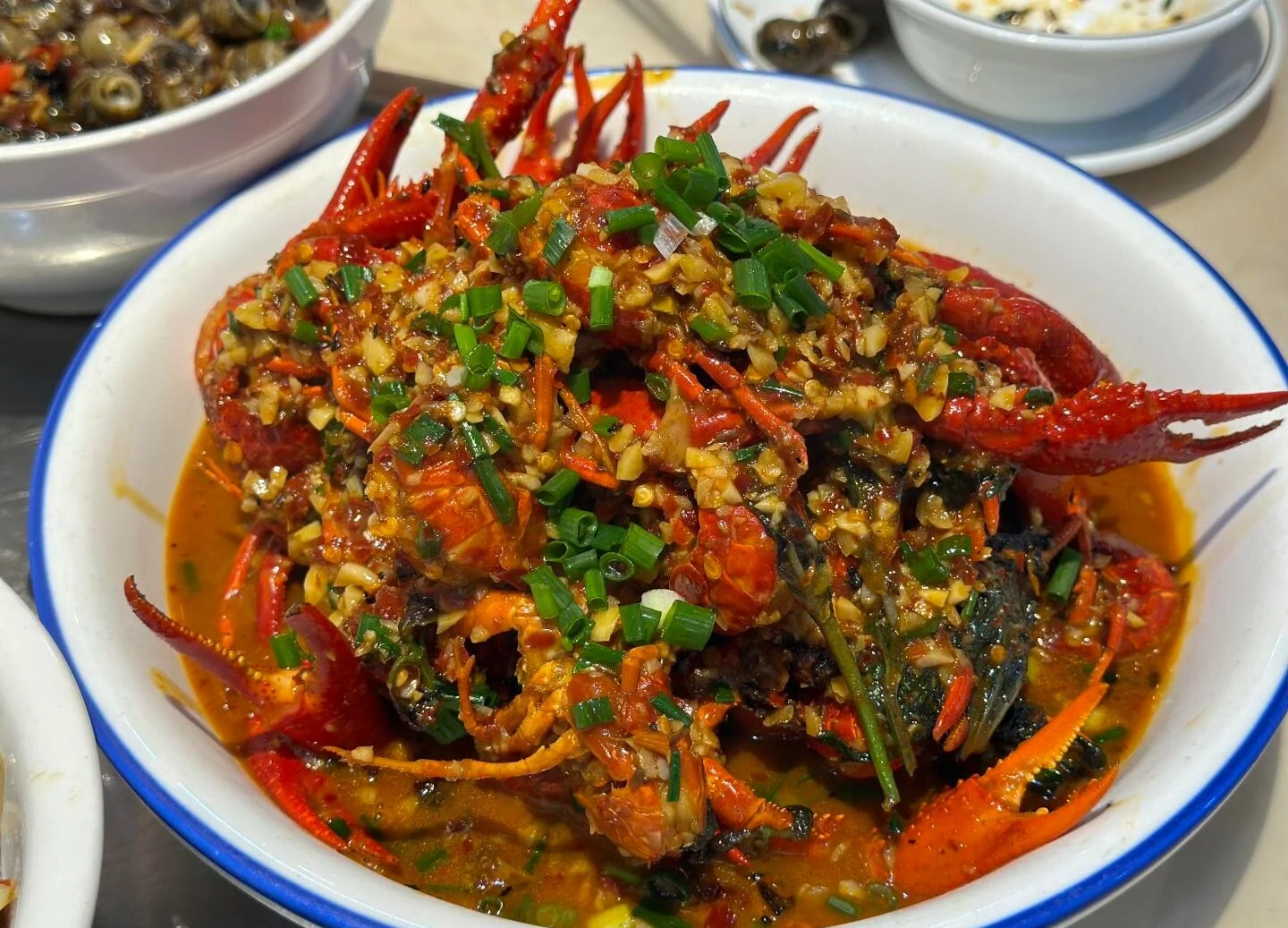
Spicy Crayfish (口味虾) is one of Changsha’s main late-night foods. Crayfish are cooked with chili, garlic, spices, and often perilla (紫苏), creating a bold, oily, aromatic dish that fits the city’s night-food culture.
This is more of a night-out experience than a cheap snack. It works best when shared with friends, not as a quick solo meal.

Local tea drinks are part of the modern Changsha travel experience, especially brands such as Chayan Yuese (茶颜悦色). They are not a meal, but they do show a real part of the city’s consumer culture.
Buy one if the line is short or use mini-program ordering when possible.
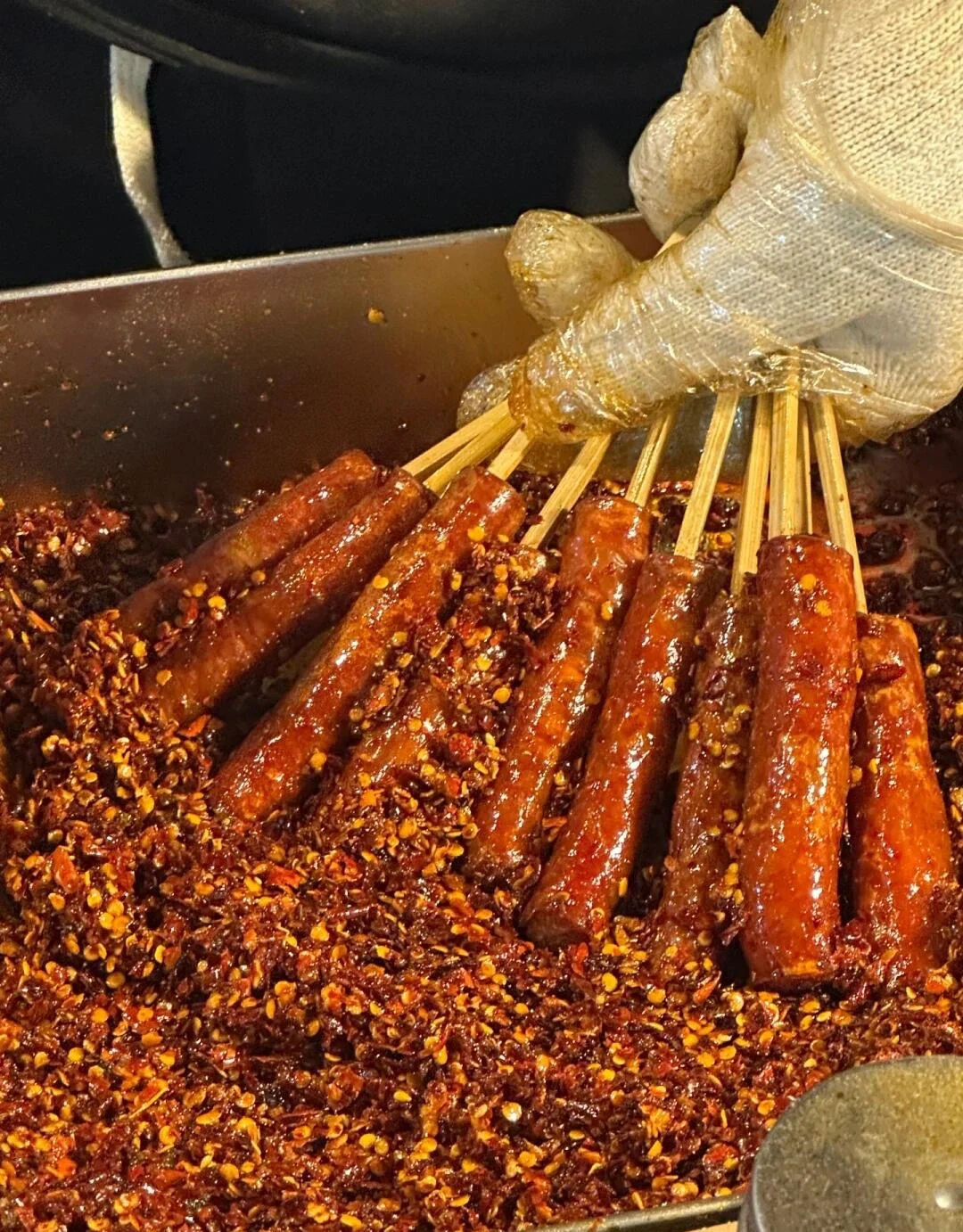
Dongguashan Sausage (冬瓜山肉肠) is a small fried sausage linked with Changsha’s night-food streets. It is brushed with seasoning after frying and works more as a night-market bite than a destination food.
This is a good mood snack if you are already there. It is not worth a special trip on its own.
Breakfast in Changsha should be hot, steady, and filling, especially before Yuelu Mountain, Orange Isle, or a long travel day. Do not start with food that is too oily or too spicy if you have a full day ahead.
Good choices include:
Rice noodles are a great local start, but control the chili and toppings.
Changsha snacks are fun, but they work best in small portions across the day. Many are spicy, oily, salty, or fried, so do not try to eat every famous snack in one short walk.
Share snacks when possible. This lets you try more without overloading your stomach.
Changsha is worth one late-night food experience. Barbecue, spicy crayfish, hot luwei, rice noodles, pork lard mixed rice noodles (猪油拌粉), and night-market snacks all fit the city’s evening rhythm.
Go for the mood, but do not make every night a heavy night. Choose busy places with fast turnover, check hygiene, and ask prices before ordering by portion or weight. If you are tired or sensitive to spice, noodles are safer than crayfish or barbecue.
Where you eat in Changsha depends on your route, budget, spice tolerance, and need for comfort. Wuyi Square is easiest for first-time visitors, Dongguashan is better for night food, University Town is good for budget meals, and malls are safer for families.
| Area | Best For | What You Can Find | Recommended Restaurants & Ratings | Main Advantage | What to Watch For |
|---|---|---|---|---|---|
| Wuyi Square (五一广场) / Huangxing Road (黄兴路) / Taiping Street (太平街) | First-time visitors who want everything in one area | Hunan restaurants, stinky tofu, tea drinks, rice noodles, snacks, late-night food | Benluobo Liuyang Cuisine / 笨萝卜浏阳菜馆:4.5/5 Chuiyan Stir-Fried Beef / 炊烟小炒黄牛肉:4.4/5 Black Classic Stinky Tofu / 黑色经典臭豆腐:4.3/5 | Most central, most convenient, huge food density, open late | Very tourist-heavy, crowded, queue-heavy, and often more viral than necessary |
| Dongguashan (冬瓜山) / Yunan Street (裕南街) | Night-food lovers and travelers who want stronger local atmosphere | Barbecue, spicy crayfish, hot luwei, sausage, beef skewers, late-night snacks | Mengzhong Barbecue / 盟重烧烤:4.4/5 Dandan Hot Luwei / 丹丹热卤:4.3/5 Zhengge Beef Skewers / 正哥牛肉串:4.3/5 | Stronger night-food mood and more local energy than tourist streets | Simple setting, possible queues, less convenient transport, and hygiene needs screening |
| University Town (大学城) / Yuelu Mountain (岳麓山) South | Students, budget travelers, and visitors combining food with Yuelu Mountain | Rice noodles, cheap snacks, milk tea, simple meals, student-style restaurants | Laotouzi Sugar Oil Baba / 老头子糖油粑粑:4.4/5 Huadao Sushi / 花道寿司:4.5/5 Local noodle and snack shops / 本地粉面小吃店:ratings vary | Good value, many choices, easy to pair with a Yuelu Mountain route | Food quality varies, settings are simple, and it is not as central as Wuyi Square |
| Malls and Hotel Areas, including Changsha IFS (长沙国金中心) and Fuxing Times Square (富兴时代) | Families, business travelers, and visitors who want comfort | Chain Hunan restaurants, branded dining, seafood, cafés, lighter meals | Feidachu Chili-Fried Pork / 费大厨辣椒炒肉:4.4/5 Tanzong Chopped Chili Fish Head / 坛宗剁椒鱼头:4.3/5 Xuji Seafood / 徐记海鲜:4.2/5 | Cleaner, more comfortable, better service, easier for families and non-street-food eaters | Less street atmosphere, higher prices, and popular restaurants can still have queues |
Ratings and “must-eat” lists can help, but Changsha is full of viral queues. A famous shop may taste good, but it is not always worth losing one or two hours.
Before choosing, check:
Famous restaurants are useful for first-time visitors because they are easier to find and usually have clearer menus. Local small restaurants may be better for daily food, but they need more screening. The best choice is the place that fits your spice tolerance, time, budget, route, and stomach comfort.
If you only have one proper meal: Choose one Hunan-style sit-down meal. A good order is one signature spicy dish, one milder dish, and rice. If you cannot eat spicy food, say no chili, no chili oil, and no chopped chili before ordering.
If you have two or three meals: Use the first meal for Hunan food, the second for rice noodles and snacks, and the third for night food or a lighter bowl of noodles. Rotate instead of eating heavy spicy food nonstop.
If you have a full sightseeing day: Start with a hot, steady breakfast and keep lunch lighter. Save heavier Hunan dishes or night food for dinner. Do not put every famous snack queue into the same day.
If your group has different spice levels: Order one spicy dish, then balance it with mild food. Non-spicy eaters should confirm no chili, no chili oil, and no chopped chili. Families and sensitive stomachs should avoid stacking fried snacks, hot luwei, barbecue, and heavy spicy dishes in one meal.
These are rough 2026 references, not fixed prices. Costs change by area, restaurant type, portion size, season, and ingredients. Tourist-heavy areas, viral restaurants, crayfish shops, barbecue spots, and malls usually cost more than neighborhood noodle shops.
| Food or Meal Type | Rough 2026 Price | Notes |
|---|---|---|
| Regular Changsha rice noodles | RMB 12–20 | Good for breakfast |
| Premium rice noodles | RMB 20–30 | Depends on toppings |
| Stinky tofu | RMB 10–20 | Small or large portion |
| Sugar oil baba | RMB 5–10 per skewer | Simple sweet snack |
| Local tea drinks | RMB 16–25 | Easy to buy more than once |
| Chili-fried pork / beef stir-fry | RMB 38–68 | Common Hunan restaurant dishes |
| Chopped chili fish head | RMB 98–168 | Better for groups |
| Spicy crayfish | RMB 128–188+ | Portion and season matter |
| Barbecue / late-night meal | RMB 80–150 per person | Depends on meat, seafood, drinks |
| Local Hunan restaurant meal | RMB 50–80 per person | Without expensive dishes |
| Popular Hunan restaurant | RMB 70–100 per person | Queue-heavy restaurants |
| Tourist-area snacks and drinks | RMB 50–100 per day | Adds up quickly |
| Mall restaurant meal | RMB 80–120 per person | More comfortable setting |
Rice noodles, snacks, and tea drinks look cheap one by one, but repeated stops add up quickly. Full Hunan meals, night food, crayfish, fish head, barbecue, and tourist-area restaurants raise the budget faster. Ask about price and portion before ordering anything sold by weight, as a set meal, or at market price.


Plan your Zhengzhou trip with Shaolin Temple, city highlights, food, transport tips, and a smart 2–3 day itinerary for first-time visitors.

Yes, most Terracotta Soldiers are hollow in the torso for firing and handling, while heads and limbs are solid for detail carving and strength.

Plan Jade Dragon Snow Mountain with tickets, cable cars, routes, altitude tips, Blue Moon Valley, transport, costs, and mistakes to avoid.

Hong Kong uses the Hong Kong Dollar (HKD), a separate currency from China’s RMB, under its own monetary system and dollar peg.

Discover Gansu, a vibrant land filled with Silk Road history, stunning landscapes like Jiayuguan, and rich cultural heritage from ancient caves to colorful ceramics.

Plan a Shandong trip with the best places, first-time routes, transport tips, food highlights, and seasonal advice for a smoother visit.


