
 Written by
Anthony

When travelers think of China’s ancient cities, places like Beijing’s Forbidden City or Xi’an’s Terracotta Army may come to mind. But nestled in Jiangsu Province lies a lesser-known gem: Yangzhou, a city of poetic charm, rich culture, and culinary legacy.
To see how Yangzhou compares with other destinations nationwide, refer to Best Places & Cities to Visit in China.
Known as “China’s No. 1 Canal City,” Yangzhou sits at the heart of the Grand Canal—an ancient waterway recognized as a UNESCO World Heritage site. It’s also the birthplace of Huaiyang cuisine, one of China’s most refined food traditions, and the inspiration for classic poetry like Li Bai’s famous line: “In misty March, I descend to Yangzhou.”

Here, you won’t find overwhelming crowds. Instead, Yangzhou offers the elegance of a slow-paced life. Sip a morning cup of Kui Longzhu green tea in a traditional teahouse, wander through rock-lined classical gardens, cruise the canal at sunset, and end your day with steaming soup dumplings along Dongguan Street. Every alley, every dish, and every stone bridge whispers stories from a thousand years of history.

Spring (March–April) is the most poetic time to visit Yangzhou. As cherry blossoms and qiong flowers (a rare local bloom) blanket the city, willow trees sprout along Slender West Lake—just like the scenes in Li Bai’s famous line: “In misty March, I descend to Yangzhou.” Mid-April also hosts the Yangzhou Flower and Culture Festival, featuring folk performances and floral displays, while the Qiong Flower Festival celebrates one of China’s most treasured blooms.

Autumn (September–October) is another ideal season, with crisp air (15–25 °C / 59–77 °F) and fewer crowds. It’s the best time to wander through blooming gardens, enjoy fresh crab-stuffed soup dumplings, and admire the full moon during the Canal Moon Festival, when locals enjoy boat rides and open-air opera performances along the Grand Canal.
Avoid summer (June–August): Hot, humid, and rainy afternoons often exceed 35 °C (95 °F), making outdoor sightseeing uncomfortable.
Avoid winter (December–February): Cold and dry, with some garden water features closed and less scenic charm.
Holiday caution: National holidays like Spring Festival and Golden Week (early October) draw large domestic crowds—expect packed streets at Slender West Lake and Dongguan Street.
| Season | What to Wear |
|---|---|
| Spring | Light layers + rain gear (mild days, cool nights) |
| Autumn | Thin sweaters or jackets (chilly evenings) |
| Summer | Breathable clothes + sunscreen, hat, umbrella |
| Winter | Warm coat, scarf, anti-slip shoes (frost possible) |
Choose the right season, and you’ll experience Yangzhou at its most graceful and relaxed—whether it’s flower viewing in spring or moonlit canal cruises in autumn.
For a broader seasonal comparison across the country, see Best & Worst Time to Visit China.
Yangzhou is easy to reach from major cities like Shanghai and Nanjing, with smooth connections by high-speed rail, car, or airport transfer. Here’s how to get there:

Yangzhou has two major train stations:
Yangzhou East Station: Located near the new town area, connected to Metro Line 1 for fast access to the city center.
Nanjing South → Yangzhou East: ~40 minutes / ¥25
Shanghai Hongqiao → Yangzhou East: ~2 hours / ¥80
Yangzhou Station: Closer to the old town, with direct buses to Dongguan Street.
Tip: At both stations, you’ll find buses, taxis, and shared bikes. Scan QR codes at the station for real-time transfer info.
For routes, tickets, and travel tips nationwide, see China’s High-Speed Rail (HSR).
For nearby cities like Nanjing or Zhenjiang, long-distance buses are convenient and frequent:
From Nanjing South Bus Station → Yangzhou West Bus Station: ~1 hour / ¥20
No train transfers needed—ideal for short trips and budget travelers.

Yangzhou doesn’t have a major airport, but it’s easy to reach via nearby hubs:
From Nanjing Lukou International Airport:
Take an airport shuttle bus to Nanjing South Station (~1 hour, ¥20), then a high-speed train to Yangzhou.
Or take a taxi directly to Yangzhou (~1.5 hours, ~¥200).
From Shanghai Pudong / Hongqiao Airports:
Take Metro Line 2 or an airport bus to Hongqiao Railway Station, then a high-speed train to Yangzhou.
From Nanjing: Take the Beijing–Shanghai Expressway (G2), ~1.5 hours.
From Shanghai: Take the Shanghai–Chengdu Expressway (G42), ~2.5 hours.
Note: Parts of the old town—like Dongguan Street and Geyuan Garden—have driving restrictions. Park at nearby lots:
Slender West Lake Parking: ¥10/hour
Dongguan Street Underground Parking: ¥8/hour
Yangzhou isn’t a city for rushing—it’s best explored slowly. Most attractions are concentrated in the old town, and getting around is both affordable and tourist-friendly. Here’s how to enjoy the city at your own pace:

Ideal for short distances between attractions like Geyuan Garden, Dongguan Street, and He Garden (all 5–15 minutes apart).
Use apps like Meituan or Hello Bike (scan QR code to ride).
Just ¥1 for 30 minutes—stop anytime to browse shops or take photos.
Tip: Yangzhou’s flat terrain and quiet streets make cycling a pleasure. It’s the best way to feel the local rhythm.

Tourist Bus Line 1: Slender West Lake → Daming Temple → Geyuan → Dongguan Street
Tourist Bus Line 2: He Garden → Grand Canal Museum → Dongguan Street
Fare: ¥2 per ride, supports Alipay/WeChat “Yangzhou Bus QR Code” (search 扬州公交乘车码).
Some buses offer English stop announcements.
These routes are perfect for sightseeing—hop on and off to explore each area.
Base fare: ¥9 for the first 3 km, ¥2.4/km after that.
Most city trips between attractions cost ¥10–20.
Use DiDi (China’s Uber, with an English app) for hassle-free rides. Avoid hailing on the street to prevent scams or detours.
Special “Garden Line” shuttle connects Slender West Lake, Geyuan, and He Garden.
¥10 per person, runs every 30 minutes—great for seniors or families.
| Area | Best Transport | Notes |
|---|---|---|
| Slender West Lake | Walk or shared bike | Paved paths, bike-friendly, Daming Temple 1.5 km away |
| Old Town (Dongguan St., Geyuan, He Garden) | Walk | All within 5–15 min by foot |
| Grand Canal Museum | Metro Line 1 | Exit at “Grand Canal Museum” station, walk 5 min |
| Gaomin Temple | Bus 37 or taxi | 10 km from city center (~40 min by bus or ¥30 taxi) |

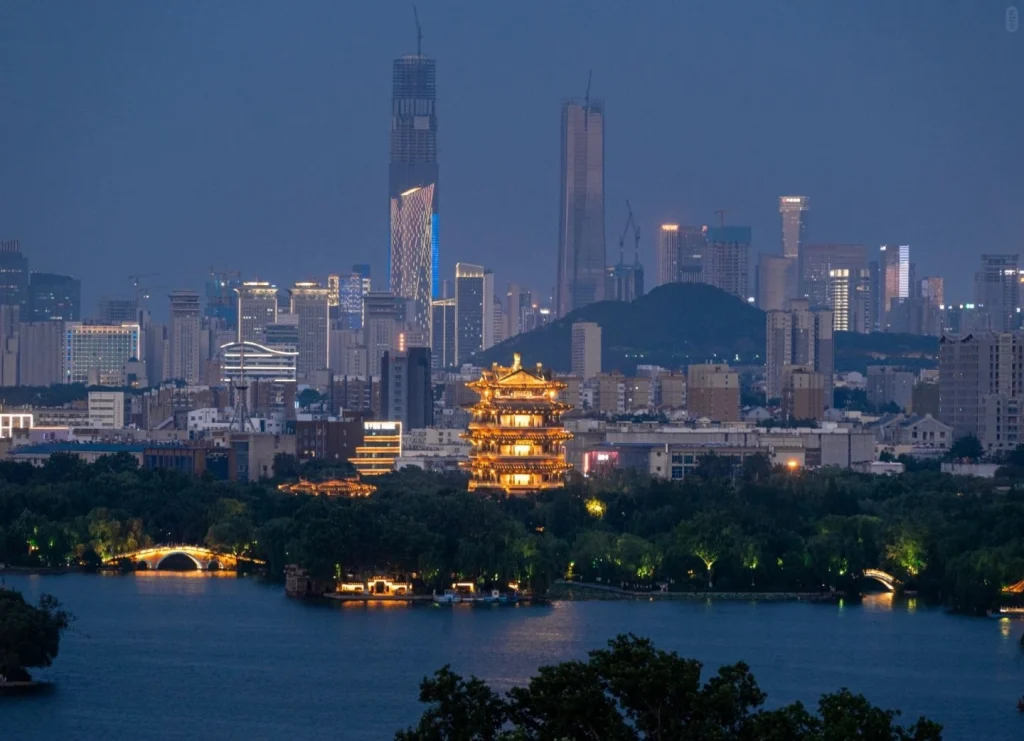
Famous for its elegant, slender waterway lined with willow trees, Shouxi Lake blends natural charm with classical Chinese aesthetics. It features arched bridges, pavilions, and poetic scenery often praised by emperors and poets alike.
Must-See:
Five Pavilion Bridge (五亭桥): The lake’s postcard view, with five elegant pavilions and 15 arches.
White Pagoda: A Tibetan-style stupa adding contrast to the lake’s Jiangnan charm.
Fishing Platform (钓鱼台): A quiet spot once visited by emperors.
Travel Tips:
Hours: 7:30am–5:30pm
Tickets: ¥100 (peak), ¥80 (off-season)
Seasonal Tip: Best in spring when cherry blossoms and qionghua bloom.

A Qing Dynasty private garden known for its clever rockery design symbolizing the four seasons and its signature bamboo groves, Ge Garden is a masterpiece of classical garden art.
Must-See:
Rock Formations: Divided into four areas, each representing spring, summer, autumn, or winter.
Bamboo Pathways: Ideal for slow strolls and photography.
Octagonal Pavilion: Provides elevated views over the entire layout.
Travel Tips:
Hours: 8:00am–5:30pm
Tickets: ¥45–60
Note: Less crowded than Shouxi Lake, perfect for quiet exploration.

Also called “Jixiao Villa,” He Garden combines residential elegance with garden harmony. It’s considered one of the best-preserved late Qing gardens in China.
Must-See:
Gallery of Longest Corridor: With decorative windows offering unique views.
Water Pavilion Theater: A rare indoor stage once used for family opera performances.
Rock Grottos: Designed to surprise at every turn.
Travel Tips:
Hours: 8:00am–5:30pm
Tickets: ¥40–60
Pro Tip: Ideal for those interested in Qing social life and architecture.

Perched on a hill north of Shouxi Lake, Daming Temple is a key Buddhist site dating back over 1,500 years. It was once home to Master Jianzhen, who introduced Buddhism to Japan.
Must-See:
Qiling Pagoda (栖灵塔): 9-story tower offering panoramic views over Yangzhou.
Jianzhen Memorial Hall: Exhibits the monk’s journey to Japan.
Ancient Bell: Still rung during temple festivals.
Travel Tips:
Hours: 7:30am–6:00pm
Tickets: ¥30 (temple only), ¥50 (incl. pagoda)
Best Time: Visit on a clear day for sweeping lake views.

A pedestrian-friendly old street stretching for over a kilometer, Dongguan Street is lined with Qing-era architecture, folk museums, teahouses, and traditional snack stalls.
Must-Do:
Try Local Bites: Soup dumplings, sesame pancakes, salted duck.
Visit Former Residences: Explore merchant mansions and guild halls.
Night Stroll: Lantern-lit atmosphere with local music and street performers.
Travel Tips:
Open: 24/7, shops close around 9:30pm
Tip: Go in the morning for quiet photos, or after dinner for night vibes
Note: Weekends can be crowded—visit early or late for best experience.

As one of China’s four great Zen temples, Gaomin Temple offers a peaceful escape from the urban bustle. With ancient halls, incense-filled courtyards, and a deep connection to Chan Buddhism, it’s a spiritual retreat for both pilgrims and curious visitors.
Must-See:
Daxiong Hall: The main hall with golden Buddha statues and chanting monks.
Pagoda Tower: Offers views of the surrounding countryside.
Lotus Pond: A tranquil spot ideal for quiet reflection.
Travel Tips:
Hours: 7:30am–5:30pm
Tickets: Free (donations welcome)
Getting There: Take Bus 37 (about 40 minutes from city center) or taxi (~¥30).

Located northeast of Yangzhou, Shaobo Ancient Town retains its Ming and Qing charm with narrow alleyways, old stone bridges, and slow-paced canal life. It’s perfect for a half-day cultural getaway.
Must-See:
Shaobo Old Street: A quiet pedestrian lane with traditional houses and folk snacks.
Canal Scenery: Wooden boats and stone piers bring Jiangnan water town vibes.
Shaobo Salt History Museum: Tells the story of ancient salt transport and trade.
Travel Tips:
Hours: Open all day
Tickets: Free entry
Getting There: ~1 hour by car or local bus from downtown Yangzhou

Often called “a small garden with big soul,” Wang’s Garden is a lesser-known gem once owned by a wealthy salt merchant family. Despite its compact size, it features refined architecture, rare plants, and tranquil ponds.
Must-See:
Stone Archways: Intricately carved gates reflecting merchant wealth.
Hidden Courtyards: Each one with unique layouts and calligraphy plaques.
Seasonal Flowers: Especially lovely in late spring and early autumn.
Travel Tips:
Hours: 8:00am–5:00pm
Tickets: ¥20
Note: Quiet and uncrowded, great for photography and quiet study

Dating back to the Qing Dynasty, Pishi Street was once Yangzhou’s leather trading hub. Today it’s a laid-back pedestrian lane filled with tea houses, antique stores, and calligraphy shops—ideal for a slow afternoon stroll.
Must-See:
Qing-Era Storefronts: Preserved architecture with carved wooden windows.
Cultural Studios: Watch calligraphers at work or browse for scrolls.
Local Crafts: Shop for hand-stitched fans, sachets, and ink stones.
Travel Tips:
Hours: 9:00am–8:00pm
Tickets: Free
Tip: Less crowded than Dongguan Street, great for a relaxed walk

Located near the Yangzhou East High-Speed Rail Station, this state-of-the-art museum celebrates the Grand Canal’s history, engineering, and cultural impact. Interactive exhibits, multimedia films, and lifelike canal scenes make it ideal for all ages.
Must-See:
Canal Panorama Hall: A massive curved screen shows the canal’s story from past to future.
Replica Boats & Docks: Step aboard full-size canal vessels.
Salt Trade Exhibits: Learn how Yangzhou’s wealth came from salt.
Travel Tips:
Hours: 9:00am–5:00pm (closed Mondays)
Tickets: Free with ID/passport (reserve online in peak season)
Getting There: Direct access via Metro Line 1 (“Grand Canal Museum” Station)

Sharing a campus with the Grand Canal Museum, Yangzhou Museum focuses on local history, ancient art, and cultural artifacts spanning 2,000+ years. It’s a perfect companion stop for those who want to dive deeper into the city’s roots.
Must-See:
Han Dynasty Treasures: Bronze mirrors, jade ornaments, and tomb carvings.
Yangzhou Lacquerware Hall: Stunning inlaid screens and boxes.
Calligraphy & Painting: Works by Qing masters like Zheng Banqiao and Shi Tao.
Travel Tips:
Hours: 9:00am–5:00pm (closed Mondays)
Tickets: Free with ID/passport
Tip: Combine with a visit to the Grand Canal Museum for a full morning of culture
Yangzhou’s culinary scene reflects the elegance of Huaiyang cuisine—delicate knife skills, light flavors, and seasonal freshness. From imperial-style classics to street snacks, here’s how to taste your way through the city.

Large pork meatballs with two variations: braised (with savory brown sauce) and steamed (soft, light, and simmered in broth). Look for the crab roe version in autumn for extra richness.

A delicate dish showcasing Huaiyang knife skills—bean curd sliced as thin as hair, simmered with shrimp, chicken, and ham in a light broth.

A breakfast side dish of tofu threads lightly blanched and seasoned with soy sauce, vinegar, sesame oil, and ginger. Often served with morning tea.

Paper-thin wrappers encase crab roe and rich broth. Eat with care: “Lift gently, move slowly, open a vent, then sip the soup.” Often served with a straw!

Quyuan Teahouse (趣园茶社, near Slender West Lake)
Enjoy lake views with delicate dishes like Crab Roe Lion’s Head and Shredded Tofu. Perfect for afternoon tea.
Yechun Teahouse (冶春茶社, Hongqiaofang Branch)
A garden-style venue famous for its early morning set: Crab Roe Soup Dumplings, Blanched Tofu, and Kuailongzhu tea. Arrive by 8am to skip the lines.

Fuchun Teahouse (富春茶社, Deshengqiao Branch)
A century-old brand known for Three Diced Buns (chicken, pork, bamboo shoots) and Jade Shaomai—translucent dumplings with green fillings.
Gonghechun Restaurant (共和春, Ganquan Rd)
Popular with locals. Try Yangzhou Fried Rice and Shrimp Roe Wontons for an authentic and affordable lunch.

Jiangjiaqiao Dumpling Noodle Shop (蒋家桥饺面店, Guangling Rd)
Open until 1am—go-to for Shrimp Roe Dumpling Noodles and late-night Tofu Threads.
Street Stalls on Dongguan Street
Grab fresh Huangqiao Sesame Biscuits, Lotus Powder Glutinous Balls, and Crispy Cowhide Candy as you wander.

Found on Dongguan and Pishi Streets. Choose between savory (scallions, sesame) and sweet (red bean, osmanthus). Crispy outside, fluffy inside—¥5 each.

Stuffed with sesame, peanuts, and walnuts, served warm in sweet soup. A chewy, fragrant treat—¥10 per bowl.

A local night market favorite: springy noodles and dumplings in rich shrimp-infused broth. Best at Jiangjiaqiao Shop—¥20 per bowl.

Traditional chewy candy with sesame, peanut, or walnut flavors. Look for the “Lüye” (Green Leaf) brand—¥15 per bag, perfect as souvenirs.
Yangzhou isn’t just about sights—it’s a city where time flows slowly and culture breathes through daily rituals. From morning tea traditions to hands-on heritage crafts, here’s how to experience Yangzhou like a local.
Experience the Essence of Yangzhou’s Slow Mornings

Start your day the way locals do—with a leisurely zaocha (morning tea). The tradition involves sipping a pot of tea (Kuailongzhu, Longjing, or Biluochun) paired with four classic dim sum items like soup dumplings, shaomai, and tofu threads.
Meals often stretch from 7:00 to 9:00 AM, blending food, conversation, and calm—perfectly embodying the city’s famed “slow life.”
Where to try it:
Yechun Teahouse (garden setting)
Quyuan Teahouse (next to Slender West Lake)
Huayuan Teahouse (Xingcheng East Road, local favorite with a lively vibe)
Tip: If you’re unsure what to order, ask for a “morning tea set” which usually includes tea and four traditional snacks.
Listen to Ancient Tales in Local Melody and Dialect

Pinghua is a solo storytelling art in the Yangzhou dialect, often retelling epic scenes from Romance of the Three Kingdoms or Water Margin, using just a wooden block and expressive narration. Tanci adds melody, music (like pipa and sanxian), and poetic rhythm.
Where to experience it:
Lüyang Village Teahouse (inside Dongguan Street)
Performances daily at 2:00 PM
¥30 per person, with English subtitles available
Arrive 10 minutes early to get a front-row seat for clearer sound and view
Make Your Own Piece of Yangzhou to Take Home

Learn the ancient art of using scissors to create garden scenes, flowers, or animals in an ink-painting style.
Where: Yangzhou Paper Cutting Museum (Dongguan Street)
Price: ¥50 per person
Includes: Teacher guidance and a handmade piece to keep
Duration: ~1 hour
Famous for its inlay and painting techniques, Yangzhou lacquerware is both delicate and vibrant.
Where: Yangzhou Lacquerware Factory (Yanhe Street)
Experience: Watch artisans at work and design small items like bookmarks or phone cases
Price: ¥100–500 depending on customization
Duration: ~2 hours (booking ahead recommended)
Float Through a Poetic Evening Along the Grand Canal

Yangzhou’s canals glow under soft lanterns by night. Drift past historic bridges and riverside mansions aboard a traditional boat while guides share stories of salt merchants and river culture. Sometimes, the sound of distant Pinghua adds charm to the ride.
Upgrade your experience:
Choose a painted barge cruise with complimentary tea and snacks (e.g., cowhide candy, sunflower seeds).
Price: ¥80 per person
Tip: Ideal after sunset for the full romantic ambiance
Whether you’re seeking traditional charm, scenic views, or convenient transport, Yangzhou offers accommodations for every type of traveler. Here’s a quick guide based on your travel style:
Best for: Experiencing local life & historical charm

Stay in the heart of Yangzhou’s ancient city, close to Dongguan Street, Geyuan Garden, and Dongqumen Gate. You can stroll to teahouses for early breakfast, enjoy the vibrant night lights, and soak in the city’s signature slow-paced lifestyle.
Recommended Options:
Changle Inn (长乐客栈)
A beautifully restored Qing-dynasty salt merchant’s mansion with traditional courtyards, antique furniture, and grey-brick architecture. Includes local-style breakfast (Kuailongzhu tea + dim sum).
Price: ¥300–500 per night/person.
Home Inn Selected (如家精选酒店, Dongguan St. Branch)
Budget-friendly, modern, and clean. Just 5 minutes’ walk from Dongguan Street.
Price: ¥200–300 per night/person.
Best for: Garden views & quiet atmosphere

Perfect for travelers who want to visit the gardens early before the crowds and enjoy peaceful surroundings. Many lodgings here offer views of Slender West Lake’s classical landscapes.
Recommended Options:
Slender West Lake Hot Spring Resort (瘦西湖温泉度假村)
High-end resort with private hot springs, a 10-minute walk from the lake’s east gate. Ideal for a relaxing getaway.
Price: ¥800–1,200 per night/person.
Lakeside Boutique B&B (瘦西湖畔民宿)
Cozy Chinese-style guesthouse with flower gardens and personal service. Hosts can help book morning tea experiences.
Price: ¥400–600 per night/person.
Best for: Convenient transit & modern amenities

Located near Yangzhou East Railway Station and Metro Line 1, this area is ideal for short stays upon arrival or before departure. You’ll also find malls, supermarkets, and restaurants nearby.
Recommended Option:
Ji Hotel (全季酒店, East Station Branch)
Reliable and comfortable chain hotel, just 10 minutes on foot from the high-speed rail station. Includes buffet breakfast.
Price: ¥300–400 per night/person.
See also: Where to Stay in Yangzhou
Looking for meaningful gifts or a slice of Yangzhou to take home? From traditional handicrafts to local delicacies, the city offers a range of souvenirs that reflect its rich heritage and artistry.

Yangzhou Paper-Cutting
Delicate designs featuring gardens, flowers, or folklore motifs. You can even request custom pieces.
Where to buy: Yangzhou Paper-Cutting Museum (Dongguan Street). Price: ¥50–200 per piece.
Yangzhou Lacquerware
Known for intricate inlays and vibrant hand-painting. Recommended themes include canal scenes and garden motifs.
Where to buy: Yangzhou Lacquerware Factory (Yanhe Street). Bookmarks from ¥50; small decorative items ¥100–500.
Bamboo Carvings
Elegant fans, pen holders, and more with detailed carving techniques.
Where to buy: Bamboo Carving Art Gallery (Dongguan Street). Price: ¥100–300.

Sanhe Siumei Pickled Vegetables
A household name in Yangzhou. Try the mixed pickles or pickled cucumbers.
Where to buy: Sanhe Siumei flagship store (Dongguan Street). Price: ¥15–30 per jar.
Green Leaf Cowhide Candy (Niupi Tang)
A chewy traditional sweet made with sesame, peanuts, and malt. Not too sugary—perfect for gifting.
Price: ¥15 per bag.
Xie Fuchun Cosmetics
One of China’s oldest cosmetic brands. Check out the floral face powder and osmanthus hair oil.
Where to buy: Xie Fuchun Flagship Store (Dongguan Street). Price: ¥50–100 per item.

Salt Merchant Memorabilia
Includes miniature salt jars and replica banknotes from the salt trade era.
Where to buy: Salt Merchant Museum Gift Shop. Price: ¥50–100.
Yangzhou School of Painting Replicas
Copies of famous works by the “Eight Eccentrics of Yangzhou,” such as Zheng Banqiao’s bamboo paintings.
Where to buy: Yangzhou Museum Store. Price: ¥100–300 per print.
Dongguan Street (东关街)
The ultimate one-stop shopping destination for paper-cuttings, lacquerware, snacks, and cosmetics. Bustling and atmospheric.
Yangzhou Lacquerware Factory (沿河街店)
Guaranteed authentic lacquerware with on-site workshops. Great for watching artisans at work.
Yangzhou Paper-Cutting Museum (东关街店)
Watch live demonstrations and buy official handcrafted paper art.
Pishi Street (皮市街)
A quieter alley known for unique handmade items like ceramics, silver jewelry, and boutique accessories—great for finding hidden gems.
This 2-day itinerary blends Yangzhou’s elegant gardens, slow-paced local life, and rich canal heritage—perfect for travelers who want depth, not speed.

08:00–09:30 | Breakfast at Quyuan Teahouse (Slender West Lake Branch)
Start your day with a traditional Yangzhou breakfast overlooking the serene Slender West Lake. Enjoy a tea set with crab roe soup dumplings, tofu threads, and lotus root desserts in a lakeside garden setting.
10:00–12:30 | Explore Slender West Lake
Take a leisurely stroll through Yangzhou’s iconic landscape garden. Don’t miss the Five Pavilion Bridge, 24 Bridge, and the peaceful Fishing Platform once painted by poets.
13:00–14:00 | Lunch at Jiangjiaoqiao Dumpling Noodle House
Try the locals’ favorite: shrimp roe noodles and hot tofu shreds—a comforting combo that showcases Yangzhou’s delicate flavors.
14:30–16:00 | Visit Daming Temple & Qiling Pagoda
Discover the legacy of monk Jianzhen at this historic temple. Climb Qiling Pagoda for a panoramic view of the city’s green landscape and tiled rooftops.
17:00–18:30 | Stroll through Dongquan Gate Old Quarter
Wander quiet alleys and visit a former salt merchant’s mansion. Rest with a book at Biancheng Bookstore, a hidden gem full of local charm.
19:00–20:00 | Dinner at Yechun Teahouse (Main Branch)
Dine on classic braised meatballs (lion’s head) and shredded tofu soup in a beautiful courtyard setting.
20:30–21:30 | Night walk in Dongguan Street
Soak up the festive atmosphere of Yangzhou’s liveliest ancient street. Snap photos of lantern-lit shops, grab cowhide candy as a gift, and end your day with sweet nostalgia.

08:30–09:30 | Breakfast at Huayuan Teahouse (Xingcheng East Road)
Start your day like a local: San Ding Bao (three diced bun) and warm soy milk in a buzzing, authentic teahouse.
10:00–13:00 | Visit China Grand Canal Museum
Dive into the history of the world’s longest canal. Enjoy interactive exhibits, a VR barge ride, and lunch at the museum café—try their Canal Fried Rice for a themed meal.
13:30–15:00 | Tour He Garden
Explore winding corridors, the elegant Yuxiu Tower, and catch a cultural reenactment—“Miss He Tossing the Embroidered Ball”, a glimpse into local traditions.
15:30–17:00 | Roam Pishi Street
A cozy lane filled with indie shops, boutiques, and the serene Fushengji Bookstore—perfect for coffee, browsing, or journaling your travel thoughts.
17:30–18:30 | Daytime Cruise on the Ancient Grand Canal
Relax aboard a traditional canal boat. Glide past historic homes and old bridges, while listening to tales of ancient salt merchants.
19:00–20:00 | Farewell Dinner at Quyuan Teahouse
Wrap up your trip with seasonal specialties like the crab roe soup dumplings (available September–November). A poetic ending to a cultural journey.
Exchange Rate: 1 USD = 7.1 CNY
| Experience Level | Description | Tickets (CNY/USD) | Food (CNY/USD) | Transport (CNY/USD) | Accommodation (CNY/USD) | Total (CNY/USD) |
|---|---|---|---|---|---|---|
| Budget-Friendly | Value-first: affordable food & lodging | ¥276 / $39 | ¥260 / $36.6 | ¥80 / $11.3 | ¥236 / $33.2 | ¥652 / $91.5 |
| Mid-Range Comfort | Balanced: better food, boutique lodging | ¥276 / $39 | ¥320 / $45.1 | ¥100 / $14.1 | ¥450 / $63.4 | ¥916 / $128.6 |
| Luxury Experience | Premium: upscale dining & hotels | ¥276 / $39 | ¥480 / $67.6 | ¥150 / $21.1 | ¥900 / $126.8 | ¥1,436 / $203.9 |
Notes:
Ticket prices include Slender West Lake, Daming Temple (with pagoda), He Garden, and daytime Grand Canal cruise.
Meals are based on the recommended itinerary, including tea houses and local specialties.
Transport varies by option (shared bikes, public transit, taxis, or private car).
Lodging ranges from hostel beds to historic boutique inns and luxury resorts.
Prices are per person and do not include long-distance travel to/from Yangzhou.
For a broader view of daily expenses across different cities, see Cost of Travel in China.
For first-time visitors and essential planning advice, see China Travel Tips: The Best Guide You Can Find.
Tourist Visa (L): Apply in advance with your itinerary and hotel bookings if flying directly to China.
Domestic Travel: If entering via other Chinese cities (e.g., Shanghai, Nanjing), ensure your visa is still valid when arriving in Yangzhou.
Passport Use: Keep your original passport with you for hotel check-ins and some attractions (e.g., Grand Canal Museum). Take a photo backup on your phone.
SIM Card: Buy a China Unicom or China Mobile tourist SIM at Shanghai/Nanjing airports (~¥50 for 7 days with 10GB data).
Free WiFi: Available in hotels, attractions, and many restaurants (look for “Yangzhou-Free”). Some require mobile verification.
Mobile Payments: Most places accept WeChat Pay or Alipay (link to international cards possible).
Cash Backup: Always carry some cash (¥500–1000) for small shops or food stalls that don’t accept mobile payment.
Currency Tip: 1 yuan (CNY) = 10 jiao = 100 fen; common notes: ¥1, ¥5, ¥10, ¥20, ¥50, ¥100.
Spring (Mar–Apr): Light jacket, umbrella (rainy season), walking shoes, camera (for garden blossoms).
Autumn (Sep–Oct): Light sweater, sunscreen, small backpack for snacks and souvenirs.
Essentials Year-Round:
Translation app
Power bank
Basic medication (e.g., for digestion)
Passport + phone backup copy
Gardens: No loud voices, no climbing pavilions or touching rockeries and carvings.
Temples: Avoid shorts/sleeveless tops; photos are usually prohibited indoors (watch for signs).
Tea Houses: Don’t rush service—Yangzhou tea culture values slowness. Sip soup dumplings politely to avoid splashing others.
Locals speak Yangzhou dialect, but most service staff also speak Mandarin.
Use translation apps (Google Translate) to bridge communication gaps.
Museums and major attractions provide English signage or subtitles, especially at the Grand Canal Museum.
Keep Valuables Secure: Especially in crowded spots like Dongguan Street or Slender West Lake.
Night Travel: Stick to main roads after dark; some alleys have poor lighting.
Taxis: Use official ride apps (DiDi). Avoid unlicensed “black taxis.” Confirm fare before boarding.
Avoid Fake Souvenirs: Buy lacquerware and paper-cuttings from official stores (e.g., Yangzhou Lacquerware Factory, Paper-Cut Museum).
Street Food Caution: Skip uncovered snacks or unpackaged sauces. Buy jarred versions like “Sanhe Simei Pickles.”
Bargaining: For handmade items on Dongguan Street, bargaining 10–20% is common.
Heritage Care: Don’t litter in the canal or touch fragile garden relics.
Support Local: Choose small shops and family-run restaurants over chains.
Slow Down: Respect Yangzhou’s pace—don’t rush, don’t complain about “slow service.” It’s part of the charm.
Looking to extend your Yangzhou trip? Here are three culturally rich and easily accessible cities, all reachable by high-speed rail within 1–1.5 hours.
Distance: ~100 km | 🚄 High-speed rail: 49 minutes from Yangzhou East Station (from ¥37.5)

As one of China’s Four Great Ancient Capitals, Nanjing blends imperial grandeur with Republican-era charm and vibrant city life.
Top Highlights
Historical Sites:
Sun Yat-sen Mausoleum: Climb 392 steps for a sweeping view of Purple Mountain (free admission).
Ming Xiaoling Tomb: UNESCO World Heritage site; stunning “Sacred Way” in autumn.
Presidential Palace: A vivid look into China’s modern history.
Cultural Experiences:
Confucius Temple–Qinhuai River: Take a painted boat at night to enjoy lantern-lit views and shadow play.
Nanjing Museum: One of China’s top three museums, featuring treasures like the “Seven Sages in the Bamboo Grove” mural (free, with reservation).
Nature:
Xuanwu Lake: Cycle or paddle with the Ming Wall in view.
Qixia Mountain: Famous for fiery maple leaves in fall.
Local Dishes:
Salted duck (桂花鸭 brand), duck blood vermicelli soup (小潘记), beef potstickers (李记).
Distance: ~35 km | 🚄 High-speed rail: 17 minutes (from ¥24) | 🚢 Ferry: 1 hour (¥15, scenic ride across the Yangtze)

Across the river from Yangzhou lies Zhenjiang, a poetic city known for mountain temples, riverside views, and ancient lore.
Top Highlights
Religious & Historical Sites:
Jinshan Temple: Linked to the “Legend of the White Snake,” climb Cishou Pagoda for river views.
Jiaoshan Island: The only island encircled by the Yangtze River, famous for cliff carvings and historical cannons.
Old Town Charm:
Xijin Ferry Street: Ancient port street with stone paths and lantern-lit evenings.
Beigu Hill: Scene of Romance of the Three Kingdoms tales; panoramic river views from “No.1 Tower Under Heaven.”
Nature:
Nanshan Forest Park: Bamboo groves and peaceful hiking trails.
Shiye Island: A quiet riverside escape with cycling and camping options.
Local Dishes:
Pot cover noodles (镇江锅盖面), crystal pork aspic (水晶肴肉), aged black vinegar (visit Hengshun Vinegar Museum).
Distance: ~200 km | 🚄 High-speed rail: 1h14min from Yangzhou East Station (from ¥85)

Known as the “Venice of the East,” Suzhou epitomizes classical Chinese beauty with world-famous gardens and ancient canals.
Top Highlights
Classical Gardens (UNESCO-listed):
Humble Administrator’s Garden (拙政园): Lotus-filled ponds and elegant pavilions.
Lingering Garden (留园): Intricate layout with the famous Guanyun Peak stone.
Master of the Nets Garden (网师园): Intimate night tours with live Kunqu opera.
Water Towns:
Zhouzhuang: Ride a hand-rowed boat beneath stone bridges and red lanterns.
Tongli: Home to Retreat & Reflection Garden; unique “1 garden, 2 halls, 3 bridges” layout.
Historic Streets:
Pingjiang Road: Stone alleyways lined with cafés, boutiques, and riverside reading spots.
Shantang Street: Seven-mile canal walk leading to Tiger Hill.
Local Dishes:
Squirrel-shaped mandarin fish (松鼠桂鱼), crab roe noodles (三虾面), fresh meat mooncakes (鲜肉月饼 from 长发西饼).

Discover what to eat in Xi’an, from roujiamo and biangbiang noodles to paomo, liangpi, snacks, prices, food areas, and ordering tips.
Explore Shandong, the Land of Qi and Lu, known as the Hometown of Confucius and Mencius, offering stunning coastal views, rich culture, and delicious cuisine.

Plan the perfect trip to Zhejiang, China. Discover top cities, water towns, food, best time to visit, transport, hotels, itineraries, and travel tips.

A clear and structured 2026 forecast for people born in 2014, covering study growth, relationships, health, and guidance for navigating a dynamic Ben Ming Nian.

Shaanxi, home to ancient dynasties like Qin and Tang, is a key region for China’s Belt and Road Initiative. It represents rich cultural heritage and historical significance.

Plan a smart Nanning trip with city highlights, food, transport tips, nearby escapes, and how to use Nanning as a Guangxi or Vietnam gateway.

Share your travel ideas, and we’ll help you plan a smooth, personalized trip across China.

Share your travel ideas, and we’ll help you plan a smooth, personalized trip across China.
We’re looking for experienced, part-time local guides to serve international travelers.
Requirements:
• Fluent in at least one foreign language
• 3–5 years guiding international visitors
• Able to operate in multiple regions in China
• Competitive and reasonable pricing
• Proven customer reviews or testimonials
• Professional, reliable, and responsive
• Flexible availability for custom trips
Hi there!
Just a quick heads-up — a helpful user named Volker let me know that some of the non-English content on this site may not be accurate.
This site is a one-person project I run part-time. I research and publish all the content myself, and the translations are currently done by machine (Google Translate). Balancing accuracy and accessibility across multiple languages is a real challenge.
If you spot any errors, I recommend switching to the English version using the button at the bottom left. I’ll continue working to improve the translations over time.
I truly appreciate your understanding. And if you have any suggestions, feel free to leave a comment — it means a lot to me.
— Anthony 2025.6.18


