

| Key Info | Details |
|---|---|
| Chinese name | Yunnan (云南) |
| Capital | Kunming (昆明) |
| Best first-time gateway | Kunming, the easiest entry point for most routes |
| Best known for | Old towns, mountain scenery, ethnic culture, rice terraces, tea, and regional food |
| Best trip length | 7–12 days for a balanced first trip |
| Best time to visit | Spring and autumn overall; summer is also good for some higher areas |
| Best for | Nature lovers, culture-focused travelers, food travelers, and slow-travel fans |
| Travel style | Multi-stop, slower-paced travel with a mix of scenery, towns, and local culture |

Yunnan is one of the best provinces in China for a slower multi-stop trip. Its appeal is not one famous landmark, but how naturally old towns, mountain scenery, lakes, local food, and regional culture connect into one easy route. It also feels very different from classic first-time China trips built around Beijing, Shanghai, or Xi’an. Yunnan is less urban, more relaxed, and more varied from stop to stop, which makes it especially appealing to travelers who want both scenery and atmosphere.

Yunnan works best when you treat it as a set of different travel zones, not one single destination. For first-time visitors, choosing the right region matters more than adding more sights. The classic route is still the easiest and most complete choice, but it is not the only worthwhile one. Southern and southeastern Yunnan usually work better as separate routes or deeper follow-up trips than as rushed add-ons.
This is the most practical first-time route in the province. Built around Kunming, Dali, Lijiang, and Shangri-La, it combines easy transport with a strong mix of towns, scenery, and culture. For most first-time visitors, it is the clearest way to experience Yunnan without overcomplicating the trip.
Travel feel: Balanced, classic, scenic, and easy to organize.
Best for: First-time visitors who want the most reliable Yunnan route.
This is where Yunnan becomes more dramatic in both landscape and atmosphere. Lijiang, Tiger Leaping Gorge, and Shangri-La bring stronger mountain scenery, deeper gorges, and more altitude, along with clearer Tibetan influence. It usually works best as the deeper half of the classic route.
Travel feel: Mountain-heavy, higher, more dramatic, and more atmospheric.
Best for: Scenery lovers, hikers, and travelers drawn to plateau landscapes.
Southern Yunnan offers a warmer, greener, and more tropical side of the province. Around Xishuangbanna and Pu’er (普洱), the route shifts toward rainforest scenery, tea culture, and Dai influence. It is rewarding, but usually makes more sense as its own route than as a quick addition to a first classic trip.
Travel feel: Warm, tropical, greener, and slower-paced.
Best for: Travelers interested in rainforest scenery, tea culture, and southern ethnic character.
Southeastern Yunnan is a stronger choice for deeper travel than for a quick first pass. Yuanyang and Jianshui offer terraces, older town texture, and a more niche route style. This side of Yunnan is less plug-and-play than the classic line, but highly rewarding when given enough time.
Travel feel: Photogenic, cultural, quieter, and more niche.
Best for: Photographers, deeper-return travelers, and people who want something beyond the classic line.
The best places to visit in Yunnan depend on what kind of trip you want to build. Some places are ideal for a first classic route, while others work better as slower extensions or separate follow-up trips. In most cases, it is smarter to choose a few places that connect naturally than to force too many famous names into one itinerary.
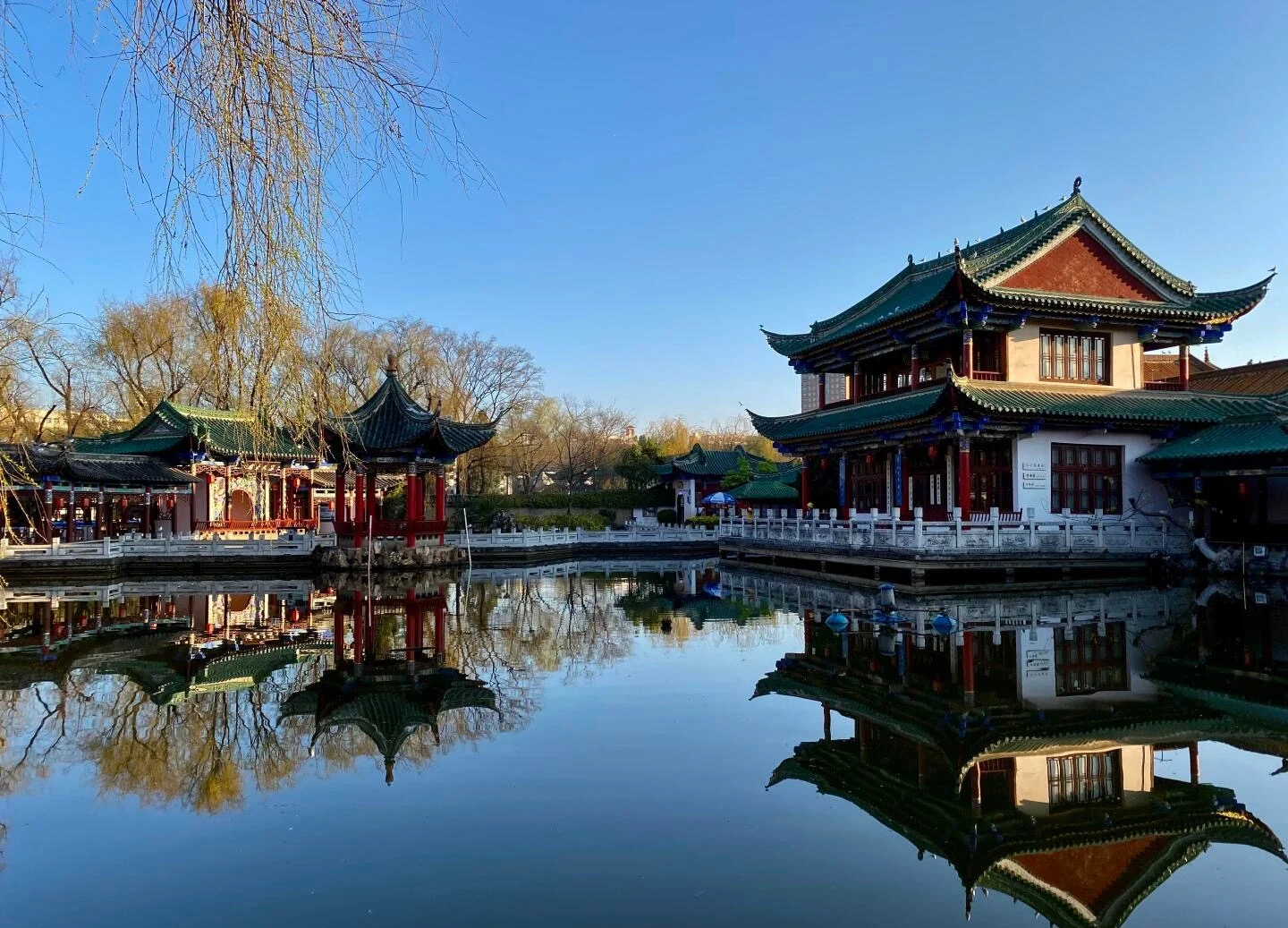
Kunming is the main gateway for most Yunnan trips and the easiest place to organize the rest of your route. It has useful city sights and a comfortable climate, but for many travelers its real value is practical rather than emotional.
Why go: Easy entry point, mild climate, and simple first stop.
Best for: First-time visitors who want the smoothest start.
Route role: Main gateway and transport hub, not always the highlight of the trip.

Dali is one of the strongest bases in Yunnan because it combines scenery, town life, and flexible pacing. It is not just about the old town itself. The wider area, especially around Erhai (洱海), gives the trip more space and variety.
Why go: A relaxed mix of lake views, Bai culture, and easy day-to-day travel.
Best for: Almost all first-time visitors, especially those who like slower pacing.
Route role: One of the best central bases on a classic Yunnan route.
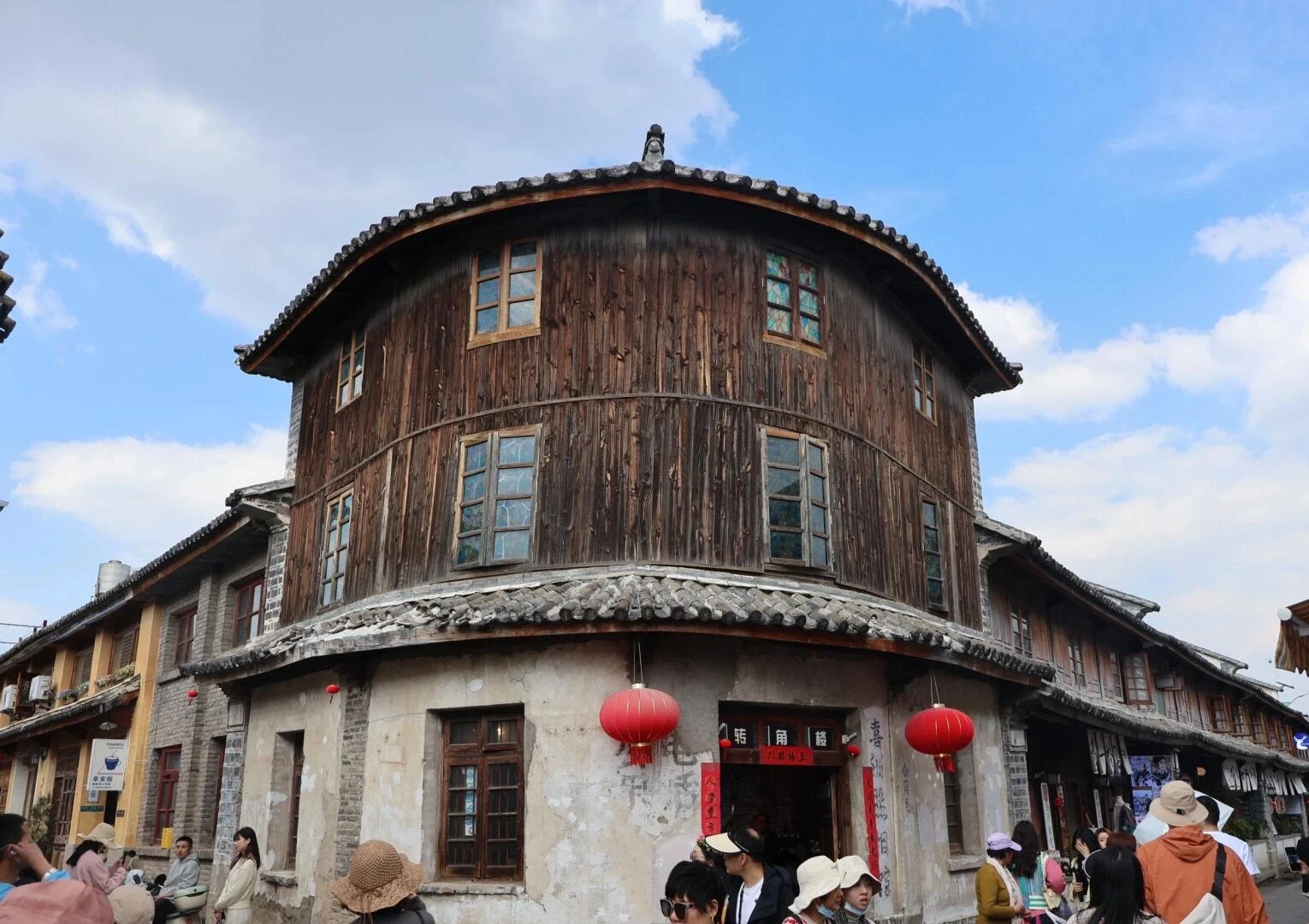
Xizhou and the Erhai-side villages often feel more rewarding than staying only inside Dali Old Town. This is where Yunnan’s slower rhythm becomes clearer, with village texture, Bai architecture, and better access to lake-side atmosphere.
Why go: Quieter local feel, village character, and a better sense of the Dali area beyond the old town.
Best for: Travelers who prefer atmosphere, photography, and slower days over checklist sightseeing.
Route role: Best as an extension of Dali, not usually a separate stop.

Shaxi is one of Yunnan’s most appealing smaller stops, especially for travelers who want a slower and less commercial old-town experience. It feels more intimate than Dali or Lijiang, but it also asks for more intentional planning.
Why go: Tea Horse Road atmosphere, smaller scale, and a calmer pace.
Best for: Slow-travel fans and people who want a quieter overnight stop.
Route role: Optional deeper stop between Dali and Lijiang, not essential for every first trip.

Lijiang is still worth visiting on a first Yunnan trip because it combines strong mountain scenery, good route position, and easy access to nearby highlights. At the same time, it is one of the more touristy stops in the province, so expectations matter.
Why go: Strong location, famous old-town setting, and easy access to major scenic areas.
Best for: First-time visitors who want a classic stop with convenient onward travel.
Route role: Major base on the classic line, worth visiting but best approached with realistic expectations about crowds.
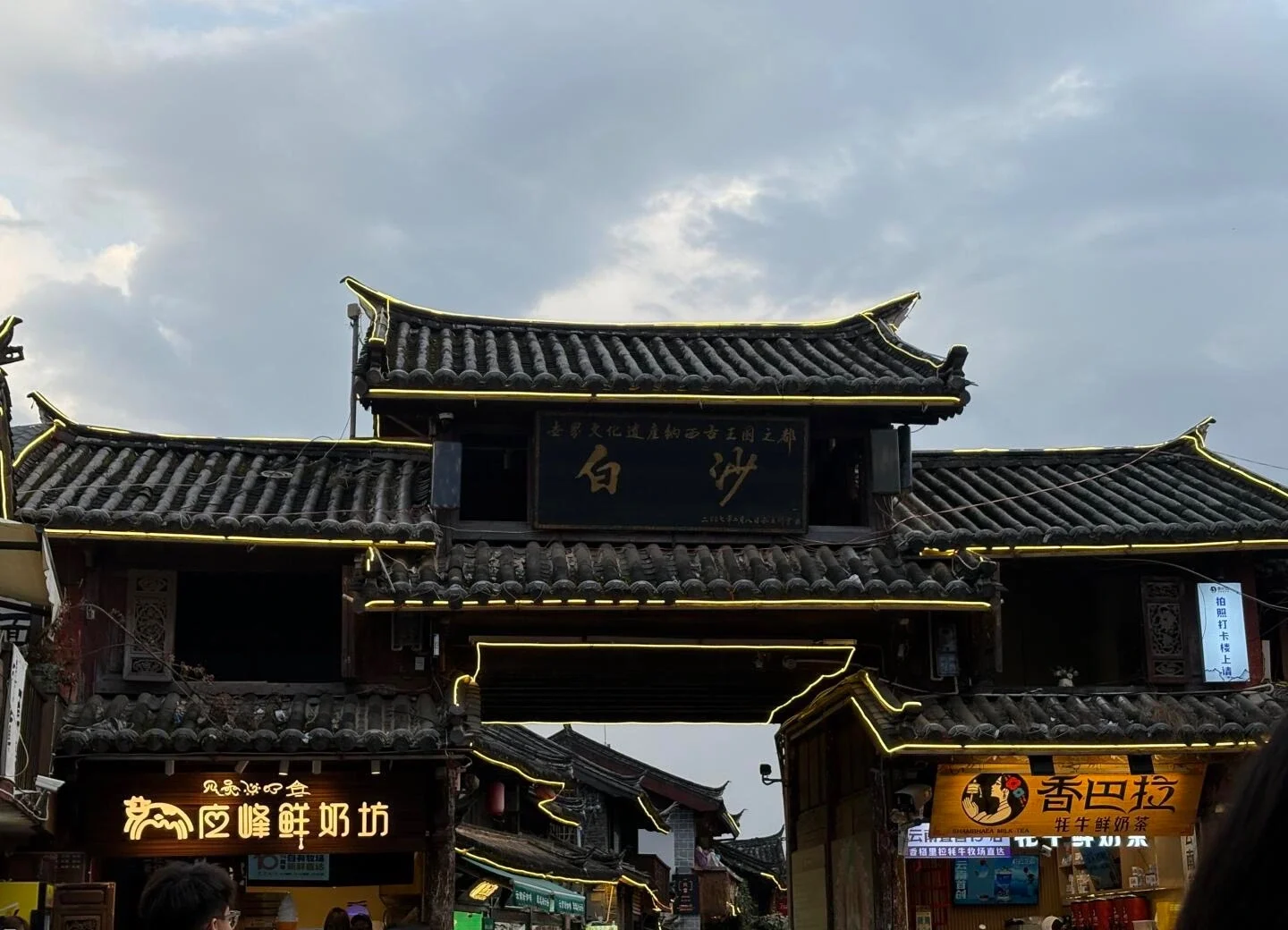
Baisha and Yuhu offer a calmer alternative to Lijiang Old Town. They are especially useful for travelers who like the Lijiang area but do not want all their time shaped by the busiest parts of town.
Why go: Quieter village atmosphere with mountain views and more local texture.
Best for: Travelers who want a softer, less commercial side of the Lijiang region.
Route role: Best as a half-day or overnight extension from Lijiang, not usually a standalone base for first-timers.

Tiger Leaping Gorge is one of Yunnan’s strongest nature experiences and one of the best reasons to extend beyond town-based travel. It adds movement, scale, and more dramatic scenery to a route that might otherwise stay focused on old towns and lakes.
Why go: Spectacular canyon scenery and one of the province’s most memorable outdoor experiences.
Best for: Hikers, active travelers, and anyone who wants stronger landscape impact.
Route role: Best as a Lijiang–Shangri-La extension, not always necessary on shorter first trips.

Shangri-La gives the classic route a very different final layer. The altitude, wider landscapes, and Tibetan influence make it feel distinct from Dali and Lijiang. It is rewarding, but it works best when you have enough time and energy to let the route open up.
Why go: Stronger highland scenery, Tibetan cultural atmosphere, and a more expansive end to the classic line.
Best for: Travelers drawn to plateau landscapes, monasteries, and deeper regional contrast.
Route role: Best as the deeper northwestern extension of the classic route, not always essential on short itineraries.

Yuanyang is one of Yunnan’s most visually powerful destinations, especially for travelers interested in photography and cultural landscape. But it does not fit as neatly into the classic route as Dali or Lijiang do.
Why go: Some of the most distinctive agricultural and photographic scenery in China.
Best for: Photographers, return visitors, and travelers willing to plan a more specialized route.
Route role: Very rewarding, but usually better as a separate southeastern route or a deeper choice than as a quick classic-line add-on.

Xishuangbanna offers a completely different side of Yunnan: tropical, warmer, and more southern in mood. Its appeal is real, but it should be chosen for what it is, not because it is famous.
Why go: Rainforest atmosphere, Dai cultural influence, and a warmer, more relaxed southern route.
Best for: Travelers interested in tropical scenery, food, tea, and a different pace from the classic line.
Route role: Best as a separate southern trip or longer extension, not something to force into a short first Yunnan itinerary.
In practical terms, most first-time visitors should build around Kunming, Dali, Lijiang, and possibly Shangri-La, then add places like Shaxi, Tiger Leaping Gorge, or Baisha depending on pace and interest.
If you are still deciding how Yunnan fits into a wider China itinerary, it also helps to think through Best Cities & Places to Visit in China before locking the route.

Yunnan is easier to plan than Xinjiang, but that does not mean it works well as a rushed all-in-one trip. The biggest mistake is adding too many regions just because they look close on a map. For first-time visitors, the safest approach is usually to choose one mature main line and let the trip breathe rather than trying to cover everything at once.
In practical terms, Yunnan rewards selection more than coverage. The strongest first trip is usually not the fullest one, but the one built around a clear, proven route. That becomes even easier once you are clear on how long to spend in China overall.
These first-time Yunnan itineraries work best when the route stays clear and intentional. In Yunnan, the value of an itinerary is not just which places are included, but why they are arranged that way. The strongest first trip usually follows one mature line instead of trying to combine too many different corners of the province.

Who it’s for: Travelers with limited time who still want a meaningful first taste of Yunnan without turning the trip into constant transfers.
Route logic: Keep the route simple and build around Kunming plus one classic extension, most often Dali. Lijiang can also work, but Dali usually gives a softer and easier short-trip rhythm.
Main stops: Kunming, Dali, Erhai-side experience, and possibly Xizhou.
Why this itinerary works:
This is the strongest short Yunnan route because it keeps the structure clean. Kunming works as the natural entry point, while Dali adds the old-town atmosphere, lake scenery, and slower travel mood that many people come to Yunnan for. It gives you a real sense of the province without forcing too many hotel changes. A five-day trip is not the right time to add Shangri-La, Yuanyang, or Xishuangbanna. The smartest short route is one that feels complete, not one that tries to imitate a much longer trip.

Who it’s for: Most first-time visitors who want the classic Yunnan experience in a balanced and manageable form.
Route logic: Follow the most proven first-time line: Kunming–Dali–Lijiang. This is the most mature route in the province and the easiest one to get right.
Main stops: Kunming, Dali, Xizhou or Erhai-side villages, Lijiang, and possibly Baisha.
Why this itinerary works:
This is the best range for most first-time travelers because it covers Yunnan’s core appeal without becoming tiring. Kunming gives you the practical entry point, Dali brings lake-and-town balance, and Lijiang adds stronger mountain presence. The route is mature, transport is easy, and the progression feels natural. It is usually a stronger first choice than trying to stretch too far north or forcing in southern or southeastern Yunnan.

Who it’s for: Travelers who want the strongest and most complete first Yunnan trip, with enough time for the classic line to develop properly.
Route logic: Expand the classic line into its fuller form: Kunming–Dali–Lijiang–Shangri-La, with space for one deeper natural stop such as Tiger Leaping Gorge and possibly a slower cultural stop like Shaxi.
Main stops: Kunming, Dali, Xizhou, Lijiang, Baisha or Shaxi, Tiger Leaping Gorge, and Shangri-La.
Why this itinerary works:
This is the most mature first-time Yunnan route because it gives the classic line enough room to breathe. Dali and Lijiang remain the center, while Shangri-La and Tiger Leaping Gorge add altitude, stronger scenery, and a more layered end to the trip. At this length, northwestern Yunnan starts to feel immersive rather than rushed.

Who it’s for: Travelers with plenty of time who want to go beyond the classic line and shape a broader or more specialized Yunnan trip.
Route logic: Start with the classic route, then add one major deeper extension rather than trying to do everything. That extension is usually either southeastern Yunnan for Yuanyang or southern Yunnan for Xishuangbanna. Trying to add both often weakens the structure unless the trip is even longer.
Main stops: Kunming, Dali, Lijiang, Shangri-La, plus either Yuanyang and Jianshui, or Xishuangbanna and possibly Pu’er.
Why this itinerary works:
Two weeks is when Yunnan becomes flexible enough for a broader first trip, but the route still needs discipline. If you add Yuanyang, you move toward terraces, deeper cultural landscape, and a more photographic southeastern route. If you add Xishuangbanna, the trip shifts toward tropical scenery, Dai cultural influence, and a warmer southern mood. Both are rewarding, but they pull the trip in different directions. That is why the strongest two-week Yunnan itinerary usually combines the classic line with only one extra branch. This keeps the route coherent and gives you a better experience than trying to force every famous region into the same first trip.
In practical terms, the best first-time Yunnan itinerary is not the longest one, but the one with the clearest route logic. Kunming–Dali–Lijiang is the safest core. Shangri-La and Tiger Leaping Gorge need more time to feel right. Yuanyang and Xishuangbanna are both excellent, but they usually belong in a longer trip or as deliberate deeper choices, not as rushed add-ons.
See also:

The best things to do in Yunnan are not only about famous sights. What makes the province rewarding is how town walks, village stays, food, markets, and scenic transfers combine into a slower and more layered trip.
Places such as Dali, Lijiang, and smaller town centers feel far better in the morning or near dusk than in the busiest middle hours.
A smaller base often gives you a calmer and more memorable experience than staying only in the most famous old-town core.
One of Yunnan’s strengths is how easily you can combine water, old towns, and mountain backdrops without huge travel days.
This is one of the best ways to add movement, scale, and a more active side to a Yunnan route.
Slow down, observe daily life, and focus on place and atmosphere rather than treating culture as a quick photo stop.
Crossing-the-Bridge Noodles, mushroom dishes, local ham, Bai flavors, and regional snacks are part of the trip, not just background.
Yunnan is one of the few provinces where both tea culture and local coffee can meaningfully shape the travel experience.
Flower markets, food markets, and lived-in villages often reveal more of Yunnan’s rhythm than a long list of formal attractions.
This area rewards lingering more than checklist travel, especially if you like cycling, village stops, and quieter lake views.
Choose Tiger Leaping Gorge for hiking, Shangri-La for higher-altitude atmosphere, Yuanyang for terraces, or Xishuangbanna for a southern contrast.
There is no single best time to visit Yunnan. The right season depends on which part of the province you want to see, because Kunming, Dali, Lijiang, Shangri-La, Xishuangbanna, and Yuanyang do not follow the same travel logic. In general, spring and autumn are the strongest overall choices, but summer and winter can also work very well depending on the route. For a wider country-level view, see our Best Time to Visit China guide.

Spring is one of the best overall seasons for Yunnan. The weather is usually comfortable, flowers and fields begin to look lively, and many classic-route stops feel especially pleasant for walking and slower travel. This is a strong time for Kunming, Dali, and Lijiang, where temperatures are usually mild and the scenery feels fresh without the heavier summer rain pattern. Spring can also work well for Xishuangbanna if you want warmth without the most intense wet-season feel.

Summer is still very workable in Yunnan, especially compared with much of hotter eastern China, but it needs more selectivity. Kunming, Dali, Lijiang, and even Shangri-La can be attractive in summer because the higher elevation keeps conditions more comfortable than in many other parts of the country. At the same time, this is also the rainy season in much of Yunnan, and school-holiday travel can make popular places much busier. Summer works best if you want greener scenery and do not mind occasional rain or higher visitor numbers.

Autumn is usually the strongest all-around season for Yunnan. It combines comfortable weather, good visibility, and strong travel flexibility across the classic route. Dali and Lijiang are especially appealing, Shangri-La often feels clearer and more dramatic, and Yuanyang becomes more attractive as a photography-oriented choice later in the season. If you want one season that works well for a broad first Yunnan trip, autumn is often the safest answer.

Winter is better in Yunnan than many first-time travelers expect. Kunming remains relatively mild, Dali and Lijiang can still work very well for slower town-and-scenery travel, and Xishuangbanna becomes especially appealing if you want warmth. In the north, Shangri-La is colder and more altitude-sensitive, but it can be rewarding for travelers who like crisp air, snow-touched scenery, and fewer crowds. Winter is also one of the more interesting seasons for Yuanyang, especially if your trip is built around terraces and photography rather than classic old-town travel.

Getting to Yunnan is straightforward for most travelers, and transport is one of the reasons the province works so well for first-time trips. The main question is usually not whether Yunnan is reachable, but which gateway best matches your route.
For most travelers, flying is the easiest way to enter Yunnan. Kunming is the province’s main gateway by far, with the strongest domestic flight network and the most flexible onward connections. Major cities such as Beijing, Shanghai, Chengdu, and Xi’an all connect easily. Dali, Lijiang, and Xishuangbanna can also work as entry points, but they usually make the most sense when your route is already clearly focused on one part of Yunnan.
Yunnan is also well connected by rail, especially through Kunming. For travelers already moving through China overland, high-speed rail can be a practical and comfortable way to arrive. Once inside the province, rail connections make classic city-to-city travel much easier than in the past, especially on the main central route. In practice, though, long-distance train entry still works best for travelers with more time.
Kunming is the best gateway for most first-time visitors. It is the easiest place to begin, the strongest transport hub, and the most reliable starting point for a classic Yunnan route. Dali, Lijiang, and Xishuangbanna are useful secondary gateways for more specific plans, but for most travelers, Kunming in and the classic line out remains one of the safest and simplest ways to build a first Yunnan trip.
For a broader look at flights, trains, and long-distance travel across the country, see our China Transportation Guide.

Yunnan is much easier to move around than Xinjiang, but route organization still matters. The province rewards travelers who follow one clear line instead of jumping randomly between distant regions. For most first-time visitors, Kunming is the transport center, and the most mature route is still Kunming–Dali–Lijiang–Shangri-La.
High-speed rail is one of the biggest reasons Yunnan is so practical for first-time travel. Kunming to Dali is especially strong by rail and is usually the smartest choice. Dali to Lijiang can also work well by train, especially if you want speed and convenience without dealing with a longer road transfer.
Road travel becomes more valuable once the scenery between stops starts to matter. The clearest example is Lijiang to Shangri-La, especially if you want to include Tiger Leaping Gorge. This is a segment where going by car or private transfer usually adds much more to the trip than simply moving from point A to point B. It is also more useful for smaller scenic stops, villages, and flexible pacing.
Some parts of Yunnan are better treated as road-based regions rather than rail-first routes. Tiger Leaping Gorge and the Shangri-La direction are the most obvious examples on the classic line. Yuanyang and the southeastern side are also much easier by car, since the route is less plug-and-play than the main Kunming–Dali–Lijiang corridor. If your trip goes south toward Xishuangbanna, the best choice depends on your wider route: flying saves more time, while rail can work if you prefer a smoother overland structure.
| Route | Best transport choice |
|---|---|
| Kunming → Dali | High-speed rail |
| Dali → Lijiang | High-speed rail or car |
| Lijiang → Tiger Leaping Gorge / Shangri-La | Car or private transfer |
| Kunming → Yuanyang / southeastern Yunnan | Car or private transfer |
| Kunming → Xishuangbanna | Flight or high-speed rail |
In practical terms, Yunnan is easiest when you use rail for the strongest city-to-city links and switch to road travel where scenery, stops, and route flexibility matter more.
See also: How to Get Around Yunnan
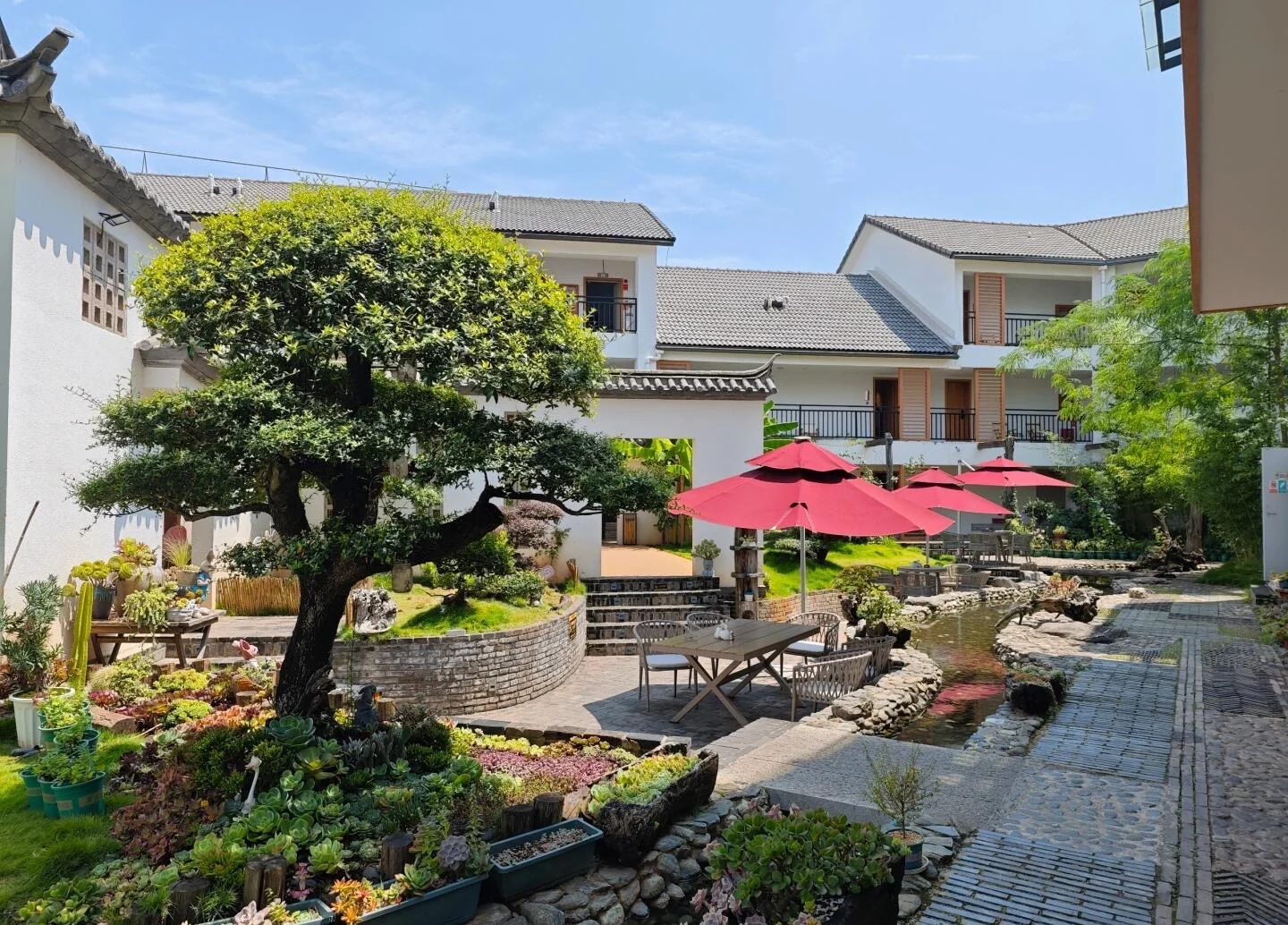
In Yunnan, where you stay should match the route you are building. This is not a province where one base fits everything. For most first-time visitors, Kunming works as the gateway, while Dali and Lijiang are the strongest true bases. Smaller-town stays can improve the experience, but they are not necessary for every trip.
Stay in Kunming if you need the easiest arrival or departure point, or if your route begins and ends there. Kunming works best as a practical stop for transit, recovery, and short city sightseeing rather than as the emotional center of the trip. For most travelers, one or two nights is enough.
Stay in Dali if you want one of the best all-around bases in Yunnan. It gives you easy access to the old town, Erhai-side scenery, and day-to-day flexibility. Choose Xizhou if you want a slower and more atmospheric stay with more village texture and less tourist density. Dali is the more practical base, while Xizhou often gives the more memorable stay.
Stay in Lijiang if you want the most convenient base for the surrounding region, especially if your route includes the old town, mountain views, and onward travel north. Stay in Baisha if you prefer a calmer setting and do not need to sleep inside the busiest part of the Lijiang area. Lijiang is easier; Baisha is more character-driven.
Stay in Shangri-La only if your itinerary clearly extends into northwestern Yunnan. It makes sense once your route is built around higher-altitude scenery, Tibetan cultural atmosphere, and a deeper classic line. It is rewarding, but not necessary on every first trip.
Stay in places such as Xizhou, Shaxi, or Baisha if you want to improve the quality and mood of the trip rather than simply maximize convenience. These stays are often more rewarding for slower travelers, photographers, and people who care about atmosphere. But they are enhancements, not requirements. For many first-time visitors, the classic base structure still works very well.

Yunnan is one of the most rewarding food provinces in China, but not because of one signature dish alone. What makes it special is the range: noodles, mushrooms, cured meats, village flavors, tea, and coffee all play a real role in the trip. Compared with much of eastern China, Yunnan food often feels more earthy, more ingredient-driven, and more shaped by altitude, minority traditions, and local produce. If you like regional food with strong place identity, Yunnan is especially satisfying.
This is Yunnan’s most famous dish and still worth trying properly. The appeal is not only the name, but the experience of hot broth, fresh ingredients, and rice noodles coming together at the table. It suits first-time visitors, lighter eaters, and travelers who want a dish that feels distinctly Yunnan without being too heavy.
Yunnan is one of China’s strongest mushroom regions, and this is one of the clearest ways its food stands out nationally. Mushroom dishes can be delicate, earthy, rich, or very fresh depending on the style. They are especially rewarding for travelers who care about ingredient quality and seasonal eating more than just famous names.
Yunnan ham adds a salty, deep, cured flavor that appears in more places than many visitors expect. It is worth trying because it shows the province’s older preservation traditions and gives many dishes a stronger savory backbone. This suits travelers who enjoy cured meats and fuller flavors.
Erkuai is one of the best everyday foods to try because it gives you a more local, less export-famous side of Yunnan. It is soft, chewy, and adaptable, often eaten in simple, filling ways. It suits travelers who like street food, breakfast-style foods, or trying something beyond the best-known tourist dishes.
Around Dali, food becomes an important part of understanding the region, not just something to fit between sights. Bai-influenced dishes often feel fresher and more tied to local produce, with flavors that can be lighter, tangier, or more herb-driven than travelers expect. This is a good fit for people who enjoy regional variation and meals with more cultural texture.
Yunnan is unusual in China because both tea and coffee matter to the travel experience. Pu’er tea adds historical and cultural depth, while Yunnan coffee gives travelers a more contemporary regional flavor angle. This suits anyone who likes slow travel, café stops, tasting experiences, and understanding place through what people grow and drink.
In the south, Yunnan food shifts again. Dai-influenced flavors can feel brighter, more aromatic, and more tropical than the better-known foods of the classic central route. This is especially worth trying if you enjoy food that feels more herb-heavy, grilled, or sour-spicy, and want something clearly different from northern or eastern Chinese cooking.
In practical terms, Yunnan food is one of the province’s real strengths. It is not only about “must-try dishes,” but about how different towns and regions give the trip a different flavor identity.
Yunnan is usually not very expensive in day-to-day terms. In most parts of the province, food and standard accommodation are more manageable than many first-time visitors expect. What usually changes the budget is not everyday spending, but route design: longer itineraries, peak-season pricing, scenic-area stays, private transport, and deeper extensions into snow mountain, gorge, or higher-altitude areas. For a broader country-level budget view, see our Cost to Travel China guide.
| Budget Level | Approx. Daily Cost (per person) | What It Usually Covers |
|---|---|---|
| Budget | RMB 300–500 | Simple guesthouse or budget hotel, basic local meals, rail or public transport, and a focused classic route |
| Mid-range | RMB 700–1,000 | Comfortable hotel or boutique stay, better dining, high-speed rail plus some car transfers, and a smoother overall trip |
| Comfortable | RMB 1,200+ | Higher-end hotels, private driver on selected segments, more scenic-area stays, and a more relaxed travel pace |
In practical terms, the classic Kunming–Dali–Lijiang–Shangri-La line is usually the easiest part of Yunnan to control on budget because the route is mature, transport is straightforward, and accommodation choices are broad. Costs rise more noticeably when you travel in peak seasons, stay inside or very near scenic areas, or rely heavily on private cars. They also rise when you add more time-intensive branches such as Yuanyang, Xishuangbanna, or smaller boutique-town stays that trade convenience for atmosphere.
For most travelers, Yunnan becomes expensive not because daily life is costly, but because a more ambitious route asks for more transfer time, more selective lodging, and more paid convenience.
For most first-time visitors, the safest choice is still the mature Kunming–Dali–Lijiang–Shangri-La line. Yunnan has many rewarding side regions, but trying to add too much too early usually weakens the trip.
Not every part of Yunnan feels the same physically. Shangri-La, Jade Dragon Snow Mountain (玉龙雪山), and Tiger Leaping Gorge can feel much more demanding than Kunming or Dali, especially if you move upward too quickly.
Summer can still be a good time to visit, but rain patterns and school-holiday crowds can affect the experience. Autumn and spring are often easier overall, especially for classic first-time routes.
Dali, Lijiang, and similar places usually feel far more enjoyable in the morning or near dusk, when the streets are calmer and the atmosphere feels less commercial.
English support is generally better in Kunming, Dali, Lijiang, and other mature stops than in smaller towns, but it is still helpful to have a translation tool ready for hotels, restaurants, and transport situations.
Yunnan is easier to plan than some western provinces, but that does not mean every region connects neatly on impulse. A route that looks simple on a map can still waste time if the structure is not thought through.
In more cultural or rural areas, travel works better when you slow down, observe, and avoid treating every village as a photo backdrop. Ask before taking close-up photos of people.
Smaller bases such as Xizhou, Shaxi, Baisha, or scenic stays near higher-demand areas can fill faster than travelers expect, especially during strong seasonal windows.
The province is at its best when you leave room for slower mornings, food stops, village time, and scenic pauses instead of trying to rush through every famous name.
Yunnan is a province where selection usually creates a better experience than coverage. A slower, cleaner itinerary often feels much richer than a crowded one.
For broader first-time planning advice across the country, see our China Travel Tips guide.

Yunnan is one of the few provinces in China that works very well for all three, but the experience differs depending on what you want most from the trip.
Yunnan is very strong for nature travelers, especially those who like variety rather than one single type of scenery. Mountain views, lakes, rice terraces, gorges, and higher-altitude landscapes all fit naturally into the province. It is especially rewarding for travelers who want scenic diversity without the extreme travel distances of some western regions.
Yunnan is also very strong for culture-focused travel. The appeal comes from old towns, minority communities, Tea Horse Road history, and the shifting cultural atmosphere between Dali, Lijiang, Shangri-La, and smaller places beyond them. It is especially good for travelers who want human texture and regional identity, not only monuments.
Yunnan is highly worthwhile for food travelers, but not mainly as a fine-dining destination. The real strength is regional flavor: rice noodles, mushrooms, cured ham, village food, Bai-style dishes, tea, and local coffee all shape the trip in meaningful ways. It is best for travelers who enjoy local specialties and place-driven eating rather than luxury restaurant culture.


Explore the 1978 Earth Horse’s exact dates, Wu-Wu element layers, traits, compatibility, lucky signs, and traditional 2026–2027 outlooks with clear limits.

A clear and structured 2026 forecast for children born in 2022, covering learning outlook, relationships, health, lucky elements, and practical guidance.

Plan 4 days in Chongqing with city landmarks, mountain streets, night views, food, costs, hotels, side-trip choices, and practical tips.

Plan your Harbin Ice and Snow Festival trip: must-see sites, tickets, transport, food, hotels, and tips to enjoy China’s top winter wonderland.

Discover the rich flavors of Shandong cuisine with iconic dishes like Braised Sea Cucumber, Sweet and Sour Carp, highlighting authentic culinary traditions of China.

Discover Ningbo, a historical port city with a rich cultural heritage, including the ancient Tianyi Pavilion, and its importance as the starting point of the Maritime Silk Road.


