


Hướng dẫn du lịch
Vân Nam 5 ngày: Lịch trình tốt nhất cho lần đầu
Lên kế hoạch 5 ngày ở Vân Nam với lộ trình Đại Lý – Lijiang, lịch trình hàng ngày, phương tiện di chuyển, chỗ ở, ăn uống, chi phí và những lời khuyên hữu ích khi du lịch.

Most first-time problems at the Mogao Caves come from misunderstanding how admission works. You cannot simply arrive in Dunhuang, buy a ticket at the cliff, choose a famous cave and explore independently. Admission is timed, identity-checked and managed as a sequence through the Digital Exhibition Center, shuttle transfer and guided cave route.
This updated page replaces the old history-heavy overview with the details international visitors actually need: foreign-passport booking, ticket choices, payment preparation, the correct starting point, realistic timing and conservation rules. It also explains enough art and history to make the short time inside each cave more meaningful. For the wider city plan, use our Hướng dẫn du lịch Đôn Hoàng.

The Mogao Caves, also called the Thousand Buddha Caves, stand southeast of Dunhuang at the western end of the Hexi Corridor. Their construction traditionally begins in 366 CE, although the surviving complex developed over many periods from the fourth to the fourteenth century. UNESCO inscribed Mogao as a World Heritage Site in 1987 for its exceptional record of Buddhist art and cross-cultural exchange.[2]
Two cave counts often get mixed together. The Dunhuang Academy records 735 surviving caves across the whole complex. Of these, 492 contain murals or painted sculptures; the site preserves more than 45,000 square metres of murals and over 2,400 painted sculptures.[3][4] Only a small rotating selection is opened for ordinary visits.
The value of Mogao is broader than any single Buddha image. Its art records how Chinese, Indian, Central Asian and other traditions met along the Con Đường Tơ Lụa. Murals show worship, architecture, clothing, music, dance, farming and travel, making the caves both a major monument of Phật giáo Trung Quốc and a visual archive of medieval life. Travelers continuing across the region can place it in context with the Cẩm nang du lịch Cam Túc.
Mogao uses timed, real-name reservations and daily capacity limits. The two main visitor modes are not equivalent: the regular visit gives the fullest first-time experience, while the emergency visit is a reduced-capacity response used when demand is high. Special caves are a separate, limited add-on.[1]
| Visit mode | Published 2026 content | Current published full price | Cách dùng phù hợp nhất |
|---|---|---|---|
| Regular visit | Digital-film program and 8 physical caves under the 2026 annual notice; the visitor page currently lists 10 caves in the low season | RMB 238 in peak season; RMB 140 in low season | First choice for almost every first-time visitor |
| Emergency visit | 4 physical caves and no regular digital-film program; activated according to peak-season demand | RMB 100 | Fallback when regular tickets are unavailable |
| Special-cave visit | A separately managed selection of limited-access caves after a regular or emergency visit | Separate on-site charge | Repeat visitors and serious art or history enthusiasts |
The official 2026 daily limits are 6,000 regular visits and, when the emergency mode is activated, 12,000 emergency visits. Prices and low-season inclusions above are those published by the official visitor page in August 2026; verify the live booking screen before payment.[1][5]
Do not select a ticket because a reseller promises Cave 17, Cave 96 or another famous cave. Open caves rotate according to conservation conditions, restoration work, weather and crowd management. Special caves are also limited and may not operate every day. Under the 2026 rules, their formalities are completed at the cave area after the visitor finishes a regular or emergency visit.[1]
Foreign-passport holders should use the English entry in the official WeChat service account:
The annual notice says to book in advance, but it does not establish a permanent 30-day window for every date. Watch the live calendar and reserve as soon as your preferred date becomes available, especially for summer, weekends and the National Day holiday period.
Accepted payment routes can change. Set up WeChat Pay or Alipay before the trip and check the payment options shown during checkout; our Cách thanh toán ở Trung Quốc page explains the broader setup. If the English interface or payment fails, ask your hotel to help you navigate the official channel while keeping the reservation in the traveler’s own passport details. Do not buy a marked-up “guaranteed” ticket from a reseller: the Dunhuang Academy states that it has not authorized third parties to sell Mogao tickets.[1]
The 2026 annual notice sets the following operating periods. Use these dates rather than a generic attraction listing, and recheck the official announcement shortly before travel.[1]
| Mùa | Opening hours | Last admission check | Planning notes |
|---|---|---|---|
| April 1–November 30 | 08:00–18:00 | 16:10 | Highest demand; summer is hot and major holidays sell quickly |
| December 1–March 31 | 09:00–17:00 | 15:10 | Lower demand and colder weather; operating details may be adjusted for conservation |
For comfortable weather, late spring and early autumn are usually easier than midsummer. July and August bring heat and heavy demand, while the early-October National Day period is one of the hardest times for tickets and crowding. Winter can provide a quieter visit but requires warm clothing and flexibility around maintenance.
An early slot is useful if you want to combine Mogao with another attraction later, but it does not guarantee empty caves. Heavy rain or strong sand and dust can force temporary closure; the official policy provides a full refund for booked admission that has not been used when the caves close for these conditions.[1]
Set your map destination to “Mogao Caves Digital Exhibition Center,” at 8899 Yangguan East Road, Dunhuang. Do not navigate to the Nine-Story Building or the protected cave zone. The Digital Exhibition Center has visitor parking; the cave zone does not, and visitors continue from the center on the official shuttle.[1]
| Điểm xuất phát | Practical option | Typical planning allowance |
|---|---|---|
| Central Dunhuang | Taxi or prearranged hotel transfer | About 20–30 minutes in normal traffic |
| Central Dunhuang | Xe buýt công cộng | About 40 minutes; frequency is limited, so confirm the current timetable |
| Ga xe lửa Đôn Hoàng | Taxi | Usually about 10–20 minutes, plus a generous admission buffer |
| Dunhuang Mogao International Airport (DNH) | Taxi | Usually about 10–20 minutes, depending on pickup and traffic |
These are practical ranges, not guaranteed journey times. Build the required 30-minute early arrival on top of the transfer, rather than treating it as part of the drive. A taxi is the simplest option for an early reservation or a group with limited time; the official Gansu travel guidance identifies the Digital Exhibition Center as the correct destination and notes a roughly 40-minute city bus journey.[7] For a convenient base, compare the central areas in Nơi lưu trú tại Dunhuang.
The regular visit follows a managed sequence. You cannot reverse it, drive yourself between the center and the caves, or separate from the assigned cave group to explore independently.
Arrive at least 30 minutes before the reserved time. Complete security and identity checks, and obtain the paper ticket information sheet required for a regular visit. Keep both the sheet and original passport accessible: the information sheet is checked at the Digital Exhibition Center and again at the cave zone.[1]
Foreign-passport visitors should allow time for a staffed counter if an automatic terminal does not accept their document. Do not schedule arrival from a flight or train so tightly that one pickup delay makes you miss the slot.
The regular digital program introduces the history and art before the physical visit. It has traditionally included the ultra-high-definition film “A Thousand Years of Mogao Caves” and the dome presentation “The Splendors of the Buddha’s Palace”; allow roughly 40 minutes for the film portion.[6] An emergency ticket does not include the standard regular-visit film program.
After the screening, visitors take the official shuttle about 15 kilometres to the protected cave zone. Staff then organize visitors into guided groups. The guide controls the route and opens the assigned rotating caves; visitors cannot choose caves, remain behind or enter another group’s route. Foreign-language availability can vary by date and demand, so confirm current language arrangements through the official service line if this is essential.
Inside, light levels are low and the group may spend only a short time in each cave. Listen to the explanation first, then use the remaining moments to look at the composition, sculpture, ceiling and small daily-life details rather than trying to memorize every date.
If the on-site exhibitions and replica-cave displays are open, allow another 30–60 minutes after the guided route. They can show details that are hard to study during a brief cave visit and may include replicas of caves not on your assigned route.
Treat this as a useful extension rather than a guaranteed fixed program. Exhibition access and operating arrangements can change, so check signs on the day. Visitors who need to leave quickly can return by shuttle after the core cave route.
The main experience is the relationship between murals, painted clay sculpture and the architecture of each cave. They were designed as one religious space, not as separate museum objects.

Mogao’s murals cover Buddhist narratives and devotional images, but they also preserve architecture, clothing, music, dance, farming, travel and social customs. Their changing styles show how local Chinese traditions absorbed and reworked influences moving through Central Asia and India. UNESCO describes the caves as a record of roughly a thousand years of Buddhist art and cultural exchange.[2]

The figures are painted clay sculptures, not terracotta statues carved directly from the cliff. Artisans built forms around wooden or reed armatures, added modeled clay and finished them with color. Buddhas, bodhisattvas, disciples and guardians changed in proportion, expression and dress across different periods.
The caves themselves also vary. Central-pillar caves supported ritual movement, hall-style caves created spaces for worship, and giant-Buddha caves used height and vertical architecture to frame monumental images. Looking at the plan of the cave helps explain why its sculpture and murals were arranged as they were.[3][4]

Cave 96 sits behind the Nine-Story Building, the best-known exterior landmark at Mogao. The early-Tang cave contains a 35.5-metre Maitreya image, the largest surviving painted sculpture in the complex.[4] You can recognize the red-fronted building from the outdoor area, but entry to Cave 96 still depends on the route operating that day.

Cave 17, the Library Cave, became famous after its discovery in 1900. It had held tens of thousands of manuscripts, paintings and other objects in multiple languages, providing exceptional evidence for the history of China and Central Asia. Many of those objects are now dispersed among institutions worldwide.[2]
Other well-known caves contain the nine-colored deer story, elaborate Pure Land scenes, musicians, dancers and detailed maps or landscapes. Learn the famous numbers as context, not as a checklist: a regular ticket buys access to an assigned rotating route, not a promise to enter specific caves.
Plan Mogao as a half-day attraction. A standard visit normally takes about 3.5–5 hours door to door from central Dunhuang, depending on traffic, queues, group organization and whether you stay for the exhibitions. The old advice to reserve a full day is unnecessary for most travelers, but a two-hour window is too tight.
A realistic time budget is:
Leave extra margin if you arrive during a holiday, require help with a foreign passport or must collect luggage before continuing.
Yes. A practical classic day is an early Mogao reservation followed by a rest and a late-afternoon visit to Mingsha Mountain and Crescent Lake. This keeps the desert visit away from the hottest part of a summer day and positions you for evening light.
Check the season’s sunset and attraction hours before choosing the Mogao slot. Do not add the distant Yadan landforms and Yumen Pass western route to the same day; that creates long transfers and removes the buffer required by a timed Mogao reservation.
These rules protect fragile murals, sculptures and the cave environment. They also change what you should carry and how you plan the day.[1][5]
| Rule | Practical effect |
|---|---|
| No photography or video inside the caves | Keep cameras and phones away during cave entry; ordinary personal photography is generally possible only in unrestricted outdoor areas and where signs allow it |
| No touching, leaning, graffiti or crowding | Follow the guide and remain behind barriers |
| No suitcases or packages of 20 inches or larger in the cave zone | Use the free large-luggage storage at the Digital Exhibition Center before admission |
| No pets or drones in the cave zone | Arrange pet care in advance; the center currently lists a pet-storage service, but verify capacity |
| Preschool children, older adults and visitors with limited mobility need a companion | Do not plan independent admission for someone who needs physical support |
| Strong rain or sand and dust can close the caves | Monitor official notices and avoid a nonrefundable onward connection immediately after the visit |
The cave route is not uniformly step-free. Elevated walkways, thresholds and stairs can limit how much a wheelchair user or traveler with reduced mobility can access. The annual notice requires accompaniment but does not promise a complete accessible route. Contact the official visitor service before booking to ask which route and assistance are available on your date.
Every child still needs the booking or admission record required by the current system. Because the published concession wording does not clearly cover every foreign-passport situation, verify the child fare and document requirement in the official English booking channel rather than assuming a free ticket.
| Common mistake | Better practice |
|---|---|
| Navigating to the cave cliff or Nine-Story Building | Use the Mogao Caves Digital Exhibition Center as the destination |
| Waiting until arrival in Dunhuang to look for tickets | Monitor the official calendar and book as soon as your travel date opens |
| Buying from a reseller promising guaranteed admission | Use only the official Mogao booking service and keep the ticket in the traveler’s passport details |
| Treating the official 30-minute early-arrival rule as drive time | Add it after the full hotel-to-center transfer |
| Expecting to choose famous caves | Accept the assigned rotating route; no ticket guarantees a cave number |
| Bringing a large suitcase or drone | Store large luggage at the Digital Exhibition Center and leave the drone out of the cave-zone visit |
| Combining Mogao, Mingsha Mountain and the western desert route in one day | Pair Mogao only with a flexible late-afternoon city or desert activity |
For a first visit, prioritize a regular ticket, use the foreign-passport entry in the official booking service and arrive at the Digital Exhibition Center at least 30 minutes early with the original passport. Plan four to five hours, accept that cave access rotates, and do not build the day around one famous cave number.
Mogao is most rewarding when treated as a managed encounter with fragile art rather than a photo stop. A half-day visit followed by Mingsha Mountain near sunset makes a strong Dunhuang day without overloading it.
Yes. “Thousand Buddha Caves” is a traditional alternative name for the Mogao Caves. For maps, tickets and travel planning, use “Mogao Caves” or the Chinese name 莫高窟.
You cannot explore the physical caves independently. Visitors enter in assigned groups and follow the guide through a managed rotating route. Museums and unrestricted outdoor areas may be explored separately after the cave portion.
No. The 735 figure covers all surviving caves in the complex, while 492 contain murals or painted sculptures. Only a small selection opens for ordinary visits, and that selection rotates for conservation and operational reasons.
No. Staff assign the route according to cave condition, conservation work, weather and visitor management. A tour operator or regular ticket cannot guarantee Cave 17, Cave 96 or another requested cave.
Ordinary personal photography is generally possible in unrestricted outdoor areas, including exterior views, but follow posted signs and staff instructions. Photography and video are prohibited inside the caves, and some exhibition areas may also restrict them.
Yes, but preschool children, older adults who need support and visitors with limited mobility must be accompanied. The route includes walking, thresholds and stairs, so confirm current accessibility and foreign-passport child-ticket rules before booking.
[1] Dunhuang Academy. 2026 Mogao Caves Tourism Opening Announcement
[2] UNESCO World Heritage Centre. Hang Mạc Cao
[3] Dunhuang Academy. Mogao Caves Named China’s Most Popular World Cultural Heritage Site Among Foreign Visitors
[4] Dunhuang Academy. Introduction to the Mogao Caves
[5] Dunhuang Academy. Mogao Caves Visitor and Ticket Information
[6] Dunhuang Academy. Digital Dunhuang Brings Cultural Relics to Life
[7] Gansu Culture and Tourism. Practical Dunhuang Travel and Transport Guide

Lên kế hoạch 5 ngày ở Vân Nam với lộ trình Đại Lý – Lijiang, lịch trình hàng ngày, phương tiện di chuyển, chỗ ở, ăn uống, chi phí và những lời khuyên hữu ích khi du lịch.

Trịnh Châu, thủ phủ của tỉnh Hà Nam, là sự kết hợp giữa lịch sử phong phú, những tòa nhà chọc trời hiện đại và các địa danh mang tính biểu tượng như Tháp tưởng niệm Erqi. Khám phá nét quyến rũ của nơi này!

Khám phá những khách sạn tốt nhất ở Bắc Kinh với thông tin chi tiết về địa phương. Từ những kỳ nghỉ tiết kiệm đến những trải nghiệm sang trọng, hãy tìm khách sạn hoàn hảo cho chuyến đi Bắc Kinh của bạn.

Phần lớn du khách đi lần đầu cần 3 ngày trọn vẹn ở Thành Đô. So sánh kế hoạch 2 ngày, 3 ngày và 4–5 ngày để xem gấu trúc, điểm nổi bật của thành phố, ẩm thực, trà quán và các chuyến đi lân cận.

Lên kế hoạch 4 ngày ở Trùng Khánh với các địa danh nổi bật, đường phố miền núi, cảnh đêm, ẩm thực, chi phí, khách sạn, các lựa chọn tham quan thêm và những lời khuyên hữu ích.
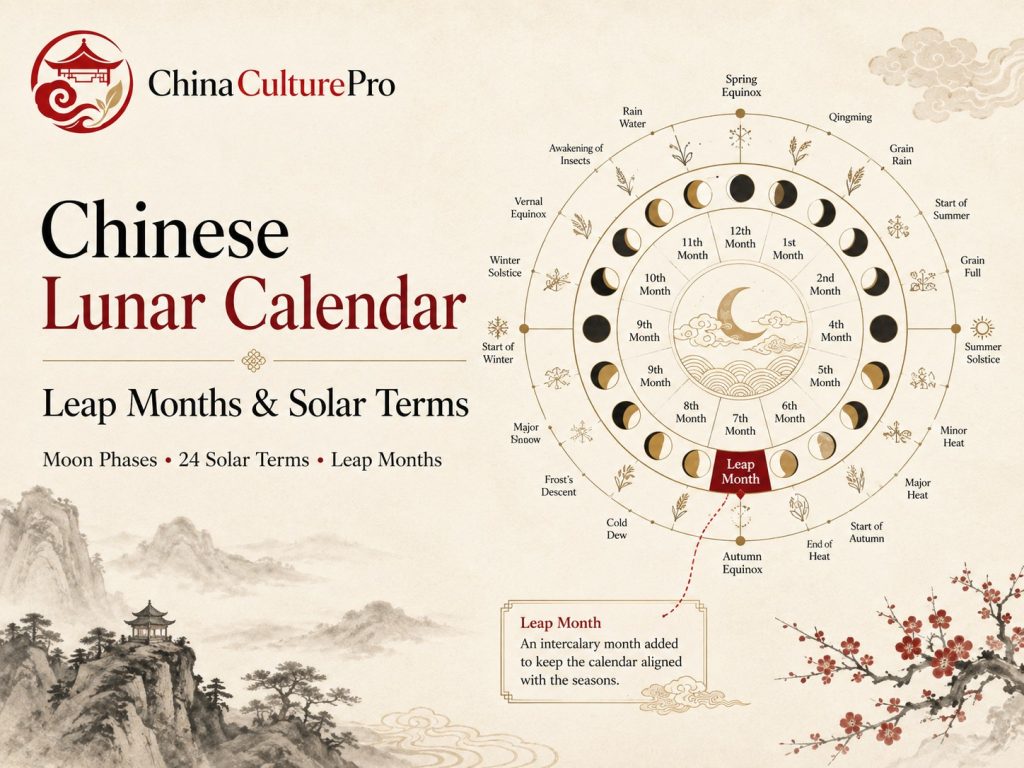
Tìm hiểu cách lịch âm Trung Quốc sử dụng chu kỳ Mặt Trăng, tiết khí và tháng nhuận để xác định ngày tháng, mùa, lễ hội, sinh nhật và năm con giáp.


