Most confusion about the 1987 Chinesisches Tierkreiszeichen comes from treating Fire Rabbit, Rabbit Wood and Fire in the Furnace as competing answers. They are not. Chinese calendrical and folk systems can classify the same birth year by its Heavenly Stem, Earthly Branch and complete Stem-Branch pair.
This article separates those layers, gives the exact public-zodiac dates, explains the Lunar New Year and Li Chun boundaries, and presents personality and compatibility ideas with appropriate cultural limits. It is designed as an evergreen explanation rather than a page of short-lived annual predictions.
1987 Fire Rabbit Dates and Zodiac Boundaries

For the familiar twelve-animal zodiac, the year changes at Lunar New Year. Hong Kong Observatory calendar tables identify January 29 as the first day of the first lunar month in 1987 and February 17 as that date in 1988.[1][2]
| Gregorian birth date | Public zodiac result | Was das bedeutet |
|---|---|---|
| January 1-28, 1987 | Bing-Yin Fire Tiger | The 1986 lunar year had not ended |
| January 29-December 31, 1987 | Ding-Mao Fire Rabbit | The 1987 lunar year had begun |
| 1. Januar–16. Februar 1988 | Ding-Mao Fire Rabbit | The Ding-Mao lunar year was still in progress |
Use this Lunar New Year convention for an everyday zodiac question such as “What is my Chinese zodiac animal?” The chinesischen Tierkreisrechner is the most direct next step when a birthday falls near the annual boundary. Readers born before January 29 can instead check the 1986 Fire Tiger year.
Four Pillars of Destiny, or BaZi, commonly uses Li Chun—the Start of Spring solar term—to change the year pillar. In 1987, Lunar New Year fell on January 29, while Spring Commences fell on February 4.[1] A person born from January 29 through February 3 can therefore be a Rabbit under the public zodiac convention but retain the previous Bing-Yin year pillar in a Li Chun-based BaZi chart. Neither answer is a random error: the two methods serve different questions. A precise Four Pillars calculation near the boundary also requires the birth time, location and the exact solar-term moment.
What Does the 1987 Fire Rabbit Mean in Chinese Astrology?
Ding Fire and the Mao Rabbit

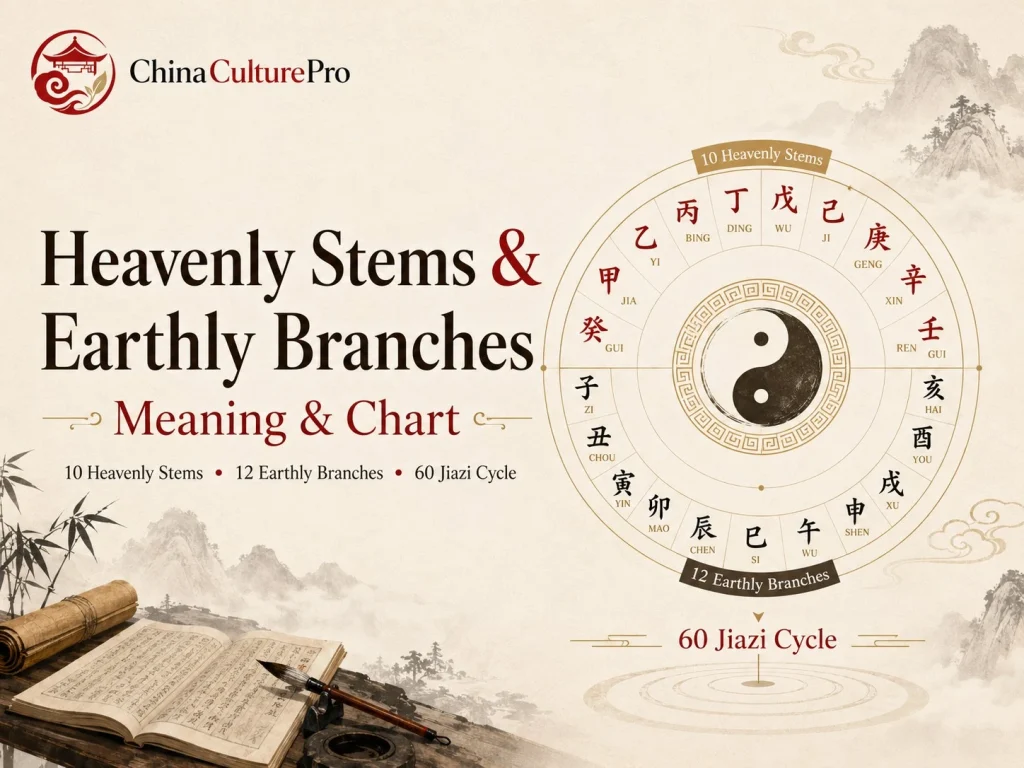
The Gan-Zhi system combines ten Heavenly Stems with twelve Earthly Branches in a repeating 60-unit cycle. Ding-Mao is the fourth pair in that sequence.[3] Its two characters perform different roles.
- Ding (丁) as Yin Fire: Traditional imagery compares Ding Fire with a controlled lamp, ember or steady flame rather than a large blaze. It suggests warmth, refinement, expression and influence that works through consistency rather than force.
- Mao (卯) as Yin Wood: Mao is the Rabbit branch. Its imagery emphasizes growth, flexibility, attentiveness and a preference for nonconfrontational movement. In traditional hidden-stem classification, Mao contains Yi Wood, reinforcing its Wood association.
- Wood generating Fire: Within Wuxing, Wood generates Fire. Folk interpretation therefore reads Ding-Mao as a relatively coherent combination: Wood supports a quieter Fire, producing the familiar image of a person who is outwardly gentle but inwardly warm and purposeful.
“Fire Rabbit” is an elemental-animal label based chiefly on the Ding Heavenly Stem. It does not mean that the Rabbit branch stops being Wood. The Chinese Zodiac Elements guide explains how the five stems create Wood, Fire, Earth, Metal and Water versions of each animal, while the broader Wuxing guide covers the generating and controlling cycles.
Why Is the Na Yin Fire in the Furnace?
Na Yin is a third classification attached to the complete Stem-Branch pair. The classical San Ming Tong Hui groups Bing-Yin and Ding-Mao under Lu Zhong Huo, fixed in this project as Fire in the Furnace (炉中火).[4]
The image is contained heat: fire that works inside a defined space, sustains a process and changes material through tempering. In cultural interpretation, it can suggest concentration, patient refinement and development under formative pressure. It is not the same image as an uncontrolled wildfire or a conspicuous flame.
| Classification layer | 1987 result | What the layer describes |
|---|---|---|
| Himmelsstamm | Ding, Yin-Feuer | Source of the name Fire Rabbit |
| Erdzweig | Mao, Rabbit, Yin Wood | Zodiac animal and the branch’s fixed element |
| Na Yin of Ding-Mao | Feuer im Ofen | Symbolic category assigned to the full pair |
Na Yin does not rename the year as a different animal or provide a complete birth-chart reading. It also cannot determine health, wealth, career or relationship outcomes by itself. See the full set of mappings in the Na Yin Five Elements guide.
1987 Fire Rabbit Personality Traits
The following profile is traditional zodiac symbolism derived from Ding Fire, Mao Wood and Fire in the Furnace imagery. It offers a cultural vocabulary for discussing tendencies; it does not describe every person born in 1987.
| Klassifizierung | Traditional interpretation | How the same quality may become difficult |
|---|---|---|
| Social awareness | Notices changes in mood, tone and group dynamics | May monitor other people’s reactions too closely |
| Tactful communication | Prefers polite, measured language and peaceful resolution | May soften a necessary message or delay confrontation |
| Warmth and empathy | Tries to make others feel heard and supported | May over-accommodate and neglect personal boundaries |
| Patience and follow-through | Advances work steadily and pays attention to presentation | Can overwork details or wait too long for perfect conditions |
| Creative sensitivity | Responds to aesthetics, nuance and subtle patterns | May become self-conscious when work receives criticism |
In folk interpretation, Mao Wood supplies flexibility and sensitivity, while Ding Fire adds warmth and a wish to communicate or contribute. Fire in the Furnace adds the idea of concentration and gradual refinement. Together they produce the familiar Fire Rabbit description: gentle in manner, serious beneath the surface and more persistent than an initially quiet presentation suggests.
The central tension is between harmony and decisiveness. Sensitivity helps a Fire Rabbit read a room, but the same sensitivity can turn into overthinking. Patience supports careful work, but it can become hesitation when a clear answer is needed. A practical counterbalance is to separate kindness from agreement: listen carefully, state a boundary plainly and set a deadline for decisions that cannot remain open indefinitely.
Growth, education, family environment and personal choices usually explain more about a real personality than a birth-year label. The profile is most useful as cultural symbolism, not as a diagnostic tool.
Wie sich die fünf Hasen-Typen unterscheiden
Die Jahr des Hasen returns every 12 years, but its Heavenly Stem changes. Across a 60-year cycle, this produces five elemental Rabbit types. Their Na Yin names belong to a separate system and may use a different element.
| Hasen-Typ | Beispieljahre | Gan-Zhi | Na Yin | Traditional emphasis compared with the Fire Rabbit |
|---|---|---|---|---|
| Holz-Hase | 1975, 2035 | Yi-Mao | Großes Stromwasser | More adaptable and growth-oriented, with a looser response to change |
| Feuer-Hase | 1987, 2047 | Ding-Mao | Feuer im Ofen | Warmer and more expressive, while remaining deliberate and relationship-aware |
| Erdhase | 1999, 2059 | Ji-Mao | Stadtmauer-Erde | More practical, protective and focused on dependable foundations |
| Metall-Hase | 1951, 2011 | Xin-Mao | Kiefern- und Zypressenholz | Clearer about standards and boundaries, with a firmer decision style |
| Wasser-Hase | 1963, 2023 | Gui-Mao | Goldblatt | More fluid, perceptive and willing to adjust to changing circumstances |
These contrasts are broad folk interpretations, not rankings. A Wood Rabbit is not “better” at growth, nor is a Metal Rabbit automatically more successful because it is described as decisive. The table’s main purpose is to show why people born in different Rabbit years can receive different elemental labels—and why those labels should not be confused with Na Yin.
1987 Fire Rabbit Love and Compatibility
Beziehungsstil in der traditionellen Deutung
Folk interpretation describes the Fire Rabbit as attentive, loyal and highly aware of emotional tone. In a close relationship, this may appear as remembering small preferences, checking how a partner feels and trying to preserve a calm shared environment. Affection is often shown through considerate actions and patient support rather than dramatic display.
The same harmony-seeking pattern can create problems when disagreement is unavoidable. A Fire Rabbit may postpone a difficult conversation, say yes to preserve peace or assume that a partner should notice unspoken discomfort. Sensitivity to details can also turn an ordinary change in tone into excessive analysis.
The useful lesson is not to become less considerate. It is to combine consideration with clearer boundaries: describe the issue without accusation, state what is needed and allow the other person to respond directly. These are general relationship skills, not remedies prescribed by a zodiac sign.
Traditionell kompatible und herausfordernde Zeichen
Traditional compatibility uses relationships among the Earthly Branches. For the Rabbit branch Mao, the commonly discussed patterns are Six Harmony with Dog, Three Harmony with Pig and Goat, a direct clash with Rooster, harm with Dragon and punishment with Rat.
| Zodiac sign | Traditionelle Beziehung | Volkstümliche Deutung |
|---|---|---|
| Hund | Liu-He, Six Harmony | A complementary pairing associated with trust, support and practical understanding |
| Schwein und Ziege | San-He, Three Harmony | Hai-Mao-Wei forms a traditional group associated with a compatible social rhythm and cooperative values |
| Hahn | Chong, direct clash | Mao and You symbolize opposing approaches to expression, boundaries, pace and criticism |
| Drache | Hai, harm | Mao and Chen are associated with less visible misunderstandings or accumulated friction |
| Ratte | Xing, punishment | Zi and Mao symbolize tension around expectations, etiquette or emotional interpretation |
Compatibility categories are not relationship verdicts. A harmonious pairing can still fail without communication, while a traditional clash can be managed by people with shared values and mature conflict skills. The Kompatibilitätsleitfaden zum chinesischen Tierkreis explains all branch pairings without treating them as guarantees.
Arbeits-, Geld- und Entscheidungsstil
Traditional Fire Rabbit imagery favors environments where care, coordination, presentation and sustained attention matter. The profile often works best with clear objectives and enough autonomy to organize the path toward them. It may contribute through diplomacy, quality awareness, patient project follow-through and the ability to notice how decisions affect other people.
The risk is over-accommodation. A person who continually absorbs extra work to protect group harmony may become overloaded without making the problem visible. A careful planner may also keep researching after the decision threshold has already been met. These patterns can occur in anyone, regardless of zodiac, but they follow logically from the traditional Fire Rabbit image.
Useful balancing practices include:
- Define responsibility early: Clarify who owns each task instead of quietly accepting work that has no clear owner.
- Separate evidence from approval: Make major decisions from costs, risks, contracts and goals—not from a wish to satisfy every opinion.
- Set a decision deadline: Careful thinking is valuable, but an open-ended decision creates its own cost.
- Protect financial boundaries: Generosity should not replace written terms, independent checks or a realistic ability to absorb loss.
No birth-year system can identify a destined career, predict income or select an investment. Practical financial choices require current information, personal circumstances and qualified advice when the stakes are high.
The 1987 Fire Rabbit in 2027: A Brief Cultural Context
The public zodiac year beginning on February 6, 2027, is Ding-Wei, the Fire Goat year.[5] In traditional branch relationships, Wei (Goat) and Mao (Rabbit) both belong to the Hai-Mao-Wei Three Harmony group. This creates a culturally favorable association with cooperation and compatible pace, but it does not establish that 2027 will be lucky for every person born in 1987.
A real Four Pillars annual reading considers the year, month, day and hour pillars, as well as timing cycles and the relationship among all elements in the chart. A birth-year animal alone is too broad to support specific claims about promotion, income, marriage or health.
For that reason, this evergreen page does not provide monthly forecasts, lucky colors, stones, directions or remedies. The 2027 reference is cultural context—not a promise about events or outcomes.
Fazit
The 1987 Chinese zodiac is the Ding-Mao Fire Rabbit for births from January 29, 1987, through February 16, 1988. People born earlier in January 1987 remain in the Fire Tiger year under the public Lunar New Year convention.
Its three element labels answer different questions: Ding is Yin Fire and supplies the “Fire Rabbit” name; Mao is the Rabbit branch and belongs to Yin Wood; Ding-Mao’s Na Yin is Fire in the Furnace. Traditional interpretation connects this combination with warmth, tact, patience and perceptiveness, balanced by the need for clearer decisions and boundaries. These ideas belong to cultural symbolism and should not be used to define a person or predict a life.
Weitere Hasen-Jahre
Rabbit years repeat every 12 years while their Heavenly Stem and elemental label change. Explore these published birth-year pages for more date-specific context:
FAQs About the 1987 Chinese Zodiac
What Animal Is the 1987 Chinese Zodiac?
The standard public-zodiac animal for most of 1987 is the Rabbit. The exact Fire Rabbit period begins on January 29, 1987. People born from January 1 through January 28 belong to the previous Fire Tiger year.
Ist 1987 das Jahr des Feuerhasen?
Yes. The Stem-Branch pair is Ding-Mao: Ding is a Yin Fire Heavenly Stem, and Mao is the Rabbit Earthly Branch. That is why the year is called the Fire Rabbit.
What If I Was Born in January 1987?
Under the Lunar New Year convention, January 1-28 births are Fire Tigers and January 29-31 births are Fire Rabbits. In Li Chun-based Four Pillars practice, the year pillar changed around the Start of Spring on February 4, so January 29-February 3 can produce a different BaZi result.
Why Is the 1987 Rabbit Associated With Fire and Wood?
Fire comes from the Ding Heavenly Stem, while Wood is the fixed element of the Mao Rabbit branch. The complete Ding-Mao pair also has the Na Yin Fire in the Furnace. These are three related but separate classifications.
Which Signs Are Most Compatible With the 1987 Fire Rabbit?
Traditional branch relationships pair Rabbit with Dog through Six Harmony and with Pig and Goat through Three Harmony. Compatibility depends on far more than a birth-year animal, so these pairings should be treated as folklore rather than predictions.
Is 2027 Lucky for People Born in 1987?
No definite judgment can be made from the birth year alone. The 2027 Fire Goat shares a Three Harmony group with Rabbit in traditional symbolism, but a full annual interpretation requires the complete birth chart and still remains a cultural reading rather than a guaranteed forecast.
Quellen
- Hong Kong Observatory, Gregorian-Lunar Calendar Conversion Table of 1987.
- Hong Kong Observatory, Gregorian-Lunar Calendar Conversion Table of 1988.
- Hong Kong Observatory, Heavenly Stems and Earthly Branches.
- San Ming Tong Hui, Volume One, Na Yin classification and imagery.
- Hong Kong Observatory, Gregorian-Lunar Calendar Conversion Table of 2027.