
The Qing Dynasty wasn’t just China’s last empire—it was one of its most powerful and fascinating. From golden-age emperors and epic wars to rich culture and lasting influence, the Qing shaped much of what we know about modern China today.

Founded by the Manchus in 1644 and lasting until 1912, the Qing ruled for nearly 270 years. During this time, China saw massive growth in land, population, and trade. It also faced huge challenges, like Western invasions, rebellion at home, and pressure to modernize.
Before the Qing ruled China, they were a powerful group of tribes from the northeast—known as the Jurchens, later called the Manchus. Their rise began with a strong leader named Nurhaci.
In 1616, Nurhaci founded a new state called the Later Jin. He united many tribes and built a strong military system called the Eight Banners, which organized soldiers and their families for war and settlement.
After Nurhaci’s death, his son Hong Taiji took over. In 1636, he renamed the country “Qing” and began creating a real government, blending Manchu and Chinese traditions. He set up six ministries like in the old Chinese dynasties and encouraged Manchu-Han cooperation through marriage and shared rule.

In 1644, a rebel army overthrew the Ming Dynasty and took Beijing. A Ming general named Wu Sangui opened the gates of the Great Wall to the Manchus for help. The Qing army entered, defeated the rebels, and took the capital. This was the start of Qing rule over China.
Over the next few decades, the Qing spent years fighting southern warlords and former Ming loyalists to gain full control. In 1683, under the Kangxi Emperor, they took Taiwan, completing their unification of China.
The Qing Dynasty built one of the most powerful governments in Chinese history. It kept many ideas from earlier dynasties but also added new systems to keep control over a huge and diverse empire.
At the heart of Qing politics was a powerful emperor. Rulers like Kangxi and Yongzheng didn’t just sit on the throne—they made big decisions every day.

To run things smoothly, Yongzheng created the Grand Council (Junji Chu). It was a small, secret group that handled top state matters quickly and directly. This gave the emperor more control than ever before.
Another key feature was the “dual system”, where government jobs were shared between Manchu and Han officials. This helped reduce conflict and kept both groups involved in ruling the country.
China under the Qing was huge, so local control was just as important. Provinces had governors and officials who sent reports directly to the emperor—sometimes using a private letter system called the “secret memorial”.
There were also censors who traveled the empire and reported corruption. While the emperor had full power, he relied on these systems to keep things running.
The Qing ruled over many different ethnic groups. They created unique systems for different regions:
In Mongolia, they used a banner and league system and married into noble families to keep peace.
In Tibet, they appointed a Qing representative (Amban) and used a lottery called the Golden Urn to select religious leaders like the Dalai Lama.

In Xinjiang, they set up the Ili General and reformed local rule to fit Qing laws.
In southwest China, they ended old tribal rule through a policy called “Gaitu Guiliu”, replacing local chiefs with Qing officials.
The Qing kept the civil service exam system to find new leaders. But over time, it became too focused on memorizing texts and less useful for solving real problems. By the late 1800s, the system was seen as outdated and was finally abolished in 1905.
The Qing Dynasty was shaped by a long line of emperors—some were brilliant rulers who expanded the empire, while others struggled with rebellion, foreign invasion, and internal decline. Let’s break down the key periods and the emperors who led them.

Nurhaci (1616–1626): Founder of the Later Jin (precursor to Qing). He united the Manchu tribes and created the Eight Banners, a powerful military and social system.
Hong Taiji (1626–1643): Nurhaci’s son. He renamed the state “Qing”, built a more organized government, and started blending Manchu and Chinese traditions.
Together, they laid the foundation for conquering China.
This was the dynasty’s most stable and prosperous period, also called the “High Qing” era.
Kangxi (1661–1722): Took the throne at age 7. He crushed rebellions, brought Taiwan into the empire, and kept peace along the borders.
Yongzheng (1722–1735): Known for his strict reforms. He cleaned up government corruption, simplified taxes, and strengthened imperial control.
Qianlong (1735–1796): Expanded the empire to its largest size ever. He loved art, culture, and books—but his long reign also saw the start of decline, with rising corruption and overconfidence.
After Qianlong, problems started piling up—rebellions, foreign invasions, and a failure to modernize.
Jiaqing (1796–1820): Tried to fix corruption but couldn’t stop decline.
Daoguang (1820–1850): Faced the Opium War and signed the humiliating Treaty of Nanjing.
Xianfeng (1850–1861): Dealt with the deadly Taiping Rebellion and foreign troops in Beijing.
Tongzhi (1861–1875): A boy emperor. His reign was controlled by Empress Dowager Cixi.
Guangxu (1875–1908): Tried to reform China with the Hundred Days’ Reform, but was stopped and imprisoned by Cixi.
Xuantong (Puyi, 1908–1912): China’s last emperor. He abdicated in 1912 after the Xinhai Revolution, ending over 2,000 years of imperial rule.
| Temple Name | Personal Name | Reign Years | Reign Title(s) | Key Historical Highlights |
|---|---|---|---|---|
| Taizu | Nurhaci | 1616–1626 | Tianming | Founded Later Jin; created Eight Banner system |
| Taizong | Hong Taiji | 1626–1643 | Tiancong, Chongde | Renamed state “Qing”; promoted Manchu–Han integration |
| Shizu | Fulin (Shunzhi) | 1643–1661 | Shunzhi | Entered Beijing; started Qing rule over all of China |
| Shengzu | Xuanye (Kangxi) | 1661–1722 | Kangxi | Suppressed rebellions; unified Taiwan; expanded territory |
| Shizong | Yinzhen (Yongzheng) | 1722–1735 | Yongzheng | Centralized power; tax and administrative reforms |
| Gaozong | Hongli (Qianlong) | 1735–1796 | Qianlong | Peak of Qing wealth and size; began signs of decline |
| Renzong | Yongyan (Jiaqing) | 1796–1820 | Jiaqing | Ended He Shen’s corruption; internal unrest grows |
| Xuanzong | Minning (Daoguang) | 1820–1850 | Daoguang | Lost First Opium War; signed Treaty of Nanjing |
| Wenzong | Yizhu (Xianfeng) | 1850–1861 | Xianfeng | Faced Taiping Rebellion; foreign invasion of Beijing |
| Muzong | Zaichun (Tongzhi) | 1861–1875 | Tongzhi | “Tongzhi Restoration”; controlled by Empress Cixi |
| Dezong | Zaitian (Guangxu) | 1875–1908 | Guangxu | Failed 1898 Reform; remained under Cixi’s control |
| — | Puyi (Xuantong) | 1908–1912 | Xuantong | Last emperor; abdicated after 1911 Revolution |
The Qing Dynasty ruled a vast and diverse empire, but military strength—and how it was used—played a key role in both its rise and decline. Let’s take a look at how Qing military power evolved and how it shaped foreign relations.
In the early Qing period, two major forces kept control:
Banner Army: Made up mostly of Manchu, Mongol, and Han Bannermen, this elite force was loyal to the emperor and lived under a separate system with special privileges.

Green Standard Army: Mainly Han Chinese soldiers, used for routine policing and regional security.

Over time, both forces grew weak and outdated. They struggled to fight large uprisings like the Taiping Rebellion (1850–1864). As a result, the Qing turned to regional armies led by strong generals like Zeng Guofan and Li Hongzhang, who raised the Xiang Army and Huai Army.
After repeated defeats, the Qing court knew it had to catch up with Western technology. During the Self-Strengthening Movement (1860s–1890s), they:
Built modern arsenals like the Jiangnan Manufacturing Bureau
Purchased modern weapons and ships, including for the Beiyang Fleet
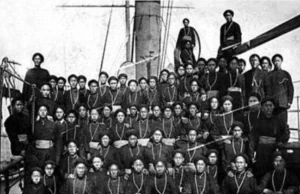
Created a New Army based on Western training, most notably by Yuan Shikai in the late 1890s
These efforts had some success, but corruption, lack of central control, and resistance to change held reforms back.

Foreign powers forced China into a series of wars and unfair treaties that weakened the Qing:
First Opium War (1839–1842): Qing defeat led to the Treaty of Nanjing, ceding Hong Kong and opening ports to Britain.
Second Opium War (1856–1860): Ended with British and French troops entering Beijing; Treaty of Tianjin and Convention of Beijing followed.
Sino-French War (1884–1885): China lost control of Vietnam.
First Sino-Japanese War (1894–1895): A major blow. The Qing lost Taiwan and recognized Korea’s independence.
Boxer Rebellion (1900): The Qing supported anti-foreign forces. In response, an eight-nation army invaded and imposed the Boxer Protocol, with huge indemnities and more foreign troops in China.
At first, the Qing practiced a closed-door foreign policy, viewing China as the “Middle Kingdom.” But after the Opium Wars, that changed fast.
In 1861, the Qing set up the Zongli Yamen—a kind of foreign affairs office. This marked the start of formal diplomatic relations with other countries.
By 1901, the Zongli Yamen was replaced by the Ministry of Foreign Affairs, modeled after Western systems. China began sending envoys and students abroad, opening its eyes to a wider world.
The Qing economy had its highs and lows—from booming agriculture and trade in the early years to serious financial troubles by the end. Here’s how the empire earned, spent, and traded its wealth.

For most people, farming was life. During the Kangxi and Qianlong reigns, agriculture flourished:
New crops like corn and sweet potatoes increased food supply
Land expansion and better irrigation helped feed a growing population
China’s population jumped from 100 million to over 400 million between 1700 and 1800
But as more people shared limited land, poverty and land disputes became common.

The Qing were famous for their craft industries. Towns like:
Suzhou made silk
Jingdezhen made porcelain
Shanxi merchants created a banking system using draft notes and money exchanges
Markets grew in big cities, and trade fairs became popular. Local merchants formed guilds to set rules and protect business.
Early on, China had strict trade rules, only allowing foreign trade through Guangzhou (Canton). But China’s tea, silk, and porcelain were in high demand, especially in Europe.
Foreign traders paid in silver, which helped fuel the economy—but also made China depend on imports of silver. Later, Britain used opium to trade instead, leading to war and serious damage.
The Qing government relied on land taxes. In the Yongzheng era, the system was improved with policies like:
“Head tax into land tax”: No more per-person tax—simpler and fairer
Fire tax reform: Cut corruption by making officials report tax money clearly
But in the 1800s, things got worse:
The Taiping Rebellion destroyed farmland and tax systems
China paid huge war debts under treaties
Loss of control over customs and tariffs hurt revenue
To survive, the Qing tried new state-run factories and shipping companies, but most were poorly managed or underfunded.
Life in the Qing Dynasty was shaped by your ethnicity, class, and gender. From royal palaces to farming villages, society followed strict rules—but it was also rich with tradition, color, and daily rituals.

At the top of society were the Manchu Bannermen, who held special status. They received government pay, housing, and jobs. The Han majority formed the bulk of farmers, workers, and scholars.
Bannermen: Manchu, Mongol, and Han soldiers with privileges
Han civilians: Commoners with fewer rights, especially early in the dynasty
Merchants: Wealthy but low in social rank
Slaves and servants: Often born into bondage, with little chance to rise
Even clothing and housing were divided between Manchu and Han people, especially in cities like Beijing.

Daily life followed tradition but also varied across regions and classes.
Clothing: Manchu men wore long robes and shaved the front of their heads; women wore qipao-style gowns. Han women often wore skirts and jackets.
Food: Rice, vegetables, and pork were staples. Festivals meant big meals like dumplings, mooncakes, and hot pot.
Etiquette: Bowing and kneeling showed respect. Obedience to elders was a must.
Festivals: People celebrated Lunar New Year, Mid-Autumn Festival, and Lantern Festival with firecrackers, parades, and family feasts.
Gender roles were very traditional. Men handled outside matters; women focused on the home.

The Qing family was ruled by Confucian values—obedience, loyalty, and male authority.
Han women often had bound feet, a painful custom tied to beauty and class.
Manchu women, by law, were not allowed to bind feet, and they had more freedom to walk and work.
Marriage was arranged, and women joined their husband’s family
Mothers-in-law had strong authority over daughters-in-law
In the late Qing, early feminist ideas emerged. Some women rejected footbinding, started attending girls’ schools, and called for change
Even small reforms helped lay the foundation for women’s rights in modern China.
The Qing Dynasty wasn’t just about power and politics—it was also a time of deep thought, great books, and lasting art. While Confucianism remained the backbone of society, new ideas and Western learning slowly began to shape the future.

Confucianism was the official way of thinking. Scholars were trained to memorize classics and respect the social order. But even within this system, ideas were evolving.
The Evidential School (kaozheng) focused on facts and logic, using detailed study of texts and history.
Philosophers debated old ideas, checked sources, and tried to separate myth from truth.
In the 1800s, Western learning entered through missionaries and reformers. Chinese thinkers like Lin Zexu and Yan Fu began to translate Western books on science, law, and evolution, planting seeds of change.
The Qing era gave us some of the greatest works of Chinese culture.
Dream of the Red Chamber (Hong Lou Meng) by Cao Xueqin is considered China’s finest novel. It blends love, family drama, and deep social meaning.

Opera thrived—especially Peking Opera, with painted faces, singing, and stylized movement.
Painting was split between two styles: official court painters who followed classic methods, and bold, personal artists like Zheng Banqiao and the Yangzhou Eight Eccentrics.
Folk art, woodblock prints, and decorative crafts were popular across cities and villages.
Qing scholars preserved knowledge—and also began to explore the new.
The Siku Quanshu (Complete Library in Four Branches) was the largest collection of Chinese books ever compiled. It was ordered by Emperor Qianlong and included thousands of works on history, literature, and philosophy.

In the 1860s, China built its first modern schools and translation bureaus, like the Tongwen Guan in Beijing.
These institutions trained students in math, foreign languages, engineering, and even astronomy. Some students were even sent abroad to study in the U.S. and Japan.
Although traditional ideas still dominated, the late Qing laid the intellectual foundation for modern China.
The Qing Dynasty ruled for nearly 270 years—but in the 19th and early 20th centuries, things fell apart fast. Internal problems and foreign pressure combined to bring down China’s last imperial dynasty.

By the 1800s, the Qing government was weak, corrupt, and outdated.
The population had exploded, but the tax system stayed the same
Rebellions like the Taiping Uprising (1850–1864) caused huge losses of life and money
The ruling class refused many needed changes, and local warlords gained more power
Efforts like the Self-Strengthening Movement helped a bit—but not enough to fix the system.
The Qing faced constant attacks from Western powers and Japan:
After the Opium Wars, China signed unequal treaties, lost land, and paid huge reparations
In 1894–1895, China lost to Japan in the First Sino-Japanese War, giving up Taiwan
The Boxer Rebellion (1900) led to a brutal crackdown and even more foreign troops on Chinese soil
These defeats hurt national pride and drained the treasury.
Some Qing leaders tried to change:
In 1898, Emperor Guangxu launched the Hundred Days’ Reform, but Empress Dowager Cixi stopped it and put him under house arrest
After the Boxer Crisis, the Qing introduced the Late Qing Reforms: modern schools, a national army, and even plans for a constitution
Even though the Qing Dynasty ended more than a century ago, its influence is still felt in modern China. From national borders to cultural identity, the Qing left behind a legacy that is complex—and sometimes controversial.

Despite its problems, the Qing achieved a lot:
Territorial unity: The Qing created a map of China that closely matches today’s borders—including Tibet, Xinjiang, Mongolia, and Taiwan.
Multi-ethnic governance: It built systems to manage many cultures under one state, balancing Manchu, Han, Mongol, Tibetan, and Uyghur communities.
Cultural preservation: Projects like the Siku Quanshu helped save thousands of ancient texts and traditions.
Economic prosperity: The Kangxi–Qianlong period saw population growth, trade expansion, and improved farming.
But there were also serious failures:
Isolation: By closing off trade and rejecting Western technology, the Qing missed the Industrial Revolution.
Corruption and rigidity: Power stayed in the hands of a few. Reform came too late, and officials resisted change.
Repression: The literary inquisition silenced free thought. Critics were jailed or executed, slowing progress.
Unequal treaties: Losses in war weakened national strength and pride, leaving a lasting scar in China’s memory.
Modern scholars debate the Qing’s true legacy:
Was it a foreign occupation by the Manchus, or a successful Chinese empire with a new cultural mix?
Should we view it as a golden age of unity—or a period that delayed modernization?
These questions are still studied today, especially in fields like the New Qing History, which explores the empire from a multi-ethnic, non-Han viewpoint.
But by then, it was too little, too late. The public had lost trust.
In 1911, a revolution led by Sun Yat-sen and other reformers spread quickly. Provinces declared independence from Qing rule.
By February 1912, the six-year-old Emperor Puyi was forced to abdicate, ending more than 2,000 years of imperial history in China.
The Republic of China was born, and the Qing Dynasty became history.
Want to step into the world of emperors and palaces? You still can.
Several well-preserved Qing Dynasty sites are open to the public and give a real taste of imperial life:
The Forbidden City (Beijing): Though built in the Ming Dynasty, it served as the home of Qing emperors for nearly 300 years. Walk through grand halls, royal gardens, and the emperor’s throne room.

Summer Palace (Beijing): A stunning lakeside retreat used by the Qing court, especially during the late dynasty. It’s known for its long covered walkway, Kunming Lake, and views once enjoyed by Empress Dowager Cixi.

Shenyang Imperial Palace: This smaller but equally impressive palace in northeast China was built by Nurhaci and Hong Taiji, the early Manchu rulers. It’s full of Manchu-style architecture and artifacts.
These sites are not just tourist attractions—they’re windows into a time of splendor, struggle, and change. If you’re planning a trip to China, Qing heritage landmarks are a must-see.


Discover the 1984 Wood Rat zodiac meaning and 2026 forecast, including personality, career, wealth, love, health, lucky elements, and practical advice.

Plan your first Jiangxi trip with the best routes, top places, timing, transport tips, and practical ideas for Jingdezhen, Wuyuan, and Jiangxi’s mountain lines.

Choose the best area to stay in Qingdao with practical hotel picks, real traveler logic, and clear advice for first-time visitors, beach trips, and stopovers.

Explore Qingdao, a coastal gem blending European-style architecture, sandy beaches, vibrant nightlife, and iconic landmarks like May Fourth Square.

Plan your first Guiyang trip with top things to do, food, where to stay, best time to visit, and smart 2–3 day Guizhou gateway itineraries.

The Terracotta Army was destroyed by rebel forces during Qin’s fall and further damaged by fire, looting, and natural decay over 2,000 years.


