

Fortune
2026 Zodiac Fire Horse & Forecast for 2026
A clear and structured 2026 forecast for babies born in 2026, outlining personality, growth, relationships, health, lucky elements, and parental guidance.
 Written by
Anthony
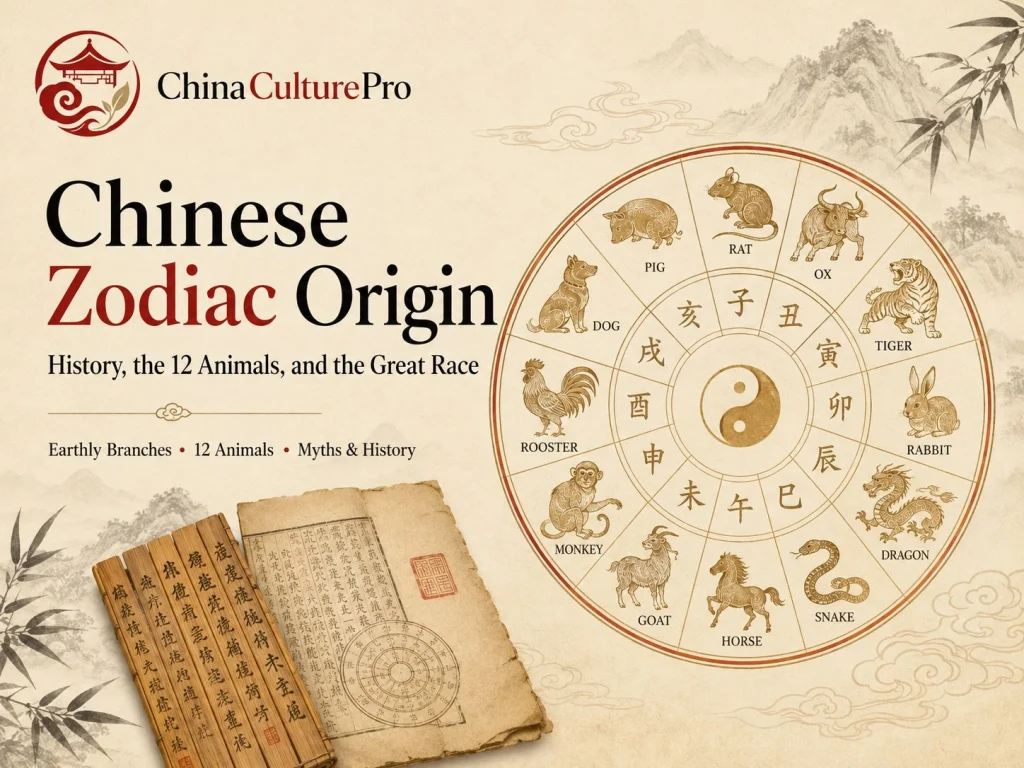
The Chinese zodiac did not begin with a literal race organized by the Jade Emperor. It developed gradually as animals were attached to the older twelve-part system of Earthly Branches, then standardized and expanded through texts, material culture, and folklore.
The historical outline is:
The Twelve Earthly Branches predate the fixed animal cycle.
Third-century BCE Qin bamboo texts preserve early branch-animal pairings, some different from today’s list.
Wang Chong’s Eastern Han Lunheng records a sequence substantially matching the modern zodiac.
From the Han through the Tang, the animals spread into calendars, tombs, mirrors, figurines, and other material culture.
The Great Race is a later explanatory legend, not a historical record of the zodiac’s creation.
The branches supplied the structure, animals made it memorable, and later stories and customs gave the cycle its cultural personality.
The Chinese zodiac is called shengxiao (生肖), while shuxiang (属相) is common in everyday speech. The question Nǐ shǔ shénme? (你属什么?) literally means “What do you belong to?” but idiomatically asks for a person’s birth-year animal.
The cycle is built on the older framework explained in Heavenly Stems and Earthly Branches.
| Earthly Branch | Pinyin | Zodiac Animal |
|---|---|---|
| 子 | Zǐ | Rat |
| 丑 | Chǒu | Ox |
| 寅 | Yín | Tiger |
| 卯 | Mǎo | Rabbit |
| 辰 | Chén | Dragon |
| 巳 | Sì | Snake |
| 午 | Wǔ | Horse |
| 未 | Wèi | Goat / Sheep |
| 申 | Shēn | Monkey |
| 酉 | Yǒu | Rooster |
| 戌 | Xū | Dog |
| 亥 | Hài | Pig |
The animals repeat every twelve years, while the ten Heavenly Stems and Twelve Earthly Branches combine into the 60 Jiazi. “Five Elements multiplied by twelve animals” is a convenient shortcut, but the actual cycle is produced by the synchronized stem and branch sequences.
“Chinese zodiac” is also an approximate English label. Western zodiac signs divide the Sun’s apparent annual path into twelve sections and are assigned mainly by birth date; the Chinese animal cycle is based on the Earthly Branches and birth year. The systems share the number twelve but not the same structure.
The Twelve Earthly Branches—Zi, Chou, Yin, Mao, Chen, Si, Wu, Wei, Shen, You, Xu, and Hai—already appear in late Shang writing as signs used to order and record time. They later organized years, months, double hours, directions, and other cycles, but surviving Shang evidence does not contain the standardized modern animal list.
The zodiac is therefore best understood as an animal layer added to an older calendrical framework, making abstract branch signs easier to recognize, remember, and transmit.
Among the earliest known excavated evidence for branch-animal pairings are third-century BCE bamboo manuscripts from Shuihudi in Hubei and Fangmatan in Gansu. They include rishu (日书), or daybooks—practical manuals addressing date selection, travel, illness, marriage, agriculture, lost property, and other everyday concerns.
At Shuihudi, animal-branch associations appear in a section used to infer a thief’s characteristics. This was practical divination, not a modern claim that everyone born under one animal shares the same personality.
The lists do not perfectly match today’s zodiac. Scholars have identified forms interpreted as deer, ape, bird, insect, and other alternatives, although several readings remain debated; Fangmatan also preserves local or textual differences. The animal cycle was already in use, but its modern form had not yet become completely uniform.
By the Eastern Han, the surviving textual picture is clearer. Wang Chong, who lived in the first century CE, recorded branch-animal pairings in Lunheng (论衡, Balanced Discourses).
The sequence in these passages substantially matches the modern list: Rat, Ox, Tiger, Rabbit, Dragon, Snake, Horse, Goat, Monkey, Rooster, Dog, and Pig.
Wang Chong did not invent or officially standardize the zodiac. His work is important because it shows that the familiar combination was already circulating by his time.
After the Han, zodiac animals became increasingly visible beyond technical texts. They appeared in calendars, mirrors, inscriptions, tomb murals, sculptures, and ceramic or stone figurines.
By the Sui and Tang periods, sets of twelve zodiac tomb figurines had become a recognizable form of material culture. In burials, the animals functioned not merely as calendrical labels but as protectors, directional figures, symbols of time, and part of the visual language of death and the afterlife.
Later traditions added personality descriptions, compatibility rules, Ben Ming Nian customs, New Year imagery, gifts, collectibles, and commercial meanings.
The Earthly Branch framework and Qin manuscripts support a strong Chinese foundation for the zodiac. Ancient China, however, was connected with Central, South, East, and Southeast Asia, where animal cycles, religious imagery, and calendrical knowledge also circulated.
Scholars have explored possible relationships with Indian, Buddhist, Iranian, and Central Asian traditions. These comparisons are valuable, but they do not establish that China copied one complete zodiac from India—or that all related animal cycles came from a single source.
The most defensible interpretation is that the Chinese zodiac developed around the Earthly Branches while also participating in wider cultural exchange.
The clearest explanation is structural: the animals inherited the twelve positions of the Earthly Branches.
Other twelve-part systems reinforced the importance of that number in traditional Chinese timekeeping:
Twelve Earthly Branches
Twelve traditional double hours
Twelve months in an ordinary year
Twelve principal directional sectors
Jupiter’s approximately twelve-year orbit, used in ancient year-counting traditions
Animals made this framework easier to remember and transmit. Zi and Chou are abstract signs; Rat and Ox can be pictured, carved, painted, and placed in stories.
No single theory proves exactly why the final animal cycle took this form. The Earthly Branch framework is the strongest structural explanation, while astronomy, timekeeping, and mnemonic use provide supporting context.
The modern list combines several layers of animal experience.
| Category | Animals | Place in Traditional Life |
|---|---|---|
| Domestic and working animals | Ox, Horse, Goat, Rooster, Dog, Pig | Farming, transport, food, guarding, ritual, and household production |
| Human-associated animal | Rat | Grain stores, homes, fields, and constant contact with settlements |
| Wild animals | Tiger, Rabbit, Snake, Monkey | Landscape, danger, agility, fertility, and symbolic imagination |
| Mythical animal | Dragon | Rain, water, transformation, authority, and auspicious power |
The list joins animals central to agricultural life with creatures drawn from the surrounding environment and symbolic imagination. Rats threatened stored grain; domestic animals supported farming, transport, food, guarding, and ritual; wild animals represented familiar forms of danger, agility, and fertility.
The Dragon, the only clearly mythical member, embodied rain, water, transformation, and authority—forces no less important to an agricultural society than a working animal.
One popular summary describes the list as “six domestic animals and six other creatures.” It is memorable but not a proven ancient selection formula. The variation in early Qin lists shows that the system evolved rather than being assembled through one documented rule.
The modern order is Rat, Ox, Tiger, Rabbit, Dragon, Snake, Horse, Goat, Monkey, Rooster, Dog, and Pig. Several traditions explain the sequence, but none has been proven as its original historical formula.
| Explanation | Basic Idea | Evidence Status |
|---|---|---|
| Great Race | Animals earn their places through a race or heavenly gathering | Important folklore, not an early historical record |
| Double-hour activity | Animals correspond to times when they are active or symbolically appropriate | Later mnemonic explanation |
| Yin-Yang and body features | Odd and even toes, hooves, claws, or other traits determine the order | Later correlative theory with inconsistencies |
| Historical evolution | Animals and associations changed before becoming standardized | Most consistent with early manuscript variation |
One traditional account links each animal with a double hour:
Rats are active around midnight.
Oxen chew cud before dawn.
Tigers hunt in the dark early morning.
Rabbits emerge around sunrise.
Dragons are linked with morning mist and rain.
Snakes warm themselves as the day grows hotter.
Horses are energetic around noon.
Goats graze in the afternoon.
Monkeys become noisy later in the day.
Roosters return to the coop near sunset.
Dogs guard homes at night.
Pigs sleep deeply before midnight.
The sequence is vivid and useful for remembering the branches, but it is better treated as a later folk explanation of an existing order.
Another theory alternates animals according to odd and even physical traits. Divided Ox hooves are classified as even, Tiger claws as odd, and other animals are assigned through toes, hooves, lips, or movement.
The explanation becomes inconsistent across the complete list, especially when applied to the imaginary Dragon. It illustrates how later thinkers used Yin-Yang correspondences to interpret the zodiac, but it does not prove the original order.
The most famous explanation is the Great Race, sometimes called the Heavenly Gate Race.
In its best-known version:
The Jade Emperor announces that twelve animals will be selected for the calendar.
The animals must cross a river or reach the heavenly court.
The Rat rides on the Ox because it cannot cross alone.
Near the finish, the Rat jumps ahead and takes first place.
The Ox finishes second, followed by the Tiger and Rabbit.
The Dragon arrives fifth after stopping to bring rain or help others.
The Snake startles the Horse and finishes sixth.
The Goat, Monkey, and Rooster cooperate and arrive next.
The Dog finishes eleventh after becoming distracted in the water.
The Pig arrives last after eating and sleeping.
Depending on the version, the Rat fails to wake the Cat, lies about the date, or pushes it into the river—explaining both the Cat’s absence and its feud with the Rat. Other tellings replace the Jade Emperor with the Buddha, turn the contest into a banquet or heavenly appointment, and alter the roles of the Dragon, Rabbit, and Dog.
These variations are characteristic of oral storytelling. The Great Race gives the animals memorable personalities and explains their order, but it does not appear in the Qin daybooks or Wang Chong’s Lunheng. Historical evidence shows how the cycle developed; the legend shows how later communities remembered and retold it.
The folk explanation comes from the Great Race. The Cat asks the Rat to wake it for the competition, but the Rat deliberately leaves it asleep. In another version, the Rat pushes the Cat into the river.
The Cat misses the final twelve places and begins its permanent feud with the Rat. It is an effective story, but not historical evidence.
The claim that “ancient China had no cats” is too broad. Native leopard cats lived in China and appeared near some early agricultural settlements, while ancient words translated as “cat” or “wildcat” are not always easy to distinguish.
Recent ancient-DNA research suggests that modern domestic cats reached China through Silk Road connections around 1,400 years ago—long after the Qin manuscripts and the first-century Lunheng. By the time domestic cats became familiar household animals, the twelve-animal sequence had been established for centuries.
This provides better historical context for the Cat’s absence without claiming that early Chinese communities knew no small felines.
In the Vietnamese zodiac, the Cat commonly replaces the Rabbit. Suggested explanations include the similarity between regional pronunciations of Mao (卯) and the Vietnamese word mèo, as well as the greater familiarity of cats in the local environment.
Neither theory has been conclusively proven as the sole explanation. The important point is that the zodiac changed as it traveled. Vietnam developed a local version of a shared cultural framework rather than simply “misremembering” the Rabbit.
| Cultural Use | How It Appears |
|---|---|
| Birth years and age | Asking “What animal are you?” can help estimate age within a twelve-year range |
| Traditional hours | Animals make the twelve branch hours easier to remember |
| Ben Ming Nian | A person’s birth branch returns every twelve years and may be marked with red clothing or protective customs |
| Personality and compatibility | Later traditions assign temperaments and relationship patterns to the animals |
| Art and material culture | Zodiac animals appear in tomb figures, mirrors, paintings, paper cuts, New Year prints, stamps, coins, and jewelry |
| Family and festival life | Animal years shape greetings, gifts, decorations, stories, and everyday conversation |
| Modern birth preferences | Some families favor culturally auspicious animal years or avoid years carrying negative stereotypes |
These uses accumulated over time: Qin daybooks employed animal signs in practical divination; Han and Tang evidence shows their growth in chronology, burial culture, and art; later traditions added personality, compatibility, ritual protection, entertainment, and commercial meanings.
For many Chinese people, however, the zodiac begins with family rather than an astrology manual—grandparents estimating age from an animal sign, parents choosing a zodiac gift for a newborn, or children asking why one sibling is a Rabbit and another a Dragon. The modern meanings are introduced in Chinese Zodiac, and returning-year customs in Ben Ming Nian.
The animal cycle traveled into Korea, Japan, Vietnam, and parts of Southeast and Central Asia. Local communities preserved the twelve-part framework while adapting animals, names, images, and customs.
| Region | Common Local Features |
|---|---|
| China | Rabbit, domestic Pig, and Yang, which may be rendered as Goat or Sheep |
| Vietnam | Cat commonly replaces Rabbit; Ox may be represented as Water Buffalo |
| Japan | Boar commonly occupies the position represented by Pig in China |
| Korea | The list remains broadly similar to China’s, with local terminology and imagery |
| Southeast Asian Chinese communities | Chinese signs coexist with local calendars and religious traditions |
Translation itself creates variation: yang (羊) can refer broadly to caprine or ovine animals, so Goat, Sheep, and Ram each fit some historical images or regional traditions.
Such differences are local adaptations, not corrupted copies. Vietnamese, Korean, Chinese, Japanese, and other Lunar New Year traditions share historical connections while retaining distinct animals, calendars, imagery, and customs.
The zodiac, Chinese lunar calendar, and Gan-Zhi system work together but perform different functions.
| System | Main Function |
|---|---|
| Chinese Lunar Calendar | Organizes lunar months, festivals, solar terms, and leap months |
| Twelve Earthly Branches | Provides the twelve-position framework underlying the animals |
| Chinese Zodiac | Adds animal identities to the Earthly Branches |
| Heavenly Stems and Earthly Branches | Names years, months, days, and hours through recurring pairs |
| 60 Jiazi | Combines stems and branches into a sixty-year cycle |
A Dragon year returns every twelve years, but a complete combination returns every sixty. For example, 2024 was Jia-Chen (甲辰): Jia was the Heavenly Stem and Chen the Dragon branch. Another Dragon year arrives after twelve years, while another Jia-Chen year requires sixty.
Popular zodiac years usually change at Chinese New Year, while some BaZi traditions change the year pillar at Lichun. People born near that boundary should verify the convention being used; the distinction is explained in the Chinese Lunar Calendar. The annual deity associated with the current branch year is introduced in Tai Sui.
Myth: The Jade Emperor created the zodiac through the Great Race.
The race is a later folk legend, and no single historical inventor is known. The system developed from the Earthly Branches, animal associations, divination, chronology, and folklore.
Myth: The animal cycle is as old as the Earthly Branches.
The branches appear in much earlier writing; secure animal pairings come from later evidence.
Myth: The modern list has never changed.
Qin manuscripts preserve animals and written forms that differ from the standardized sequence.
Myth: One proven formula selected the twelve animals.
Agricultural, ecological, symbolic, mnemonic, and religious explanations are theories, not a documented original formula.
Myth: Animal activity times prove the historical order.
The double-hour explanation is a later mnemonic tradition rather than archaeological proof.
Myth: Ancient China had no cats of any kind.
Native leopard cats existed, although modern domestic cats became widespread much later.
Myth: Zodiac years begin on January 1.
Popular usage follows Chinese New Year, while some technical systems use Lichun.
Myth: The zodiac is the same as the Chinese lunar calendar.
The calendar organizes dates; the zodiac attaches animals to the Earthly Branches.
Myth: The Chinese and Western zodiacs have the same structure.
The Chinese cycle is based mainly on branch years; Western signs divide the Sun’s apparent annual path.
Myth: Five Elements multiplied by twelve animals created the sixty-year cycle.
The cycle is formed by ten Heavenly Stems advancing with twelve Earthly Branches.
Myth: Vietnam’s Cat is an incorrect Rabbit.
It is a regional adaptation of a shared animal-cycle tradition.
Myth: The Chinese zodiac was conclusively copied from India or Buddhism.
Cultural exchange is important, but the Earthly Branch framework and early Chinese manuscripts support substantial local development.
The Chinese zodiac was not invented in one moment. The Twelve Earthly Branches supplied its underlying structure, Qin manuscripts preserve early and still-variable animal pairings, and Lunheng shows the modern sequence taking recognizable form by the Eastern Han.
The Great Race did not create that history, but it gave the system characters, motives, humor, and emotional life. Historical evidence explains how the zodiac developed; legend explains how generations learned to remember it. Together, they transformed an abstract cycle of time into one of the most enduring symbolic systems in Chinese Culture.
The Earthly Branches are much older, but early excavated animal pairings appear in third-century BCE Qin manuscripts. A sequence substantially matching the modern zodiac is recorded in the first-century Lunheng.
No single inventor is known. The zodiac developed gradually from the Earthly Branch system, animal associations, practical divination, chronology, material culture, and folklore.
The Shuihudi and Fangmatan Qin bamboo manuscripts are among the earliest known excavated sources containing animal–Earthly Branch pairings. Some of their animals differ from the modern list.
The animals follow the twelve positions of the Earthly Branches. Other twelve-part systems, including months, double hours, directions, and Jupiter-based year-counting, reinforced the cultural importance of twelve.
The list combines domestic animals, familiar wild species, the human-associated Rat, and the mythical Dragon. It likely reflects agriculture, ecology, ritual, symbolism, and mnemonic value rather than one documented formula.
The Great Race says the Rat rode on the Ox and jumped ahead at the finish. Another tradition links Rats with the Zi hour around midnight. Neither explanation is proven as the original reason.
No. It is a widely told folk legend with many versions. It does not appear in the Qin daybooks or Wang Chong’s early record of the animal sequence.
The race legend blames the Rat. Historically, modern domestic cats became common in China long after the zodiac’s early formation, although native leopard cats were already present.
The Earthly Branch framework and early manuscripts support substantial Chinese development. Contact with India and Central Asia may have influenced later imagery or interpretations, but simple one-way-copying claims remain unproven.
Each animal is attached to one Earthly Branch. The branches form the older calendrical framework; the animals make the twelve-position cycle easier to remember and use.
Qin-period lists were still variable. By the Eastern Han, Lunheng recorded a combination substantially matching today’s order, which became increasingly standardized afterward.
The cycle was adapted as it spread. Vietnam uses the Cat instead of the Rabbit, Japan commonly uses the Boar instead of the Pig, and other animals vary in translation or imagery.
Not directly. The animals are attached to the Earthly Branches. Popular zodiac years usually change at Chinese New Year, so the animal cycle is commonly used alongside the Chinese lunar calendar.

A clear and structured 2026 forecast for babies born in 2026, outlining personality, growth, relationships, health, lucky elements, and parental guidance.

Plan your Hefei trip with Bao Gong culture, museums, city highlights, food, transport tips, and a smart 1–2 day Anhui itinerary.

Discover Xi’an’s Terracotta Army, ancient city walls, Silk Road history, local food, best seasons, hotels, and practical travel tips for first-time visitors.

Find the best area to stay in Datong for first-time trips, old-town walks, modern comfort, Yungang access, and practical rail stopovers.

Explore the Tang Dynasty (618–907): key emperors, Chang’an’s global Silk Road era, poetry giants, major rebellions, and lasting legacy.

Discover Gansu, a vibrant land filled with Silk Road history, stunning landscapes like Jiayuguan, and rich cultural heritage from ancient caves to colorful ceramics.

Share your travel ideas, and we’ll help you plan a smooth, personalized trip across China.

Share your travel ideas, and we’ll help you plan a smooth, personalized trip across China.
We’re looking for experienced, part-time local guides to serve international travelers.
Requirements:
• Fluent in at least one foreign language
• 3–5 years guiding international visitors
• Able to operate in multiple regions in China
• Competitive and reasonable pricing
• Proven customer reviews or testimonials
• Professional, reliable, and responsive
• Flexible availability for custom trips
Hi there!
Just a quick heads-up — a helpful user named Volker let me know that some of the non-English content on this site may not be accurate.
This site is a one-person project I run part-time. I research and publish all the content myself, and the translations are currently done by machine (Google Translate). Balancing accuracy and accessibility across multiple languages is a real challenge.
If you spot any errors, I recommend switching to the English version using the button at the bottom left. I’ll continue working to improve the translations over time.
I truly appreciate your understanding. And if you have any suggestions, feel free to leave a comment — it means a lot to me.
— Anthony 2025.6.18

