

Travel Guide
Wuhan Travel Guide
Discover Wuhan with this complete travel guide—top attractions, local food, transport tips, and seasonal highlights to help you plan the perfect trip.
 Written by
Anthony
Written by
Anthony
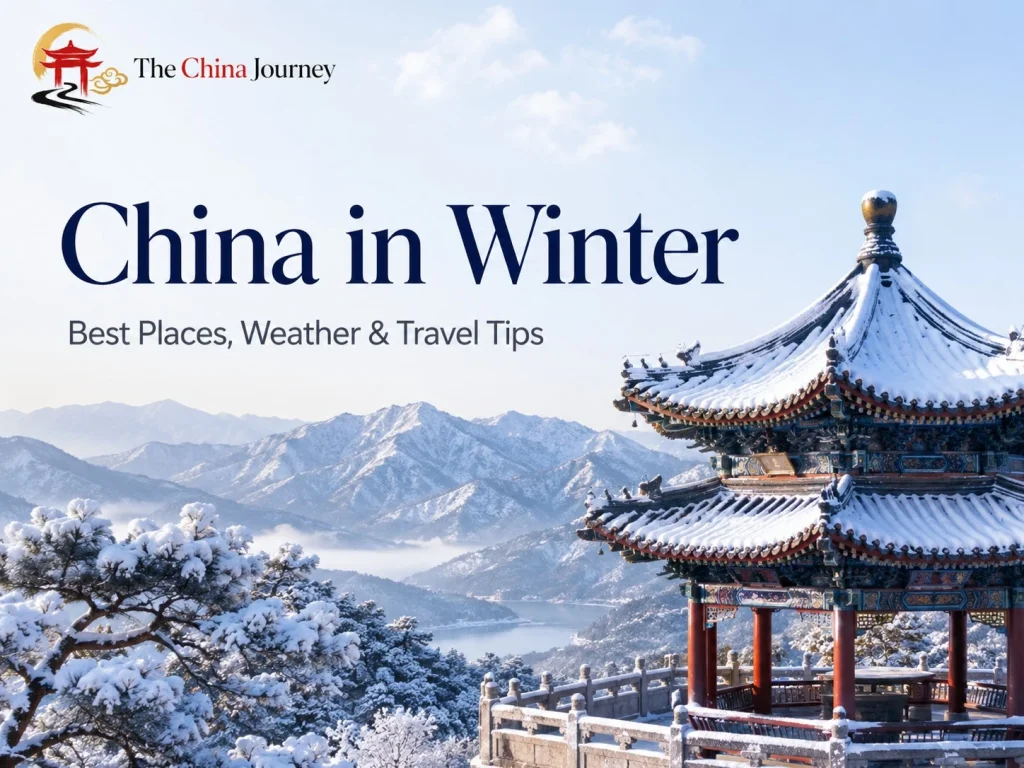
Winter can be an excellent time to visit China, but only if you choose the region for the experience you actually want. There is no single “China winter.” Harbin and Jilin offer serious ice, snow and skiing; Beijing and Xi’an can be quieter for cultural sightseeing outside major holidays; while Hainan and Xishuangbanna offer warm-weather escapes at the opposite end of the country.
Winter works especially well if you want:
It is less suitable if you dislike prolonged cold, want one climate across a multi-region itinerary, or plan high-altitude and remote routes without allowing for winter operating changes.
One major exception to the idea of “winter low season” is Chinese New Year. Harbin, ski resorts, Hainan and other winter-specific destinations can also be at or near their busiest during this period. Build the route around the kind of winter you want rather than assuming the whole country will be cold, quiet and inexpensive.
Asking what China is like in winter is a little like asking what Europe is like in winter. The country is too large, geographically and climatically, for one answer.
At the same time of year, Harbin can be deep in its ice-and-snow season, Beijing can be cold and relatively quiet between holiday peaks, Yunnan can offer dry highland sunshine with cold nights, and Hainan can be busy with travelers escaping winter altogether. China’s climate ranges from long, severe winters in the northeast to tropical conditions in the far south, with elevation adding another layer of variation in the west and southwest.[1]
That means the first question is not “Is China good in winter?” It is “Which winter do you want?” Once you decide between ice and snow, quieter cultural sightseeing, and warm-weather travel, the choice of destination, month and route becomes much easier.
If you are still deciding whether winter is the right season at all, start with our Best & Worst Time to Visit China. This page assumes winter is already a serious option and focuses on how to make it work.
China’s winter differences come from latitude, continental geography, monsoon patterns and huge changes in elevation. The northeast has a long, severe winter, while parts of far southern China have little or no climatic winter in the conventional sense. High plateaus can remain cold even when places at a similar latitude farther east are much milder.[1]
| Region | Winter feel | Snow likelihood | Best for | Main trade-off |
|---|---|---|---|---|
| Northeast China | Very cold and generally dry | High | Ice, snow, skiing, winter photography | Long periods outdoors can be demanding |
| North China | Cold and dry, often windy | Possible but not guaranteed | History, museums and quieter city sightseeing | Outdoor monuments can feel very cold |
| East China / Jiangnan | Cool to cold, often damp | Usually limited | Lower-crowd urban travel | Damp cold can feel uncomfortable |
| South China | Mild to cool | Rare | City sightseeing and easier outdoor travel | Not everywhere is warm enough for a beach holiday |
| Hainan / far south | Warm | None in ordinary tourist areas | Winter sun and beach trips | Winter can be peak season rather than low season |
| Yunnan / Southwest | Highly dependent on elevation | Possible in higher mountains | Dry-season scenery and varied climates | Large day-night and altitude differences |
| Northwest / plateau regions | Cold to severe | Highly location-dependent | Specialist winter trips | Longer distances and weather-sensitive logistics |
This is why a national temperature average is not very useful for planning. What you need to know is how winter affects the specific route you are considering.
If snow itself is the main question, see Does It Snow in China?. This guide focuses on the travel decisions that come after that.
Most winter trips to China fit into one of three broad travel styles. Choosing between them before choosing individual cities prevents a lot of inefficient route planning.
Choose Northeast China if winter itself is the attraction. Harbin, Jilin and the Changbai Mountain region build an entire travel season around ice, snow, skiing, rime, winter landscapes and cold-weather experiences. Current provincial winter programs in Heilongjiang and Jilin continue to treat this as one of their major tourism seasons rather than a quiet off-season.[2][3]
This trip works for travelers who actively want deep cold. The temperature is not an inconvenience you simply tolerate; it is part of the destination.
Beijing and Xi’an make a very different winter trip. The appeal is not guaranteed snow. It is the opportunity to visit major historic sites without summer heat and, outside holiday peaks, often without the same visitor pressure seen in stronger spring and autumn periods.
The trade-off is obvious: much of the experience is outdoors. The Forbidden City, Temple of Heaven, Beijing hutongs, the Great Wall and Xi’an’s City Wall can all involve prolonged exposure to cold wind.
If you are comfortable dressing for the weather, winter can work surprisingly well for a history-focused first trip.
If your goal is to avoid winter rather than celebrate it, look far south.
Hainan and Sanya are the beach-and-resort option. Xishuangbanna offers a different warm-weather experience built around tropical vegetation, Dai culture, food and inland landscapes rather than a coastline. Current winter travel demand confirms that both regions attract travelers specifically for warmer conditions.[4][5]
The important trade-off is price and demand. Warm winter does not mean cheap winter.
Harbin is China’s clearest winter-specific city destination. The season transforms the city rather than simply changing the weather.
The main appeal comes from giant ice constructions, snow sculpture, frozen-river activities, winter streetscapes and a city culture that has turned extreme cold into part of its identity. Provincial winter plans continue to place Harbin Ice and Snow World, Sun Island and nearby ski destinations at the center of Heilongjiang’s winter tourism system.[2]
Choose Harbin if you want:
Do not underestimate the weather. The difference between walking around a normal cold city and spending hours outdoors in a Harbin winter is substantial. Proper protection for hands, feet, face and electronic devices matters.
Opening dates for major seasonal ice attractions vary from year to year according to construction and weather. Never build a December trip around a fixed historical opening date. Check the current season before booking.
For detailed planning, use our Harbin Travel Guide and Harbin Ice & Snow Festival Guide.
Harbin is strongest for city-based ice and snow spectacle. Jilin and the Changbai Mountain region are stronger when you want winter landscapes to feel more natural.
Recent winter tourism programs in Jilin emphasize skiing, rime, snowy forests, volcanic hot springs, frozen landscapes and winter mountain experiences. The province’s current snow season also links Jilin City, ski resorts and the Changbai Mountain area through dedicated winter routes.[3]
Jilin City’s rime is a particularly distinctive winter phenomenon, but it is weather-dependent. Even local tourism authorities note that natural rime does not form every day. Do not schedule a trip around the assumption that one specific morning will produce perfect conditions.
Changbai Mountain adds a different landscape: deep snow, forests, hot springs and high-altitude winter scenery. Seasonal conditions can affect what is accessible on a particular day, so this is a destination where checking current operations shortly before travel matters more than memorizing a permanent itinerary.
See our Jilin Travel Guide for the wider province.
Beijing is not a snow destination in the same sense as Harbin. Winter snow does occur, but a visitor cannot book January and assume the Great Wall will be white.
The better reason to choose Beijing in winter is history. The Forbidden City, Temple of Heaven, hutongs, museums and major Great Wall sections remain meaningful without snow, and the dry winter atmosphere can make outdoor architecture visually striking.
Major Great Wall sections such as Badaling publish winter operating schedules, and Mutianyu is promoted as a year-round destination.[7] Weather can still affect individual facilities, paths and transportation, so check the specific section before leaving Beijing.
The biggest practical disadvantage is wind and prolonged outdoor exposure. A winter Great Wall visit can feel much colder than walking between museums in central Beijing.
Choose Beijing in winter if you care more about history and lower visitor pressure than about comfortable outdoor temperatures. See our Beijing Travel Guide for full planning.
Xi’an works well for travelers who want a history-heavy trip without depending entirely on outdoor sightseeing.
The Terracotta Army and museum-based attractions give you substantial indoor or sheltered sightseeing, while the City Wall, historic neighborhoods and food scene can be added when conditions are comfortable.
Winter also removes one of Xi’an’s major warm-season disadvantages: intense heat. The trade-off is colder outdoor walking, shorter daylight and no guarantee of picturesque snow.
Xi’an therefore fits especially well into a Beijing–Xi’an winter route for a first-time visitor who wants major historical sites and does not need winter itself to be the attraction.
“Yunnan is warm in winter” is too simple to be useful.
The province ranges from tropical lowlands to high mountains. Kunming and parts of Dali can offer pleasant daytime sightseeing, while Lijiang and especially Shangri-La can become much colder at night. High mountains introduce snow, ice and altitude into the same trip.
This variation is actually Yunnan’s winter strength. You can build a route around dry-season sunshine and cultural sightseeing without committing to Northeast-level cold—but you still need to pack for elevation changes.
Current winter travel demand is strong enough that Yunnan’s transport authorities increase capacity around destinations such as Dali, Lijiang and Xishuangbanna during winter holiday periods.[5]
For route planning, see our Yunnan Travel Guide.
Xishuangbanna is the better warm-winter choice if you want tropical scenery without making the trip primarily about the beach.
The region combines tropical vegetation, Dai culture, night markets, regional food and Southeast Asian influences. Winter remains green and warm enough to attract large numbers of visitors escaping colder parts of China, and transport capacity is actively increased during the winter travel season.[5]
Choose Xishuangbanna over Sanya if you prefer:
It can also be busy. Warm weather is exactly why winter demand rises.
For a dedicated itinerary, see our Xishuangbanna Travel Guide.
Hainan sits at the opposite end of the winter-China spectrum from Harbin. While the northeast is built around cold, Hainan attracts travelers specifically because of its tropical winter climate.
Sanya offers beaches, resort hotels and outdoor seaside travel at a time when most of northern China is cold. Current Hainan tourism data describe winter as the island’s busiest tourism season, with strong inbound demand for sun, sand and sea.[4]
That leads to the main warning: winter Hainan is not the budget alternative to summer China. Flights, resorts and popular bays can be more expensive and crowded during the strongest winter periods, especially around major holidays.
Choose Hainan when beach time is the purpose of the trip. Choose Xishuangbanna when you want warmth but would rather spend the trip exploring tropical landscapes, culture and food.
Continue with our Hainan Travel Guide or Sanya Travel Guide.
Other winter possibilities include Huangshan after snow, Zhangjiajie in cold-season conditions, Jiuzhaigou and ski areas in Xinjiang. These can be excellent trips, but their winter value is more dependent on actual weather, seasonal operations and route logistics. Check current conditions rather than choosing them purely from winter photographs.
December is useful when you want winter conditions without automatically placing the trip inside the main Spring Festival travel cycle.
Northeast China’s ice-and-snow season builds through the month, while Beijing and Xi’an generally settle into their winter sightseeing rhythm. Christmas does not create the same nationwide domestic travel pressure in China that Spring Festival does.
The main caution is seasonal attraction timing. Large ice constructions and some ski products do not start on the same calendar date every year. Weather and construction determine the actual opening. Verify current announcements before building a December trip around one attraction.
January is the strongest choice if you want the deepest northern winter. Harbin, Jilin and ski destinations are typically well into their main snow season, while Beijing and Xi’an are firmly in cold-weather sightseeing conditions.
It is also the month when you need to start watching the lunar calendar. In years when Chinese New Year falls relatively early, late January can already bring stronger transport demand and holiday-related changes.
February is the least useful month to judge without checking the actual year’s Spring Festival dates.
In Northeast China it can still offer strong winter conditions. Farther south, the seasonal transition toward spring begins earlier. But the biggest variable is the holiday calendar.
If your dates overlap with Chinese New Year or the wider Spring Festival travel rush, ticket availability, hotel demand, attraction crowds and business hours can change dramatically. The same February itinerary can therefore feel completely different in two different years.
There is no universally best winter month. December, January and February work for different combinations of weather, snow reliability and holiday tolerance.
Chinese New Year is not a small adjustment to a winter itinerary. It can change the way the entire national transport and tourism system behaves.
The wider Spring Festival travel rush lasts far beyond the official holiday itself. In 2026, for example, the national travel-rush period ran for 40 days, with record-scale demand forecast across roads, railways and aviation.[6]
For travelers, the difficult side can include:
The positive side is a completely different cultural atmosphere. Lantern displays, temple fairs, seasonal food and local celebrations can make the holiday one of the most memorable times to experience China.
Do not repeat the old claim that “China closes during Chinese New Year.” Major hotels, transport systems, shopping centers and many attractions continue operating, while individual businesses may adjust their schedules. The correct approach is to check the particular services you need.
If the holiday itself interests you, see our Chinese New Year guide. If it does not, plan dates around the holiday and the surrounding travel-rush period rather than only avoiding Lunar New Year’s Day.
Sometimes. Not everywhere.
This is one of the most misleading generalizations about China in winter.
Beijing, Xi’an and some other culture-focused destinations can be quieter outside major holidays. Hotels may also offer better value than during their strongest spring or autumn periods.
But the opposite is true where winter itself is the product.
Never budget a winter trip using a single national “low-season discount.” Check whether your actual destination treats winter as low season, high season or simply a different season.
Winter does not automatically produce snowy sightseeing in Beijing, Xi’an or Shanghai. A cold day and a snowy day are not the same thing.
If snow is essential to the trip, prioritize Northeast China or another destination with a much stronger seasonal snow pattern rather than hoping to get lucky at the Great Wall.
Northern winter is often dry and windy. East China can feel damp and penetrating even when the thermometer is less dramatic. Yunnan’s highland sunshine can make midday pleasant while nights become much colder.
This is why packing based on one national temperature forecast does not work.
Outdoor sightseeing time is more limited than in late spring or summer. This matters particularly for mountain routes, long day trips and attractions where your best views depend on daylight.
Build winter itineraries with fewer outdoor stops rather than taking a summer itinerary and simply wearing a heavier coat.
Ice, snow and wind can affect mountain roads, walking trails, scenic transport and cableways. This does not mean mountain attractions automatically close for winter.
It means operating conditions matter more. Check official notices close to the travel date instead of assuming a summer route will operate unchanged.
High-speed rail remains one of the easiest ways to connect classic cities such as Beijing, Xi’an and Shanghai. Winter weather can cause disruption, but for many city-to-city routes the bigger planning challenge is Spring Festival demand rather than normal winter conditions.
Book according to the current 12306 sales window and do not assume popular holiday trains will remain available until the last minute.
Flights become especially valuable when winter routes cross large distances: Beijing to Hainan, Shanghai to Harbin or other north–south combinations.
Severe weather can disrupt aviation, so avoid constructing important same-day connections with no margin for delay.
Road conditions matter more around snow towns, ski resorts and mountain areas such as Changbai. Ice, snow, fog and temporary traffic controls can alter transfer times.
If a winter route relies on a private car or long road transfer, check the forecast and local road situation close to departure.
For the wider choice between rail and aviation, see Train vs Plane in China. For railway procedures, use our China High-Speed Rail Guide.
There is no useful single packing list for a China winter trip. Pack for the coldest and warmest parts of your actual route.
| Trip type | What matters most |
|---|---|
| Harbin / Northeast snow trip | Serious insulation, wind protection, warm boots, gloves, face and head protection |
| Beijing / northern cultural trip | Layering, insulated outerwear and strong wind protection |
| Shanghai / Jiangnan | Warm layers that remain comfortable in damp conditions |
| Yunnan highlands | Layering, sun protection and warmer clothing for evenings and elevation |
| Hainan / Xishuangbanna | Light clothing with an extra layer for cooler mornings, evenings or air-conditioned spaces |
A Harbin-to-Sanya trip creates an obvious packing problem: you are effectively preparing for two seasons in one suitcase. Use compressible layers and avoid packing as though the entire country shares one temperature.
For a full pre-departure checklist, see our China Packing List.
These are route shapes rather than detailed day-by-day itineraries. Their purpose is to show how a winter trip changes according to your main goal.
Beijing → Xi’an → Shanghai
This works for a first-time visitor who values history and urban culture more than snow. Beijing and Xi’an provide the strongest historic core, while Shanghai creates a completely different modern-city finish.
The route does not depend on winter scenery. That is its strength. Snow is a bonus rather than a requirement.
Harbin → Yabuli / another nearby snow destination → Jilin / Changbai Mountain area
This is the specialist winter route. Keep the trip concentrated in the northeast rather than wasting time flying repeatedly between climate zones.
The exact combination should depend on whether you care more about skiing, natural snow, rime, hot springs or Harbin’s city-based ice attractions.
Use one of two completely different approaches.
Option A: Hainan / Sanya
Choose this when the purpose is beach time and resort relaxation. Seven days is enough to slow down rather than forcing the island into a checklist trip.
Option B: Kunming + Dali, or Kunming + Xishuangbanna
Choose Yunnan when you want culture and landscapes rather than a resort. Do not try to combine every famous Yunnan destination into one week. Western highlands and tropical southern Yunnan are different geographic directions and different climates.
Beijing or Harbin + Hainan
This route demonstrates the scale of China better than almost any single-season itinerary: snow or northern winter followed by tropical sea and sunshine.
The trade-off is a long domestic flight and complicated packing. This route is most worthwhile when experiencing the contrast itself is one of the reasons you chose China.
| Traveler | Winter fit |
|---|---|
| Ice and snow traveler | Excellent — Northeast China is at its strongest |
| Budget-conscious cultural traveler | Often good outside Spring Festival and winter-specific peak destinations |
| First-time history traveler | Good if comfortable with cold outdoor sightseeing |
| Family | Highly route-dependent — both snow resorts and Hainan can work |
| Warm-weather traveler | Excellent in Hainan and tropical southern Yunnan |
| Long-distance hiker | Highly destination-dependent; winter can restrict mountain routes |
| Photographer | Strong for snow, clear northern light and seasonal landscapes |
| Traveler who strongly dislikes cold | Choose the far south or another season |
Winter can be one of the most rewarding times to travel in China when the route is designed around the season rather than against it.
Choose Northeast China if you want ice and snow. Choose Beijing and Xi’an if history matters more than warm weather and you value lower visitor pressure outside holiday peaks. Choose Hainan or Xishuangbanna if your goal is to escape winter entirely.
Then choose the month carefully and check whether Chinese New Year affects your dates. The mistake is not visiting China in winter. It is assuming that one idea of winter applies to the entire country.
Yes. Major sections such as Badaling and Mutianyu operate in winter, although hours, cableways, trails or other facilities can change according to the section and weather. Snow is not guaranteed, so plan the visit for the Great Wall itself rather than only for a snow-covered photograph. Check the specific section’s current notice before departure.
Yes, if the route fits your tolerance for cold. Beijing and Xi’an can work well for a first cultural trip outside Spring Festival, while Hainan or southern Yunnan suit travelers who want warmer conditions. Avoid trying to cover extreme northern and southern climates in a short first trip unless the contrast itself is a major goal.

Discover Wuhan with this complete travel guide—top attractions, local food, transport tips, and seasonal highlights to help you plan the perfect trip.

Macau ranks among the world’s top cities by GDP per capita (PPP), but whether it’s the “richest” depends on the metric and comparison set.

Discover the Feng Shui Money Tree’s meaning, types, and best placement to attract wealth, balance energy, and bring prosperity to your home or office.

No, the Great Wall is not visible to the naked eye from space due to its narrow width and natural coloring that blends into the landscape.

Discover the essence of Chinese food culture—its history, regional cuisines, symbolism, and dining etiquette that reveal China’s rich traditions and taste philosophy.

A structured and balanced 2026 forecast for people born in 1969, covering career, wealth, relationships, health, and guidance for a steady and harmonious year.

Share your travel ideas, and we’ll help you plan a smooth, personalized trip across China.

Share your travel ideas, and we’ll help you plan a smooth, personalized trip across China.
We’re looking for experienced, part-time local guides to serve international travelers.
Requirements:
• Fluent in at least one foreign language
• 3–5 years guiding international visitors
• Able to operate in multiple regions in China
• Competitive and reasonable pricing
• Proven customer reviews or testimonials
• Professional, reliable, and responsive
• Flexible availability for custom trips
Hi there!
Just a quick heads-up — a helpful user named Volker let me know that some of the non-English content on this site may not be accurate.
This site is a one-person project I run part-time. I research and publish all the content myself, and the translations are currently done by machine (Google Translate). Balancing accuracy and accessibility across multiple languages is a real challenge.
If you spot any errors, I recommend switching to the English version using the button at the bottom left. I’ll continue working to improve the translations over time.
I truly appreciate your understanding. And if you have any suggestions, feel free to leave a comment — it means a lot to me.
— Anthony 2025.6.18

