Discover Lhasa, the heart of Tibetan culture, featuring iconic landmarks like Potala Palace, stunning landscapes, and rich spiritual traditions.
Table of Contents
About Lhasa
Lhasa, also known as “Sunlight City,” is the capital of Tibet Autonomous Region, located in the southwestern region of China on the Tibetan Plateau.
Situated at an altitude of 3,650 meters, it enjoys over 3,000 hours of sunshine annually.
Renowned as a sacred center of Tibetan Buddhism, Lhasa is a cultural, political, and economic hub, boasting breathtaking landscapes and a rich history.
Its landmarks include the iconic Potala Palace and Jokhang Temple.
Designated as a national historic and cultural city, Lhasa is an international tourist destination blending stunning natural beauty with deep religious and cultural heritage.
If you want help choosing routes, trip length, and the best places to combine on a first visit, see our Lhasa Travel Guide.
Potala Palace, Norbulingka, Jokhang Temple, Sera Monastery
Airport
Lhasa Gonggar International Airport
Train Station
Lhasa Station
License Plate Code
Zang A
GDP
83.479 billion RMB (2023)
Elevation
3,650 m
Universities
Tibet University (211), Tibet University of Traditional Chinese Medicine
Lhasa Travel Overview
Lhasa, the Sunlight City, is a sacred destination rich in history and culture.
The majestic Potala Palace glows under the sun, symbolizing faith and tradition, while Jokhang Temple welcomes devout pilgrims who spin prayer wheels, sharing tales of time.
Norbulingka enchants with its Tibetan garden charm, and ancient monasteries like Drepung and Sera immerse visitors in profound religious heritage.
Bustling Barkhor Street blends tradition with modernity, offering vibrant Tibetan goods.
Nearby, geothermal hot springs, such as Qusang in Doilungdêqên District and Dezong in Maizhokunggar County, provide relaxation and a glimpse into Tibetan wellness wisdom, adding unique allure to Lhasa tourism.
Food Culture in Lhasa
Lhasa’s culinary culture is deeply intertwined with its natural environment, religious beliefs, and ethnic traditions.
Rooted in Tibetan cuisine, it integrates flavors and techniques from neighboring regions and ethnic groups.
Local staples include barley, yak meat, and Tibetan pigs, known for their unique flavors.
Signature dishes like tsampa, yak butter tea, and Tibetan hot pot highlight bold and distinct tastes, often salty, sour, and spicy.
Dairy products like sweet tea, yogurt, and cheese are widely enjoyed.
Dining in Lhasa emphasizes etiquette, with meals often serving as a social bond in tea houses or family gatherings.
Intangible Cultural Heritage in Lhasa
Lhasa boasts remarkable achievements in intangible cultural heritage (ICH).
By 2021, it had 167 county-level or higher ICH items spanning 10 categories, including traditional crafts, dance, music, drama, visual arts, folk customs, sports, and medicine, showcasing the region’s rich and diverse cultural heritage.
Supported by 221 certified inheritors, these skilled practitioners play a vital role in preserving and passing down these precious traditions.
Lhasa’s thriving ICH initiatives not only protect unique ethnic cultures but also contribute to cultural prosperity and foster the integration of cultural and tourism development in the region.
Origin of Lhasa’s Name
Lhasa was originally called “Resa” in Tibetan, where “Re” means “goat” and “Sa” means “earth.”
The name “Lhasa” translates to a place where actions follow Buddhist teachings with absolute precision, reflecting its deep religious significance.
The city’s name first appeared in historical records in 806 AD on the Gajong Monastery Stele, erected by King Tridé Songtsen.
It mentions the establishment of Jokhang Temple, marking Lhasa as a city built around Buddhist temples.
With a history of nearly 1,200 years, Lhasa remains a sacred center of Tibetan Buddhism.
Lhasa’s City Flower: Gesang Flower
The Gesang Flower, Lhasa’s city flower, symbolizes happiness and good fortune in Tibetan culture.
Its name derives from the Tibetan words “Gesang” (beautiful time or happiness) and “Meiduo” (flower), often referred to as the “Flower of Happiness.”
With its delicate yet resilient nature, it thrives in the harsh highland environment, reflecting the strength and perseverance of the Tibetan people.
Beloved across Tibet, it represents hope, prosperity, and a deep connection to nature, embodying their aspirations for a joyful and auspicious life.
Lhasa’s City Bird: Pending
Lhasa is in the process of selecting its official city bird through a public vote held from November 27 to December 3, 2024.
As of February 9, 2025, the final decision has not yet been announced.
Based on the Lhasa Tourism and Culture Department’s poll on Wechat, the Black-necked Crane received the highest votes (469 votes, 52.87%), followed by the Golden Eagle (206 votes, 23.22%), the Painted Stork (92 votes, 10.37%), the Tibetan Gull (65 votes, 7.33%), and the Bar-headed Goose (55 votes, 6.20%).
Black-necked Crane: A nationally protected species known as the “Panda of Birds,” symbolizing loyalty and auspiciousness.
Golden Eagle: A powerful predatory bird, representing strength and freedom.
Bar-headed Goose: One of the highest-flying birds, known for crossing the Himalayas during migration.
Tibetan Gull: A graceful waterbird, thriving in Lhasa’s lakes and rivers, symbolizing resilience and courage.
Painted Stork: An elegant wading bird, often called the “Fairy of Birds,” representing prosperity and nobility.
History of Lhasa
1st Century (Western Han Dynasty): Various tribes formed alliances on the Tibetan Plateau, with the Yalong tribe, Xiangxiong Kingdom, and Supi tribal alliance being the strongest. Lhasa was referred to as “Jiqu River Basin.”
6th–7th Century (Northern and Southern Dynasties to Sui Dynasty): The Yalong tribe expanded northward, occupying Lhasa. Songtsen Gampo unified Tibet, moved the political center from Yarlung to Lhasa, and established the Tibetan Empire. The Tang Dynasty referred to Lhasa as “Luoxie.”
633 AD (Tang Dynasty, Zhenguan Era): Songtsen Gampo established the Tibetan Empire in Lhasa, transforming the swampy land into a political and religious center. The Jokhang Temple was built, marking Lhasa’s emergence as a Buddhist city.
822 AD (Tang Dynasty, Changqing Era): The Tang-Tibetan Alliance Treaty was signed in Lhasa, commemorated by a stone stele at Jokhang Temple.
842 AD (Tang Dynasty, Kaicheng Era): King Langdarma, known for anti-Buddhist policies, was assassinated in Jokhang Temple, leading to the collapse of the Tibetan Empire and Lhasa’s decline.
857 AD (Tang Dynasty, Dazhong Era): A major peasant uprising led to the disintegration of the Tibetan Empire, plunging Lhasa into a period of division and decline.
1160 AD (Southern Song Dynasty, Shaoxing Era): Inter-tribal conflicts devastated Lhasa, burning parts of Jokhang and Ramoche Temples. The Tsangpa Kagyu Sect emerged as the dominant power in Lhasa.
1239 AD (Southern Song & Yuan Dynasty): The Tsangpa Kagyu Sect initiated diplomatic ties with Mongol rulers, leading to Tibet’s integration into the Yuan Dynasty’s administrative system.
13th Century (Yuan Dynasty): The Caiwa family became one of Tibet’s ruling factions, constructing temples and reinforcing Lhasa’s infrastructure.
1409 AD (Ming Dynasty, Yongle Era): Je Tsongkhapa founded the Great Prayer Festival and established Ganden Monastery, marking the rise of the Gelug school (Yellow Hat Sect) in Tibetan Buddhism.
1416–1419 AD (Ming Dynasty, Yongle Era): The Drepung Monastery and Sera Monastery were built, solidifying Lhasa as the Buddhist center of Tibet.
1644 AD (Qing Dynasty, Shunzhi Era): The Qing Dynasty began asserting direct control over Tibet.
1717 & 1727 AD (Qing Dynasty, Kangxi & Yongzheng Eras): Lhasa experienced two major political conflicts—the Dzungar invasion and civil wars, both suppressed by the Qing government.
1757 AD (Qing Dynasty, Qianlong Era): The Regency System was introduced, and Norbulingka Palace was built as the summer residence for the Dalai Lama. Lhasa became Tibet’s cultural, political, and commercial hub, attracting merchants from China, Nepal, and India.
1904 AD (Qing Dynasty, Guangxu Era): British forces invaded Lhasa, leading to resistance from local monks and civilians.
1950 AD (People’s Republic of China): The Battle of Chamdo took place, leading to the negotiation of Tibet’s peaceful liberation.
1951 AD: Tibet was peacefully liberated, integrating into China.
1960 AD: Lhasa officially became a city.
1965 AD: Tibet Autonomous Region was established, with Lhasa as its capital.
Location of Lhasa
Lhasa is located in southwestern China, within the Tibet Autonomous Region.
Its geographical coordinates are approximately 91°06′E longitude and 29°36′N latitude.
The city lies in southeastern Tibet, bordering Nyingchi to the east, Shigatse to the west, Shannan to the south, and Nagqu to the north.
Situated in the central Qinghai–Tibet Plateau, Lhasa features a diverse terrain with the Nyainqêntanglha Mountains to the north and the Yarlung Tsangpo River to the south.
The city sits along the middle reaches of the Lhasa River valley, with elevations ranging from 3,576 meters to 7,168 meters.
Covering 29,640 square kilometers, Lhasa extends 277 km from east to west and 202 km from north to south.
Topography of Lhasa
Lhasa is situated in the central Qinghai-Tibet Plateau at an altitude of 3,650 meters, making it one of the highest cities in the world.
The terrain slopes from north to south and east to west, with the middle and southern parts forming the Lhasa River valley plain, a tributary of the Yarlung Tsangpo River.
About 100 km north of Lhasa, the Nyainqêntanglha Mountains rise, with peaks reaching 7,117 meters.
This mountain range extends 600 km from west to east and serves as the watershed between the Yarlung Tsangpo and Nujiang Rivers.
The Tangula Mountain Pass at 5,231 meters marks the natural boundary between Tibet and Qinghai and is the highest point on China’s National Highway 109 (Qinghai-Tibet Highway).
Climate in Lhasa
Lhasa has a highland temperate semi-arid monsoon climate, characterized by abundant sunshine, low precipitation, and large temperature differences between day and night.
It receives over 3,000 hours of sunshine annually, earning it the nickname “Sunlight City.”
The city is located north of the Himalayas, where subsiding airflow results in clear skies and minimal rainfall.
The annual average temperature is 7.4°C, with extremes ranging from -16.5°C to 29.6°C. Most of the 200-510 mm of annual precipitation falls between June and September, primarily as night rain.
The climate is cold and dry in winter and spring, with strong solar radiation and thin air. The frost-free period lasts 100-120 days per year.
Hydrological Features of Lhasa
The Lhasa River, known as the mother river of Lhasa, originates from the southern slopes of the Nyenchen Tanglha Mountains and is a major tributary of the Yarlung Tsangpo River.
It stretches 495 km with a watershed area of 31,760 square kilometers, making it one of the highest-altitude rivers in the world, with elevations ranging from 5,500 meters at its source to 3,580 meters at its mouth.
The river’s flow varies seasonally, influenced by glacial melt and rainfall, with a maximum discharge of 2,830 m³/s and a minimum of 20 m³/s.
The upper reaches feature steep “V”-shaped valleys, while the lower sections widen, forming alluvial plains with fertile farmland, making it one of Tibet’s key grain-producing regions.
The right-bank tributaries originate from glaciers, while left-bank tributaries come from lakes and wetlands.
Lhasa’s Natural Resources
Lhasa is rich in natural resources, supporting its agriculture, industry, and energy sectors.
Covering 29,640 square kilometers, the region features diverse landscapes, including river valleys and mountains, offering various land resources for urban development and farming.
Water resources are abundant, with the Lhasa River and numerous lakes, such as Namtso, providing water supply and hydroelectric potential.
The city also holds valuable mineral resources, including copper, iron, lead, zinc, gold, and marble, supporting industrial development.
Lhasa enjoys one of China’s highest solar energy levels, making it ideal for solar power generation.
Additionally, geothermal energy is prominent, with the Yangbajing Geothermal Field serving as an important clean energy source.
Lhasa’s Biodiversity
Lhasa boasts rich biodiversity, with diverse vegetation and unique wildlife adapted to the high-altitude environment.
The plant life varies by elevation, from alpine meadows and cold-resistant shrubs to river valley forests with poplars and willows.
Notable medicinal plants include Cordyceps sinensis, Snow Lotus, and Rhodiola, all valued for their health benefits.
The wildlife includes Tibetan antelopes, known for their long migrations, and wild yaks, which are highly resilient to cold.
Black-necked cranes, the only cranes native to highlands, winter in Lhasa’s wetlands, while golden eagles dominate the skies.
Domesticated animals like the Tibetan Mastiff, yaks, and Tibetan sheep are crucial to local livelihoods, providing meat, wool, and transportation for the Tibetan people.
Lhasa’s Administrative Divisions
Lhasa has undergone significant administrative changes over time.
In 1960, Lhasa was officially established as a city, originally governing seven counties.
Over the years, it expanded, incorporating counties such as Linzhou, Dangxiong, Mozhugongka, Nimu, Qushui, and Dazi.
In 2015, Duilongdeqing County was upgraded to a district, followed by Dazi County in 2017, making them Lhasa’s second and third districts.
As of 2022, Lhasa consists of three urban districts and five counties, covering 64 towns and 269 villages/communities.
The city government is based in Chengguan District.
This administrative framework supports urban growth, rural development, and efficient governance in the region.
Lhasa’s Population
Lhasa has a permanent population of 867,891, with an estimated total population of around 950,000.
As of 2022, the registered population stood at 581,200.
The urbanization rate is 69.77%, with 605,511 people residing in urban areas.
Chengguan District is the most densely populated, while northern counties such as Dangxiong, Nimu, and Linzhou have lower population densities.
The city is ethnically diverse, with Tibetans making up 78.4%, followed by Han, Hui, Monba, Lhoba, Deng, and Sherpa communities.
Education levels vary, with 147,800 people having college degrees and 256,544 people attaining only primary education.
Customs in Lhasa
Lhasa is a city where tradition and modernity coexist harmoniously.
The new city expands from Potala Palace and Barkhor Street, reaching north to Sera Monastery and west to Doilungdêqên District.
The skyline features modern buildings like the Lhasa Post Office, News Tower, Lhasa Hotel, and Tibet Hotel, blending contemporary and traditional architecture.
From Potala Palace, one can see the city’s green-shaded modern structures, while Barkhor Street remains deeply rooted in Tibetan traditions.
Here, prayer flags flutter, incense smoke drifts, and Tibetans in traditional attire walk with prayer wheels and beads in hand, embodying a way of life deeply intertwined with Buddhism.
Lhasa Festivals
Tibetan New Year (Losar)
Tibetan people prepare for the New Year from the twelfth month of the Tibetan calendar.
On the first day, families collect the first bucket of “auspicious water”.
From the second day, they visit relatives and friends for celebrations, which last several days.
Festivities include singing, dancing, and traditional circle dances like Guozhuang and Xianzi, while children enjoy fireworks.
King of Cattle Festival (Niu Wang Hui)
Starting on the 15th day of the eighth lunar month, this festival lasts over ten days, sometimes up to a month.
Participants honor their ancestral spirits by chanting scriptures, playing yak horns, and sacrificing cattle and sheep.
Due to its high cost, it has been celebrated on a large scale only once in the past century.
Monlam Prayer Festival (Great Prayer Festival)
The largest religious festival in Tibet, this prayer gathering brings together monks from Drepung, Sera, and Ganden Monasteries to Jokhang Temple.
Established in 1409 by Tsongkhapa, the festival has expanded over time, attracting thousands of monks and devotees.
Butter Lamp Festival
Held on the 15th day of the Tibetan New Year, this festival marks the conclusion of the Monlam Prayer Festival.
People visit temples by day and in the evening, Barkhor Street is lit up with intricate butter sculptures depicting deities, animals, and mythical creatures.
The night also features folk dances, singing, and storytelling competitions, creating a vibrant festive atmosphere.
Saga Dawa Festival
Celebrated on the 15th day of the fourth Tibetan month, this festival commemorates the birth, enlightenment, and nirvana of Buddha.
Tibetans dress in traditional attire and gather at Dragon King Pool behind the Potala Palace for religious rituals, including circumambulating sacred sites, offering prayers, and engaging in merit-earning activities.
Bathing Festival
A traditional Tibetan festival lasting five to six days, during which people travel to rivers, lakes, and hot springs across Lhasa and the Tibetan Plateau for ritualistic bathing, swimming, and purification.
Families set up tents along the riverbanks, enjoying butter tea, barley wine, and tsampa while celebrating nature’s blessings.
Shoton Festival (Yogurt Festival)
One of Tibet’s largest festivals, the name means “Yogurt Banquet”.
Before the 17th century, it was a purely religious event marking the end of monks’ meditation retreats. Later, local people began offering yogurt to monks.
Today, it is a grand festival featuring Tibetan opera performances, thangka unveilings at Drepung Monastery, and celebrations in Norbulingka Palace.
Horse Racing Festival
A highly popular Tibetan tradition, horse racing is not only an entertainment event but also a display of Tibetan culture and strength.
Various Tibetan festivals incorporate horse racing, archery, and equestrian games, with participants dressed in colorful costumes and performing acrobatic stunts on horseback.
Ongkor Festival (Bumper Harvest Festival)
This agricultural festival is held annually to celebrate bountiful harvests.
Locals dress in traditional clothing, carry barley and wheat bundles, and parade around the fields in joyous processions.
Festivities include horse racing, archery, yak racing, folk singing, and Tibetan opera performances, creating an atmosphere of gratitude and celebration.
Religious in Lhasa
Lhasa is a city deeply influenced by Tibetan Buddhism, which dominates its religious and cultural landscape.
The city is home to major Tibetan Buddhist sects, including Nyingma, Sakya, Kagyu, and Gelug, with Gelug being the most influential.
Prominent monasteries such as Jokhang Temple, Drepung Monastery, and Sera Monastery serve as significant religious centers.
Religious practices like daily pilgrimages and turning prayer wheels are common, especially around Jokhang Temple and Potala Palace.
Other religions in Lhasa include Bon, an indigenous Tibetan belief system, Islam, with local Hui Muslim communities, and Catholicism, which has a small presence in the region.
Lhasa’s Language
The primary language spoken in Lhasa is Tibetan, particularly the Ü-Tsang dialect, which serves as the standard Tibetan dialect and is widely used in daily life, religious ceremonies, and cultural traditions.
Tibetan script, a phonetic writing system, plays a crucial role in preserving Tibetan history, religion, and literature.
Mandarin Chinese is also commonly spoken, especially in government, education, and commerce, facilitating communication with other regions.
Due to Lhasa’s central position in Tibet, other Tibetan dialects like Amdo and Kham can also be heard, adding to the city’s linguistic diversity.
Essential Etiquette in Lhasa
Respect for Life: Tibetans avoid killing animals themselves, though they consume beef and mutton. Eating horse, donkey, and dog meat is strictly forbidden, and some regions also abstain from fish.
Drinking Butter Tea: When served, wait for the host to present the tea with both hands before accepting it.
Religious Sites: When passing temples, Mani stones, or stupas, always circumambulate clockwise unless following the Bon religion, which follows a counterclockwise path. Never step over religious objects or fire pits.
Handling Prayer Wheels: Always rotate prayer wheels clockwise, never in reverse.
Temple Etiquette: When entering a monastery, remove your hat, avoid smoking, touching statues, flipping scriptures, or striking bells and drums. Never touch monks’ sacred objects like amulets or prayer beads, and sit properly without occupying a lama’s seat. Keep quiet and avoid loud noises, hunting, or killing near temples.
Respect for Tibetan Script: Never use paper with Tibetan writing for cleaning or wiping.
Village Customs: If a pile of firewood, tree branches, or red cloth is placed at a home’s entrance, it signals a household with a newborn or an ill person. Do not enter when you see these signs.
Lhasa’s Economy
In 2023, Lhasa’s GDP surpassed ¥800 billion, reaching ¥834.79 billion, marking a 9.6% year-on-year growth.
The secondary and tertiary sectors played a key role in economic expansion.
The primary sector grew by 7.7%, contributing ¥29.92 billion; the secondary sector increased by 10.0%, reaching ¥328.81 billion; and the tertiary sector rose by 9.4%, totaling ¥476.06 billion.
In 2022, Lhasa’s GDP was ¥747.57 billion, with slower growth of 0.2%.
The city’s public budget revenue in 2022 was ¥72.47 billion, while fixed asset investments declined, with the primary sector increasing 76.1%, but secondary and tertiary investments dropping.
Education in Lhasa
As of 2022, Lhasa had 1 higher education institution, 2 vocational schools, 23 middle schools, 74 primary schools, 276 kindergartens, and 1 special education school.
The primary school enrollment rate reached 99.99%, while the junior high school gross enrollment rate was 102.83%, with a 99.33% retention rate for compulsory education.
In 2020, Lhasa was selected as a national demonstration zone for the new high school curriculum reform.
Key secondary schools include Lhasa Middle School, Lhasa Beijing Middle School, and Lhasa No. 3 Senior High School.
Tibet University (a “Double First-Class” and 211 Project university) and Tibet University of Tibetan Medicine are among Lhasa’s leading higher education institutions.
Lhasa’s Air Transportation
Lhasa Gonggar Airport, located in Gonggar County, Shannan, Tibet, sits at an altitude of 3,600 meters, making it one of the highest civilian airports in the world.
The 4E-class airport features a 4,000-meter-long, 45-meter-wide runway, capable of handling large aircraft such as Boeing 747s and Airbus models.
In 2007, it recorded a passenger throughput of 1,187,104.
On July 26, 2011, Tibet Airlines launched its inaugural flight from Lhasa to Ngari, establishing itself as Tibet’s first local airline and the world’s first airline based in a high-altitude region, focusing on domestic passenger and cargo transport.
Lhasa’s Railway Transportation
As of 2022, Lhasa is served by three major railway lines: Qinghai-Tibet Railway, Sichuan-Tibet Railway, and Lhasa-Shigatse Railway, with key stations including Lhasa Station, Lhasa South Station, and Lhasa West Station.
The Qinghai-Tibet Railway, stretching 1,956 km from Xining to Lhasa, is the world’s highest and longest plateau railway.
Opened in 2006, it crosses the Tanggula Mountains and reaches an altitude of over 5,000 meters.
The Sichuan-Tibet Railway, still under construction, will connect Chengdu and Lhasa, while the Lhasa-Shigatse Railway extends to Tibet’s second-largest city, Shigatse, running through deep valleys and rugged landscapes.
FAQs About Lhasa
Is Lhasa still closed to foreigners?
Lhasa is not closed to foreigners. They only need to follow the relevant Chinese regulations, such as obtaining a visa and other necessary documents, to visit Lhasa for tourism or other purposes.
What is Lhasa called now?
Lhasa is still called Lhasa. In Tibetan, it has unique meanings and pronunciations, such as the ancient name “Luoxie.” However, it is now primarily referred to as Lhasa.
Is it safe to visit Lhasa?
Yes, it is safe to visit Lhasa. The city has good public security, and the local government and related departments have taken various measures to ensure the safety and rights of tourists. Additionally, tourism facilities and services are continuously improving.
Is Lhasa worth visiting?
Lhasa is definitely worth visiting. It boasts world-renowned historical and cultural landmarks like the Potala Palace and Jokhang Temple, along with unique Tibetan culture and stunning natural landscapes, offering visitors a distinctive and unforgettable experience.
Why is Lhasa so cold?
Lhasa’s cold climate is mainly due to its high altitude, where thin air reduces atmospheric insulation and allows heat to dissipate quickly. Additionally, its geographical location and topographical features also contribute to the low temperatures.
What language is spoken in Lhasa?
The primary languages spoken in Lhasa are Tibetan and Mandarin Chinese. Tibetan is the mother tongue of the local Tibetan people and is widely used in daily life and cultural traditions, while Mandarin is commonly used in government, schools, and commercial activities.
I’m Anthony, the founder and editor of The China Journey.
I create practical, experience-based guides covering travel, food, and culture across China, with a focus on helping international travelers make clear planning decisions.
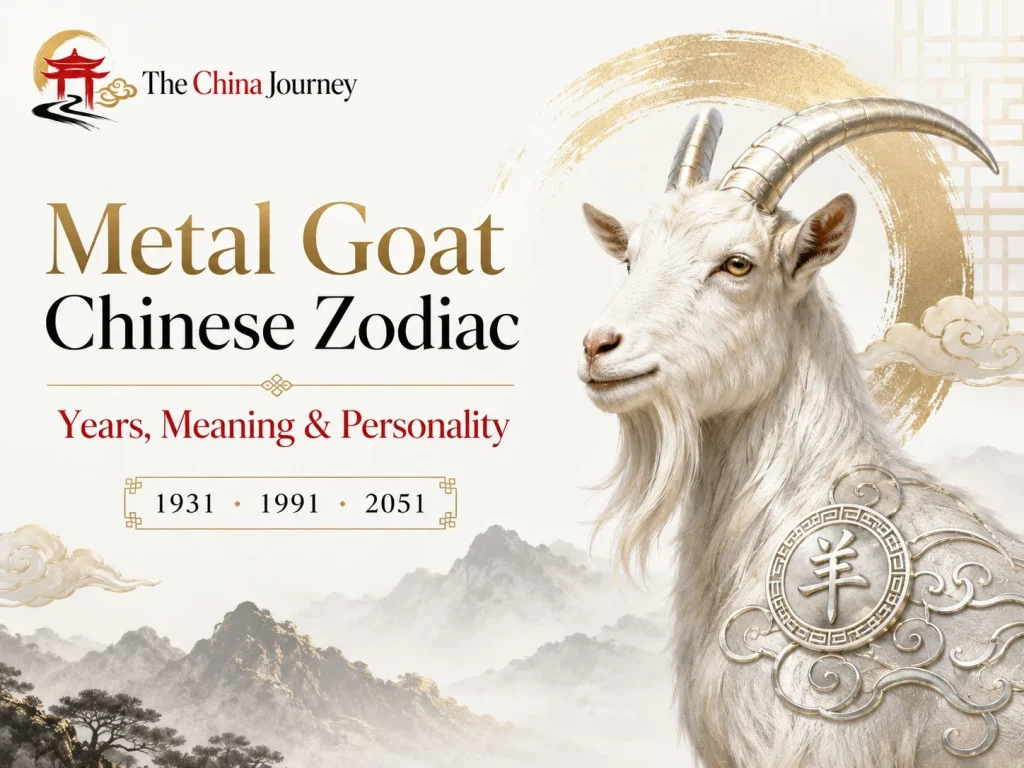
The Metal Goat corresponds to the years 1931, 1991 (Nayin “Lu Pang Tu”). In the Five Elements system, “Metal” represents strength, wisdom, and wealth, while “Goat” symbolizes gentleness, kindness, and responsibility.
China is politically a communist, single‑party state led by the CCP, but runs a socialist market economy—blending centralized control with market reforms.
Plan Your China Trip with Our Experts
Share your travel ideas, and we’ll help you plan a smooth, personalized trip across China.
Plan Your China Trip with Our Experts
Share your travel ideas, and we’ll help you plan a smooth, personalized trip across China.
Work with Us as a Local Guide in China
We’re looking for experienced, part-time local guides to serve international travelers.
Requirements:
• Fluent in at least one foreign language • 3–5 years guiding international visitors • Able to operate in multiple regions in China • Competitive and reasonable pricing • Proven customer reviews or testimonials • Professional, reliable, and responsive • Flexible availability for custom trips
Just a quick heads-up — a helpful user named Volker let me know that some of the non-English content on this site may not be accurate.
This site is a one-person project I run part-time. I research and publish all the content myself, and the translations are currently done by machine (Google Translate). Balancing accuracy and accessibility across multiple languages is a real challenge.
If you spot any errors, I recommend switching to the English version using the button at the bottom left. I’ll continue working to improve the translations over time.
I truly appreciate your understanding. And if you have any suggestions, feel free to leave a comment — it means a lot to me.